Trump-Ramaphosa Meeting Turns Tense Over South Africa’s Land Reform

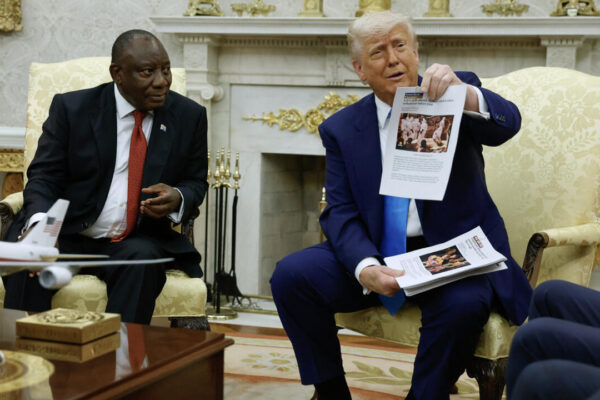
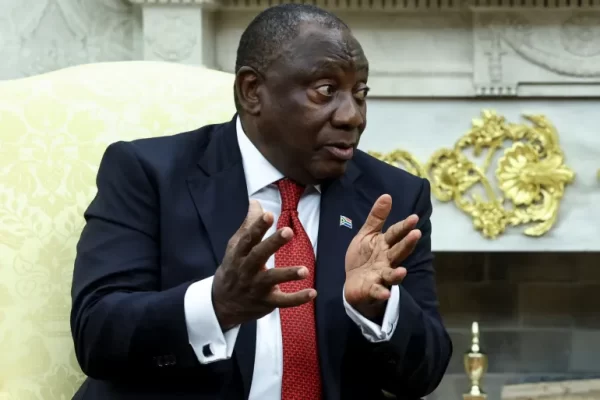
By Kamal YalwaPublished: May 22, 2025 WASHINGTON, D.C. – A high-stakes meeting between U.S. President Donald Trump and South African President Cyril Ramaphosa at the White House on Wednesday took a contentious turn after Trump made inflammatory claims of “white genocide” in South Africa, referencing the country’s new land expropriation law. The meeting, intended to improve strained U.S.–South Africa relations, quickly escalated as Trump accused the South African government of persecuting white farmers and seizing land without compensation. The claims, which have been widely debunked by experts, overshadowed efforts by Ramaphosa to foster economic cooperation and present a trade proposal to the U.S. Trump’s Genocide Allegations President Trump alleged that white Afrikaner farmers in South Africa are victims of targeted violence and land confiscation. He cited videos and news clippings, including a controversial montage featuring South African opposition leader Julius Malema singing “Kill the Boer,” a historical anti-apartheid chant. “We have many people that feel they’re being persecuted, and they’re coming to the United States,” Trump said, referencing the recent relocation of 59 white South Africans to the U.S. under a refugee plan initiated by his administration. Ramaphosa firmly rejected the allegations. “There is criminality in our country, but the majority of victims are Black South Africans,” he said. “If there was a genocide, these gentlemen would not be here,” he added, gesturing to white South African golfers Ernie Els and Retief Goosen, and billionaire Johann Rupert, who accompanied him. Land Reform at the Heart of the Dispute In January 2025, Ramaphosa signed a new land expropriation law aimed at redressing historical injustices from South Africa’s apartheid era. The law allows the government to seize land for public use—with or without compensation—replacing a 1975 statute criticized for its ambiguity. White South Africans, who make up around 7% of the population, continue to own over 70% of the land, despite the official end of apartheid in 1994. The law has sparked debate globally but, as of mid-May, no land has been seized without compensation. South African historian Saul Dubow described Trump’s genocide claims as baseless. “The violence in South Africa is largely criminal, not political,” he said. “Historical racial injustice is real, but the notion of a targeted genocide against white farmers is unfounded.” Fallout for Aid and Trade Following the signing of the land law, Trump froze U.S. aid to South Africa in February and slashed funding for HIV/AIDS programs, placing more than 8,000 health workers at risk of losing their jobs. The Trump administration has also curtailed the operations of the U.S. Agency for International Development (USAID) across the continent. Another key point of tension is the future of the African Growth and Opportunity Act (AGOA), which allows sub-Saharan African countries, including South Africa, to export goods to the U.S. duty-free. If AGOA is not renewed, South Africa’s automotive and agricultural exports could be significantly impacted. Trump has already imposed a 31% tariff on South African goods—currently under a 90-day suspension—and maintains a 10% universal tariff on foreign imports. Ramaphosa Pushes for Trade Talks Despite the confrontational tone, Ramaphosa said the meeting was “a great success.” He presented a trade framework to Trump, offering U.S. companies access to South Africa’s rich deposits of critical minerals, including platinum, manganese, and vanadium—resources vital for manufacturing, technology, and clean energy. “We’ve got critical minerals that you want to fuel your own economy and reindustrialize,” Ramaphosa said. No trade agreement was finalized, but both leaders agreed to continue discussions. Looking Ahead Observers say Wednesday’s meeting underscores the Trump administration’s increasingly hardline stance on Africa, especially in cases where domestic politics intersect with foreign policy. The fallout from this latest exchange could have long-lasting implications for U.S.-Africa relations. With the future of AGOA uncertain and U.S. aid programs hanging in the balance, South Africa now finds itself navigating a complex diplomatic landscape shaped by contentious narratives and shifting geopolitical interests. — Source: Al Jazeera, White House Press Briefing, South African Government Statement.
Read More

Trump Accuses South Africa of White Genocide in Tense White House Meeting With Ramaphosa

In a contentious Oval Office encounter on Wednesday, U.S. President Donald Trump stunned South African President Cyril Ramaphosa by accusing South Africa of perpetrating a “genocide” against white Afrikaner farmers — a claim long discredited by experts. The meeting, which Ramaphosa hoped would ease tensions between the two nations, quickly spiraled into controversy as Trump presented news clippings and videos, including footage of South Africans singing the anti-apartheid song Dubul’ ibhunu (“Kill the Boer”), to support his allegation. Ramaphosa firmly rejected the accusation, stating, “If there was Afrikaner farmer genocide, I can bet you, these three gentlemen would not be here,” referring to white South Africans Ernie Els, Retief Goosen, and billionaire Johann Rupert, who accompanied him. Experts, including historian Saul Dubow of the University of Cambridge, dismissed Trump’s claims, noting that while South Africa faces high crime rates, the violence is overwhelmingly non-political and disproportionately affects Black citizens. Trump’s dramatic display, which included a dimmed Oval Office and a five-minute video montage, came just weeks after his administration flew 59 white South African “refugees” to the U.S. Meanwhile, critics pointed out the inconsistency of welcoming South African migrants while revoking protections for displaced people from Venezuela, Haiti, Afghanistan, and Cameroon. Some observers linked Trump’s rhetoric to political retaliation over South Africa’s genocide case against Israel at the International Court of Justice. 👉 Continue reading

Read More

Barcelona Interested in Rashford and Diaz, Confirms Sporting Director Deco

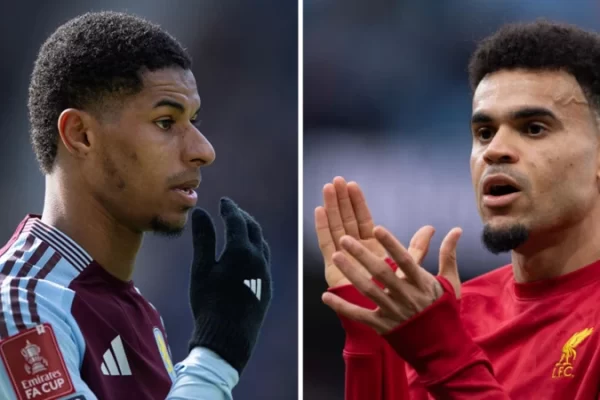
Barcelona sporting director Deco has confirmed the club’s interest in Manchester United forward Marcus Rashford and Liverpool winger Luis Diaz, stating both are admired targets for the Catalan giants. Speaking in an interview with Catalan radio station RAC1, Deco said, “We like Luis [Diaz], we like [Marcus] Rashford, and we like other players. When we go to the market, there are names that we know and that could improve the team.” Rashford, who is under contract with Manchester United until 2028, is expected to make a decision on his future at the end of the current season. Reports suggest he favours a move to a Champions League club and is not keen on relocating to London. Rashford has been sidelined with injury and spent part of the season on loan at Aston Villa. Barcelona’s reported admiration for the players reflects their intent to strengthen the squad with proven attacking talent. However, given financial constraints and long-term contracts of the targets, any potential move could be complicated and depend on summer departures or restructuring within the squad.

Read More

Tinubu Approves Maritime Bank Takeoff Appoints Aderogba as Pioneer CEO

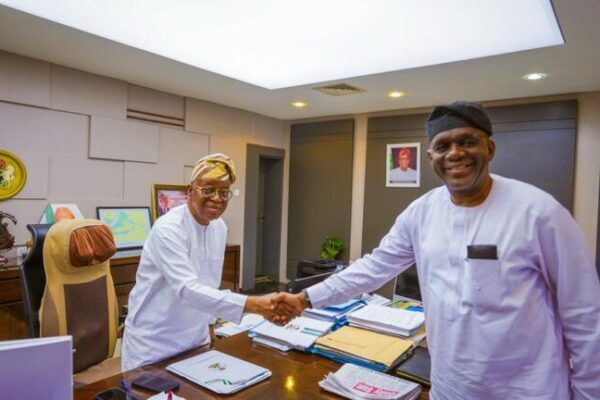
President Bola Tinubu has approved the long-awaited operational launch of the Regional Maritime Development Bank (RMDB), with Mr. Adeniran Aderogba appointed as its pioneer President and CEO. The Minister of Marine and Blue Economy, Adegboyega Oyetola, made the announcement on Thursday, describing the development as a historic breakthrough for West and Central Africa after a 16-year delay. The RMDB, originally conceived in 2009 by member states of the Maritime Organisation of West and Central Africa (MOWCA), is expected to fund key infrastructure and logistics projects across the sub-region. Oyetola praised President Tinubu’s decisive leadership in breaking the deadlock, noting that the bank’s takeoff aligns with the administration’s Renewed Hope Agenda. The RMDB will provide long-term funding solutions for projects including port development, fleet expansion, shipping logistics, and intermodal transport systems. “This is a moment of great significance for Nigeria and the entire sub-region,” Oyetola said, adding that the bank will boost regional integration and economic cooperation. Mr. Aderogba, who brings over three decades of experience in maritime finance and investment, previously held leadership roles at NIMASA, First Atlantic Bank, and MBC International Bank. He is also the founder of CLG Securities Limited and has led over $5 billion in structured finance transactions. A Fellow of ICAN and an alumnus of the University of Lagos, Aderogba’s appointment is seen as pivotal in steering the RMDB towards impactful delivery in the maritime sector.

Read More

Tinubu Dismisses One-Party Rule Fears, Earns APC Endorsement for 2027

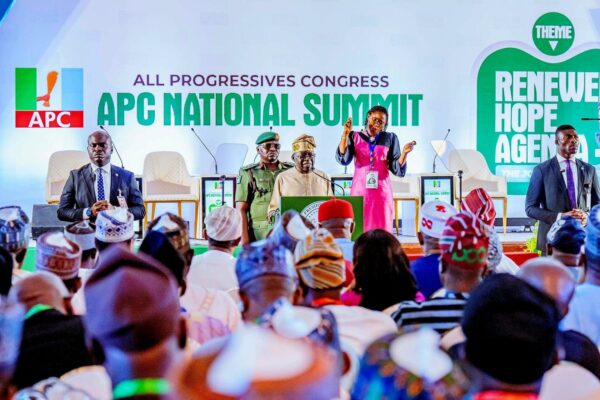
President Bola Ahmed Tinubu has dismissed fears that Nigeria is sliding into a one-party state, assuring that democracy remains intact despite the ruling All Progressives Congress (APC)’s growing dominance. Speaking at the APC Renewed Hope Agenda Summit in Abuja on Thursday, Tinubu said the party’s growing influence was based on visible achievements in less than two years of governance. “A one-party system is not suitable for democracy,” he said, adding, “You don’t expect people to remain in a sinking ship without a life jacket.” At the summit, key APC stakeholders, including the National Assembly leadership, Progressive Governors Forum, and party executives, unanimously endorsed Tinubu for a second term in 2027. The endorsement was formalised by a motion moved by Imo State Governor Hope Uzodimma and seconded by Kaduna State Governor Uba Sani. APC National Chairman Abdullahi Ganduje declared Tinubu as the party’s sole presidential candidate for the 2027 election. President Tinubu defended tough economic reforms, such as the removal of fuel subsidies and multiple exchange rates, as necessary steps to stabilize the economy and fight corruption. He cited increased foreign investments and the recovery of over 750 properties by the EFCC as early wins. The summit also reviewed progress in key sectors under the Renewed Hope Agenda, including infrastructure, health, and national security.

Read More

El-Rufai Endorses Minister Bosun Tijani, Says 2027 Coalition Will Unseat Tinubu

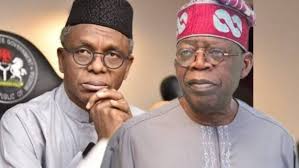
Former Kaduna State Governor, Nasir El-Rufai, has endorsed the Minister of Communications, Innovation, and Digital Economy, Bosun Tijani, lauding his performance and affirming he would retain his ministerial role if a new opposition coalition succeeds in removing President Bola Tinubu in 2027. El-Rufai made the statement during the second edition of the Arewa Tech Fest in Katsina, where Tijani delivered the keynote address to a gathering of tech innovators, investors, and policy stakeholders. El-Rufai, a central figure in the emerging opposition alliance, explained that his late arrival at the event was due to a late-night political meeting focused on building a broad coalition to challenge Tinubu’s leadership. “We will still keep Bosun Tijani because he is doing good work,” El-Rufai stated, adding that the coalition’s goal is to “send Tinubu back to Lagos” in the next general election. Having reportedly defected from the ruling All Progressives Congress (APC) to the Social Democratic Party (SDP) in March, El-Rufai is positioning himself as a key opposition strategist. His comments underscore intensifying political realignments and growing momentum among opposition blocs ahead of the 2027 elections.

Read More

Ivorian President Ouattara Dispels Coup Rumours, Presides Over Cabinet Meeting

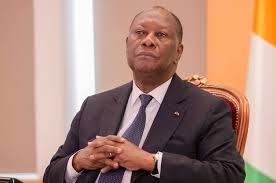
President Alassane Ouattara of Côte d’Ivoire made a high-profile public appearance on Wednesday, leading a council of ministers meeting in Abidjan amid swirling social media rumours of a military coup and his alleged death. The Ivorian presidency released official photos showing Ouattara with key cabinet members at the presidential palace, discussing national development issues including electricity diversification and housing reforms. The public outing came in response to widespread false reports circulating on platforms like Facebook, X, and TikTok, which claimed that the military had seized power and that both President Ouattara and Army Chief Lassina Doumbia had been killed. These rumours caused a wave of concern both locally and internationally. However, journalists and authorities in Abidjan firmly dismissed the claims, insisting there was no coup or unrest. Christelle Kouamé, a leading journalist and member of the National Union of Journalists of Côte d’Ivoire, confirmed that the president had recently attended major events and that the internet remained active despite online disinformation. The incident highlights ongoing regional instability, with recent coups in Mali, Niger, and Burkina Faso, as Côte d’Ivoire prepares to host the African Development Bank’s annual meetings in the coming days.

Read More

CAF Unveils ‘New Look’ CAF Champions League Trophy

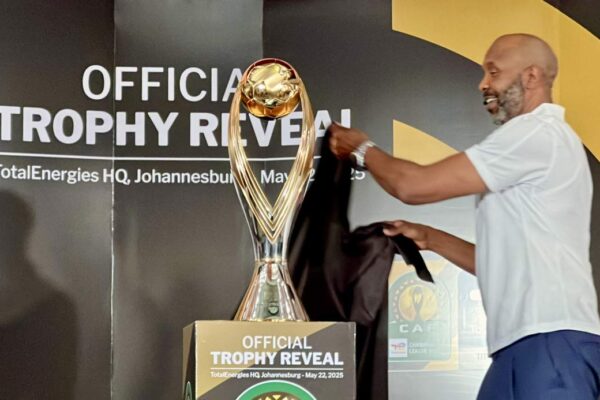
The Confédération Africaine de Football (“CAF”) has unveiled the new TotalEnergies CAF Champions League trophy together with partners TotalEnergies, marking a bold new chapter in the legacy of Africa’s premier club competition. The unveiling took place at TotalEnergies’ South African Headquarters in Johannesburg and was attended by some of African football legends including Lucas Radebe, Teko Modise and Siphiwe Tshabalala as well as several African football leaders. One of the two Finalists, Mamelodi Sundowns and Pyramids will make history when they lift the new trophy. CAF’s official unveiling of the striking new trophy design is far more than a mere replacement; it represents a powerful evolution of CAF’s commitment to modernisation and innovation. As part of CAF’s broader strategy to rebrand and elevate its Competitions, the new design was conceived to amplify the visual impact of African football’s most coveted prize. “In line with the vision of the CAF President, Dr Patrice Motsepe, we are rebranding and repositioning African football with a special focus on interclub competitions at the moment. This TotalEnergies CAF Champions League trophy reveal reflects our goals and bold steps toward an exciting African club football environment. With this, we aim to elevate the stature of African club competitions to global prominence, strengthen our commercial appeal, and inspire a new generation of footballing talent,” CAF General Secretary Véron Mosengo-Omba said. “TotalEnergies Marketing South Africa is honoured and privileged to be a part of this historic moment in our country. This goes beyond revealing the TotalEnergies CAF Champions League trophy, it is about celebrating a powerful momentum that brings people together in Africa — a continent where TotalEnergies has long been a dedicated and trusted energy partner. TotalEnergies partnership with CAF reflects our deep-rooted commitment to supporting the growth of a sport that embodies the values we hold dear—diversity, unity, and cohesion. We take pride in what this trophy represents and we are delighted that the ceremony is taking place in South Africa, a reflection of the unbreakable spirit that defines African football,” Mr Aluko said. Thursday’s unveiling builds on the growing excitement across the continent ahead Saturday’s much-anticipated 2024/25 TotalEnergies CAF Champions League final, first leg, between South Africa’s Mamelodi Sundowns and Pyramids FC of Egypt in Pretoria. The return leg for the prestigious title will be on 1 June in Cairo. The new Trophy draws inspiration from the fierce competition and rich cultural heritage of the continent, the trophy features sleek silver and gold lines, symbolising unity, rivalry, and the competitive balance that defines the tournament. At its peak, the golden sphere – embellished with African symbolism – represents the ultimate prize: victory. The interplay of contrasting silver and gold elements celebrates both the triumph of champions and the honour of worthy opponents, reinforcing the spirit of respect, ambition, and excellence that underscores African football. The redesign mirrors the successful evolution of African football, positioning the TotalEnergies CAF Champions League trophy as a visual icon that reflects the prestige and passion of African club football.

Read More