

House Minority Committee Confirms Illegal Alterations In Tax Laws
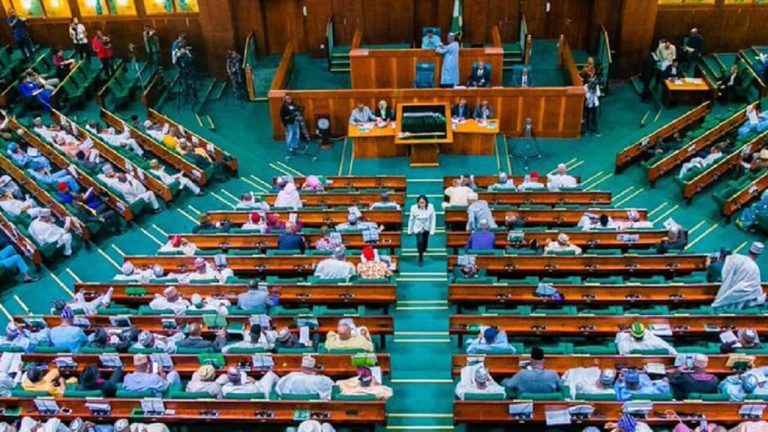
The House of Representatives Minority Caucus Ad-hoc Committee has confirmed that some recently passed tax reform laws were illegally altered, with the Nigeria Tax Administration Act, 2025, identified as the most affected.
The committee’s interim report, released on Friday, compared the versions of the tax laws passed by the National Assembly with those published in the official gazette, confirming discrepancies raised by House member Abdulsamad Dasuki over altered documents circulating publicly.
The Minority Caucus had previously warned on December 28, 2025, that any attempt to impose fake laws on Nigerians would violate the constitutional role of the National Assembly and pledged to defend legislative independence.
To investigate, the caucus, led by Kingsley Chinda, set up a seven-member fact-finding committee on January 2, 2026, chaired by Victor Ogene. The team includes Aliyu Garu (Bauchi), Stanley Adedeji (Oyo), Ibe Osonwa (Abia), Marie Ebikake (Bayelsa), Shehu Fagge (Kano), and Gaza Gbefwi Jonathan (Nasarawa).
On January 3, 2026, the House, through spokesman Akin Rotimi, announced that Speaker Tajudeen Abbas had ordered the release of four tax reform Acts signed by President Bola Tinubu for public verification. These are: Nigeria Tax Act, 2025; Nigeria Tax Administration Act, 2025; National Revenue Service (Establishment) Act, 2025; and Joint Revenue Board (Establishment) Act, 2025.
According to the committee’s preliminary findings, comparisons between the certified copies and the gazetted versions revealed multiple alterations. “There were some alterations as alleged, especially in the Nigeria Tax Administration Act, 2025. There were three different versions of the documents in circulation, particularly the Nigeria Tax Administration Act, 2025,” the report said.
The report highlighted several irregularities:
- Section 29(1) on reporting thresholds lowered individual thresholds from N50m to N25m, contrary to the approved law.
- New subsections 41(8) and 41(9) imposed a mandatory 20% deposit for tax disputes to be heard in the High Court, which were not in the authentic law.
- Section 64 expanded enforcement powers for tax authorities, including arrests and asset seizures without court approval.
- Section 3(1)(b) excluded petroleum income tax and VAT from federal taxes.
- Section 39(3) mandated tax computation for petroleum operations in US dollars, replacing the original provision to use the currency of the transaction.
The committee also flagged changes to the Nigerian Revenue Service (Establishment) Act, noting the removal of Sections 30(1)(d) and 30(3), which had provided for National Assembly oversight through reports, summons, and accountability mechanisms.
Describing the alterations as “anomalies, illegalities, and impunity” that undermine constitutional powers, the committee called for a deeper investigation and requested an extension to continue its work. The committee expressed gratitude to the caucus leadership for entrusting them with the assignment.