Colombian President Petro Denounces Trump’s Drug Claims, Warns Against US Military Action
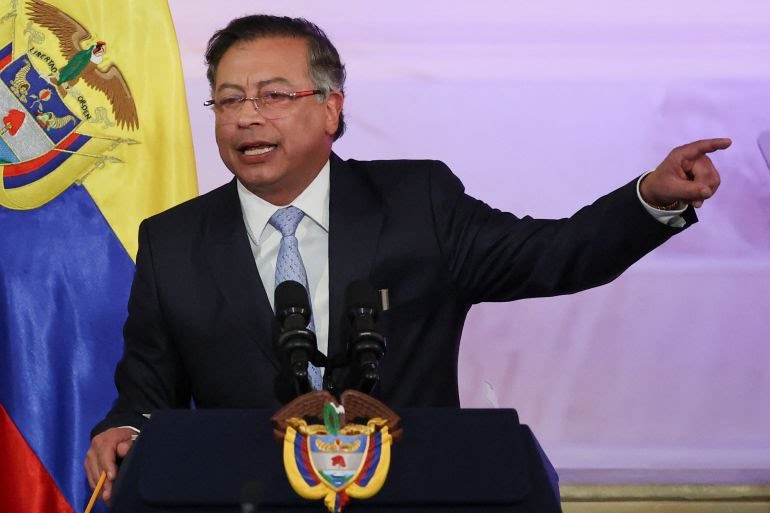
Colombian President Gustavo Petro has strongly rejected US President Donald Trump’s accusations and warned that any attempt at military intervention in Colombia could spark widespread resistance.
Trump had threatened Colombia following a US strike on Venezuela aimed at removing President Nicolás Maduro, accusing Petro of running a cocaine operation. Speaking on Air Force One, Trump said Colombia is “very sick” and called Petro “a sick man who likes making cocaine and selling it to the United States,” adding, “He has cocaine mills and cocaine factories and is not going to be doing it very long.”
Petro, a former leftist guerrilla who demobilised in the 1990s, denied the allegations, posting on X: “I am not illegitimate and I am not a narco. Trump speaks without knowledge. Stop slandering me.”
He also warned that any US attack would have serious consequences. “If they bomb, the campesinos will become thousands of guerrillas in the mountains. And if they detain the president, which a large part of the country loves and respects, they will unleash the ‘jaguar’ of the people,” Petro said.
Petro, who previously belonged to the M-19 guerrilla group, later helped draft Colombia’s 1991 constitution, served as a lawmaker, and became mayor of Bogotá before being elected president. “I swore not to touch a weapon again … but for the homeland I will take up arms again,” he added.
In response to the escalating tensions, Colombian Defence Minister Pedro Sánchez announced that the president’s security detail had been reinforced. While some right-wing opposition figures in Colombia have sided with Trump, political leaders across the spectrum have rejected the idea of a US attack.
Relations between Colombia and the US have already been strained: the US revoked Petro’s visa in September after he urged American soldiers to disobey illegal orders and imposed financial sanctions on him, his wife, and key aides in October. Meanwhile, the US has bolstered its military presence in the Caribbean and conducted strikes on suspected drug boats near Venezuela and off Colombia’s Pacific coast.