242 People Perish in Indian Plane Crash

A plane carrying 242 people, including 53 British nationals, to London Gatwick has crashed in India. A fireball can be seen in footage as the Air India flight crashed into a residential area near Ahmedabad Airport shortly after take-off. Video circulating on social media shows massive plumes of thick black smoke rising into the sky near the airport in the north-western city in Gujarat state. Other footage shows debris at the scene on fire and people being moved in stretchers and taken away in ambulances. Air India said flight AI171, which departed from Ahmedabad to London Gatwick at 1.38pm local time, was carrying 242 passengers and crew members. They include 169 Indian nationals, 53 British nationals, seven Portuguese nationals and one Canadian national. “The injured are being taken to the nearest hospitals,” the airline said in a statement. Ahmedabad Airport said in a statement all flights have been suspended until further notice after the plane crashed “shortly after take-off, outside the airport”. In a statement, London Gatwick said the flight was due to land at 6.25pm UK time on Thursday. Flight tracking website Flightradar said a signal was last received from the aircraft less than a minute after take-off. It is the first ever crash of a Boeing 787 Dreamliner, according to the Aviation Safety Network database. The model, a widebody, twin-engined plane, has made five million journeys in the 14 years since its first passenger flight. In a statement, Prime Minister Sir Keir Starmer said “the scenes emerging of a London-bound plane carrying many British nationals crashing in the Indian city of Ahmedabad are devastating”. He said he was being kept updated as the situation develops, while Buckingham Palace said the King was also being kept informed. An airport spokesperson said all flights to and from Ahmedabad have been suspended. An airport spokesperson said all flights to and from Ahmedabad have been suspended. The foreign office said the UK is “working with local authorities in India to urgently establish the facts and provide support to those involved” and advised British nationals who require consular assistance to call 020 7008 5000. India’s prime minister Narendra Modi said in a post on X: “The tragedy in Ahmedabad has stunned and saddened us. “It is heartbreaking beyond words. In this sad hour, my thoughts are with everyone affected by it.” India’s civil aviation minister Ram Mohan Naidu Kinjarapu said he was “shocked and devastated” to learn about the crash. “We are on highest alert,” he said. “I am personally monitoring the situation and have directed all aviation and emergency response agencies to take swift and coordinated action. “Rescue teams have been mobilised, and all efforts are being made to ensure medical aid and relief support are being rushed to the site.” Aviation expert Julian Bray told Sky News he understands the pilot managed to make a mayday call, meaning the crew was aware of a problem before the crash. Air India was acquired by Tata Group from the Indian government in January 2022 after racking up billions of pounds of losses. The group now operates more than 8,300 weekly flights on 312 routes, connecting more than 100 domestic and international destinations with a fleet of 300 aircraft. The airline’s chairman Natarajan Chandrasekaran described the incident as a “tragic accident” and a “devastating event” and said emergency response teams were at the site. “At this moment, our primary focus is on supporting all the affected people and their families,” he said. “We are doing everything in our power to assist the emergency response teams at the site and to provide all necessary support and care to those impacted.” A Boeing spokesperson said: “We are aware of initial reports and are working to gather more information.”

Read More

Pope Urges Russia to Embrace Peace in Phone Call with Patriarch Kirill

In a significant diplomatic gesture, Pope Leo held a phone conversation with Russian Orthodox Patriarch Kirill, during which he appealed for a meaningful gesture from Russia to help advance peace in Ukraine. The call, which addressed various mutual concerns, focused especially on the ongoing conflict and the importance of dialogue in resolving it. The Pope emphasized the critical role of open communication between all parties involved in the war, urging that dialogue must remain a cornerstone of peace efforts. He highlighted the deteriorating humanitarian conditions in affected areas and stressed the urgency of delivering aid to those most in need. He also acknowledged the ongoing efforts to facilitate prisoner exchanges, commending the mediation role played by Cardinal Matteo Zuppi. During the conversation, Pope Leo expressed appreciation for the well-wishes he received from Patriarch Kirill at the beginning of his pontificate. He reiterated that shared Christian values—such as the defense of life, promotion of peace, and pursuit of genuine religious freedom—can serve as moral beacons during times of global crisis. The Vatican sees the dialogue as part of its broader peace mission, underscoring the Holy See’s commitment to humanitarian diplomacy. As the war in Ukraine grinds on with no clear end in sight, Pope Leo’s latest outreach represents a continued effort by the Catholic Church to act as a bridge-builder in one of the most divisive global conflicts of the 21st century.

Read More

Russia-Ukraine Peace Talks End Without Ceasefire Deal Prisoner Exchange Agreed

Kyiv demands full ceasefire, Moscow pushes “lasting peace” amid deep divides A second round of direct peace talks between Russia and Ukraine, held in Istanbul, Turkey, has ended without a major breakthrough. The only agreement reached was on a limited exchange of prisoners of war, with both sides pledging to swap all sick and heavily wounded captives, as well as those under 25. Ukraine’s negotiating team, led by Defence Minister Rustem Umerov, accused Russia of rejecting its key demand for an “unconditional ceasefire” across land, sea, and air for at least 30 days. Kyiv said it had submitted a ceasefire proposal days before the talks, but Russia only presented its plan during the session. Russia’s delegation, led by Vladimir Medinsky, offered a limited truce in unspecified areas of the front line for two to three days. Medinsky also confirmed that Russia would return the bodies of 6,000 Ukrainian soldiers to Kyiv next week. No timeline was given for the agreed prisoner exchange. Deep Divisions Persist The talks, lasting just over an hour, highlighted the ongoing rift between both sides. Moscow insists on Ukraine’s withdrawal from its four partly occupied regions—Donetsk, Luhansk, Kherson, and Zaporizhzhia—as well as Crimea, which Russia annexed in 2014. Russia also demands Kyiv’s demilitarisation, a ban on NATO membership, Russian as an official language, and an end to sanctions. Kyiv and its Western allies have firmly rejected these demands, calling them tantamount to Ukraine’s de facto surrender. Ukrainian officials also presented a list of hundreds of children allegedly deported to Russia, demanding their return. Next Steps Unclear Umerov said Ukraine expects Russia’s formal response to its ceasefire proposals by the end of June and called for a direct meeting between Ukrainian President Volodymyr Zelensky and Russian President Vladimir Putin. However, no concrete plans have been made for such talks. In Vilnius, where he was attending a summit, Zelensky said, “While there are no meaningful signals from Russia to end the war, it is important to strengthen our defence.” He also urged for more sanctions pressure on Russia. Meanwhile, US President Donald Trump has continued to advocate for a quick settlement but has delayed imposing tougher sanctions on Moscow. Trump, who previously called Putin “absolutely crazy” after a wave of Russian drone and missile attacks, has been criticised for what some see as a soft stance on Russia. With no major progress from the peace talks, the war—now in its third year since Russia’s full-scale invasion in February 2022—grinds on, with Moscow still controlling around 20% of Ukrainian territory.

Read More

Moroccan Sahara: UK Considers Morocco’s Autonomy Proposal as Credible, Viable & Pragmatic

The United Kingdom “considers Morocco’s autonomy proposal, submitted in 2007 as the most credible, viable and pragmatic basis for a lasting resolution of the dispute” over the Moroccan Sahara, and “will continue to act bilaterally, including economically, regionally and internationally in line with this position to support resolution of the conflict”. This position was expressed in a Joint Communiqué signed, Sunday in Rabat, by the Secretary of State for Foreign, Commonwealth and Development Affairs of the United Kingdom of Great Britain and Northern Ireland, David Lammy, and the Minister of Foreign Affairs, African Cooperation and Moroccan Expatriates, Nasser Bourita. This document underlines that the UK “follows closely the current positive dynamic on this issue under the leadership of His Majesty King Mohammed VI.” It adds that London “recognises the importance of the question of Western Sahara for the Kingdom of Morocco,” noting that this settling this regional dispute “would strengthen the stability of North Africa and the relaunch of the bilateral dynamic and regional integration.” The UK affirms, in the Joint Communiqué signed at the Foreign Ministry headquarters, that UK “can consider supporting projects” in the Sahara, notably as part of “the UK Export Finance’s £5bn commitment to support new business across the country.” It also underlines that the UK “recognises Morocco as a key gateway to Africa’s socio-economic development and reaffirms its commitment to deepening engagement with Morocco as a partner for growth across the continent”. In this document, “both countries support, and consider vital, the central role of the UN-led process,” reaffirming “their full support for the efforts of the UN Secretary-General’s Personal Envoy, Mr. Staffan de Mistura.” To this end, the UK underlines that it is “ready, willing and committed to lend its active support and engagement to the Personal Envoy and the parties.” “As a Permanent Member of the UN Security Council, the United Kingdom agrees with Morocco on the urgent need to find a resolution to this long-held dispute, which would be in the interest of the parties”, the document notes, adding that “the time for a resolution and to move this issue forwards is long-overdue, and would strengthen the stability of North Africa and the relaunch of the bilateral dynamic and regional integration,”. This new position of the United Kingdom, a permanent member of the UN Security Council, aligns with the strong stances expressed by many major powers, notably the United States, France, and Spain. This new position of the United Kingdom, a permanent member of the UN Security Council, reinforces the growing international momentum driven by His Majesty King Mohammed VI in support of the Autonomy Plan under Moroccan sovereignty. It also confirms the credibility of this initiative and the broad consensus backing it to reach a final resolution to the regional dispute over the Moroccan Sahara.

Read More

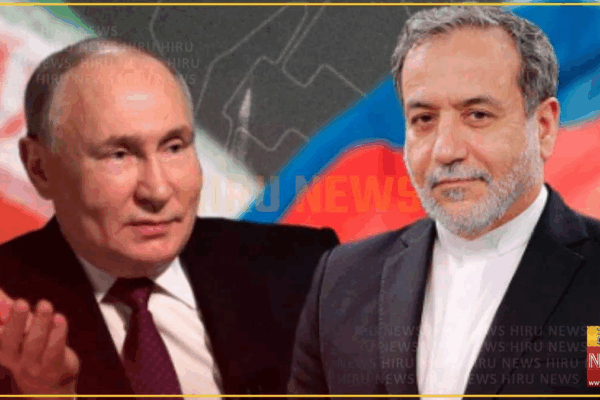
Trump Urges Netanyahu to Delay Iran Strike Amid Nuclear Deal Talks

United States President Donald Trump has revealed that he urged Israeli Prime Minister Benjamin Netanyahu to hold off on any strike against Iran, citing ongoing negotiations aimed at reviving a nuclear agreement with Tehran. Speaking at the White House on Wednesday, Trump told reporters he advised Netanyahu that a strike “would be inappropriate to do right now because we’re very close to a solution.” Several rounds of talks have reportedly taken place in Oman and Italy, with hopes of reaching a new deal. Netanyahu has been threatening to attack Iran’s nuclear facilities, while Iran has warned of severe retaliation if such an attack occurs. According to two Iranian sources close to the negotiations, Tehran may pause its uranium enrichment activities for a year if the US agrees to release frozen Iranian funds and publicly recognises Iran’s right to enrich uranium for civilian use under the Nuclear Non-Proliferation Treaty (NPT). This potential “political understanding” could pave the way for a broader agreement. However, the key sticking point remains: while the US insists Iran must halt uranium enrichment, Iran maintains it has the right to enrich uranium for peaceful purposes. The 2015 nuclear deal, formally known as the Joint Comprehensive Plan of Action (JCPOA), placed strict limits on Iran’s nuclear programme in exchange for sanctions relief. It collapsed after Trump withdrew the US from the agreement in 2018, sparking renewed tensions. Talks are ongoing, with negotiators for both sides having recently held a fifth round of discussions, mediated by Oman, in Rome. The head of the UN’s International Atomic Energy Agency (IAEA), Rafael Mariano Grossi, said that while the jury is still out on whether the US and Iran will reach an agreement, the ongoing dialogue is a positive sign. “I think that is an indication of a willingness to come to an agreement. And I think that… is something possible,” Grossi said.

Read More

At Least 10 Killed in 48 Hours as Israel Targets Gaza Aid Seekers; Global Condemnation Grows

Israeli forces have killed at least 10 Palestinians in the past 48 hours as they sought aid in southern Gaza, according to the Gaza Government Media Office, which described the killings as a “heinous crime.” It said soldiers opened direct fire on starving civilians at an aid distribution centre near Rafah, run by the newly formed Gaza Humanitarian Foundation, backed by Israel and the United States. The latest killings come as Palestinians continue to flock to the distribution site in desperation. Meanwhile, Israeli Prime Minister Benjamin Netanyahu has announced that a strike on Gaza killed Hamas leader Mohammad Sinwar. The Palestinian group has yet to comment on the claim. At least 63 Palestinians were killed in Israeli strikes across Gaza on Thursday, including eight in an attack on the home of journalist Osama al-Arbid in the northern Strip. According to the Gaza Health Ministry, Israel’s ongoing war has killed at least 54,084 Palestinians and wounded 123,308 others. However, the Gaza Government Media Office updated the death toll to more than 61,700, adding that thousands of people missing under the rubble are presumed dead. The war began after the October 7, 2023, Hamas-led attacks in Israel, which left 1,139 people dead and over 200 taken hostage. International condemnation of the attacks on Gaza aid seekers is mounting, as the humanitarian crisis in the enclave worsens.

Read More

We Can’t Survive Without it Palestinians Rely on Community Kitchens

Lina Abu Shaaban, a Gaza City resident, says her family depends on a community kitchen because food has become so expensive amid shortages caused by the Israeli blockade. “We can’t survive without it. I wait five to seven hours in the heat just to get food, and I’m always scared of being bombed,” she told Al Jazeera while waiting in line for a bowl of lentils at the kitchen, which was set up at a school housing displaced people. Another resident in line, Um Ahmad al-Sayfi, also said she has no choice but to get food from the community kitchen because her family is suffering from a lack of supplies. She condemned Israel’s targeting of the food distribution points. “They bomb them so that we die of hunger. I saw a kitchen get hit just days ago – children were burning. Why don’t they want us to live?” she told Al Jazeera.

Read More

Chaos in Gaza: Desperate Palestinians Storm US-Israeli Aid Centre Amid Blockade

Thousands of desperate Palestinians have stormed a controversial US-Israeli aid distribution centre in southern Gaza, seeking food for their families after nearly three months of a total Israeli blockade. Eyewitness reports from the Gaza Strip indicate that security contractors lost control at the site shortly after it opened, with live ammunition fired to disperse the growing crowds. The chaotic scenes have drawn sharp criticism, with the Gaza Government Media Office accusing Israel of deliberately creating a humanitarian crisis it has now failed to manage. According to the Gaza Health Ministry, Israel’s ongoing war on Gaza has killed at least 54,056 people and wounded 123,129 others. The Government Media Office has updated the death toll to more than 61,700, including thousands still missing under the rubble and presumed dead. Meanwhile, the aftermath of the October 7, 2023 Hamas-led attacks on Israel continues to loom large. That attack left 1,139 people dead in Israel and over 200 taken captive. As the blockade continues to choke Gaza, tensions are soaring, with aid distribution centres turning into flashpoints of unrest, exposing the deepening desperation of the besieged population.

Read More