
War Powers Act in Focus as Trump Hints at Possible Strike on Iran

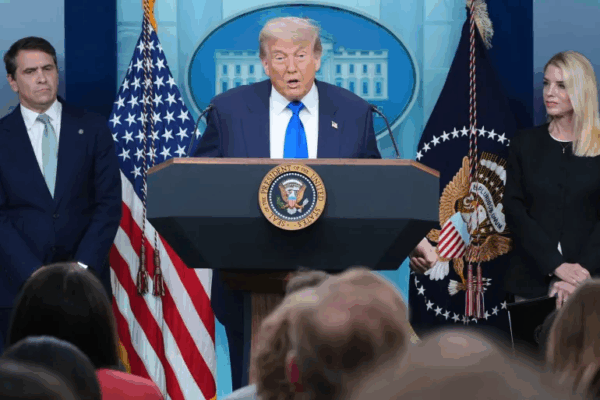
As tensions escalate in the Middle East, renewed attention is being drawn to the War Powers Act of 1973 amid speculation that former U.S. President Donald Trump may order a military strike on Iran. Trump recently refused to rule out U.S. involvement in Israel’s conflict with Iran, telling reporters: “I may do it. I may not.” While the U.S. Constitution grants Congress the sole authority to declare war, presidential military actions in modern times have largely sidestepped formal declarations, raising fresh questions about the balance of power between the executive and legislative branches. Trump’s allies have emphasized that any decision to engage militarily would rest squarely with him, with Department of State spokeswoman Tammy Bruce stating: “He is the singular guiding hand about what will be occurring from this point forward.” However, critics and anti-war advocates argue that Congress must play a decisive role in matters of war and peace, as stipulated under the Constitution. This has prompted some lawmakers to reassert congressional authority through the War Powers Act. The War Powers Resolution, enacted in 1973 during the aftermath of the Vietnam War, requires the president to notify Congress within 48 hours of deploying armed forces into hostilities. It also limits military engagement to 60 days—plus a 30-day withdrawal period—unless Congress authorizes continued involvement. Legal experts note that while the act exists to check presidential powers, it has rarely been enforced. Previous administrations, including Trump’s, have carried out strikes abroad—such as the killing of Iranian General Qassem Soleimani in 2020—without prior congressional approval. “Presidents have often cited national security and self-defense to bypass formal authorization,” said Ayodele Oni, a constitutional analyst. “The courts have also been reluctant to intervene in these political questions.” The last time the U.S. formally declared war was in 1942 during World War II. Since then, successive administrations have conducted military actions in Korea, Vietnam, Iraq, Libya, and elsewhere without formal declarations of war. Should Trump move forward with military action against Iran, Congress could invoke the War Powers Act to force a withdrawal. However, enforcement would likely face political hurdles, including the possibility of a presidential veto and the challenge of securing a two-thirds override in both chambers. As diplomatic tensions rise, the debate over war powers underscores the enduring struggle between executive authority and congressional oversight in U.S. foreign policy.

Read More

What Is Iran’s Fordow Nuclear Facility and Could US Weapons Destroy It?

The Fordow nuclear facility in Iran has once again come under global scrutiny amid heightened tensions following Israeli airstrikes and speculation about potential US military involvement. As concerns grow over Iran’s nuclear capabilities, many are questioning whether the fortified site could be destroyed — and what risks it poses. What Is the Fordow Facility?Located 30km northeast of Qom, deep in Iran’s mountainous terrain, Fordow was initially constructed as a military installation for the Islamic Revolutionary Guard Corps (IRGC) before being converted into a uranium enrichment site. The facility lies hundreds of meters underground, making it one of Iran’s most heavily fortified nuclear sites. Iran formally disclosed its existence to the International Atomic Energy Agency (IAEA) in 2009, only after Western intelligence services uncovered its secret development. Why Is It Significant?First site where uranium enriched close to weapons-grade levels was found: In 2023, IAEA inspectors detected particles enriched to nearly 90% purity — the threshold for weapons-grade uranium. Capacity: Fordow is equipped to hold nearly 3,000 centrifuges, a small portion compared to Natanz (which has capacity for about 50,000), but its location deep underground makes it more defensible. Symbolic and strategic value: Fordow’s continued operation is often cited by the West as a major obstacle to reviving the 2015 nuclear deal (JCPOA). Has Fordow Been Hit or Damaged in Recent Attacks?Following Israel’s massive strike on Iran’s Natanz facility, missiles also targeted Fordow. However, according to IAEA chief Rafael Grossi, no visible damage was recorded at Fordow or at the Khondab heavy water reactor. This suggests Fordow remains operational, unlike Natanz, which sustained both above-ground and suspected underground damage. What Happens at Fordow?Fordow’s original role was to enrich uranium up to 20% U-235 — far above the 3.67% permitted under the JCPOA but below weapons-grade. Since the US withdrawal from the JCPOA in 2018, Iran has resumed higher enrichment levels at the site. Uranium enrichment involves concentrating the fissile U-235 isotope. Weapons-grade uranium requires enrichment levels of 90% or more, which Fordow is technically capable of producing. What Did Iran Agree to Under the JCPOA?Under the 2015 JCPOA, Iran agreed to: By 2017, these conditions were met — until the agreement began to collapse post-2018. Can the US Destroy Fordow With Airstrikes?Not easily. Military analysts agree that Fordow’s deep underground location makes it extremely difficult to target with conventional weapons. To neutralize it, the US would likely require: In short, Fordow is not invulnerable, but destroying it would require serious firepower and likely a coordinated air campaign, not a single strike. What’s Next?With the Israel-Iran conflict escalating and the JCPOA effectively dormant, Fordow represents both a flashpoint and a symbol of Iran’s nuclear resilience. Whether the U.S. will attempt military action there remains uncertain, but any such move would risk widening the current conflict — and dragging the world’s most volatile region into deeper chaos. Bottom line:Fordow is a hardened, operational nuclear facility, vital to Iran’s enrichment program. While not untouchable, it’s built to withstand conventional strikes, and any U.S. attempt to neutralize it would be a major military gamble with significant regional consequences.

Read More

Israel Escalates Gaza Attacks Locks Down West Bank as Focus Shifts to Iran

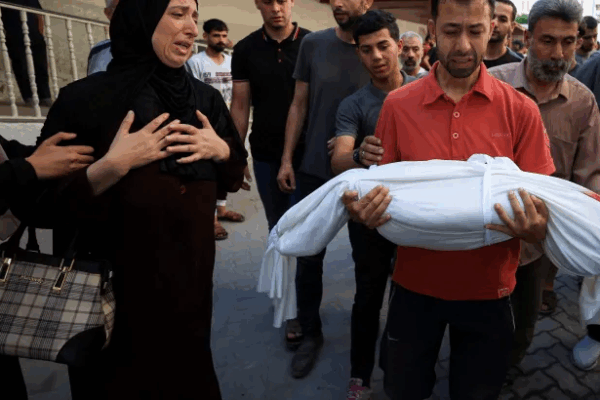
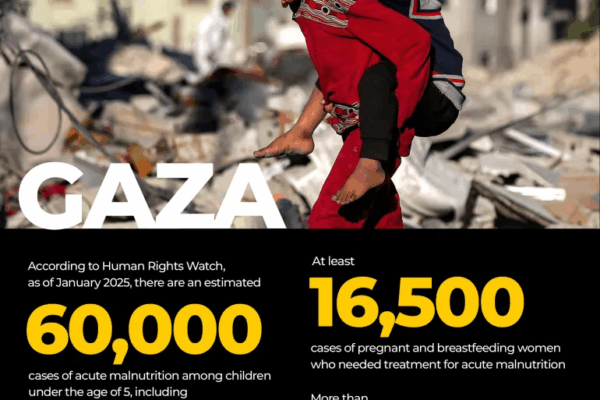
As global attention intensifies around Israel’s military confrontation with Iran, violence against Palestinians in the occupied territories has sharply escalated, with dozens killed in recent days amid what many observers are calling a mounting humanitarian catastrophe. On Thursday alone, at least 16 Palestinians were reportedly shot dead by Israeli troops while attempting to access food aid in Gaza. This followed a grim pattern: 29 killed on Wednesday, and at least 70 more gunned down on Tuesday at an aid distribution site in Khan Younis, according to eyewitnesses and health officials. The victims, many of whom were already displaced and starving, were fired upon with drones, machine guns, and tank shells. Earlier in the week, 38 Palestinians were killed in Rafah under similar circumstances, while another 17 died on Sunday in both southern and central Gaza. The killings have occurred at locations run by the Gaza Humanitarian Foundation (GHF)—a controversial new entity established by Israel and backed by the United States. Staffed by private security contractors, the GHF was launched in May 2025 to replace United Nations-led aid operations in Gaza, which Israel had previously restricted. Since its creation, GHF distribution points have reportedly become flashpoints of deadly violence. Witnesses say this marks at least the eighth major incident in which Palestinians seeking food have been fired upon. “This happens to some extent every day. It’s becoming a routine,” said Yasser al-Banna, a journalist reporting from inside Gaza. “Now that Israel has started a war with Iran, everyone here in Gaza is scared that the world is going to forget about them,” he told Al Jazeera. Meanwhile, the West Bank remains under heavy lockdown, with increased military checkpoints, curfews, and raids targeting Palestinian communities. Human rights organizations have decried what they describe as collective punishment and war crimes, urging the international community to maintain focus on the worsening conditions in Gaza and the occupied West Bank. As civilian casualties continue to mount, humanitarian groups have reiterated urgent calls for a ceasefire, international investigations, and the restoration of independent aid operations in the besieged enclave.

Read More

Israel Intensifies Gaza Assault: Dozens Killed in Strikes on Aid Sites and Residential Areas

Gaza Strip — Israeli forces have killed at least 70 Palestinians and wounded hundreds more during an assault on civilians gathered for food in Khan Younis on Tuesday, marking the deadliest single day at aid distribution points since the conflict escalated. According to Palestinian health authorities, the attack—carried out with tank fire, drones, and machine guns—targeted desperate civilians along a major road in southern Gaza where aid had been expected to arrive. The Gaza Health Ministry reported that 89 Palestinians have been killed across the enclave since dawn, with the toll rising. Elsewhere in the Gaza Strip, Israeli air strikes continued to pound residential areas, displacing families and killing dozens: The Gaza Humanitarian Foundation (GHF) — a controversial relief initiative backed by Israel and the United States — has been operating distribution points since May 26, but has drawn criticism over a surge in violence around aid areas. Hamas condemned the Israeli military’s continued bombardment of residential neighborhoods and aid collection points, accusing Israel of deliberately targeting civilians under the guise of humanitarian aid coordination. International rights organizations have renewed calls for immediate ceasefires, protection of civilian infrastructure, and safe access to humanitarian relief, warning of catastrophic hunger and mass displacement in the war-ravaged enclave. No official comment has been released by the Israeli military regarding Tuesday’s widespread attacks.

Read More

Israel Kills at Least 70 Palestinians in Gaza’s Deadliest Day at Aid Sites

Gaza City — In one of the bloodiest days of the war for Palestinians seeking humanitarian aid, Israeli forces killed at least 70 people on Tuesday in Khan Younis, southern Gaza, and wounded hundreds more as they gathered for desperately needed food assistance. According to Gaza health officials and local eyewitnesses, Israeli tanks, drones, and machine guns opened fire on crowds assembled along the main eastern road in the city early Tuesday. The attacks occurred as civilians gathered at a known distribution point for food supplies. The fatalities in Khan Younis are part of a broader pattern of escalating violence, bringing the total number of Palestinians killed since dawn to at least 89 across the besieged enclave, with scores more injured. This latest assault comes just three weeks after the Gaza Humanitarian Foundation (GHF) — backed by Israel and the United States — began distributing aid across Gaza. Since the start of GHF operations on May 26, aid sites have increasingly become targets, with reports indicating hundreds of aid-seeking civilians have been killed while attempting to access food. Human rights observers have condemned the killings, calling for immediate international intervention and unfettered access to humanitarian corridors. The Gaza Health Ministry and local aid workers have decried the pattern of attacks as part of a systematic obstruction of humanitarian relief, warning of famine conditions and rising child malnutrition amid the continued blockade. As of Tuesday night, no official comment had been issued by the Israeli military regarding the Khan Younis incident. Would you like a version with quotes from humanitarian agencies, or a short format for social media headlines?

Read More

Khamenei: US Will Suffer Irreparable Harm if It Enters Conflict Militarily

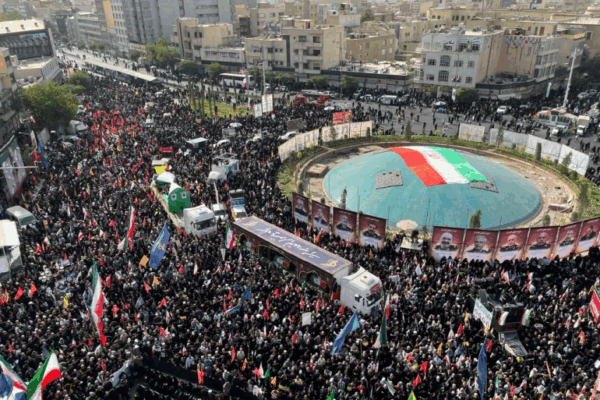
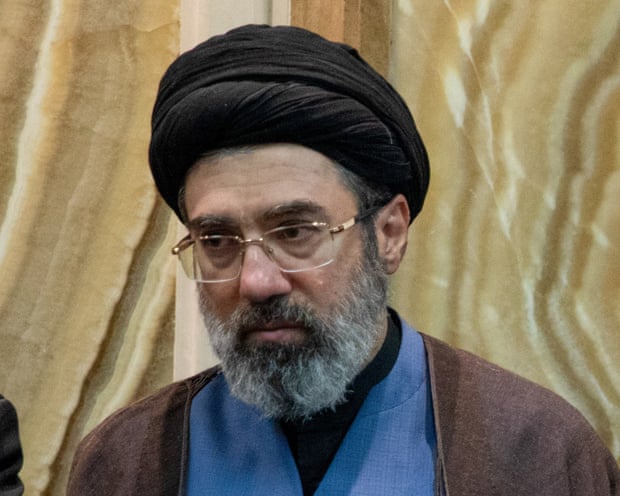
In a series of strongly worded remarks posted on the official X account of Iran’s Supreme Leader, Ayatollah Ali Khamenei, the Zionist regime’s recent attack on Iranian territory was condemned as a malicious act, allegedly carried out with increasing suspicion of US involvement. “The Zionist regime’s malicious attack on our country took place at a time when Iranian officials were indirectly engaged in negotiations with the US. There was no indication on the part of Iran that signaled a military move,” one post read. Khamenei’s office warned that any direct military involvement by the United States in the unfolding crisis would lead to consequences beyond repair: “The harm the US will suffer will definitely be irreparable if they enter this conflict militarily.” The posts also implied growing certainty about Washington’s role in the offensive, suggesting that: “It was already suspected that the US was involved in the malicious move carried out by the Zionist regime, but considering their recent remarks, this suspicion is growing stronger day by day.” The rhetoric underscores escalating regional tensions and comes amid stalled backchannel diplomacy between Tehran and Washington.

Read More
U.S. Pressures West African Nations to Accept Deported Migrants Amid Trump Talks

G7 Leaders Back Israel’s Right to Self-Defence, Call for De-escalation with Iran

Rome, Italy – The leaders of the Group of Seven (G7) nations have issued a strong statement affirming Israel’s right to self-defence while urging a broader de-escalation of hostilities across the Middle East, including the conflict in Gaza. In the statement released Monday, the G7 reiterated their collective commitment to peace and stability in the region and identified Iran as the “principal source of regional instability and terror.” “We, the leaders of the G7, reiterate our commitment to peace and stability in the Middle East,” the statement began. “In this context, we affirm that Israel has a right to defend itself. We reiterate our support for the security of Israel.” The G7 also stressed the importance of protecting civilian lives in all ongoing hostilities and reaffirmed a unified position that Iran must never acquire a nuclear weapon. The leaders called for a diplomatic resolution that would help de-escalate tensions in the region. “We urge that the resolution of the Iranian crisis leads to a broader de-escalation of hostilities in the Middle East, including a ceasefire in Gaza,” they stated. Acknowledging the global economic risks posed by the escalating conflict, particularly in relation to energy markets, the G7 said they would closely monitor the situation. “We will remain vigilant to the implications for international energy markets and stand ready to coordinate, including with like-minded partners, to safeguard market stability,” the statement concluded. The G7 comprises Canada, France, Germany, Italy, Japan, the United Kingdom, and the United States.

Read More

Israel’s War on Gaza: 23 Killed Today, Including Aid Seekers

Death toll surpasses 55,000 as Israeli attacks continue Gaza – June 15, 2025Israeli military operations in Gaza continue at full intensity, with at least 23 Palestinians killed since dawn today, according to medical sources speaking to Al Jazeera. Among the dead are 11 people who were reportedly waiting to receive humanitarian aid, highlighting the growing risks faced by civilians amid the ongoing conflict. The Gaza Health Ministry now reports that at least 55,297 people have been killed and 128,426 wounded since the war began. The death toll includes thousands of women and children, with hospitals and emergency services overwhelmed or non-operational in many parts of the besieged territory. The humanitarian crisis deepens daily as Gaza remains largely cut off, with food, fuel, and medical supplies running dangerously low. International calls for a ceasefire have so far failed to halt the violence.

Read More