Satellite Images Reveal Extensive Damage at Iran’s Fordow Nuclear Site After US Strikes

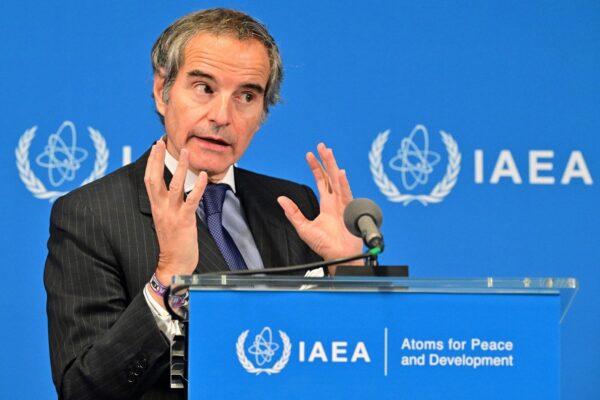
Satellite imagery has confirmed significant structural damage at Iran’s Fordow nuclear facility following coordinated U.S. airstrikes that also hit Natanz and Isfahan. The strikes, authorized by President Donald Trump, marked a dramatic escalation in military action targeting Iran’s nuclear infrastructure. In a national address, Trump described the strikes as “spectacularly successful,” stating that U.S. forces used advanced “bunker buster” bombs to penetrate the heavily fortified Fordow site. The operation, he said, was conducted in full coordination with Israel and aimed at dismantling Iran’s alleged nuclear weapons ambitions. This latest move comes over a week after Israel initiated attacks on Iranian sites, accusing Tehran of nearing atomic bomb capability—a claim Iran has strongly denied. Trump’s decision to openly join Israel’s campaign has intensified fears of a broader regional war. Iran maintains that its nuclear program is entirely peaceful and under international oversight. The UN’s nuclear watchdog has also dismissed claims that Iran was close to developing a nuclear weapon, casting further doubt on the justification for the strikes.

Read More

Trump Betrayed Voters by Submitting to Israeli Pressure, Iran Says

Araghchi accused President Trump of betraying not only Iran but also the American people. He said Trump campaigned on promises to end U.S. entanglement in foreign conflicts but had now plunged the country into another war. “He has deceived his own voters by submitting to the wishes of a wanted war criminal,” said Araghchi, referring to Israeli Prime Minister Netanyahu. The foreign minister accused Trump of using American lives and resources to serve Israeli interests. Trump’s decision to attack Iran, Araghchi claimed, contradicts his prior stance on “forever wars” and exposes a pattern of dishonesty in U.S. foreign policy. He warned that American credibility has been severely damaged. Iran says the strike will have consequences beyond the region, further isolating the United States on the world stage and undermining its claims to democratic values.

Read More

Iran’s Foreign Minister Heads to Moscow for Emergency Talks

Foreign Minister Araghchi announced on Sunday that he would travel to Moscow to hold urgent talks with Russian President Vladimir Putin. The visit comes in response to the escalating conflict and the U.S. airstrikes on Iranian soil. “Russia is a friend of Iran and we enjoy a strategic partnership,” Araghchi said while in Istanbul. “We always consult with each other and coordinate our positions.” The high-level diplomatic meeting is expected to take place on Monday morning, with both sides likely to discuss joint strategies and possible international responses to the crisis. Observers say the Iran-Russia relationship may become more prominent as Tehran seeks support against Western aggression and isolation at the United Nations.

Read More
LIVE UPDATE: US Joins Israel in Striking Iran, Bombs Three Nuclear Sites

LIVE UPDATE: US Joins Israel in Striking Iran, Bombs Three Nuclear Sites

Published: June 21, 2025 By Kamal Yalwa In a major escalation of the ongoing Israel-Iran conflict, US President Donald Trump has confirmed that American forces have conducted coordinated airstrikes on three Iranian nuclear facilities — Fordow, Natanz, and Isfahan. The announcement was made during a televised address from the White House. President Trump described the mission as “very successful,” noting that all US aircraft involved in the operation had exited Iranian airspace without incident. The targeted sites are known to house key components of Iran’s nuclear program, with Fordow and Natanz previously enriched to near weapons-grade uranium levels, according to the International Atomic Energy Agency (IAEA). This marks the first confirmed direct US military engagement in the Israel-Iran war, which erupted following Israel’s initial strikes on June 13. Until now, the US had limited its role to logistical, intelligence, and diplomatic support for Israel.

Read More

Aid Seekers Targeted Again as Israeli Strikes Kill 26 in Gaza

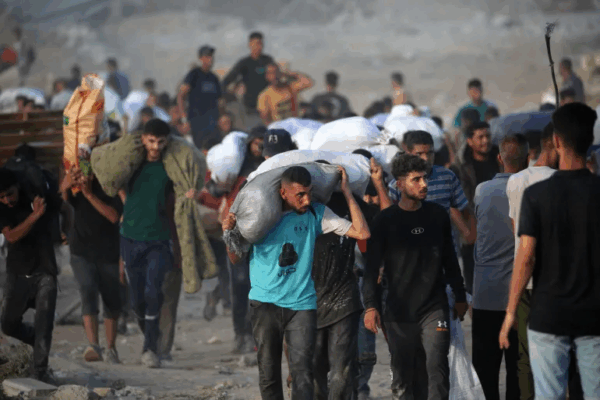
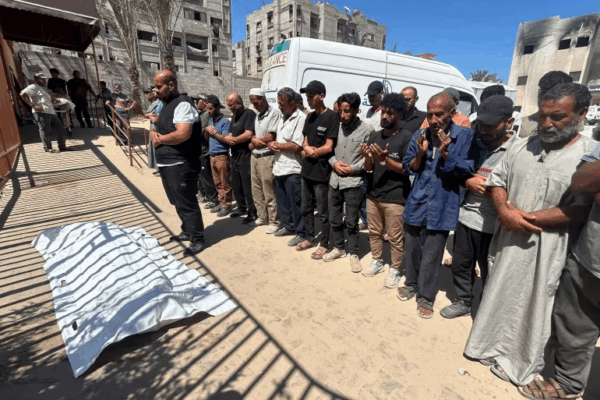
June 22, 2025 By Kamal Yalwa At least 26 Palestinians, including 11 individuals seeking food aid, have been killed in the latest wave of Israeli airstrikes on Gaza, according to local health authorities. The attacks occurred on Saturday, further deepening the humanitarian crisis in the besieged territory. Gaza’s Health Ministry reported that 202 people have been killed and 1,037 others wounded in the last 48 hours alone as Israeli bombardments intensified across the Strip. Among the dead were aid recipients at food distribution centres operated by the Gaza Humanitarian Foundation (GHF)—an entity backed by the United States and Israel. The United Nations has previously condemned the GHF, accusing it of the “weaponisation” of humanitarian aid. In a separate incident, the Wafa news agency said an Israeli drone strike killed three displaced Palestinians in al-Mawasi, a southern Gaza area previously designated as a “safe zone” by the Israeli military. The strike hit a tent housing members of the Shurrab family, leaving several others injured. Since Israel began its military campaign in Gaza in October 2023, at least 55,908 Palestinians have been killed and 131,138 wounded, according to Gaza’s Health Ministry. The repeated targeting of civilians—especially those at aid centres and in designated safe zones—has drawn increasing international condemnation and raised alarm over the worsening hunger and displacement crisis in the enclave.

Read More

Tehran in Shock: A Firsthand Account of Life After the Israeli Strikes

By a Displaced Iranian Journalist | June 2025 Gilan, Iran – Tehran has fallen into a deep state of shock, panic, and uncertainty following a devastating wave of Israeli attacks that began in the early hours of June 13. My family and I are among the millions forced to flee our homes, unsure if—or when—we will return, or what may be left when we do. The first explosions shook the capital shortly after 3am, as Israeli jets, drones, and quadcopters coordinated with internal agents to unleash a precision assault across the country. Dozens of sites were hit simultaneously—residential buildings, military facilities, air defense systems, and parts of Iran’s nuclear infrastructure, including facilities near Natanz. The air raids killed scores of civilians, alongside several top military commanders and nuclear scientists, shaking Iran’s leadership and stunning its people. Chaos and Panic in the Capital In the immediate aftermath, Tehran resembled a ghost city. The attacks struck on a Friday, the last day of the weekend in Iran, leaving the streets hauntingly quiet except where the bombs fell. As news of the devastation spread, the city came alive with fear. Long lines formed at fuel stations as millions tried to flee or prepare for what was coming. I visited some of the worst-hit areas in western Tehran. In Patrice Lumumba, multiple homes were reduced to rubble. In Saadat Abad, a building that housed university professors had partially collapsed. The adjacent buildings in Marzdaran had gaping holes where top floors once stood. These were not random strikes—each appeared to be a targeted assassination. Retaliation and Escalation That same night, Iran launched a barrage of missiles and drones in retaliation. As of this writing, there have been at least 16 waves of Iranian strikes targeting Israel. The government has vowed to continue responding for as long as Israeli aggression persists. Meanwhile, U.S. President Donald Trump has signaled the possibility of direct American involvement in the conflict—stoking fears of an all-out regional war. The U.S. already provides critical support to Israel through advanced weapons systems, aerial refueling aircraft, and intelligence coordination. Fear Takes Over For days, the sound of explosions became part of daily life. Airstrikes rang out at all hours, many landing dangerously close to homes and offices. I felt the impacts firsthand—at home and at the Al Jazeera bureau—some just 2km (1.2 miles) away. With the bombing intensifying, Tehran shut down. Streets emptied. People rushed to petrol stations in numbers greater than I had ever seen. The government, unprepared for the scale of the assault, opened metro stations and mosques as makeshift shelters, lacking any permanent infrastructure or coordinated civilian protection plans. A Nation on the Brink Iran now faces its most volatile moment in decades. While the war’s political and military dimensions dominate headlines, it’s the human cost that is truly staggering. Millions like myself have fled cities, carrying only what we can, and leaving behind lives built over generations. We left with heavy hearts—uncertain if our homes still stand, uncertain if our nation will ever be the same. As Tehran reels from the violence, and the world watches the Israel-Iran war unfold, we can only hope that diplomacy, not further destruction, will define what comes next.

Read More

Iran’s FM Arrives in Geneva for Peace Talks as Israel-Iran War Enters Day 8

By Kamal Yalwa June 21, 2025 Iran’s Foreign Minister, Abbas Araghchi, has arrived in Geneva for high-stakes talks with his counterparts from France, Germany, and the United Kingdom — the first major diplomatic effort aimed at ending the week-long war between Iran and Israel. The Geneva talks, set to focus on Iran’s nuclear programme and the broader regional conflict, come as the war enters its eighth day. British Foreign Secretary David Lammy, after meetings with senior U.S. officials on Thursday, told Al Jazeera that “a window now exists within the next two weeks to achieve a diplomatic solution.” This marks Europe’s first significant diplomatic involvement since Israel launched a surprise strike on Iran last week. While Germany has aligned with Israel, France has voiced caution, warning of a potential regional destabilization if hostilities escalate further. Europe has long played a central role in nuclear diplomacy with Iran, having been instrumental in brokering the 2015 Iran nuclear deal (JCPOA), which curbed Tehran’s nuclear activities in exchange for sanction relief. That agreement faltered in 2018 when then-President Donald Trump withdrew the U.S. from the deal, prompting Iran to resume uranium enrichment. Israel Accuses Iran of War Crimes The conflict intensified Thursday when Iran launched a barrage of missiles into Israel, with one striking near Soroka Hospital in Beersheba, southern Israel. Iranian officials claimed they were targeting military infrastructure, not civilian sites. Israel has condemned the strike as a war crime. Deputy Foreign Affairs Minister Sharren Haskel stated on X (formerly Twitter) that, “Iran is targeting Israeli children… This is terror aimed at the most innocent from the genocidal maniacs in Tehran. The world must not stay silent.” Israeli officials say 24 people have been killed and over 270 injured in the recent attacks. Meanwhile, the Iranian government last updated its death toll on June 15, reporting 224 fatalities. However, the U.S.-based Human Rights Activists News Agency (HRANA) estimates that 639 people have been killed in Iran since the start of the war. How the War Started The war erupted on June 13, when Israeli airstrikes killed several senior Iranian generals and atomic scientists. Iran responded swiftly, launching dozens of missiles and drones into Israeli territory. Both sides have since pledged to escalate their military actions. Last Friday, Israel warned that the conflict was “likely to last weeks, not days.” Trump Weighs U.S. Involvement Amid growing international concern, the U.S. appears to be recalibrating its stance. White House Press Secretary Karoline Leavitt revealed on Thursday that President Donald Trump will decide within the next two weeks whether the U.S. will get directly involved. “The president is always interested in a diplomatic solution… He is the peace through strength president,” Leavitt said. “If there’s a chance for diplomacy, the president’s always going to grab it. But he’s not afraid to use strength as well.” The U.S. had initially distanced itself from Israel’s attack. Secretary of State Marco Rubio previously labeled the strikes as a “unilateral action” and warned Iran against targeting American personnel or interests. So far, Iran has not attacked any U.S. assets since the war began. As diplomatic channels reopen in Geneva, global powers will be closely watching whether talks can bring an end to what risks becoming a prolonged and regionally destabilizing conflict.

Read More

For the Second Day in a Row Iranian Missile Strikes Beersheba — 7 Injured Buildings Damaged

Beersheba, Israel – Tensions between Iran and Israel escalated further as an Iranian missile struck the southern Israeli city of Beersheba for the second consecutive day, injuring seven people and damaging multiple buildings. The latest attack, confirmed by Israeli emergency services, occurred early Friday morning, sending residents scrambling for shelter as air raid sirens wailed across the city. The missile reportedly landed in a residential area, shattering windows, setting off car alarms, and leaving a deep crater in the street. Among the injured are two children and an elderly woman, all of whom suffered moderate to serious injuries due to flying debris and the impact of the blast. Several others were treated for shock. Emergency teams rushed to the scene and transported the wounded to Soroka Medical Center. Israeli military officials said the missile was launched from Iranian territory and evaded the Iron Dome defense system due to its low-altitude trajectory and short-range speed. Buildings within a 200-meter radius suffered varying degrees of structural damage, including broken glass, collapsed ceilings, and fire outbreaks. This marks the second Iranian missile to hit Beersheba in 48 hours, part of what Israeli authorities are calling a “deliberate and sustained escalation.” The previous attack, on Thursday, resulted in three injuries and caused extensive damage to a shopping center. Israeli Defense Forces (IDF) spokesperson Rear Admiral Daniel Hagari stated: “These attacks are unacceptable. Iran’s direct targeting of Israeli civilian areas marks a new and dangerous phase in their aggression. We are reviewing our response options and remain on high alert.” The latest strike comes amid an ongoing regional crisis, with Israel also carrying out targeted strikes inside Iran earlier this week, hitting nuclear and military infrastructure. Prime Minister Benjamin Netanyahu is expected to meet with the security cabinet today to assess military and diplomatic responses. Meanwhile, residents in Beersheba and other southern cities have been advised to remain near protected shelters. This is a developing story.

Read More