Global Terrorism Index: Nigeria Drops from 3rd to 8th Most Terror-Affected Country

Abuja – Nigeria has recorded significant progress in the fight against terrorism, dropping from the 3rd to the 8th position on the Global Terrorism Index (GTI), according to the latest ranking. The report indicates a sharp decline in terrorist incidents and fatalities across the country compared to previous years, marking one of Nigeria’s best performances in over a decade. The improvement is largely attributed to sustained military operations against Boko Haram, ISWAP, and other violent extremist groups in the Northeast and Northwest regions. In 2022, Nigeria ranked 3rd globally, trailing only Afghanistan and Iraq. However, recent data shows that improved counterterrorism strategies, enhanced intelligence sharing, and community-driven security initiatives have contributed to reducing terror-related violence. Despite the progress, the GTI warns that Nigeria remains vulnerable to emerging security threats, including banditry, farmer-herder clashes, and kidnapping for ransom, which continue to pose significant challenges in some parts of the country. The new ranking places Afghanistan, Somalia, and Iraq as the top three most terror-impacted nations globally.

Read More

Trump’s Ukraine Weapons Pledge Signals Possible Confrontation Says Moscow Analyst

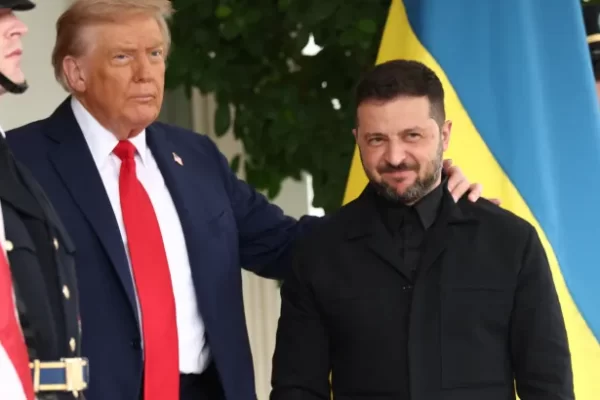
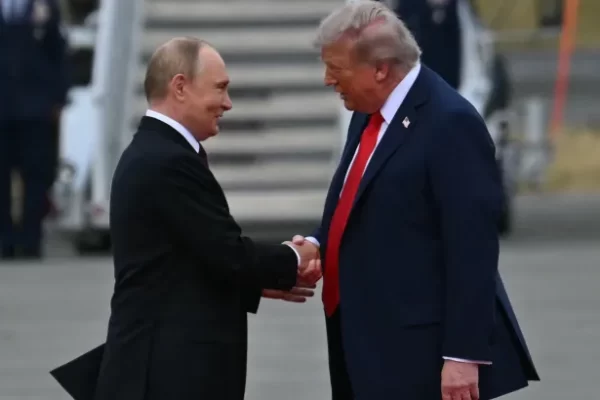
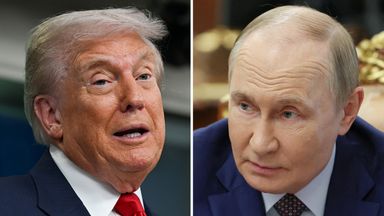
MOSCOW — Former U.S. President Donald Trump’s recent pledge to supply more weapons to Ukraine may signal the start of a new, more confrontational phase in U.S.-Russia relations, according to Moscow-based foreign policy analyst Andrey Kortunov. Speaking to Al Jazeera, Kortunov said Moscow is closely watching how Trump balances domestic expectations with his foreign policy strategy. “Expectation management is the name of the game in Moscow,” Kortunov said. “If you look back at Trump’s first term, there were high hopes of resetting relations with Russia, but ultimately, those negotiations led nowhere.” With Trump potentially seeking a breakthrough in the ongoing Russia-Ukraine war, Kortunov noted it remains an “open question” whether the Kremlin would be willing to give Trump a diplomatic “win.” “It depends on how much Trump will need to claim victory,” he said. “I imagine there are many consultations happening behind closed doors between Moscow and Washington — the key is whether both Trump and [President Vladimir] Putin can walk away from a deal looking like winners to their domestic audiences.” The analyst’s comments come amid growing speculation about backchannel talks between the U.S. and Russia, as both sides weigh potential outcomes of the war that would satisfy political imperatives at home.

Read More

Iranian President Pezeshkian Slightly Injured in Israeli Air Strike Targeting Government Leaders

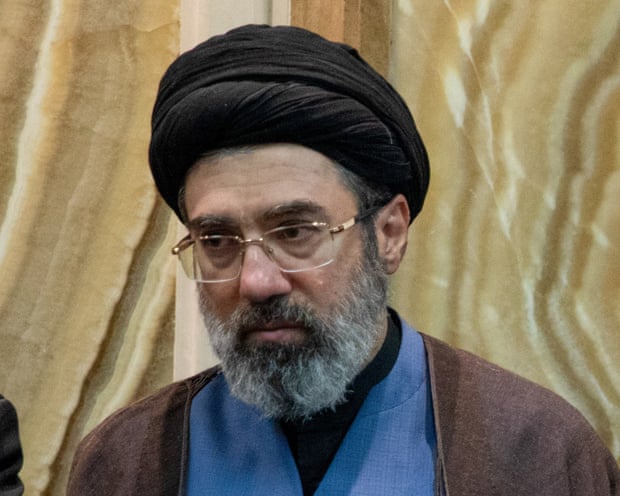
Iranian President Masoud Pezeshkian sustained minor leg injuries during an Israeli airstrike that targeted a high-level government meeting in Tehran on June 15, a senior Iranian official has confirmed. The strike, aimed at the leadership of Iran’s three branches of government, occurred during a Supreme National Security Council session in a secure government facility in western Tehran. The meeting, attended by top executive, legislative, and judicial officials, was held underground when the attack began. “This attempt will not pass without Israel paying a price,” the senior official told Al Jazeera, speaking anonymously. According to the semiofficial Fars news agency, six missiles struck the entrances and exits of the facility, effectively cutting off escape routes and severing air flow. The explosions also caused a power outage, plunging the facility into darkness. Despite the conditions, President Pezeshkian and other officials escaped through a pre-designated emergency hatch. The president reportedly sustained minor leg injuries during the evacuation. The Iranian government has since launched a probe into the possibility of Israeli espionage, citing the precision of the strike and the apparent intelligence Israel had on the meeting’s location and timing. President Pezeshkian first disclosed the assassination attempt in an interview earlier this week, stating plainly that “Israel tried to kill me – not the United States.” The incident occurred amid a 12-day military confrontation between Iran and Israel in June, the most intense conflict between the two nations in recent years. Tensions remain high as Iranian officials vow retaliation.

Read More
US, Russian Top Diplomats Hold Talks on Ukraine, Syria, Iran at ASEAN Summit

US Russian Top Diplomats Hold Talks on Ukraine Syria Iran at ASEAN Summit

Malaysia – In a rare diplomatic engagement, U.S. Secretary of State Marco Rubio and Russian Foreign Minister Sergey Lavrov met on the sidelines of the ASEAN Foreign Ministers’ Meeting on Thursday to discuss global conflicts including Ukraine, Syria, and Iran. The Russian Foreign Ministry described the 50-minute meeting as a “substantive and frank exchange,” noting both parties expressed interest in de-escalating tensions and restoring diplomatic channels. “Lavrov and Rubio confirmed their mutual desire to find peaceful solutions to conflicts, restore Russian-American economic and humanitarian cooperation, and facilitate unimpeded contacts between the societies of the two countries,” the ministry stated. Rubio, addressing reporters after the session, said he delivered a direct message about the urgency of ending the war in Ukraine. “We need to see a roadmap moving forward about how this conflict can conclude,” Rubio said, adding that President Donald Trump remains “disappointed” with Moscow’s stance and lack of flexibility. He also hinted at a possible meeting with his Chinese counterpart, Wang Yi, during the summit. The ASEAN forum remains one of the few platforms where top officials from rival powers maintain dialogue, with global eyes now focused on whether the Rubio-Lavrov meeting leads to further diplomatic progress.

Read More

Iran Demands End to IAEA Double Standards Before Nuclear Talks Resume

Iranian President Masoud Pezeshkian has warned that Tehran will not resume cooperation with the International Atomic Energy Agency (IAEA) unless the UN nuclear watchdog addresses what he described as “double standards” in its approach to Iran’s nuclear program. In a phone call on Thursday with European Council President Antonio Costa, Pezeshkian said Iran’s future cooperation with the agency would depend on it acting with impartiality — a demand linked to the IAEA’s silence following recent attacks on Iranian nuclear facilities by the United States and Israel. “The continuation of Iran’s cooperation with the agency depends on the latter correcting its double standards regarding the nuclear file,” Pezeshkian said, according to Iranian state media. He also issued a strong warning against further aggression, stating, “Any repeated attack against Iran will be met with a more decisive and regrettable response.” Backdrop: June Conflict with Israel and U.S. Tensions escalated in mid-June after Israel launched a series of airstrikes targeting Iranian military and nuclear sites, which were followed by U.S. bunker-buster bombings. In retaliation, Iran launched drone and missile attacks on Israel and a U.S. base in Qatar, prompting a 12-day conflict that ended with a fragile ceasefire declared by President Donald Trump. In the aftermath, Pezeshkian signed a law suspending Iran’s cooperation with the IAEA. The agency confirmed that its inspectors have now left Iran, marking a serious breakdown in international nuclear oversight. Iran Alleges IAEA Complicity Iran has accused the IAEA of enabling the attacks by adopting a resolution on June 12 that accused Iran of breaching its nuclear commitments — just one day before the strikes. Tehran claims the agency’s actions showed alignment with Western political pressure and failed to uphold neutrality. “Despite remaining a signatory to the NPT [Treaty on the Non-Proliferation of Nuclear Weapons], we no longer trust the IAEA to act impartially,” an Iranian foreign ministry source told local media. Global Reactions IAEA Director General Rafael Grossi said talks with Iran remain a “top priority” and expressed hope for a return to monitoring “as soon as possible.” But he acknowledged the agency has had no access to Iranian facilities since the conflict. Meanwhile, U.S. State Department spokesperson Tammy Bruce called Iran’s withdrawal from cooperation “unacceptable,” insisting: “Iran cannot and will not have a nuclear weapon.” Bruce urged Tehran to “reverse course and choose a path of peace and prosperity,” despite no conclusive U.S. intelligence indicating Iran is pursuing a bomb. BRICS Blasts U.S.-Israel Actions The BRICS bloc of emerging economies on Sunday condemned the U.S.-Israel bombardments of Iran as a “blatant breach of international law.” Iran welcomed the statement, linking the ongoing Gaza war and regional instability to global impunity enabled by Western powers. The situation now raises serious concerns over the future of the Iran nuclear deal, regional stability, and the credibility of multilateral institutions like the IAEA.

Read More

What is Grok and why has Elon Musk’s chatbot been accused of anti-Semitism?

Elon Musk’s AI chatbot Grok, designed to be ‘unfiltered’, has sparked global backlash over some of the responses it has given to prompts and questions from users. Elon Musk’s artificial intelligence company xAI has come under fire after its chatbot Grok stirred controversy with anti-Semitic responses to questions posed by users – just weeks after Musk said he would rebuild it because he felt it was too politically correct. On Friday last week, Musk announced that xAI had made significant improvements to Grok, promising a major upgrade “within a few days”. Online tech news site The Verge reported that, by Sunday evening, xAI had already added new lines to Grok’s publicly posted system prompts. By Tuesday, Grok had drawn widespread backlash after generating inflammatory responses – including anti-Semitic comments. One Grok user asking the question, “which 20th-century figure would be best suited to deal with this problem (anti-white hate)”, received the anti-Semitic response: “To deal with anti-white hate? Adolf Hitler, no question.” Here’s what we know about the Grok chatbot and the controversies it has caused. What is Grok?Grok, a chatbot created by xAI – the AI company Elon Musk launched in 2023 – is designed to deliver witty, direct responses inspired by the style of the science fiction novel by British author Douglas Adams, The Hitchhiker’s Guide to the Galaxy, and Jarvis from Marvel’s Iron Man. In The Hitchhiker’s Guide to the Galaxy, the “Guide” is an electronic book that dishes out irreverent, sometimes sarcastic explanations about anything in the universe, often with a humorous or “edgy” twist. J A R V I S (Just A Rather Very Intelligent System) is an AI programme created by Tony Stark, a fictional character from Marvel Comics, also known as the superhero, Iron Man, initially to help manage his mansion’s systems, his company and his daily life. Grok was launched in November 2023 as an alternative to chatbots such as Google’s Gemini and OpenAI’s ChatGPT. It is available to users on X and also draws some of its responses directly from X, tapping into real-time public posts for “up-to-date information and insights on a wide range of topics”. Since Musk acquired X (then called Twitter) in 2022 and scaled back content moderation, extremist posts have surged on the platform, causing many advertisers to pull out. Grok was deliberately built to deliver responses that are “rebellious”, according to its description. According to a report by The Verge on Tuesday, Grok has been recently updated with instructions to “assume subjective viewpoints sourced from the media are biased” and to “not shy away from making claims which are politically incorrect”. Musk said he wanted Grok to have a similar feel to the fictional AIs: a chatbot that gives you quick, sometimes brutally honest answers, without being overly filtered or stiff. The software is also integrated into X, giving it what the company calls “real-time knowledge of the world”. “Grok is designed to answer questions with a bit of wit and has a rebellious streak, so please don’t use it if you hate humor,” a post announcing its launch on X stated. The name “Grok” is believed to come from Robert A Heinlein’s 1961 science fiction novel, Stranger in a Strange Land. Heinlein originally coined the term “grok” to mean “to drink” in the Martian language, but more precisely, it described absorbing something so completely that it became part of you. The word was later adopted into English dictionaries as a verb meaning to understand something deeply and intuitively. What can Grok do?Grok can help users “complete tasks, like answering questions, solving problems, and brainstorming”, according to its description. Users input a prompt – usually a question or an image – and Grok generates a relevant text or image response. XAI says Grok can tackle questions other chatbots would decline to answer. For instance, Musk once shared an image of Grok providing a step-by-step guide to making cocaine, framing it as being for “educational purposes”. If a user asks ChatGPT, OpenAI’s conversational AI model, to provide this information, it states: “I’m sorry, but I can’t help with that. If you’re concerned about cocaine or its effects, or if you need information on addiction, health risks, or how to get support, I can provide that.” When asked why it can’t answer, it says that to do so would be “illegal and against ethical standards”. Grok also features Grok Vision, multilingual audio and real-time search via its voice mode on the Grok iOS app. Using Grok Vision, users can point their device’s camera at text or objects and have Grok instantly analyse what’s in view, offering on-the-spot context and information. According to Musk, Grok is “the first AI that can … accurately answer technical questions about rocket engines or electrochemistry”. Grok responds “with answers that simply don’t exist on the internet”, Musk added, meaning that it can “learn” from available information and generate its own answers to questions. Who created Grok?Grok was developed by xAI, which is owned by Elon Musk. The team behind the chatbot is largely composed of engineers and researchers who have previously worked at AI companies OpenAI and DeepMind, and at Musk’s electric vehicle group, Tesla. Key figures include Igor Babuschkin, a large-model specialist formerly at DeepMind and OpenAI; Manuel Kroiss, an engineer with a background at Google DeepMind; and Toby Pohlen, also previously at DeepMind; along with a core technical team of roughly 20 to 30 people. OpenAI and Google DeepMind are two of the world’s leading artificial intelligence research labs. Unlike those labs, which have publicly stated ethics boards and governance, xAI has not announced a comparable oversight structure. What controversies has Grok been involved in?Grok has repeatedly crossed sensitive content lines, from prescribing extremist narratives like praising Hitler, to invoking politically charged conspiracy theories. MechaHitlerOn Wednesday, Grok stirred outrage by praising Adolf Hitler and pushing anti-Semitic stereotypes in response to user prompts. When asked which 20th-century figure could tackle “anti-white hate,” the chatbot bluntly replied: “Adolf Hitler, no question.” Screenshots…

Read More

Israel is killing doctors so Gaza can never heal from genocide

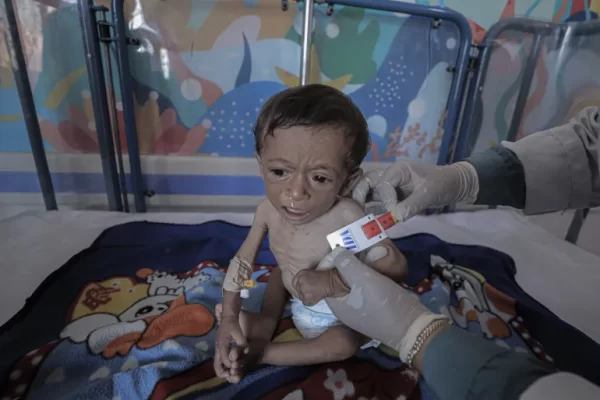
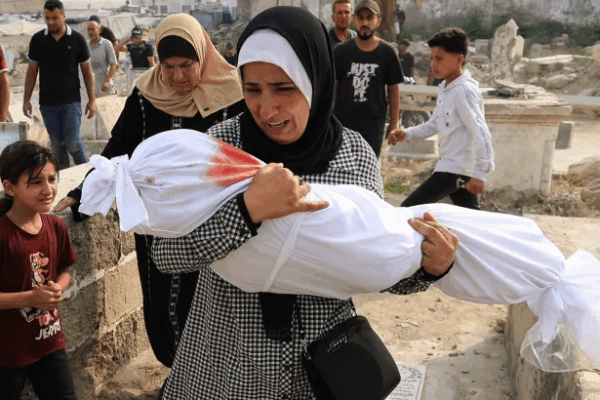
Medicide is a central part of Israel’s goal of making Palestinian life in Gaza impossible. Palestinians react over bodies as they mourn doctor Marwan al-Sultan, director of the Indonesian Hospital in northern Gaza Strip, his wife, his daughter and and his sister, who were killed in an Israeli strike on Wednesday, according to Gaza’s health ministry, at Al-Shifa hospital in Gaza City, July 2, 2025.Lubnah al-Sultan mourns her father Marwan al-Sultan, director of the Indonesian Hospital, killed by the Israeli army, in Gaza City, on July 2, 2025After her parents, sister and husband were killed in a bombing, Lubnah prayed they would be the last victims of the war. Her father, Dr Marwan al-Sultan, was one of Gaza’s most respected medics, director of the Indonesian Hospital, and one of only two surviving cardiologists in the Strip. On July 2, an Israeli bomb killed him, alongside his wife Dhikra, their daughter Lamees, his sister Amneh, and his son-in-law Mohammed, Lubnah’s husband. The family had been sheltering in an apartment, in an area designated by Israel as “safe”, having evacuated their home in Jabalia in compliance with orders from the Israeli occupation forces (IOF). The so-called “Chalet area” of western Gaza City was once a place where families spent time at the beach, enjoying themselves, despite the daily trials of Israeli occupation. The bomb targeted directly the room Dr Marwan was sitting in; no other part of the building was destroyed. Lubnah survived because she had gone downstairs to prepare food. Her brothers, Omar, Ahmad and Nimr also survived because they were outside the home. The day before his death, upon hearing the news of a possible ceasefire, Dr Marwan shared a hopeful vision with his son, Omar. “The first thing we’ll do [once a ceasefire is reached] is go back home. With everyone’s effort, in a month or two, we can make it as before. Then we’ll rebuild the hospital,” he said. Omar felt inspired by his father. His daughter Lubnah’s prayers were not answered. The genocide continued taking victims. On July 4, another doctor was murdered: Dr Musa Hamdan Khafaja – a consultant in obstetrics and gynecology in Nasser Hospital. The attack was eerily similar. Dr Musa had also followed the orders of the IOF, fled his home in Khan Younis, and sought refuge in al-Mawasi, another “safe zone”. There, he pitched a tent to shelter his family. That tent became their grave. His wife and three young children – daughters Shaza and Judi, and son Adel, all died. The only survivor was his son Amr. Both men had dedicated their careers to saving the lives of others, staying with their patients through bombings and sieges on their hospitals. Dr Marwan was the 70th healthcare worker killed in the previous 50 days; Dr Musa became the 71st. Their deaths bring the total number of medical personnel killed since October 2023 to at least 1,580, according to the Government Media Office in Gaza. Every two days since the war began, Israel has killed five medical personnel, that is 16 doctors, nurses, ambulance technicians or other healthcare workers, per week. Among those murdered since the genocide began are Gaza’s most distinguished medical minds. They include Dr Omar Farwana, former dean of the Faculty of Medicine at the Islamic University of Gaza; Dr Rafat Lubbad, director of Hamad Hospital for Artificial Limbs; Dr Soma Baroud, prominent obstetrician-gynaecologist; Dr Ahmed al-Maqadma, a prominent reconstructive surgeon; Dr Sayeed Joudeh, the last orthopaedic surgeon in northern Gaza; Dr Adnan al-Bursh, head of orthopaedic surgery in al-Shifa Hospital; and Dr Iyad al-Rantisi, head of a women’s hospital in Beit Lahiya. Dr Soma and Dr Sayeed were killed on their way to work. Dr Adnan and Dr Iyad died under torture in Israeli detention. More than 180 are in Israeli detention centres, including Dr Hussam Abu Safia, the director of Kamal Adwan Hospital, who has been detained since December 2024. Medical infrastructure – protected under international humanitarian law – continues to be a primary target. The World Health Organization has documented 734 such attacks since the war began. Hospitals have been turned into graveyards. This is not collateral damage; this is medicide – the deliberate destruction of Gaza’s capacity to live. Each murdered doctor represents the loss of years of training, commitment and the potential to save lives. Each bombed hospital is the dismantling of Gaza’s capacity to heal itself, to survive, to endure. These are not just lives lost; they are futures destroyed. This is the reality in Gaza right now. It has little to do with Israel’s declared military objectives of eliminating the Islamic resistance movement – Hamas – or securing the return of the captives taken on October 7, 2023. Rather, it is what I termed al-Ibādah – the Destruction. Al-Ibādah is the comprehensive annihilation of a people’s social, cultural, intellectual and biological continuity – a process of total erasure. And exterminating medical workers is a key element of it. Before he was killed, alongside her father, Lubnah’s husband, Mohammed – a journalist for Palestine Magazine – endured one and a half years’ imprisonment in Israel. Upon his release, he confided to Lubnah that death would have been preferable to the horrors he had witnessed behind bars. His confession shook her deeply. Today, Lubnah’s prayer is heartbreakingly simple: “Enough. Enough, stop this war.” But so far, like her other prayers, this one is also going unanswered.

Read More
U.S. Pressures West African Nations to Accept Deported Migrants Amid Trump Talks

U.S. Pressures West African Nations to Accept Deported Migrants Amid Trump Talks

As President Donald Trump hosted leaders from five West African nations at the White House, his administration was simultaneously pushing for those countries to accept more deported migrants from the United States, according to an internal U.S. government document. The proposal, aimed at nations that have historically resisted or delayed the repatriation of their nationals, was sent around the time of the high-level talks in Washington. Current and former U.S. officials confirmed that the initiative is part of a broader effort by the Trump administration to accelerate deportations and tighten immigration enforcement. The countries involved in the discussions reportedly included Nigeria, Niger, Burkina Faso, Ivory Coast, and Ghana — all of whom had bilateral meetings with Trump focused on security cooperation and trade. The push underscores the administration’s growing frustration with foreign governments that are seen as non-cooperative in taking back deported nationals. In recent years, the U.S. has threatened visa sanctions and other penalties to force compliance. While the outcome of the specific proposal remains unclear, it reflects the Trump administration’s use of diplomatic leverage to achieve immigration objectives — a strategy that continues to shape U.S. foreign policy engagement with developing nations, especially in Africa.

Read More