Israeli Forces Kill 115 Palestinians in Gaza as Starvation Claims 19 Lives

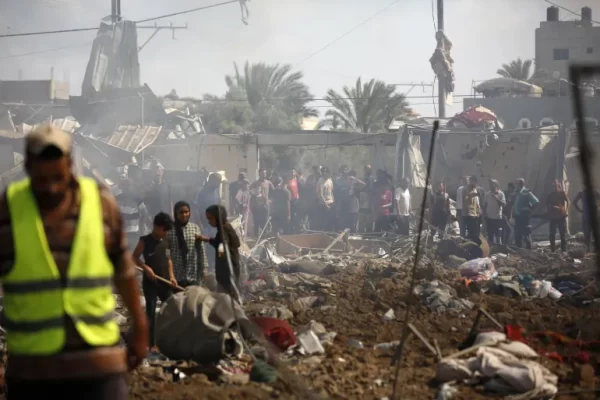
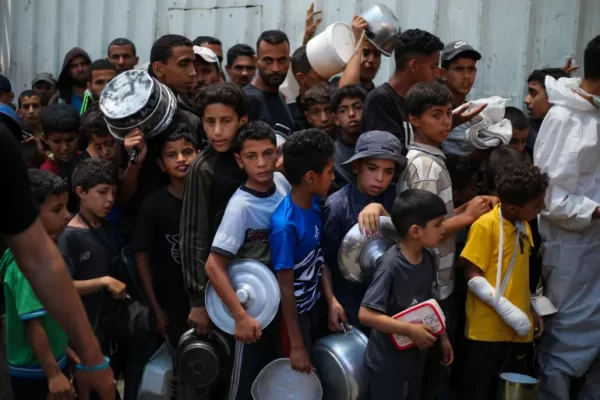
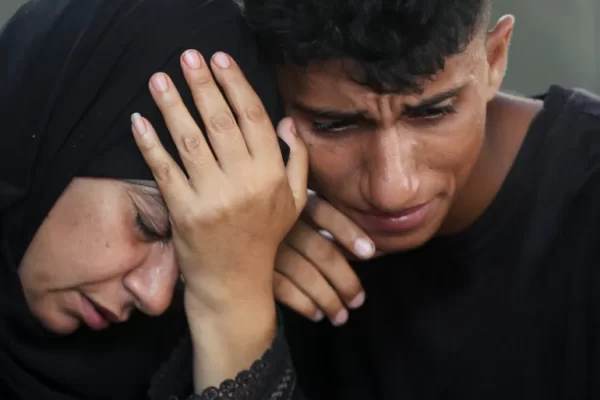
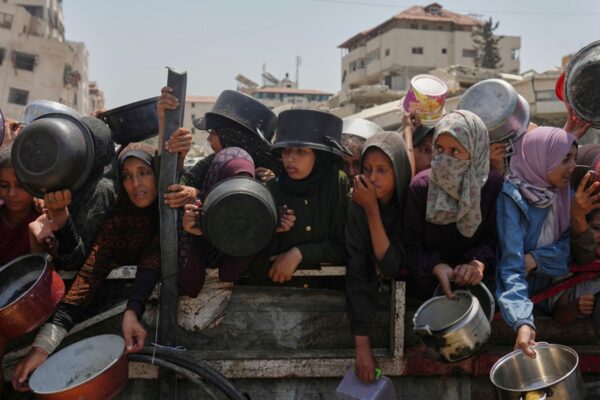
At least 115 Palestinians have been killed across Gaza by Israeli forces, with 92 shot dead while trying to obtain food from aid points in Zikim, Rafah, and Khan Younis, according to medical sources. The violence on Sunday coincides with a deepening hunger crisis, as Gaza’s health authorities confirmed 19 deaths from starvation in the past 24 hours. Aid Seekers Targeted at Zikim and Rafah Eyewitnesses reported that at least 79 people were killed in Zikim when Israeli forces opened fire on crowds waiting for flour from a UN aid convoy. In Rafah, nine more were killed near a food distribution point, while four others were shot in Khan Younis. Survivors described chaos and desperation as injured victims were transported on bicycles due to the absence of ambulances. The UN’s World Food Programme (WFP) condemned the attacks, rejecting Israeli claims of “warning shots.” “The victims were simply people trying to access food to feed their families on the brink of starvation,” the WFP said, noting that a convoy of 25 food trucks had just crossed into the area when the shooting began. Hunger Crisis Worsens Gaza’s Ministry of Health reported that 71 children have died of malnutrition since the war began in 2023, while 60,000 others face severe hunger. “We warn that hundreds of people whose bodies have wasted away are at risk of imminent death due to hunger,” the ministry said. Doctors in Gaza have noted a surge in cases of severe malnutrition, with hospitals lacking resources to treat patients. The UN and aid groups have accused Israel of blocking humanitarian supplies since March 2, despite having enough food stockpiled at border crossings to feed Gaza for months.

Read More

Will Israel Ever Face Blowback for Bombing Its Neighbours?

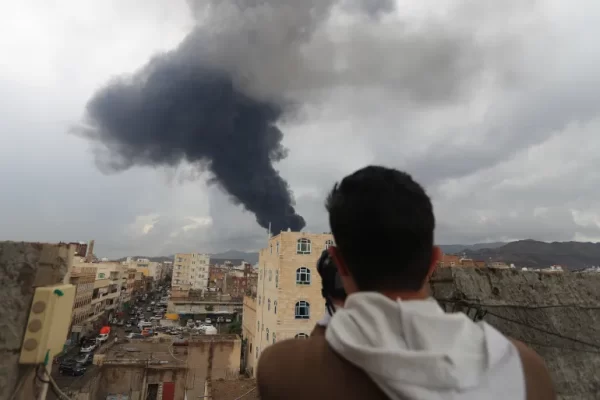
Israel’s recent military campaigns have raised questions about whether its short-term gains will ultimately be overshadowed by increasing regional and international isolation. On July 17, 2025, Israeli airstrikes targeted a school sheltering displaced people in the Bureij refugee camp in Gaza, an incident that has intensified criticism of its actions. Over the past two years, Israel’s military operations have expanded beyond Gaza and the West Bank, striking Iran, Lebanon, Syria, and Yemen. This week, Israel launched fresh attacks on Syria, including a strike on the Ministry of Defence. The Israeli government insists these operations are defensive in nature, claiming that its strikes in Syria aim to protect the country’s Druze minority. While a US-brokered ceasefire is currently in place, its durability remains uncertain. In Lebanon, Israel maintains that its assaults are meant to counter the threat posed by Hezbollah. Similarly, attacks on Iran have been justified as efforts to prevent Tehran from developing nuclear weapons. Israel also frames its bombings in Yemen as a response to attacks from the country’s Houthi rebels. However, critics argue that these justifications have done little to alter the perception of Israel as an aggressor in the region. Israel’s far-right government appears unfazed by accusations of aggression, prioritizing fear over friendship with its neighbours. The belief in maintaining military dominance, bolstered by unwavering US support, underpins Israel’s confidence. This dynamic allows it to act largely without consequence, even as it faces growing condemnation on the world stage. The changing international order has also played a role. With the United States adopting a more transactional foreign policy under President Donald Trump, and global institutions like the United Nations struggling to enforce international law, Israel has capitalized on the moment. Its decades-long occupation of Palestinian territories, deemed illegal under international law, has continued unabated, with new settlements expanding across the West Bank. Human rights organizations have repeatedly accused Israel of committing war crimes and even genocide in Gaza. Yet, these accusations have translated into few tangible repercussions. Israel remains shielded by its nuclear capability and the absence of any major power willing to challenge it directly. This has reinforced a sense of impunity, with military might taking precedence over diplomatic solutions. Supporters of Israel’s aggressive strategy argue that its main adversaries, such as Iran and Hezbollah, have failed to deliver the severe retaliation many predicted. Although Iran directly struck Tel Aviv in unprecedented attacks, the conflict lasted only 12 days without escalating into a broader regional war. Hezbollah, after suffering significant losses and the death of its leader Hassan Nasrallah, is currently weakened and poses a reduced threat. However, Israel’s growing hubris could lead to miscalculations. In Syria, efforts to control southern regions under the guise of protecting Druze communities have sparked tribal conflicts. The Syrian government, after withdrawing forces, was forced to return to Suwayda to curb the violence, illustrating that a strong state presence may be more stabilizing than the chaos Israel’s policies often leave behind. Regionally, Israel’s actions have strained potential alliances. Saudi Arabia, for instance, has expressed stronger support for Syria’s new government and has grown hesitant about pursuing normalization under the Abraham Accords. For many Gulf nations, Israel’s expansionist posture and far-right leadership are sources of instability and risk. While Israel’s military power ensures short-term victories, the long-term repercussions may prove costly. Domestically, prolonged conflict is eroding morale, with reports of declining reservist participation. Internationally, Israel risks alienating key allies and facing diplomatic isolation, even as US public opinion begins to shift. Without a sustainable strategy for peace and coexistence, Israel’s current approach could ultimately backfire, leaving it more vulnerable and isolated in the years ahead.

Read More

Israel Kills 73 Aid Seekers in Gaza, Warns of New EvacuationsBy The Culture Newspaper – July 19, 2025

Israeli forces have killed at least 84 Palestinians, including 73 people waiting for humanitarian aid, in a fresh wave of attacks across Gaza. Over 200 others were reported wounded in the strikes, which targeted multiple areas of the enclave. In Gaza City, two more Palestinians, including a 35-day-old baby, died from malnutrition at al-Shifa Hospital, highlighting the worsening humanitarian catastrophe. Hamas Condemns “Systematic Ethnic Cleansing” Hamas accused Israel of carrying out “systematic ethnic cleansing” through starvation, dehydration, and targeted killings, calling the deaths of more than 70 children from malnutrition a “stain on humanity.” In a statement, Hamas said: “Thousands of tons of aid are stuck behind the Rafah crossing as Gazans die of hunger, thirst, and disease. We hold the occupation and the US administration fully responsible for the massacres at aid points and the systematic killing mechanism in Gaza.” The group also called for an urgent investigation into the GHF (Gaza Humanitarian Facility), where more than 900 people have been killed while waiting for food and medical supplies.

Read More

27 Dead After Tourist Boat Capsizes in Vietnam’s Halong Bay

At least 27 people, including eight children, have died after a tourist boat carrying 53 passengers capsized in Vietnam’s Halong Bay during stormy weather linked to Storm Wipha. The vessel overturned around 2 p.m. local time (07:00 GMT) on Saturday amid strong winds, heavy rainfall, and lightning. Rescue teams have found 11 survivors, while efforts continue to locate others still missing, according to the state-run Vietnam News Agency. Most passengers were families visiting from Hanoi, with over 20 children on board, reports VNExpress. One survivor, a 10-year-old boy, recounted his harrowing escape: “I took a deep breath, swam through a gap, dived, then swam up. I even shouted for help, then I was pulled up by a boat with soldiers.” Vietnam’s Prime Minister Pham Minh Chinh has expressed condolences to the victims’ families, vowing a thorough investigation: “Authorities will investigate and clarify the cause of the incident and strictly handle violations,” a government statement read. Halong Bay, a UNESCO World Heritage Site, is one of Vietnam’s most popular tourist destinations, attracting millions annually. However, extreme weather has posed risks — last year, 30 vessels sank in the same region due to Typhoon Yagi. Storm Wipha’s impact also extended to Hanoi, 175 km away, where falling trees and flight disruptions were reported. Noi Bai Airport diverted nine incoming flights and temporarily grounded three departures.

Read More

Gaza Students Take Exams for the First Time Since War Began

Hundreds of Palestinian students in Gaza are sitting their end-of-secondary-school exams for the first time since the war began in October 2023. Despite ongoing Israeli attacks and widespread devastation, about 1,500 students are taking the crucial exams organised by Gaza’s Ministry of Education, aiming to secure a chance for university admission. The exams, conducted electronically, are part of an online initiative launched by the ministry to ensure education continues amidst the destruction of nearly all educational infrastructure in Gaza. Some students are taking the exams from home, while others are at designated centers, depending on safety conditions in their areas. Al Jazeera’s Tareq Abu Azzoum, reporting from Deir el-Balah, highlighted that for many students, these exams represent a gateway to higher education and future opportunities. “Even in a warzone, with no classrooms, no books, and barely any internet, Gaza’s students are showing up, logging in, and sitting their final exam, refusing to let war erase their future,” he said. Due to the war, many students who should have already started university have had their education delayed. The new online exam platform, the first of its kind in Gaza, was created to allow students to complete their studies despite the ongoing conflict. However, challenges such as weak internet connections, lack of devices, and unsafe conditions remain major obstacles. Morad al-Agha, exams director for the Central Gaza Governorate, confirmed that technical preparations have been made to ensure smooth administration of the exams. Students have already participated in mock tests to familiarize themselves with the system. One student, Doha Khatab, shared the struggles of digital exams: “The internet is weak, many of us do not have devices, and there is no safe space to take the test. We also lost our books in the bombardment.” To support students, some teachers have reopened damaged classrooms to offer in-person guidance. Enam Abu Slisa, a teacher, explained, “It is the first time the ministry has done this online and students are confused, so we’re trying to guide them step by step.” According to the United Nations, 95 percent of Gaza’s educational infrastructure has been destroyed, leaving more than 660,000 children out of school. Many former school buildings are now shelters for displaced families and are still vulnerable to Israeli airstrikes. A recent report presented to the UN Human Rights Council accuses Israeli forces of systematically targeting education infrastructure in Gaza, actions described as potential war crimes.

Read More

Renewed Fighting in Syria’s Suwayda Leaves Hundreds Dead as Ceasefire Collapses; UN Raises Alarm

Heavy clashes have erupted again in Syria’s southern province of Suwayda between Druze factions and Bedouin tribes, following the collapse of a fragile ceasefire just a day after Syrian government forces withdrew from the area. The renewed violence on Friday marks a dangerous escalation in the region, which has witnessed an upsurge in deadly tribal conflicts since the overthrow of President Bashar al-Assad in December 2024. Government Denies Troop Redeployment The Syrian Interior Ministry strongly denied reports suggesting that government forces were redeploying to Suwayda, describing such claims as “false and misleading.” Spokesperson Noureddine al-Baba stated, “We confirm that no official statement has been issued in this regard, and we categorically deny the veracity of what was published.” However, diplomatic sources revealed that Israel had reached a provisional understanding allowing limited entry of Syrian internal security forces—but not army units—into Suwayda for 48 hours to prevent further bloodshed. This comes after Israeli airstrikes earlier this week targeted positions in Suwayda and Damascus, actions Tel Aviv claimed were aimed at protecting the Druze population. Casualties and Evacuations According to the Syrian Network for Human Rights, at least 321 people have been killed since violence erupted on Sunday, with over 570 injured and hundreds of families displaced. Syrian emergency officials reported recovering 87 bodies from the conflict zones while continuing evacuation operations under heavy fire. The UK-based Syrian Observatory for Human Rights confirmed renewed gunfire west of Suwayda city, while social media footage verified by Al Jazeera showed tribal reinforcements arriving in rural areas. One video featured Bedouin tribal leader Abdul Moneim al-Naseef urging, “All tribes across Syrian provinces must immediately head to Suwayda to save our people from massacres.” Ceasefire Collapses The breakdown of the truce—brokered just two days ago—has intensified fears of a prolonged conflict. Under the short-lived deal, Druze factions and community elders were to maintain security in the province without interference from Syrian government forces. Analysts warn the resurgence of violence could destabilize Syria’s already fragile post-war environment, especially given Israel’s stated opposition to a full return of Syrian forces to the southern front. UN Condemns Atrocities The United Nations Human Rights Office issued a stark warning on Friday, citing “credible reports of widespread human rights violations” by all parties, including summary executions, arbitrary killings, kidnappings, looting, and destruction of civilian homes. UN rights chief Volker Turk urged all factions to halt the violence, stressing, “The bloodshed must stop, and the protection of civilians must be the utmost priority, in line with international human rights law.” The UN Refugee Agency (UNHCR) expressed alarm over the impact of hostilities on aid delivery. Spokesperson William Spindler told reporters in Geneva: “It is very difficult for us to operate there… our capacity to deliver aid is very limited. We are calling on all parties to allow humanitarian access.” Broader Implications Observers believe the fighting reflects long-standing fault lines between Bedouin tribes and Druze factions, which have periodically flared since the fall of Assad. However, this latest episode is seen as particularly dangerous, as Bedouin groups have openly called for state intervention, and regional actors like Israel are becoming increasingly involved. Political analyst Labib al-Nahhas noted that Tel Aviv’s cautious approval for limited security deployments signals its concern over deteriorating conditions: “Israel’s allies are under threat, so they need to intervene… the middle ground is allowing local security forces—not the army—for a short period to contain the bloodshed.”

Read More

At Least 61 Killed, Dozens Rescued in Iraq Hypermarket Fire

At least 61 people have been confirmed dead and 45 others rescued after a massive fire engulfed a newly opened hypermarket in Kut, eastern Iraq, the Interior Ministry announced on Thursday. The blaze, which broke out overnight in the five-storey shopping complex, also left several people missing, raising fears that the death toll could rise. Authorities said 14 bodies were badly charred, complicating identification. Social media videos captured flames ripping through the building as firefighters battled to contain the inferno. The mall, which opened just a week ago, housed a supermarket and a restaurant. Wasit Province Governor Mohammed al-Mayahi described the disaster as a “tragedy and calamity” and declared three days of mourning. “Families were dining and shopping when the fire started. We have filed lawsuits against the building owner and mall management,” he told the state-run Iraqi News Agency. Prime Minister Mohammad Shia al-Sudani ordered an immediate investigation, with findings expected within 48 hours. Officials suspect poor building standards may have worsened the tragedy.

Read More

Israeli Airstrikes Hit Syrian Defence Ministry, Area Near Presidential Palace in Damascus

The Israeli military has carried out air raids targeting Syria’s Defence Ministry and areas close to the presidential palace in Damascus, killing at least three people and injuring 34 others, according to local reports. The strikes follow Israel’s warning to intensify attacks if Syrian government forces are not pulled back from the country’s southern region, where recent clashes between Druze communities and Syrian security forces have escalated tensions. There has been no immediate response from Syrian authorities or confirmation from Israel, which typically maintains a policy of ambiguity regarding its military operations in Syria. Israel has repeatedly expressed concern over Iranian influence and armed groups operating within Syria, often targeting weapons depots and military installations linked to pro-Iran forces.

Read More