Thailand Accuses Cambodia of Violating Fresh Ceasefire Deal Amid Border Tensions

By Kamal Yalwa | July 29, 2025 Thailand has accused Cambodia of “deliberately” violating a newly brokered ceasefire agreement aimed at halting border hostilities that have killed at least 33 people and displaced tens of thousands. The ceasefire, agreed upon by both nations on Monday, was supposed to bring an end to five days of intense bombardments and rocket attacks along their disputed border. However, Thai military officials claimed that despite halting fire at midnight, they continued to receive gunfire from Cambodian forces at multiple locations into Tuesday morning. In contrast, Cambodia’s Ministry of Defence told AFP that there had been “no armed clashes” since the ceasefire took effect. Despite the tensions, military commanders from both sides held talks on Tuesday as part of the truce arrangement. They reportedly agreed to halt further attacks, suspend troop movements at the frontline, and allow each side to retrieve their dead. Tensions between the Southeast Asian neighbours have been escalating since May, when a Cambodian soldier was killed in a skirmish near the contested border. The conflict intensified last week after five Thai soldiers were injured by a landmine, prompting Thailand to shut some border crossings, expel the Cambodian ambassador, and recall its envoy from Phnom Penh. The conflict reached a flashpoint when Cambodia launched multiple rocket attacks into Thai territory after both sides exchanged gunfire last Thursday. Several civilians were killed, and more lives were lost in the days that followed, forcing tens of thousands of residents to evacuate to shelters. Heavy exchanges of fire continued up until the midnight deadline for the ceasefire on Monday, with Thailand reportedly conducting airstrikes on Cambodian positions. Despite Thailand’s latest accusations, Cambodia’s Prime Minister Hun Manet said on Tuesday morning that “frontlines have eased” since the truce came into force. The ceasefire deal, which mandates troop withdrawals and independent monitoring, was the outcome of a meeting between Hun Manet and Thai Prime Minister Phumtham Wechayachai in Malaysia. The meeting was facilitated by Malaysian Prime Minister Anwar Ibrahim. Cambodia, militarily outmatched by Thailand, had been actively pushing for a ceasefire. Hun Manet described the negotiations as a “very good meeting.” Thailand, initially hesitant to engage in talks, agreed to the truce after U.S. President Donald Trump threatened to suspend trade negotiations unless both sides ceased hostilities. Long-standing tensions over a centuries-old border dispute have strained relations between Thailand and Cambodia for years. A major flashpoint was the 2008 attempt by Cambodia to register the 11th-century Preah Vihear temple—located in the contested area—as a UNESCO World Heritage Site, which triggered a strong backlash from Thailand. Since May, the conflict has reached its most dangerous levels in over a decade. Both countries have imposed trade and border restrictions, with Cambodia banning imports of Thai fruits, vegetables, and digital services, while both sides ramped up their military presence along the border. The situation remains tense as the international community watches closely for signs of de-escalation.

Read More

Trump Gives Russia 10–12 Days to End Ukraine War: “No Reason in Waiting”

Turnberry, Scotland — July 28, 2025U.S. President Donald Trump has issued a sharp new ultimatum to Russian President Vladimir Putin, demanding an end to the ongoing war in Ukraine within 10 to 12 days — significantly reducing the 50-day deadline he initially set earlier this month. Speaking during a press conference alongside UK Prime Minister Keir Starmer, Trump expressed frustration with Russia’s continued military offensive in Ukraine and signaled growing impatience with the lack of progress toward a ceasefire. “I’m going to make a new deadline of about … 10 or 12 days from today,” Trump said. “There’s no reason in waiting. We just don’t see any progress being made.” The Kremlin has yet to issue a formal response. Trump’s warning comes as Moscow intensifies airstrikes across Ukraine, despite several diplomatic overtures from the U.S. and its European allies. A recent ceasefire deal remains in limbo, with Russian forces reportedly escalating attacks in key areas including Kyiv and eastern border regions. The U.S. president, who returned to office this year with a promise to end the conflict within 24 hours, continues to present himself as a peacemaker, but has faced criticism for his mixed signals. Though he has repeatedly threatened sanctions and tariffs on Russia and countries buying Russian exports, his administration has been cautious in implementing such measures. “I don’t want to do that to Russia. I love the Russian people,” Trump said Monday.“But if you know what the answer is going to be, why wait?” Trump also expressed disappointment with Ukrainian President Volodymyr Zelenskyy, whom he accused of stalling peace efforts. He referenced past conversations with Putin, saying: “We thought we had that settled numerous times, and then President Putin goes out and starts launching rockets into some city like Kyiv and kills a lot of people in a nursing home or whatever. And I say that’s not the way to do it.” With tensions rising and the international community watching closely, the next 10 days could prove critical for diplomatic relations — and for Ukraine’s war-ravaged future.

Read More

Thailand, Cambodia Agree to Immediate Ceasefire Following Deadly Border Clashes

Thailand and Cambodia have agreed to an “immediate and unconditional” ceasefire to end days of intense border clashes that have killed at least 35 people and displaced over 270,000, according to Malaysian Prime Minister Anwar Ibrahim. The agreement followed high-level mediation talks hosted at Anwar’s official residence in Putrajaya, where Cambodian Prime Minister Hun Manet and Thailand’s Acting Prime Minister Phumtham Wechayachai met face-to-face. The ceasefire, effective from 17:00 GMT on Monday, marks a significant breakthrough in the escalating conflict, which saw artillery exchanges and troop mobilizations along the disputed border area. “This is a vital first step towards de-escalation and the restoration of peace,” Anwar stated during a joint press conference with both leaders. He noted that military commanders from both nations would meet Tuesday to implement the agreement. The mediation was observed by both US and Chinese ambassadors, with Malaysian officials confirming that US President Donald Trump and Chinese leaders had been in direct contact with all parties involved. Prime Minister Hun Manet praised the talks, saying: “We had a very good meeting with very good results that we hope will immediately stop the fighting.” He also acknowledged the “decisive role” of President Trump in encouraging both sides to the negotiation table, adding that the ceasefire could help “rebuild trust and confidence” between the two nations. US Secretary of State Marco Rubio also welcomed the outcome, urging all parties to uphold their commitments. Despite the ceasefire agreement, clashes reportedly continued on Monday morning. Thai army spokesperson Col. Richa Suksuwanon confirmed artillery fire and gunshots were heard along the border, including incidents near Samrong in Cambodia’s Oddar Meanchey province and Sisaket in Thailand, where a Cambodian rocket killed one person on Sunday. Tensions have also flared around disputed ancient temples — Ta Muen Thom and Ta Kwai — with both sides trading accusations over troop movements and use of heavy weaponry. Cambodian Defence Ministry spokesperson Maly Socheata accused Thailand of “aggressive troop deployment and air-based assaults,” while Thailand claimed Cambodian snipers were operating from within contested temple zones. Reporting from the Thai-Cambodian border, Al Jazeera’s Tony Cheng described the ceasefire as “a huge relief” for tens of thousands of displaced civilians. “Many just want to go home,” he said. As the ceasefire takes effect, international observers are cautiously optimistic but stress the need for strict compliance and continuous dialogue to prevent a resurgence of violence.

Read More

Trump Issues Fresh Threat to Iran Over Nuclear Programme: We’ll Wipe It Out Faster

United States President Donald Trump has issued a stern new warning to Iran over its continued nuclear enrichment activities, declaring the U.S. would “wipe it out faster” than before if Tehran resumes nuclear development following recent strikes. The comments came during a joint press conference with UK Prime Minister Keir Starmer at Trump Turnberry golf resort in Scotland, where Trump accused Iran of sending “very bad, very nasty signals.” “We wiped out their nuclear possibilities. They can start again. If they do, we’ll wipe it out faster than you can wave your finger at it,” Trump warned.“We will do that gladly, openly and gladly,” he added. The remarks follow U.S. airstrikes earlier this month on three Iranian nuclear sites, which Washington claimed were part of efforts to halt Iran’s uranium enrichment. The attacks came shortly after Israel launched a military offensive against Tehran in June, an event that shattered previous diplomatic progress. Iran has since reaffirmed its intention to continue enrichment for what it insists are civilian energy purposes. Speaking ahead of recent talks with the UK, France, and Germany, Iranian Foreign Minister Abbas Araghchi defended Tehran’s right to maintain its nuclear programme under international law. The latest round of diplomatic talks—the first since the U.S.-Israel strikes—were described by Iranian officials as “serious, frank and detailed,” though no breakthroughs were announced. In an interview with Al Jazeera last week, Iranian President Masoud Pezeshkian reiterated his country’s stance: “We will not abandon our nuclear programme,” he said, while still expressing openness to negotiations.However, Pezeshkian also said he was “not very optimistic” about the ceasefire with Israel that ended the recent 12-day war. As global tensions remain high, European leaders are pushing for renewed diplomacy, but the Trump administration continues to take a hardline stance, insisting that Iran must fully dismantle its nuclear infrastructure or face further military action.

Read More

Horrors Upon Horrors: US Congress Reacts to Mounting Hunger Crisis in Gaza

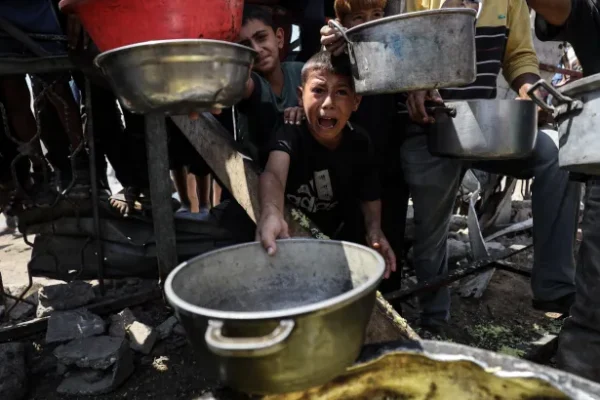
By Kamal Yalwa | July 27, 2025 Images of starving children emerging from Gaza are beginning to stir discomfort—and in some cases, condemnation—among members of the United States Congress, as the humanitarian catastrophe in the Palestinian enclave worsens under Israel’s ongoing blockade. While a growing number of Democratic lawmakers have issued urgent appeals for humanitarian access to the territory, few have directly held Israel accountable for the deepening crisis, despite widespread international criticism of the siege. In a rare and scathing rebuke, Senator Bernie Sanders described Israel’s actions as part of a broader campaign of ethnic cleansing, saying on Friday, “Having already killed or wounded 200,000 Palestinians, mostly women and children, the extremist Israeli government is using mass starvation to engineer the ethnic cleansing of Gaza.” He further accused Prime Minister Benjamin Netanyahu’s government of pursuing an “extermination campaign.” Sanders’ statement came as outrage builds over the controversial GHF food distribution mechanism—backed by the US and Israel—which has reportedly led to the deaths of over 1,000 Palestinians attempting to access aid. Despite this, most members of Congress have stopped short of attributing blame. Many have instead opted for generalized calls for aid to enter Gaza, avoiding criticism of Israeli policies directly responsible for restricting access. The lack of accountability is striking given that the United States continues to supply military support to Israel. Just last week, the House of Representatives passed a bill approving $500 million in missile defense funding for Israel, reinforcing the strong bipartisan support the country has long enjoyed on Capitol Hill. Meanwhile, humanitarian agencies and rights groups continue to sound the alarm, calling the situation in Gaza “man-made” and demanding immediate political intervention to lift the siege and allow aid to flow freely. As the death toll rises and hunger escalates, pressure is mounting on Washington to not only speak out—but to act.

Read More
Dozens Killed, Over 160,000 Displaced as Thailand-Cambodia Border Clashes Escalate

Dozens Killed, Over 160,000 Displaced as Thailand-Cambodia Border Clashes Escalate

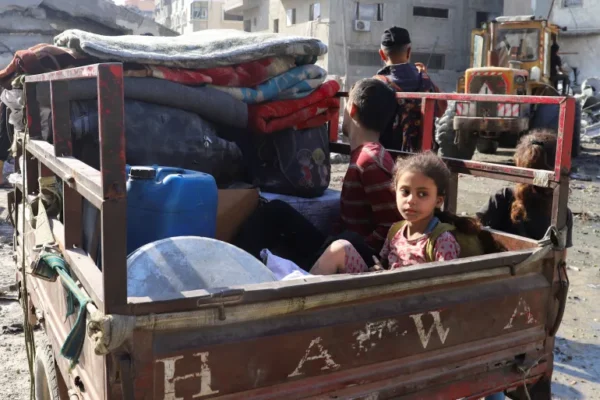
By Kamal Yalwa: July 26, 2025 Violence along the long-disputed border between Thailand and Cambodia has intensified, leaving at least 33 people dead and forcing more than 168,000 people to flee their homes, as the deadly clashes entered a third consecutive day on Saturday. Cambodian officials confirmed 12 additional deaths, bringing their national toll to 13, while Thai authorities reported the death of another soldier, raising Thailand’s total to 20, mostly civilians. New flashpoints were reported on Saturday in areas over 100 kilometers (60 miles) from earlier combat zones, including Cambodia’s Pursat Province and Thailand’s Trat Province, signaling a dangerous spread of the conflict. International Calls for Restraint The United Nations Security Council held an emergency session in New York late Friday, where members unanimously called on both countries to show restraint and pursue a peaceful resolution. A council diplomat, speaking anonymously, confirmed that pressure is mounting for an immediate ceasefire. Malaysia, chairing the Association of Southeast Asian Nations (ASEAN), which includes both nations, issued a statement urging both sides to halt hostilities and offering to mediate peace talks. Competing Accusations Tensions have escalated sharply since May, when a Cambodian soldier was killed during a skirmish. The situation worsened last Wednesday when a land mine injured five Thai soldiers, prompting Bangkok to close its border with Cambodia and expel the Cambodian ambassador—a move that deepened the diplomatic crisis. Cambodia’s Ministry of Defence accused Thailand of launching a “deliberate, unprovoked, and unlawful military attack,” while Thailand’s acting Prime Minister Phumtham Wechayachai insisted Bangkok had shown “utmost restraint” in response to Cambodian aggression. Mass Evacuations and Civilian Displacement According to Cambodia’s Information Minister, Neth Pheaktra, more than 10,865 Cambodian families—around 37,635 people—have been displaced across three border provinces. Thai authorities reported that over 131,000 residents have fled border villages, seeking safety. In Cambodia’s Oddar Meanchey province, once-bustling villages now lie deserted. Families were seen evacuating on makeshift tractors, while others sheltered in underground bunkers hastily built using wood, zinc, and tarpaulins to protect against incoming shelling. Several hundred sought refuge at a remote Buddhist temple, where temporary plastic tents were erected beneath the trees. Strategic Sites Under Fire On Friday, Thailand’s military reported multiple skirmishes along the border, including near the ancient Ta Muen Thom temple, a long-contested site that both nations claim. The latest violence marks the most serious escalation since 2011, when 20 people were killed during similar clashes. With the situation deteriorating rapidly, regional and international actors are urging urgent diplomatic intervention to prevent a broader conflict.

Read More

Climate Crisis Fuels Global Food Price Surge, Scientists Warn

Extreme weather events driven by climate change are causing sharp increases in food prices worldwide, according to a new report released on Monday by six European research organizations in collaboration with the European Central Bank. The report highlights how heatwaves, floods, and droughts have disrupted agricultural production since 2022, triggering steep price hikes for staples like rice, corn, coffee, cocoa, potatoes, and lettuce. Among the most dramatic examples cited is a 280 percent surge in global cocoa prices in April 2024 after a heatwave in Ghana and Ivory Coast, and a 300 percent spike in Australian lettuce prices following severe floods in 2022. Similarly, cabbage prices in South Korea rose by 70 percent in September 2024 due to extreme heat, while rice prices in Japan jumped 48 percent during the same period. The report also links droughts to major price increases, including a 55 percent hike in global coffee prices in 2024 after a prolonged 2023 drought in Brazil. Ethiopia saw overall food prices soar by 40 percent in 2023, following drought conditions in 2022. “Until we get to net zero emissions, extreme weather will only get worse, but it’s already damaging crops and pushing up the price of food all over the world,” said Maximillian Kotz, the lead author from the Barcelona Supercomputing Center. The analysis underscores that rising food prices are one of the most visible effects of climate change, second only to extreme heat itself. Low-income households are hit the hardest, as food costs consume a significant share of their income. In the UK, climate-linked weather disruptions added an estimated £360 ($482) to the average household food bill between 2022 and 2023, said Amber Sawyer of the Energy and Climate Intelligence Unit (ECIU). England recorded its second-worst arable harvest on record in 2023 due to intense rainfall exacerbated by climate change. The report was released ahead of the United Nations Food Systems Summit, scheduled for July 27–29 in Addis Ababa, Ethiopia. It comes as global leaders face increasing pressure to meet emissions reduction targets under the UN Framework Convention on Climate Change (UNFCCC), which currently fall short of the cuts needed to keep global temperature rise below the 1.5°C limit set by the Paris Agreement. On Wednesday, the International Court of Justice (ICJ) is expected to issue a historic advisory opinion on states’ legal obligations to combat climate change, a case spearheaded by Vanuatu and supported by many Global South nations.

Read More

Israel-Induced Starvation Worsens in Gaza as Children Die from Malnutrition

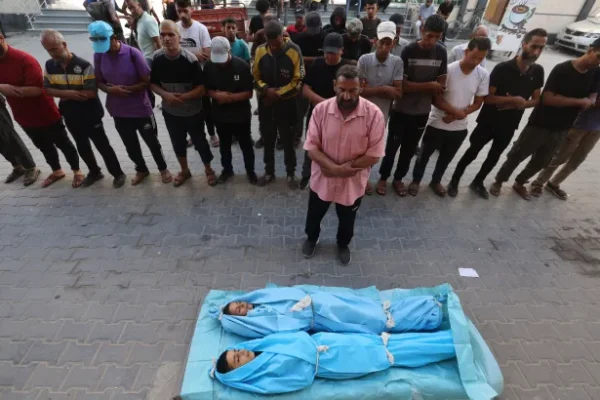
Gaza’s humanitarian crisis has reached a devastating peak, with reports confirming the deaths of a baby and a young child due to starvation. The worsening crisis is fueled by Israel’s ongoing blockade, which has severely restricted the entry of food, medical supplies, and other essential aid into the enclave. On Monday, Israeli forces killed over 60 Palestinians in a series of attacks across Gaza, including 11 people who were seeking aid. Tanks also advanced into the southern and eastern districts of Deir el-Balah for the first time, intensifying fears of further escalation. Aid agencies have repeatedly warned of the rapidly deteriorating conditions in Gaza, with thousands of children facing acute malnutrition. The blockade, now compounded by relentless military operations, has left families struggling to find food and safe shelter. International organizations are calling for immediate humanitarian access and a ceasefire to prevent more civilian deaths.

Read More