World Reacts as UN-Backed Body Declares Famine in Gaza

World Reacts as UN-Backed Body Declares Famine in Gaza

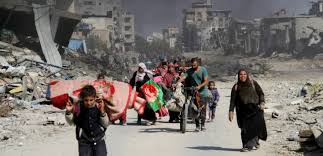
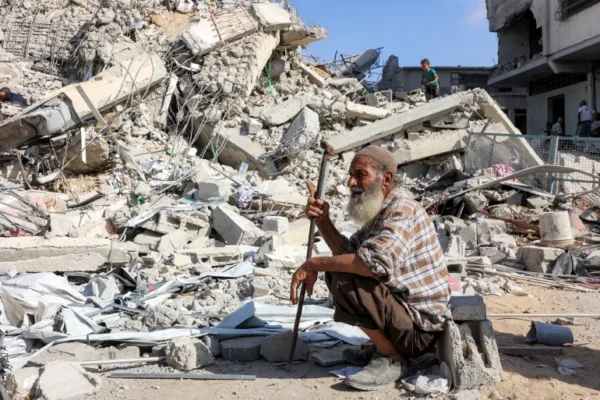
A United Nations-backed global hunger monitor has officially declared that Gaza City and surrounding areas are experiencing famine — a historic first for the Integrated Food Security Phase Classification (IPC) system outside of Africa. The crisis, described as “man-made” and “preventable,” has drawn swift condemnation and urgent calls for action from world leaders, humanitarian organizations, and civil society. According to the IPC, 514,000 Palestinians — nearly a quarter of Gaza’s population — are facing famine-level conditions. That number is expected to rise to 641,000 by the end of September, with famine projected to spread to Deir el-Balah and Khan Younis. The IPC’s Phase 5 classification — the most severe — follows 22 months of war, during which Israeli military operations, blockade of aid, and destruction of infrastructure have exacerbated a humanitarian catastrophe. UN and Humanitarian Leaders: “This is a Failure of Humanity” UN Secretary-General António Guterres condemned the crisis as a “moral indictment” of the global community: “Famine is not only about food; it is the deliberate collapse of the systems needed for human survival… People are starving. Children are dying. And those with the duty to act are failing.” Guterres reaffirmed Israel’s obligations as an occupying power to allow unhindered humanitarian access. UNRWA chief Philippe Lazzarini said “months of warnings have fallen on deaf ears,” while UN aid chief Tom Fletcher accused Israeli officials of “openly promoting” starvation as a weapon of war. Israel: ‘An Outright Lie’ Israeli Prime Minister Benjamin Netanyahu dismissed the IPC report as “an outright lie,” denying a starvation policy and citing over 2 million tons of aid allowed into Gaza since the war began. The Israel- and US-backed Gaza Humanitarian Foundation (GHF) took over aid distribution in May, but has faced criticism after Gaza’s Health Ministry reported more than 2,000 aid-seekers killed, allegedly by Israeli forces. Hamas and Palestinian Authorities: Famine Confirms a War Crime Hamas responded by demanding an immediate end to hostilities and the lifting of the Israeli blockade, accusing Israel of using starvation as a “tool of war.” Gaza’s Government Media Office said the IPC’s famine confirmation “proves war crimes,” adding that Israel’s own aid entry figures “incriminate, not exonerate” the state. The Palestinian Authority echoed these concerns, saying the report closed “the door to speculation” and demanded urgent international action. Arab and Muslim States: Urgent Call for Accountability United Kingdom: “A Moral Outrage” UK Foreign Secretary David Lammy called the famine “wholly preventable” and “a moral outrage,” directly blaming Israel’s refusal to allow sufficient aid into Gaza. NGOs and Aid Agencies: Famine Was ‘Deliberate, Predictable, and Preventable’ Conclusion: No More Excuses The IPC’s declaration marks a pivotal moment in the humanitarian crisis in Gaza. International agencies, rights groups, and nations are united in demanding immediate action to halt the famine and open humanitarian corridors. With over 500,000 lives at immediate risk, the cost of inaction grows by the hour.

Read More
Dutch foreign minister resigns over Israel sanctions deadlock

Dutch Foreign Minister Resigns Over Cabinet Deadlock on Israel Sanctions

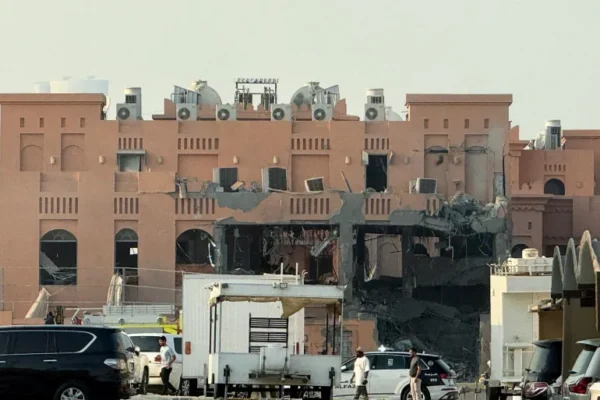
Dutch Foreign Minister Caspar Veldkamp has resigned after failing to secure cabinet backing for additional sanctions against Israel amid its ongoing military operations in Gaza. Veldkamp, a member of the centre-right New Social Contract party, announced his resignation on Friday, citing the government’s refusal to support what he called “meaningful measures” in response to the worsening humanitarian crisis. “I also see what is happening on the ground in Gaza — the attack on Gaza City, and in the West Bank, the settlement expansion in E1 and East Jerusalem,” Veldkamp told reporters. “I can no longer defend a foreign policy that ignores these realities.” His resignation has triggered broader political fallout, with all New Social Contract ministers and state secretaries stepping down in solidarity, leaving the caretaker government further weakened as it prepares for elections in October. Sanctions Push Met with Resistance Veldkamp had pushed for targeted sanctions, including entry bans for far-right Israeli ministers Bezalel Smotrich and Itamar Ben-Gvir, citing their roles in inciting settler violence. He also revoked three export permits for components used in Israeli naval vessels, warning of “deteriorating conditions” and the risk of misuse. Additionally, Veldkamp advocated for suspending the EU-Israel trade agreement — a move reportedly blocked by Germany. “There was increasing pressure from Dutch lawmakers and the public,” said Al Jazeera’s Step Vaessen, reporting from Berlin. “Many believed the Netherlands should act unilaterally rather than wait for Brussels.” Despite his efforts, Veldkamp said resistance from within the cabinet rendered his position untenable. Netherlands Caught in Broader EU Tensions While the Netherlands has taken limited steps toward sanctioning Israel, it remains a key node in the supply chain of Israel’s F-35 fighter jet programme. Research from the Palestinian Youth Movement shows that F-35 components regularly pass through the port of Rotterdam, operated by Maersk. These aircraft have played a central role in Israel’s aerial campaign in Gaza, which has killed over 62,000 people since October 2023, according to local health authorities. Earlier this week, the Netherlands joined 20 other nations in condemning Israel’s approval of a major West Bank settlement expansion, calling the move “unacceptable and contrary to international law”. No Immediate Successor The Dutch caretaker government, in place since the coalition collapse on 3 June, will remain until a new government is formed post-elections — a process that may take months. No immediate successor to Veldkamp has been named. Veldkamp’s departure comes at a critical moment for the EU, which continues negotiations with the United States over tariffs and faces growing pressure to enforce accountability in the Israel-Gaza conflict. The famine officially declared in Gaza City on Friday by the Integrated Food Security Phase Classification (IPC) has further intensified calls for urgent international action.

Read More
At least 65 killed in Gaza as Israel escalates attacks on Gaza City

At Least 65 Killed in Gaza as Israel Escalates Attacks on Gaza City On Friday

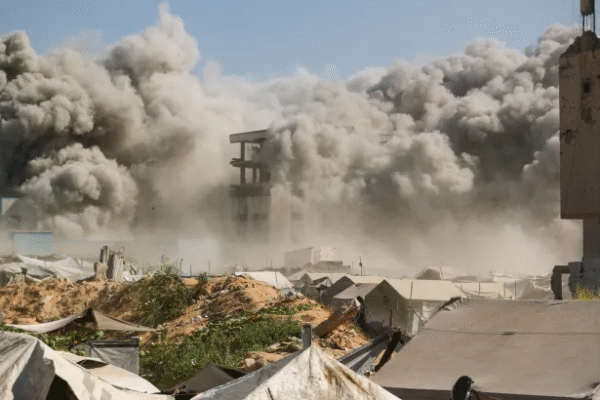
At least 65 Palestinians have been killed in Israeli attacks on Gaza since dawn, medical sources told Al Jazeera. Among them, 37 were killed in Gaza City, where Israel has intensified airstrikes ahead of a broader planned offensive. An Israeli airstrike targeted a school in Sheikh Radwan, a Gaza City neighborhood where many Palestinians sought shelter in makeshift tents. Gaza’s Ministry of Health reported that at least 12 civilians died in the attack. Footage verified by Al Jazeera shows an Israeli quadcopter dropping an explosive on a building in Sheikh Radwan, followed by smoke rising from the site. Another Palestinian was killed by Israeli forces in the Tuffah neighborhood of Gaza City. Israel’s Defense Minister Israel Katz warned that Gaza’s largest city would be destroyed unless Hamas agrees to Israel’s terms for ending the war. Katz wrote on X: “The gates of hell will soon open on the heads of Hamas’ murderers and rapists in Gaza — until they agree to Israel’s conditions for ending the war.” Israel’s ceasefire demands include the release of all captives and Hamas’s complete disarmament. Hamas has expressed willingness to release captives if the war ends but rejects disarmament without Palestinian statehood. Despite accepting a ceasefire proposal brokered by Qatar and Egypt, Israeli Prime Minister Benjamin Netanyahu said on Thursday that he had instructed officials to “begin immediate negotiations” to release captives and end the war. However, Netanyahu also confirmed plans to authorize a major military operation to seize Gaza City, potentially starting within days.

Read More
Famine declared in Gaza City - and projected to expand to two other areas in the next month

Famine Declared in Gaza City, Set to Expand to Two More Regions Within Weeks

A famine has been officially declared in Gaza City and surrounding areas, with the crisis projected to worsen in the coming weeks, expanding to Deir al-Balah and Khan Younis, according to a new report from the Integrated Food Security Phase Classification (IPC). More than half a million people in the Gaza Strip are facing “catastrophic conditions,” characterised by starvation, destitution, and an increasing number of deaths. The IPC report marks the first formal famine declaration outside of Africa and the fifth since the organisation’s inception in 2004. Previous famines declared by the IPC include Somalia (2011), and Sudan (2017, 2020, and 2024). “After 22 months of relentless conflict, over 500,000 people in Gaza are facing catastrophic conditions,” the report said. An additional one million people are experiencing severe food insecurity. Projected Expansion of Famine The IPC warned that nearly a third of Gaza’s population — approximately 641,000 people — are expected to face catastrophic conditions within a month. Acute malnutrition is expected to worsen rapidly, with at least 132,000 children projected to suffer from severe malnutrition over the next year — more than double earlier estimates from May 2024. Due to limited access and data from northern Gaza, the IPC was unable to make a precise classification for that region, but noted conditions there may be even worse. What Constitutes a Famine? Under IPC guidelines, famine is declared when an area meets the following criteria: International Outcry and Accusations The famine declaration has triggered global condemnation and renewed calls for an immediate ceasefire. UN Human Rights Chief Volker Turk called the crisis a “man-made disaster” and accused Israel of using starvation as a weapon of war. “It is a war crime to use starvation as a method of warfare, and the resulting deaths may also amount to the war crime of wilful killing,” he stated. UN Secretary-General António Guterres echoed the alarm, calling the situation “a moral indictment and a failure of humanity itself.” British Foreign Secretary David Lammy described the findings as “utterly horrifying and wholly preventable,” urging Israel to allow unhindered delivery of aid and calling for a halt to military operations in Gaza City — which he described as the “epicentre of the famine.” UN Under-Secretary-General Tom Fletcher made a direct appeal to Israeli Prime Minister Benjamin Netanyahu: “Enough. Ceasefire. Open the crossings — north and south. All of them.” Israel Rejects Famine Claims The Israeli government has categorically denied the famine designation. Prime Minister Benjamin Netanyahu dismissed the IPC report as “an outright lie,” insisting that Israel has no policy of starvation. “Since the beginning of the war, Israel has enabled the entry of over two million tons of humanitarian aid into Gaza — more than one ton per person,” he said. Israel’s foreign ministry claimed food prices in Gaza had dropped due to a “massive influx of aid” and blamed Hamas for obstructing deliveries. COGAT, the Israeli military agency overseeing aid coordination, also rejected the IPC’s conclusions, stating that over 100,000 aid trucks have entered Gaza since the conflict began. Death Toll from Malnutrition Rising Despite Israeli denials, Gaza’s health ministry reports at least 251 deaths due to famine and malnutrition, including 108 children. The UN Office for the Coordination of Humanitarian Affairs (OCHA) reported nearly 13,000 new admissions for acute malnutrition in children in July alone. Israel has challenged these figures, accusing Hamas of inflating the numbers and attributing many of the deaths to pre-existing health conditions.

Read More
Trump-Zelenskyy Meeting: US President Suggests No Need for Ceasefire

Trump-Zelenskyy Meeting: US President Suggests No Need for Ceasefire

US President Donald Trump has hosted Ukrainian President Volodymyr Zelenskyy at the White House for high-stakes talks on the future of the war in Ukraine. The meeting, which lasted about 30 minutes before a press briefing, is expected to be followed by discussions with seven European leaders and a phone call with Russian President Vladimir Putin. Ahead of the summit, Trump urged Ukraine to abandon its NATO membership ambitions and its hopes of regaining Crimea, which Russia annexed in 2014. The United States and most of the international community still regard the annexation as illegal. Key developments from the White House meeting: The talks mark Trump’s most direct engagement on Ukraine since returning to office. Analysts say the emphasis on negotiations, rather than continued battlefield support, could signal a significant shift in US policy — one that places Trump at the center of a possible deal involving Kyiv and Moscow.

Read More

Gaza Famine Deepens: 263 Dead from Starvation, Including 112 Children

Starvation deaths in Gaza are rising sharply as Israel’s blockade and bombardment fuel a man-made famine that has left families without food, clean water, or medical care. According to health officials in Gaza, at least 263 people have now died from starvation, including 112 children, as of August 17. Hospitals are struggling to cope with the growing number of malnourished patients, many of them infants and toddlers in critical condition. Children Among the Most Vulnerable One of the most harrowing cases is that of seven-month-old Hasan Ahmed Felfel, whose worsening malnutrition has put his life at serious risk. Doctors in Gaza City say they are treating him and dozens of other children under dire conditions, with shortages of medicine, baby formula, and therapeutic food supplies. Malnutrition strikes children hardest, especially within the first 1,000 days of life—from pregnancy through age two. Without treatment, starvation causes organ failure, brain damage, stunted growth, and in many cases, death. Blockade and Aid Restrictions The famine crisis is rooted in Israel’s near-total blockade of Gaza’s crossings. Between March and mid-May, food, water, and humanitarian aid were completely sealed off, creating catastrophic shortages. Relief groups report that hundreds of aid trucks—once supplying 500 truckloads a day before October 2023—now sit idle in Egypt and Jordan, barred from entering Gaza. More than 100 humanitarian organisations, including Oxfam, Doctors Without Borders, Amnesty International, and the Norwegian Refugee Council, have accused Israel of deliberately weaponising aid by blocking life-saving supplies. On August 14, Amnesty International stated that Israel’s policies amount to a “deliberate strategy of starvation”, describing the conditions imposed on Palestinians as part of an ongoing campaign of destruction. Measuring Famine International experts warn that Gaza is moving deeper into famine. The Integrated Food Security Phase Classification (IPC) defines famine as a situation where: Humanitarian agencies say all three thresholds are either already being met or dangerously close. Visible Signs of Crisis Images emerging from Gaza show children with swollen bellies caused by severe protein deficiency, sunken eyes, and skeletal frames—many measuring below the 11.5cm threshold on MUAC malnutrition tapes, which signals severe acute malnutrition. Without immediate intervention, these children face a high risk of death. Doctors say the famine is “entirely man-made” and preventable, but without access to food and medical supplies, the death toll will continue to climb daily.

Read More

World Leaders Court Unpredictable Trump as White House Talks on Ukraine Begin

In an unprecedented show of urgency, world leaders including UK Prime Minister Sir Keir Starmer and French President Emmanuel Macron have gathered at the White House for hastily arranged talks on the war in Ukraine. The meeting, called just days after Donald Trump’s summit with Vladimir Putin in Alaska, underscores the pivotal role the U.S. president now plays in determining the future of the conflict. A High-Stakes Meeting Diplomatic sources described the gathering as an “organic” next step after Trump’s discussions with Putin. Unlike in Alaska, where Europeans were absent, today they will dominate the room. For Trump, often at ease in the spotlight, the gathering serves as a platform to showcase his influence as a global convener. For the Europeans, it is a critical opportunity to pin down exactly what Trump is willing to guarantee in terms of Ukraine’s security—and what, if anything, he may have already discussed with Putin on land or territorial control swaps. Lessons From February The urgency is shaped by the memory of a disastrous Oval Office meeting in February, when Trump and Vice President JD Vance publicly berated President Volodymyr Zelenskyy in a tense exchange that rattled European capitals. Since then, leaders across Europe have recalibrated—boosting their own defense spending and pursuing personal ties with Trump. Whether through Starmer’s state visit, Finland’s Alexander Stubb joining Trump on the golf course, or Italy’s Giorgia Meloni aligning her rhetoric with his, each leader has sought to stay on Trump’s good side for precisely this kind of moment. What’s at Stake European leaders are expected to flatter Trump while issuing subtle warnings. They will frame him as the architect of a potential peace deal—an achievement that could cement his legacy—while stressing the need for continued U.S. commitment to Europe and resistance against Russian demands. Central to the talks will be whether Trump is prepared to offer Ukraine binding security guarantees and whether Putin might accept a U.S.-European pact short of NATO membership. Yet ambiguity looms large: vague agreements might yield a quick fix but could prove unsustainable in the long run. Optics and Outcomes Much will hinge not only on the substance of discussions but also on optics. Analysts note Trump often blurs the line between detail and spectacle, with even minor gestures—such as Zelenskyy’s choice of attire—becoming symbolic flashpoints. Beyond the closed doors, the world will watch for signs of whether today’s meeting produces a genuine framework for peace or simply another dramatic episode in an unpredictable diplomatic process.

Read More
Trump-Putin summit live: Leaders arrive in Alaska for Russia-Ukraine talks

Trump Putin Meet in Alaska for High-Stakes Russia-Ukraine Talks

US President Donald Trump and Russian President Vladimir Putin have arrived at Joint Base Elmendorf-Richardson in Anchorage, Alaska, for a landmark summit aimed at seeking an end to the ongoing war in Ukraine. This marks Putin’s first visit to a Western country since ordering the 2022 invasion of Ukraine, a conflict that has claimed tens of thousands of lives. The meeting is their first standalone summit since their 2018 encounter in Helsinki. According to Kremlin spokesperson Dmitry Peskov, the talks are expected to last at least six to seven hours, with a packed agenda focused on possible pathways to peace and broader geopolitical issues. Trump has indicated he hopes the Alaska summit will pave the way for a follow-up meeting involving Ukrainian President Volodymyr Zelenskyy. However, Zelenskyy was not invited to the current talks, a decision that has sparked debate over the inclusiveness of the negotiations. The outcome of this summit could significantly shape the trajectory of the Russia-Ukraine conflict, with both leaders under pressure to deliver tangible progress. Observers are closely watching for signs of compromise, potential ceasefire frameworks, and future diplomatic engagements.

Read More