INEC Proposes Constitutional Reforms to End Presidential Appointment of Electoral Commissioners

INEC Proposes Constitutional Reforms to End Presidential Appointment of Electoral Commissioners

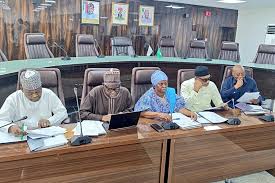
Ahead of the 2027 general elections, the Independent National Electoral Commission (INEC) is proposing amendments to Nigeria’s electoral framework that would strip the President of the power to appoint the Resident Electoral Commissioners (RECs). The proposed change would instead give the commission power to make this appointments, though with a different nomenclature to be known as State Directors of Elections. The commission is also pushing for the introduction of electronically downloadable voters’ cards to replace the use of Permanent Voter Cards (PVCs). Specifically, the commission is seeking amendments to Section 14 (3) Paragraph F of the Third Schedule to the 1999 Constitution to confer the power of appointing and disciplining Heads of State and FCT Offices of INEC on the commission. INEC is also proposing amendment to Section 6 (3) of the Electoral Act 2022 to confer the power of appointing Heads of State and FCT Offices on the Commission. According to INEC, these heads of state would be known as State Directors of Elections. Special Adviser to the INEC chairman, Mohammad Kuna, disclosed this in his presentation at a retreat with the Joint Committee of the National Assembly on Electoral Matters on the reform of the electoral legal framework held in Lagos on Monday. He said the proposal is essential to promote transparency, accountability and efficiency in the electoral process. Currently, the REC is the person in charge of INEC office at the state level. The REC who is assisted by relevant government agencies, undertakes the Presidential, National Assembly, Gubernatorial and House of Assembly elections in a state and acts pursuant to powers delegated to him or her by INEC’s national Chairman and 12 Commissioners. Among the duties of the REC is to make available all the materials required to conduct an election. The REC also monitors the activities of all ad hoc staff and provides for proper verification of election results Currently, the appointment of RECs, who oversee the electoral process in each state, is within the president’s purview according to Section 154 (1) of the 1999 constitution. Section 6 (1) of the Electoral Act reads: “There is established in each State of the Federation, Federal Capital Territory and Local Government Area, an office of the Commission Which shall perform such functions as may be assigned to it by the Commission. “(2) A person appointed to the office of a Resident Electoral Commissioner shall (a) be answerable to the Commission ; and (b) hold office for a term of five years from the date of his or her appointment which may be renewable for another term of five years and no more. “(3) The Resident Electoral Commissioner appointed under the Constitution may only be removed by the President, acting on an address supported by two-thirds majority of the Senate praying that the Resident Electoral Commissioner be so removed for inability to perform the functions of the office, whether arising from infirmity of mind or body or any other cause, or for misconduct. But according to the document presented by Kuna sighted by the Guardian, developments in the recent past and especially during and in the aftermath of the 2023 General election suggest the need for the Commission to have greater powers to make appointments to the heads of State and FCT Offices. The proposal will also confer INEC the power to discipline erring RECs. Aside from this, the commission is also proposing amendment of Sections 77 (2), 117 (1), 132 (5) and 178 (5) of the 1999 Constitution to provide for early, special, Out-of-Country, diaspora and inmates voting. The document said this will allow the country to introduce early/special voting to cater for eligible voters on essential services, election personnel as well as voters under incarceration, those in the diaspora and out-of-country voting for eligible Nigerians outside the country during elections. Another key proposal by INEC is the amendment of Sections 153 (1), 154 (3), 156 (1, a), 157 (2), 158 (1), and 160 (1) and the Third Schedule, Paragraph 15 (b – d) of the 1999 Constitution to create the Electoral Offences Commission and (b) Political Party Regulatory Agency. The commission is also seeking theamendment of sections 48, 49, 71 ant 91 of the 1999 Constitution by Providing New Provisions for Special Seats for Women and PwDs “While the Commission should continue to work with all Political Parties for greater participation of under-represented groups in elective positions, the surest way to achieve that objective is through affirmative action.This should be backed by a clear provision of the law that may, for instance, create designated constituencies for such groups, especially women and persons with Disability”, the document stated. The commission is also proposing to the National Assembly to: “Amend Sections of EA 2022 to Remove Ambiguities/Cross-Referencing Errors(a) Section 60 (5) refers to ‘transfer’ of results while 64 (4 & 5) spoke about ‘direct transmission’; (b) Section 64 (4a & 5) refers to 47 (2) with regards the transmission of results; yet 47 (2) makes no reference to the transmission of results; (c) there are similar ambiguities identified in Sections 29 (1), 75 (3) & (4), 77(3), 131 (5) & (6) and 132 (5-10) of the Electoral Act, 2022 detailed in the submission of the Commission. “Amend Section 65 (1) to Provide Clarity on the Commission’s Powers to Review Election Results. Create a caveat in Section 65 (1) to provide that the triggers to the review of results should be instances of declarations made under duress. “Review Sections 47 (1) and 16 (1, 2 & 4) on the Design, Printing, Control, Issuance and Use of PVCs. Review Section 47 (1) as well as 16 (1, 2 & 4) to Modify Requirements for the Use of PVCs to Allow for the Introduction of Electronically Downloadable Voters’ Card or Any Other Form of ID Acceptable to the Commission.
Read More

PDP Calls Emergency Meeting as Defections Threaten Party’s Future

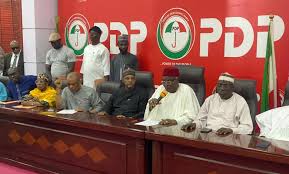
The Peoples Democratic Party (PDP) has summoned an emergency meeting of its National Working Committee (NWC) for Tuesday, following a wave of high-profile defections that have rocked the party. Among the major losses are former Vice Presidential candidate Ifeanyi Okowa, Delta State Governor Sheriff Oborevwori, and the entire PDP structure in Delta State, historically one of the party’s key strongholds. With more lawmakers, including five-term House of Representatives member Oluwole Oke, defecting, the PDP faces a deepening crisis ahead of the 2027 general elections. Internal divisions have plagued the party since the 2023 elections, and leadership disputes continue to weaken its structure. Acting National Chairman Umar Damagum has been under pressure, and tensions have intensified over the National Secretary position. Although Setonji Koshoedo was appointed acting secretary by the PDP Governors Forum, the Supreme Court reinstated Senator Samuel Anyanwu to the role in March, further splitting the leadership. Both Koshoedo and Anyanwu have confirmed their attendance at Tuesday’s crucial meeting at Wadata Plaza in Abuja. A senior party official, speaking anonymously, admitted that there’s little the PDP can do to prevent defections, blaming personal ambition and pressure from anti-corruption investigations as major factors. “Even after the party’s support, many leaders have chosen to leave,” the official lamented, adding that the NWC would use the meeting to discuss defections, upcoming congresses, the National Executive Committee meeting, and preparations for the National Elective Convention. Despite the internal turmoil, party leaders insist they are committed to salvaging the PDP’s future. Senator Anyanwu stated his resolve to work for peace within the party, while the NWC plans to review recommendations from the Governors Forum and adopt strategies to stabilize and reposition the PDP ahead of future elections. The outcome of Tuesday’s meeting is expected to shape the party’s path forward during this turbulent period.

Read More

Igbo Royal Fathers Endorse Tinubu, Promise Landslide Votes in 2027

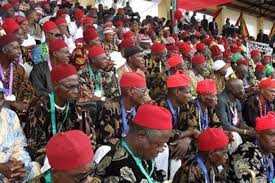
Traditional rulers from across Igbo land, under the aegis of the Ndi Igbo Progressive Traditional Rulers Council, have pledged to deliver at least 70 percent of the South East’s votes to President Bola Ahmed Tinubu in the 2027 general elections. Led by their chairman, His Royal Majesty Eze Nnamdi Oforegbu of Abia State, the monarchs made this pledge during a courtesy visit to the Deputy Speaker of the House of Representatives, Rt. Hon. Benjamin Okezie Kalu, in Umuahia, Abia State. They expressed deep appreciation to President Tinubu for the creation of the South East Development Commission (SEDC), which they believe will fast-track infrastructure growth in the region. Speaking on behalf of the group, Eze Oforegbu praised the president’s appointments of South Easterners to key positions and commended Kalu for sponsoring the bill that established the SEDC. He described Kalu’s efforts as unprecedented and assured the Deputy Speaker of their full support moving forward. The monarchs offered royal blessings to Kalu, praying for his political advancement and pledging that the South East would rally behind Tinubu with strong electoral support in 2027. In his remarks, Deputy Speaker Kalu thanked the traditional rulers for their endorsement and reaffirmed President Tinubu’s commitment to inclusive governance. He noted that Tinubu’s appointments, including the Deputy Speakership, the Chief of Naval Staff, and the Minister of Works, reflected a genuine effort to integrate the South East into national leadership. Kalu emphasized that loyalty and visible political participation would continue to attract greater benefits for the region. Furthermore, Kalu informed the monarchs that the National Assembly is working on formally recognizing traditional rulers with constitutional roles. He highlighted the vital contributions of traditional institutions to national unity, peace, and rural development. Kalu assured them that President Tinubu holds the traditional institution in high regard and stressed the importance of seeing political participation as an investment in the future of the region.

Read More
I'm Not Joining Atiku’s Coalition – Yobe State Governor Buni

I’m Not Joining Atiku’s Coalition – Yobe State Governor

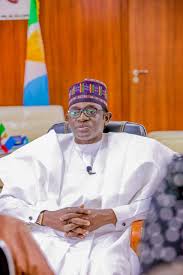
Yobe State Governor, Mai Mala Buni, has firmly denied claims that he is joining the opposition coalition led by former Vice President Atiku Abubakar. This clarification was made in a statement issued on Saturday in Damaturu, the state capital, by Alhaji Mamman Mohammed, Director-General of Press and Media Affairs. According to DAILY POST, a viral text message had alleged that Buni, along with four other APC governors, had finalized plans to defect to the opposition PDP ahead of the 2027 general elections. In response, Mohammed dismissed the report as a baseless fabrication, describing it as a product of unfounded imagination with no connection to reality. He stressed that the author of the viral message had never been close enough to Governor Buni to make any credible prediction about his political intentions. “Buni is not just an ordinary member of the APC; he is a pillar of the party. APC runs in his veins,” Mohammed stated. He further highlighted Buni’s key roles in the party’s development, notably his service as a two-term National Secretary and as the Chairman of the convention committee, emphasizing that any notion of him abandoning the party is purely speculative. Mohammed concluded that the false report likely stemmed from the wishful thinking of those who admire Buni’s political prowess and would prefer to have a leader of his caliber within their ranks.

Read More
Tompolo Backs Tinubu for Two-Term Presidency, Calls for Political Stability

Tompolo Backs Tinubu for Two-Term Presidency Calls for Political Stability

High Chief Government Oweizide Ekpemupolo, popularly known as Tompolo, has voiced strong support for President Bola Tinubu to serve two full constitutional terms, totaling eight years, before Nigeria elects a new leader in 2031. Speaking during an interview on Arise Television, the Ibe-Ebidouwei of the Ijaw Nation and Grand Patron of the PBAT Door-2-Door Movement 2027, described Tinubu as a seasoned leader capable of taking Nigeria to greater heights.“Tinubu is a good person. He has the experience to do everything and carry this country to a higher level,” Tompolo said, emphasizing that the president’s four-year mandate, with the possibility of re-election, should be respected. He drew parallels with former President Muhammadu Buhari’s eight-year tenure, urging against any actions that could cause political instability. “We don’t want anybody to cause problems. He should be allowed to complete his two constitutional terms, then we will vote for another person to take over in 2031,” he added. Tompolo also revealed plans to launch a nationwide campaign, including visits to northern states, to rally support for Tinubu’s second-term bid.“We will do our part, even go beyond our boundaries to the northern part of Nigeria to talk to our brothers and compatriots so that he will get a second tenure,” he said. He noted that traditional rulers across the region have already endorsed Tinubu’s re-election, expressing confidence that national support would ensure the president’s continued leadership. Addressing concerns over possible unrest, Tompolo dismissed claims that any group could monopolize violence, calling on all Nigerians to back Tinubu’s administration.“We are appealing to everybody, and by the grace of God, everybody will support us,” he stated. On the Rivers State Political Crisis Commenting on the political tensions in Rivers State, Tompolo expressed optimism about the resolution of the dispute between Governor Siminalayi Fubara and his predecessor, Nyesom Wike.Describing their relationship as that of a “boy and Oga,” he predicted a peaceful resolution, affirming, “The duly elected governor of Rivers State is coming back.” Tompolo disclosed plans to travel to Abuja soon to meet with President Tinubu and Wike to mediate in the ongoing crisis.“Our president is someone who has been protecting democracy for a very long time. There is no way he will truncate it,” he said, highlighting Tinubu’s longstanding commitment to democratic values. Tompolo’s comments come amid rising political activity as Nigeria prepares for the 2027 general elections, positioning him as a key advocate for Tinubu’s continued leadership and for fostering stability, particularly in Rivers State.

Read More
Alex Otti Denies Defection Plans to APC

Alex Otti Denies Defection Plans to APC

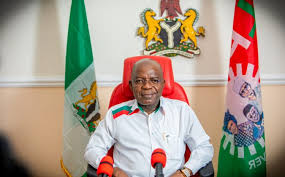
Alex Otti, the governor of Abia State, has firmly denied reports linking him to a planned defection to the All Progressives Congress (APC). Recent reports had alleged that Otti met with Imo State Governor, Hope Uzodimma, to discuss a possible move to the ruling party, following Thursday’s National Economic Council (NEC) meeting at the Presidential Villa in Abuja. However, in a statement issued on Saturday, Ferdinand Ekeoma, Special Adviser to Otti on Media and Publicity, described the claims as “false, baseless, and unfounded.” He clarified that the alleged meeting was misrepresented and had no political undertones. “After the National Economic Council meeting on Thursday, April 24, Governor Otti and a few of his colleagues attended the birthday celebration of Governor Uzodinma’s twin daughters — an event that had absolutely nothing to do with politics,” Ekeoma said. He noted that Governor Otti’s “rising profile and performance” as Abia governor may have triggered speculations and political projections from different quarters. Ekeoma stressed that any decision with long-term consequences would be made only in consultation with the people of Abia State and Otti’s close political allies. The statement reiterated that Governor Otti remains fully committed to his mandate and that it would be premature to allow 2027 political calculations to distract from the current focus on governance and service delivery. “We wish to emphatically state that Governor Otti remains a member of the Labour Party and is not planning or discussing with anyone about defecting to the APC or any other party,” Ekeoma said. In recent weeks, the ruling APC has attracted several members from major opposition parties, with reports suggesting that more governors and key political figures may also be considering a switch.

Read More

Russia Praises Nigerian Government for Support on UN Resolution

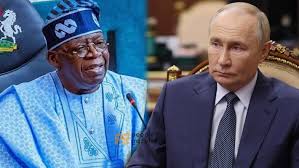
​Russia has expressed gratitude to Nigeria for its support in the United Nations’ adoption of a resolution aimed at combating the glorification of Nazism. This acknowledgment was made by Andrey Podyolyshev, the Russian Federation’s Ambassador to Nigeria, during a photo exhibition in Abuja commemorating the Soviet Union’s victory in the Great Patriotic War. The exhibition, marking the 80th anniversary of the Soviet victory over Nazi Germany, served as a platform to remember the victims of World War II and to raise awareness about the dangers associated with the glorification of Nazism. Ambassador Podyolyshev highlighted Nigeria’s vote in favor of the resolution during the 79th session of the UN General Assembly, which aims to combat practices contributing to contemporary forms of racism, discrimination, xenophobia, and intolerance He emphasized the importance of continued collaboration between Russia and Nigeria on international matters, particularly within the United Nations framework. Additionally, Podyolyshev noted Nigeria’s recent partnership with BRICS, expressing optimism about the potential for further cooperation. The ambassador reiterated Russia’s commitment to a multipolar world, advocating for close cooperation among nations to address global challenges such as economic crises and insecurity. He also acknowledged Africa, especially Nigeria, as a significant player in Russia’s foreign policy, underscoring the importance of African nations’ cooperation as a priority. ​Peoples Gazette Nigeria The Great Patriotic War, spanning from 1941 to 1945, was instrumental in the establishment of the United Nations, with the USSR playing a pivotal role in shaping the global system to prevent future conflicts. The aim was to create a framework that would protect the dignity of nations and ensure global peace, laying the foundation for international cooperation in the years to come.

Read More
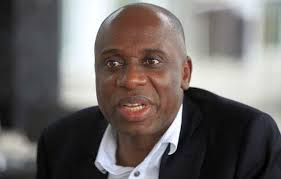
Former governor of Rivers State, Rotimi Amaechi, was a guest speaker at the ninth edition of the Akinjide Adeosun Foundation (AAF) Annual Leadership Discourse held in Lagos. Speaking on the theme *“Fearless Leadership: A Panacea for Sustainable Development,”* Amaechi discussed a range of issues, including his role in mobilizing against former President Goodluck Jonathan, who was the candidate for the Peoples Democratic Party (PDP) in the 2015 presidential elections. Amaechi explained that his decision to mobilize against Jonathan was rooted in his dissatisfaction with the president's leadership style, pointing to the economic struggles Nigerians were facing as Jonathan left office, including the rising dollar rate. Amaechi recounted the personal dangers he faced during this period, revealing that even though he had the immunity of a governor, the risks were severe. He shared an anecdote about his attempt to visit Ekiti, where he was blocked by security forces. Despite being advised against it, he persisted in his travel, leading to a tense standoff with soldiers. The situation became more dangerous when Amaechi was warned that his life could not be accounted for if he stayed in the area. He narrowly escaped with the help of a military officer, who advised him to leave before dark. The former governor also described a tense moment during a trip to Kano. After successfully installing the Emir of Kano, Amaechi found himself trapped by bad weather and the political hostility of the region's leadership. He was denied permission to land, and even after efforts to board a commercial flight were blocked, he was forced to seek the help of a local security officer to escape the situation. He recounted how he managed to leave Kano under strict surveillance, with a journey that took him through Zaria and Kaduna before finally reaching Abuja. Amaechi also discussed President Bola Tinubu's policies, particularly the removal of the oil subsidy, which he supported but felt could have been better managed. He criticized the approach for not considering social welfare measures, like creating employment through large-scale housing projects, which could have mitigated the impact of subsidy removal on Nigerians. He argued that had the government created jobs first, people would have been better equipped to handle the financial strain caused by the removal of the subsidy. Finally, Amaechi reflected on the state of activism in Nigeria, particularly among student groups like the National Association of Nigerian Students (NANS) and the Nigerian Labour Congress (NLC). He lamented the decline of activism, noting how students and labor unions were once united in their struggle against government policies. He criticized the current lack of ideological commitment within these organizations, contrasting it with the more radical, ideologically driven activism of the past.

I Escaped Death While Mobilising Against Jonathan – Amaechi

Former governor of Rivers State, Rotimi Amaechi, was a guest speaker at the ninth edition of the Akinjide Adeosun Foundation (AAF) Annual Leadership Discourse held in Lagos. Speaking on the theme “Fearless Leadership: A Panacea for Sustainable Development,” Amaechi discussed a range of issues, including his role in mobilizing against former President Goodluck Jonathan, who was the candidate for the Peoples Democratic Party (PDP) in the 2015 presidential elections. Amaechi explained that his decision to mobilize against Jonathan was rooted in his dissatisfaction with the president’s leadership style, pointing to the economic struggles Nigerians were facing as Jonathan left office, including the rising dollar rate. Amaechi recounted the personal dangers he faced during this period, revealing that even though he had the immunity of a governor, the risks were severe. He shared an anecdote about his attempt to visit Ekiti, where he was blocked by security forces. Despite being advised against it, he persisted in his travel, leading to a tense standoff with soldiers. The situation became more dangerous when Amaechi was warned that his life could not be accounted for if he stayed in the area. He narrowly escaped with the help of a military officer, who advised him to leave before dark. The former governor also described a tense moment during a trip to Kano. After successfully installing the Emir of Kano, Amaechi found himself trapped by bad weather and the political hostility of the region’s leadership. He was denied permission to land, and even after efforts to board a commercial flight were blocked, he was forced to seek the help of a local security officer to escape the situation. He recounted how he managed to leave Kano under strict surveillance, with a journey that took him through Zaria and Kaduna before finally reaching Abuja. Amaechi also discussed President Bola Tinubu’s policies, particularly the removal of the oil subsidy, which he supported but felt could have been better managed. He criticized the approach for not considering social welfare measures, like creating employment through large-scale housing projects, which could have mitigated the impact of subsidy removal on Nigerians. He argued that had the government created jobs first, people would have been better equipped to handle the financial strain caused by the removal of the subsidy. Finally, Amaechi reflected on the state of activism in Nigeria, particularly among student groups like the National Association of Nigerian Students (NANS) and the Nigerian Labour Congress (NLC). He lamented the decline of activism, noting how students and labor unions were once united in their struggle against government policies. He criticized the current lack of ideological commitment within these organizations, contrasting it with the more radical, ideologically driven activism of the past.

Read More