House of Representatives Approves Electoral Act Reforms, Imposes Two-Year Jail or N5 Million Fine for Vote Buying

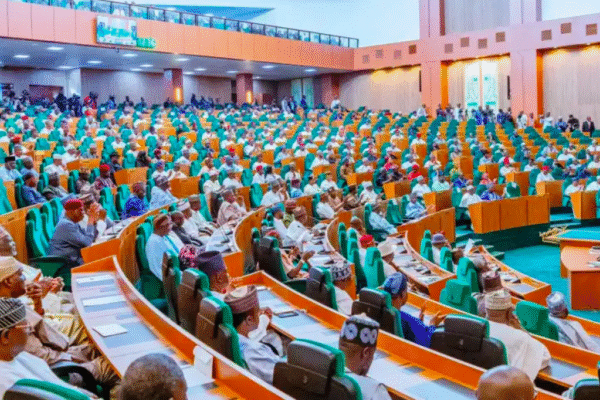
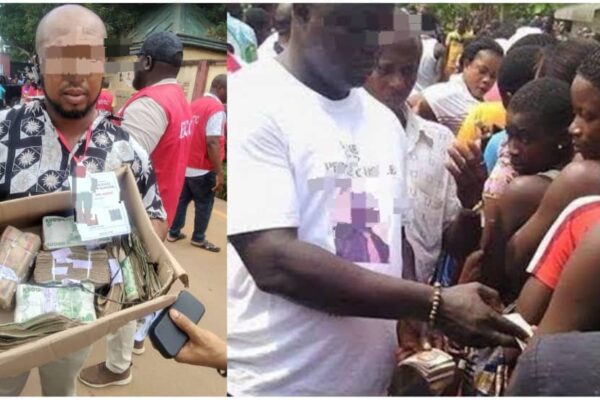
The House of Representatives has approved targeted changes to the Electoral Act, introducing tougher penalties for vote buying and selling. Offenders are now liable to a minimum of two years in prison, a N5 million fine, or both, in addition to a 10-year ban from participating in elections. The amendments were passed during a clause-by-clause review of the House Committee on Electoral Matters’ report, chaired by Deputy Speaker Benjamin Okezie Kalu. Under the updated Clause 22(a and c), penalties have been significantly increased from previous limits, which allowed fines of up to N500,000 or two years’ imprisonment. To strengthen election transparency, Section 60(3) has been revised to require the Independent National Electoral Commission (INEC) to transmit results electronically from polling units to the INEC Result Viewing Portal (IREV) in real time, alongside traditional physical collation. Presiding officers who intentionally violate procedures in counting, announcing, or transmitting results now face a minimum N500,000 fine, six months’ imprisonment, or both. Other key reforms include: Releasing election funds to INEC at least a year before general elections to improve planning and execution. Increasing penalties for multiple voter registration to a minimum N100,000 fine or one year imprisonment, or both. Extending the deadline for political parties to submit candidate lists from 180 to 210 days before elections. Allowing electronically generated voter identification, including downloadable voter cards with unique QR codes, for accreditation and voting. Chairman of the House Committee on Electoral Matters, Adebayo Balogun, explained that the House abandoned plans to repeal the Electoral Act 2022, instead choosing targeted amendments after broader proposals such as early voting, inmate voting, and PVC replacement failed to secure wide support. Balogun described the amendments as “very meaningful,” aimed at strengthening the Electoral Act 2022, addressing gaps, and improving election administration without destabilizing the legal framework. He stressed that the process was transparent and consultative, involving INEC, security agencies, civil society organizations, political parties, professional bodies, development partners, and citizens. While some innovative proposals were not adopted, they remain part of ongoing discussions on electoral reform. “Our goal remains clear: to ensure that every election in Nigeria is transparent, inclusive, secure, and truly reflective of the will of the Nigerian people,” Balogun stated.
Read More

Why We Made Emergency Landing In Burkina Faso — Detained Nigerian Air Force Personnel

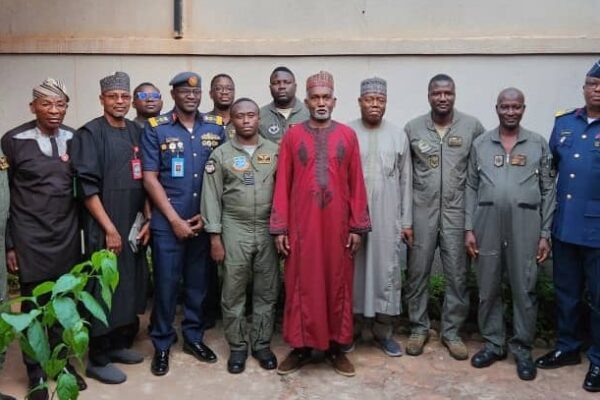
An unexpected technical failure forced a Nigerian Air Force aircraft carrying eleven personnel to make an emergency stop in Burkina Faso, leading to their detention in the country. One of the affected officers explained the situation during a visit by a Nigerian delegation led by the Minister of Foreign Affairs, Yusuf Tuggar. He said the aircraft was on its way to Portugal when it developed a fault that made it unsafe to continue the journey. The officer noted that the problem has since been repaired and the aircraft is now fit to resume operations. During the engagement, Tuggar passed along a personal message from President Bola Ahmed Tinubu to the detained Air Force personnel, assuring them of the government’s commitment to resolving the situation. The minister further disclosed that Burkina Faso’s leader, Ibrahim Traoré, had indicated his willingness to offer technical assistance to Nigeria if the need arises.

Read More

Bishop Kukah Visits Nnamdi Kanu At Sokoto Prison

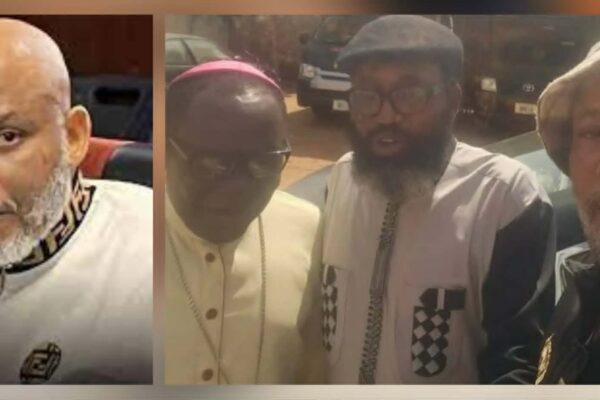
The Catholic Bishop of Sokoto, Most Rev. Matthew Hassan Kukah, has paid a visit to Nnamdi Kanu, leader of the Indigenous People of Biafra (IPOB), at the Sokoto Correctional Centre. Former African Action Congress (AAC) presidential candidate Omoyele Sowore commended the visit, describing it as a strong show of support. “Thank you so much, Bishop Matthew Hassan Kukah, for taking the time to visit Mazi Nnamdi Kanu today. Your visitation represents the solidarity of Sokoto Diocese with #MNK during this challenging time,” Sowore said. Kanu was convicted on terrorism charges by the Federal High Court in Abuja on November 20, 2025, and sentenced to life imprisonment. He was transferred to the Sokoto Correctional Centre the following day, following a court order that barred him from being held at Kuje Prison. The conviction followed prosecution on seven terrorism-related counts, including incitement and unlawful broadcasts. Justice James Omotosho found Kanu guilty on all counts and sentenced him to life imprisonment. Since his transfer, Kanu’s legal team has filed motions requesting his return to Abuja to facilitate his appeal. They argue that the distance makes it difficult to access court records, prepare his defense, and meet with lawyers. His team also contends that Nigeria lacked jurisdiction over broadcasts made in the UK, describing the trial as rushed and flawed. The court had ruled that Kanu could be detained in any correctional facility except Kuje Prison. Notable figures, including Abia State Governor Dr. Alex Otti and Sokoto State Governor Ahmad Aliyu, visited Kanu at the custodial centre in late November.

Read More

Nigeria Police, FBI Arrest Mastermind Behind Major Microsoft 365 Phishing Scam

The Nigeria Police Force National Cybercrime Centre (NPF–NCCC), working with the US Federal Bureau of Investigation (FBI) and the US Secret Service, has arrested three suspects involved in high-level internet fraud in Lagos and Edo States. The suspects are accused of targeting email systems of major corporate organisations across Nigeria, using phishing links and malicious software to gain unauthorized access. Force Public Relations Officer, CSP Benjamin Hundeyin, said the arrests followed intelligence from Microsoft and the FBI, which revealed the use of a sophisticated phishing toolkit called RaccoonO365. The toolkit was designed to create fake Microsoft login portals to steal user credentials and infiltrate corporate, financial, and educational email accounts. “Based on actionable intelligence, the NPF–NCCC launched a coordinated operation with Microsoft, the FBI, and the US Secret Service,” Hundeyin said. Investigations showed that between January and September 2025, the suspects sent phishing emails that closely mimicked legitimate Microsoft authentication pages. These attacks led to business email compromises, data breaches, and financial losses across multiple sectors. NPF–NCCC operatives were deployed to Lagos and Edo States, resulting in the arrest of three suspects. Searches of their homes recovered laptops, mobile devices, and other digital tools, all linked to the fraudulent activities following forensic analysis. Further investigations identified Okitipi Samuel, also known as “RaccoonO365” and “Moses Felix,” as the principal suspect and creator of the phishing infrastructure. He allegedly operated a Telegram channel selling phishing links for cryptocurrency and hosted fake login portals on Cloudflare using stolen or fraudulently obtained email credentials. Authorities said the other two suspects had no involvement in developing or running the phishing scheme. The Nigeria Police Force emphasized its commitment to securing the nation’s digital space through advanced technology, international collaboration, and thorough investigative and prosecutorial efforts to combat cybercrime.

Read More
Garba Muhammad Raises Alarm Over Terrorist Threats To Bomb National Assembly Complex

House of Representatives Forms Committee to Investigate Tax Law Discrepancies

The House of Representatives has established a seven-member ad-hoc committee to investigate alleged inconsistencies between tax bills passed by lawmakers and the versions later assented to and officially gazetted. The move followed a Point of Privilege raised by Sokoto State lawmaker Abdulsammad Dasuki, who claimed the publicly released tax laws did not reflect what the National Assembly had approved. The committee will be chaired by Muktar Aliyu Betara, Chairman of the House Committee on Appropriations, with members including former Deputy Speaker Ahmed Idris Wase, Sada Soli, James Abiodun Faleke, Fred Agbedi, Babajimi Benson, and Iduma Igariwey. Its mandate is to examine the legislative process leading to the gazetting of the tax laws and determine whether the final documents differ from those passed by both chambers. Dasuki, speaking under Order Six, Rule Two of the House Rules, said his legislative privilege had been breached. He revealed that after reviewing the gazetted copies alongside the Votes and Proceedings and the harmonised versions approved by both chambers, he found discrepancies. “I was here, I gave my vote and it was counted, and I am seeing something completely different,” Dasuki said. He added that copies obtained from the Ministry of Information did not match what had been approved by the House and Senate. He stressed that his intervention was aimed at highlighting a serious breach of legislative procedure and constitutional provisions. Dasuki called on the Speaker to ensure that all relevant documents—the harmonised versions, Votes and Proceedings, and gazetted copies—are made available for scrutiny by all lawmakers. He warned that allowing laws different from those passed by the National Assembly to circulate would undermine legislative integrity. Speaker Tajudeen Abbas acknowledged Dasuki’s concerns and assured the House that appropriate action would be taken. The ad-hoc committee is expected to provide clarity on the matter and safeguard the legislative process.

Read More

Federal Government Reopens 47 Unity Schools After Security Upgrades

The Federal Government has reopened the 47 unity schools it closed in November, reaffirming its commitment to the safety of students and the continuity of education across Nigeria. Folasade Boriowo, spokesperson for the Federal Ministry of Education, said in a Thursday statement that academic activities have fully resumed following the reinforcement of security arrangements within and around the affected schools. “After the strengthening of security architecture within and around the affected schools, academic activities have fully resumed,” the statement read. Students have returned safely, with many completing their December academic programs while others have finished examinations. The ministry assured parents, guardians, and the public that the welfare and protection of students remain a top priority. The government emphasized that it will continue collaborating with security agencies to maintain stability and restore normalcy in school environments nationwide. “The Federal Government remains resolute in its responsibility to protect every Nigerian child and uphold their right to education in a safe and secure environment,” the statement added. The schools were initially closed after a series of security incidents, including two mass abductions of students in Kebbi and Niger states. Experts said the shutdown reflected the government’s acknowledgment of security challenges and the need for precautionary measures to protect students in vulnerable areas.

Read More

How My Father’s Signatures Were Forged, and Our Life Under Surveillance — Fatima Buhari Reveals

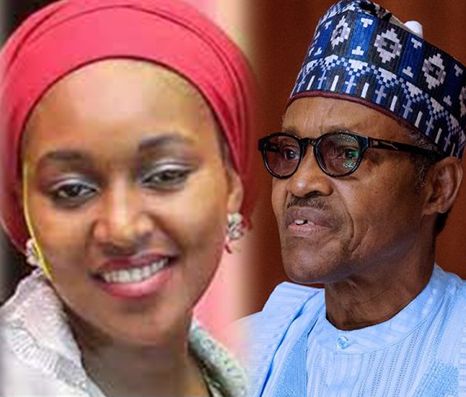
Fatima Buhari, daughter of the late President Muhammadu Buhari, has claimed that her father’s signature was forged on official documents during his presidency. Her revelations are detailed in From Soldier to Statesman: The Legacy of Muhammadu Buhari, a biography by Charles Omole. Fatima, a forensic auditor, said she examined certain documents and identified signatures that had been falsely attributed to her father. She noted that others had also raised concerns about forged signatures during his tenure. The book notes that Fatima emphasized this issue was not unique to Buhari’s administration, pointing out that previous governments had faced similar challenges. She also highlighted cases where presidential speeches and directives were altered after approval. One incident recounted in the biography occurred during a U.S. visit, when Buhari spoke at a small conference. Fatima observed that the speech he read was different from what he had approved. “You were stopping,” she told him. He quietly explained that the text had been modified but proceeded to speak in his own words. The biography explains that such alterations—directives diluted, statements rephrased, and intentions subtly changed—were common, sometimes due to bureaucratic errors and at other times orchestrated by a small clique. Fatima also disclosed that her father suspected his official residence at the State House was being wiretapped. She described how they often communicated in writing rather than verbally to avoid eavesdropping. “A daughter and her father sit quietly together. He makes a small gesture, touching his cheek as if he has a toothache, and signals that they shouldn’t speak aloud. He believes ‘they’ have a listening device planted in his office,” the book reads. Security officials who served under Buhari reportedly confirmed finding unusual devices in the president’s office and residence during routine sweeps. The biography portrays a presidency and family navigating an environment of heightened security concerns while safeguarding the authenticity of presidential communications.

Read More

Residents Attack Zamfara Lawmaker Over Neglect During Governor’s Dansadau Visit

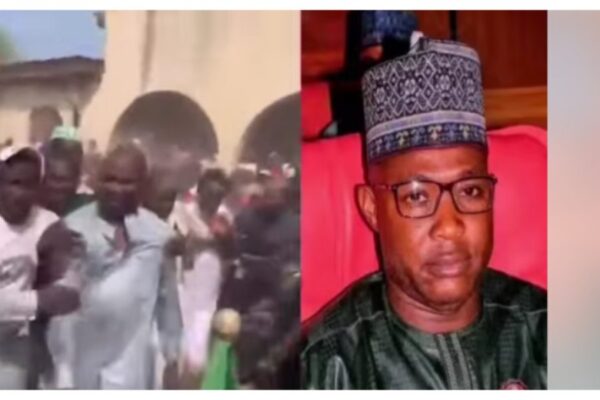
Residents of Dansadau town in Maru Local Government Area of Zamfara State on Wednesday reportedly attacked state lawmaker Kabiru Mikailu over alleged neglect of his constituency. Mikailu, who represents Maru South Constituency in the Zamfara State House of Assembly, was reportedly confronted by angry residents while accompanying Governor Dauda Lawal on a visit to the community. The residents accused him of failing to engage with constituents since his election, including skipping Sallah festivities and neglecting families affected by recurring bandit attacks. Security personnel intervened to calm the situation and prevent further violence. Governor Lawal’s visit focused on launching the reconstruction of the over 90-kilometre Dansadau–Gusau road. He also ordered the rehabilitation of the town’s General Hospital and the installation of solar-powered electricity to enhance local living conditions. The governor reassured residents of his administration’s dedication to restoring security, rebuilding essential infrastructure, and improving the welfare of communities affected by insecurity across Zamfara State. During the visit, Governor Lawal was conferred with the Chieftaincy Title of Garkuwan Dansadau and turbaned by the Emir of Dansadau, Alhaji Garba Muhammad, Sarkin Kudu Dansadau. Angry youths in Zamfara State stoned a House of Representatives member over poor performance! pic.twitter.com/vvPL6PYXNy — Abdul-Aziz Na'ibi Abubakar (@jrnaib2) December 17, 2025

Read More