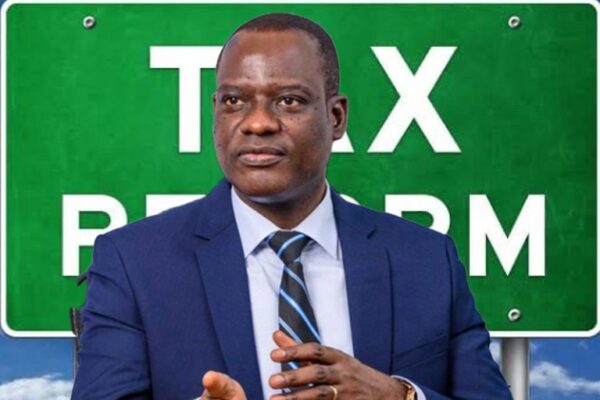
Taiwo Oyedele Defends Nigeria’s New Tax Laws, Says KPMG Misunderstood Policy Intent

The Chairman of the Presidential Fiscal Policy and Tax Reforms Committee, Taiwo Oyedele, has clarified the intent and structure of Nigeria’s newly gazetted tax laws in response to concerns raised by KPMG Nigeria, insisting that most issues highlighted by the firm stem from misunderstandings or differences with deliberate policy choices. In a statement released on Saturday, Oyedele said while some points raised by KPMG were useful—particularly regarding implementation risks and minor clerical or cross-referencing issues—the bulk of the report mischaracterised the objectives of the new tax framework. “The majority of the publication reflected a misunderstanding of the policy intent, a mischaracterisation of deliberate policy choices, and, in several instances, presentation of opinion and preferences as facts,” Oyedele said. He added that many issues described as “errors,” “gaps,” or “omissions” were either incorrect conclusions, taken out of context, or areas where the firm preferred different outcomes from those intentionally adopted. Oyedele provided detailed clarifications on key provisions flagged by KPMG: Shares and stock market taxation: The framework applies rates from 0% to 30%, set to reduce to 25%, with 99% of investors eligible for unconditional exemption. He dismissed concerns of a market sell-off, noting that disposals in December 2025 could have benefited from reinvestment exemptions or enhanced deductions. Commencement date of the laws: Strict alignment with accounting periods overlooks the complexity of transitioning to a new tax system, which involves multiple periods, audits, deductions, credits, and penalties. Indirect transfer of shares: The provision aligns with global best practices and BEPS initiatives, designed to close loopholes exploited by multinationals. Insurance premiums: These are not subject to Value Added Tax because insurance is not a taxable supply under Nigerian law. Definition of “community”: The statutory definition applies throughout the law unless context requires otherwise, with “includes” indicating a non-exhaustive list of taxable persons. Dividend taxation: Dividends from foreign companies cannot be franked as no Nigerian withholding tax would have been deducted, while dividends from Nigerian companies are treated differently by deliberate policy choice. Non-resident obligations: Non-residents are not automatically exempt from tax registration even if their income is subject to final withholding tax, as returns serve broader compliance purposes. Other clarifications addressed foreign exchange deductions at parallel market rates, linking tax deductibility to VAT compliance as an anti-avoidance measure, and noted that the Police Trust Fund expired in June 2025. The statement also pointed out that small company exemptions predate the new laws under the Finance Act 2021. Minor clerical inconsistencies and cross-referencing gaps are being addressed through administrative guidance. Oyedele described the reforms as a “bold step toward a self-sustaining and competitive Nigeria” and called on stakeholders to move from “static critique to dynamic engagement” to support effective implementation. The clarification follows KPMG Nigeria’s report, which had flagged potential errors, gaps, and inconsistencies in the new tax laws, warning that issues such as share taxation, dividend treatment, non-resident obligations, and foreign exchange deductions could impact businesses and taxpayers. Oyedele emphasised that the reforms are deliberate, comprehensive, and aimed at enhancing fairness, competitiveness, and revenue generation.


Read More

Court Orders NARD To Suspend Strike Planned For January 12 Pending Hearing

The National Industrial Court of Nigeria (NICN) in Abuja has prohibited the National Association of Resident Doctors (NARD) and its members from going on strike starting January 12. The order was issued on Friday by Justice Emmanuel Subilim following an ex parte application filed by the Federal Government and the Attorney General of the Federation (AGF). The defendants in the suit (NICN/ABJ/06/2026) include NARD, its National President Dr. Mohammad Usman Suleman, and Secretary General Dr. Shuaibu Ibrahim. The court said the restraining order will remain in force until the suit is determined and adjourned the matter to January 21 for hearing. The Federal Government has been directed to serve the order on the defendants, who may apply to vary or discharge it within seven days of receipt. Justice Subilim said the court took into account the FG’s submissions, led by Mrs. Maimuna Lami Shiru, Director of Civil Litigation at the Federal Ministry of Justice, as well as the supporting affidavits and annexures. He ruled: “An interim order of injunction is hereby granted restraining the Defendants Respondents, their members, servants, agents, privies, and/or any other person acting on their behalf or at their directives from calling, directing, organizing, participating in or embarking upon any form of industrial action, including but not limited to strikes, work stoppages, go-slows, picketing or any other form of industrial protest or disruption; as well as taking steps preparatory to or in furtherance of any industrial action, from the 12th of January, 2026, until the hearing and determination of the Motion on Notice.” The court added that it was satisfied the case warranted an interim injunction. NARD had announced plans for an indefinite strike, citing the Federal Government’s failure to implement agreed welfare demands. The announcement came after an Extraordinary National Executive Council meeting held on January 2. The association had earlier suspended a 29-day strike on November 29, 2025, after the FG promised to meet its demands within four weeks—a deadline that passed without visible progress.

Read More

INEC Receives Over N1 Trillion In 2026 Budget Ahead Of 2027 Elections

The Independent National Electoral Commission (INEC) is set to receive N1,013,778,401,602 in the 2026 budget presented to the National Assembly by President Bola Ahmed Tinubu, marking one of the largest allocations in the commission’s history. The funding comes as Nigeria prepares for the 2027 general elections. The details were released in the 2026 Appropriation Bill by the Budget Office of the Federation, which proposes a total budget of N58.18 trillion, with projected revenue of N34.33 trillion and expenditure including N15.52 trillion for debt servicing. The budget has been dubbed the “Budget of Consolidation, Renewed Resilience and Shared Prosperity.” INEC has long stressed the importance of sufficient funding to conduct credible elections. The new allocation will be critical in covering the extensive logistics required for nationwide polls, including technology procurement, voter education, and staff deployment. Section 3(3) of the Electoral Act 2022 mandates that election funds must be released at least one year before the polls. In recent years, election budgets have risen significantly. The National Assembly approved an increase for INEC in 2025, raising its budget to N140 billion from an initial N40 billion proposal. The 2023 general elections cost N313.4 billion, though only part of the approved N355 billion had been released by September 2023. In comparison, the 2019 elections cost N143 billion, while the 2015 elections were conducted at N108.8 billion. Professor Bolade Eyinla, former Chief Technical Adviser to INEC Chairman Mahmood Yakubu, projected that the 2027 elections could cost around N870 billion (about US$600 million). Speaking at a Yiaga Africa 2027 Elections Scenarios and Election Manipulation Risk Index retreat in Abuja, Eyinla described Nigeria’s elections as among the largest peacetime civil operations, requiring significant financial, technological, and logistical resources. The projected costs reflect the scale of the upcoming polls, with over 93 million registered voters, 176,846 polling units, and 1,558 electoral constituencies. After accounting for inflation and operational expansion, the estimated N870 billion is considered realistic. On a per-voter basis, this amounts to roughly US$6.72, within international norms for transitional democracies. Eyinla compared Nigeria’s election costs with other countries, noting that Kenya’s cost per voter was US$25.9 in 2017 and US$14.9 in 2022; Ghana’s was US$13.1 in 2016 and US$7.7 in 2020; South Africa’s was US$5.1 in 2019 and US$7.1 in 2024; the Democratic Republic of Congo spent US$22 and US$14.37 per voter in 2023; Liberia’s cost was US$22 per voter in 2023; and India’s 2019 election cost US$8.5 per voter. “Given the current economic conditions, inflation, and consumer price trends, conducting the 2027 general election is projected to require about US$600 million (roughly N870 billion), assuming INEC manages its resources efficiently,” Eyinla said.

Read More

Datti Baba-Ahmed Says Atiku Has Been Contesting Presidency Since His NYSC Days, Urges Generational Change

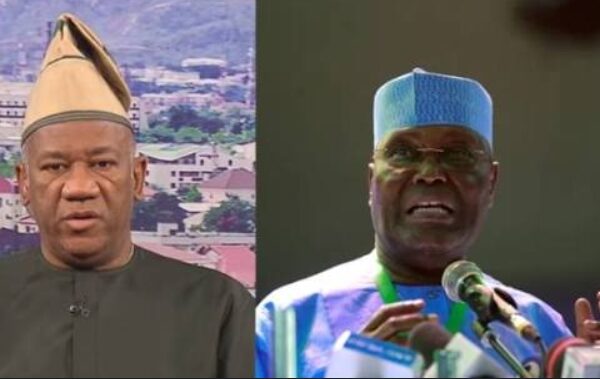
Yusuf Datti Baba-Ahmed, former Labour Party vice-presidential candidate, has called for a generational change in Nigeria’s political leadership, warning that the country cannot keep recycling the same politicians if it hopes to move forward. Speaking on Friday, Datti reflected on his long political engagement with former Vice President Atiku Abubakar, noting that Atiku has pursued the presidency for decades. “When I was doing my NYSC, Baba Atiku was an aspirant. In 2018 we contested primaries together, in 2023 again, and in 2027 too?” he said, questioning the repeated bids by longstanding politicians amid Nigeria’s growing social and economic problems. He argued that the nation’s leadership crisis stems partly from older political figures’ refusal to make way for younger, more dynamic leaders. “There is a need for a new generation of Nigerian leaders, and they exist. Many are ready to lead and offer fresh ideas to move the country forward,” he said. Datti also criticised the structure of Nigeria’s political system, describing it as unfriendly to credible individuals who genuinely want to serve. He said godfatherism, heavy financial requirements, and empty political promises discourage capable Nigerians from participating. “Until the political environment becomes more fair and accessible, the country will continue to lose out on the talents of its best minds,” he said. The former lawmaker concluded that millions of Nigerians are waiting for honest, selfless leadership capable of uniting the nation and addressing its deep-rooted challenges. He stressed that meaningful change will only come when a new generation is allowed to take charge of Nigeria’s future.

Read More

Trump Warns US Could Launch More Strikes In Nigeria If Attacks On Christians Continue

President Donald Trump has threatened that the United States could launch additional military strikes in Nigeria if attacks on Christians continue. Speaking in an interview with the New York Times, Trump was asked whether the Christmas Day missile strikes against the Islamic State in Nigeria signaled a broader campaign. He warned that further strikes were possible if the killings do not stop. The strikes followed a previous threat by Trump to send US troops into Nigeria “guns-a-blazing” to eliminate terrorists allegedly targeting Christians, amid claims by some US politicians of a possible genocide against Christians in the country. Nigeria retained control over decisions regarding the operation, according to Ademola Oshodi, senior special assistant to President Bola Tinubu on foreign affairs and protocol. “I’d love to make it a one-time strike,” Trump said. “But if they continue to kill Christians, it will be a many-time strike.” The Nigerian government has repeatedly dismissed claims that Christians are being specifically targeted.

Read More

Aliko Dangote Calls On EFCC To Probe Ex-NMDPRA Boss Farouk Ahmed Over Alleged Wealth Misconduct

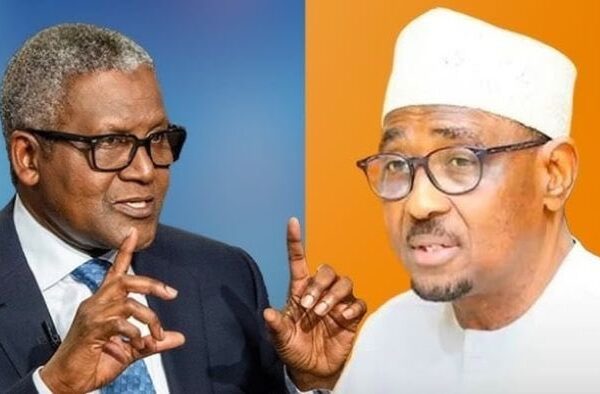
Aliko Dangote, chairman of Dangote Group, has called on the Economic and Financial Crimes Commission (EFCC) to investigate Farouk Ahmed, the former CEO of the Nigerian Midstream and Downstream Petroleum Regulatory Authority (NMDPRA), over alleged financial impropriety. Dangote accused Ahmed of abusing his office, amassing wealth beyond his legitimate earnings, and living a lifestyle inconsistent with his public service salary. The development follows Dangote’s earlier petition in December 2025 to the Independent Corrupt Practices and Other Related Offences Commission (ICPC) through his lawyer, Ogwu Onoja, in which he raised concerns about corruption and financial misconduct. Ahmed resigned from his position on December 17 after meeting with President Bola Tinubu. On January 7, Dangote withdrew his petition from the ICPC and filed a fresh complaint with the EFCC, urging chairman Ola Olukoyede to investigate Ahmed for financial misconduct, breaches of the code of conduct for public officers, and related offences. The petition highlighted that Ahmed reportedly spent over $7 million on the education of his four children — Faisal Farouk at Montreux School, Farouk Jr. at Aiglon College, Ashraf Farouk at Institut Le Rosey, and Farhana Farouk at La Garenne International School — in Switzerland over six years. Dangote argued that such expenditures far exceed what Ahmed could have earned legally as a public servant. The petition also cited legal precedents, noting that the EFCC and its partner agencies are empowered to prosecute financial crimes, and courts do not hesitate to punish offenders when a prima facie case is established. Dangote’s action signals a renewed push for accountability and transparency in public office, particularly regarding unexplained wealth and financial conduct.

Read More

FG Restricts Graduation Ceremonies To Primary 6, JSS3 And SSS3 Nationwide

The Federal Government has announced new guidelines limiting graduation ceremonies in schools across the country to only pupils and students in Primary 6, Junior Secondary School 3 (JSS3) and Senior Secondary School 3 (SSS3). According to the government, the move is intended to rein in extravagant celebrations and reduce the financial pressure placed on parents. The policy was unveiled by the Minister of Education, Dr Maruf Tunji Alausa, and the Minister of State for Education, Prof. Suiwaba Sa’idu. A statement issued on Friday by the Director of Press and Public Relations at the Federal Ministry of Education, Boriowo Folasade, said the decision forms part of ongoing efforts to reform Nigeria’s education sector and make schooling more affordable for families. Under the new directive, schools are no longer allowed to organise graduation ceremonies for classes outside Primary 6, JSS3 and SSS3, as part of measures to eliminate unnecessary expenses. In addition, the Federal Government has introduced a policy mandating the use of standardised, durable textbooks designed to last between four and six years. The initiative aims to curb repeated spending on learning materials and improve the quality of education nationwide. The policy also ends the practice of frequent, superficial textbook revisions that force parents to buy new books every academic session and prohibits the bundling of disposable workbooks with textbooks. The ministry noted that the new textbook guidelines will enable siblings to share books, reduce waste in schools and support environmental sustainability, while significantly lowering recurring costs for parents. The ministers further disclosed that a uniform academic calendar has been introduced to ensure consistency in teaching, learning and school planning across the country, adding that the reforms strengthen quality assurance and improve the assessment and use of instructional materials nationwide.

Read More

Amanda Azubuike Makes History As First Nigerian Woman To Become US Army Brigadier General

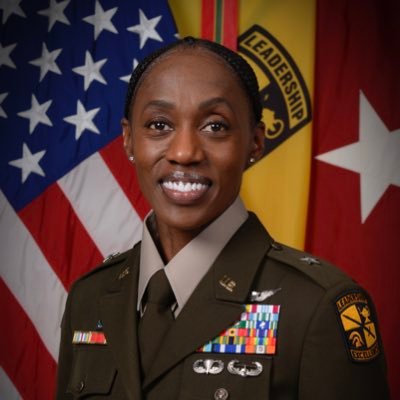
Amanda Azubuike has broken new ground in a profession long shaped by male leadership, emerging as the first Nigerian woman to rise to the rank of Brigadier General in the United States Army. Now 57, her ascent stands as a powerful symbol of possibility, particularly for women and Black professionals pushing for representation at the highest levels of military command. Azubuike was born in London to Nigerian parents of Igbo heritage and a Zimbabwean mother. Her upbringing was shaped by constant change and perseverance. Her father relocated from Nigeria to the UK to study law, where he met her mother, who was training as a nurse. After her parents separated, Amanda and her sister moved to the United States with their mother, a transition that marked a new chapter in her life. She officially became a US citizen in April 1989. With over 30 years of service, Azubuike has built an impressive military career, taking on several high-impact leadership and strategic roles. She has served as Deputy Commanding Officer at the US Army Cadet Command, led communications as Chief of Public Affairs for the US Southern Command, and worked as a Senior Military Advisor at the Pentagon. Her promotion to Brigadier General crowned decades of dedication and excellence, cementing her place in history as the first Nigerian woman to achieve this milestone in the US Army and reinforcing her legacy as a trailblazer in global military leadership.

Read More