Trump Draws Fire from Catholic Leaders Over AI Image of Himself as Pope

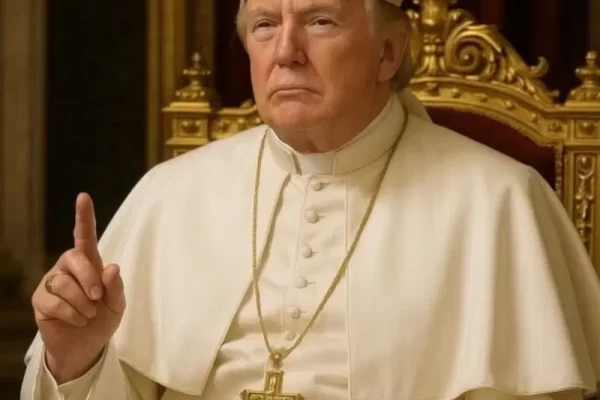
The New York State Catholic Conference has strongly condemned former U.S. President Donald Trump after he posted an AI-generated image depicting himself as the Pope, calling the move disrespectful and untimely. In a statement on X (formerly Twitter), the group, which represents New York’s Catholic bishops, criticized the image as offensive, particularly in light of the recent death of Pope Francis on April 21. “We just buried our beloved Pope Francis and the cardinals are about to enter a solemn conclave… Do not mock us,” the statement read. The image, originally posted on Trump’s Truth Social account and later reshared by the official White House X account, shows Trump dressed in ornate papal robes and a mitre, raising a finger as if giving a benediction. The post sparked divided reactions online, ranging from laughter to outrage, particularly within religious circles. Adding to the controversy, Trump reportedly joked to reporters days earlier that he would like to be Pope, calling it his “number one choice” when asked about the conclave. Trump attended Pope Francis’ funeral last week—his first major international appearance since returning to public office—raising eyebrows as some viewed his remarks and the AI image as politically tone-deaf and opportunistic. The incident underscores a broader tension between AI-generated satire and religious sensitivity, particularly at a time of mourning and transition in the Catholic Church.

Read More

The Illusion of Liberation: Captain Ibrahim Traoré and the Mirage of Pan-Africanism

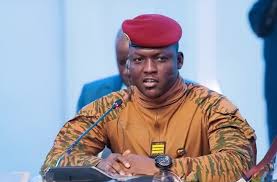
Of the three military rulers who forcefully seized power in Burkina Faso, Mali, and Niger, Captain Ibrahim Traoré of Burkina Faso has arguably operated the most sophisticated propaganda machine, one heavily infused with Pan-Africanist and anti-imperialist rhetoric. Yet beneath the surface, his regime has effectively swapped Western hegemony for Russian influence, primarily through collaboration with the Russian Africa Corps, the rebranded Wagner Group notorious for its operations across unstable regions. Since forming the Alliance of Sahel States (AES), these countries have expelled Western powers such as France and the United States, and formally withdrew from ECOWAS, the West African bloc that condemned the military coups and advocated for the restoration of democratic governance. Despite lofty promises, Captain Traoré’s regime has shown little tangible progress. Core objectives, including resolving the humanitarian crisis, reviving the economy, and combating the jihadist insurgency—which has worsened, tripling the death toll since the coup—remain unmet. Instead, civil liberties have been curtailed, and democracy, suspended in 2022, continues to languish. Yet the regime’s narrative persists—amplified by Russian disinformation networks—claiming progress and sovereignty. Just last week, pro-Traoré rallies staged under the banner of a “global day of support” took place in cities such as London, Paris, Accra, Ouagadougou, and Kingston, with demonstrators demanding an end to “Western interference” in AES affairs. Alarmingly, some supporters went as far as threatening to burn down London should Traoré die under mysterious circumstances—a stark and irrational display of political fanaticism. These protests, reportedly funded and encouraged by Russia, represent a new theatre of influence in the global East-West rivalry, with Africa as a battleground. Despite their emotive appeal, the rallies mask worsening conditions on the ground and serve as a distraction from the regression into authoritarianism. The troubling embrace of strongman politics under the guise of sovereignty reflects a crisis in African political consciousness—a failure to reckon with the long-term costs of dictatorship dressed in the garments of anti-colonialism. The irony is clear: in rejecting Western dominance, Burkina Faso and its AES partners have welcomed another imperial force, one equally, if not more, opaque and exploitative. What is even more disconcerting is the applause such regimes receive from segments of the Nigerian public, who view Traoré’s defiance of the West as courage rather than what it truly is—a regression into repression, misgovernance, and foreign manipulation.

Read More

2027: Wike, PDP Governors Move Towards Reconciliation Amid Party Crisis

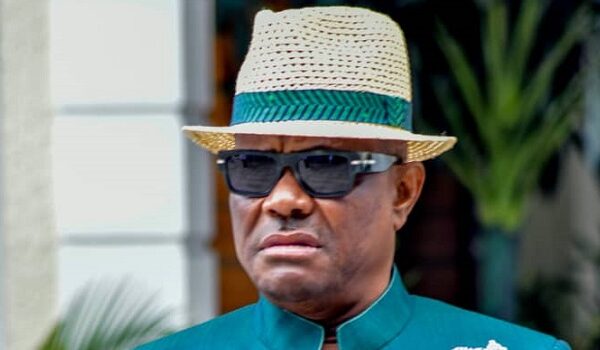
Governors elected under the Peoples Democratic Party (PDP) and the Minister of the Federal Capital Territory, Nyesom Wike, appear to be making headway in resolving lingering internal disputes, as part of broader efforts to unite the party ahead of the 2027 presidential elections. A high-level meeting held in Lagos last week between Wike and Oyo State Governor Seyi Makinde, who represented the PDP Governors Forum, has been described by insiders as a significant step toward reconciliation. According to sources close to the matter, the dialogue addressed the ongoing political crisis in Rivers State involving Wike and suspended Governor Siminalayi Fubara, as well as contentious issues surrounding the South-South zonal leadership and the vacant National Secretary position. Mounting Internal Struggles Since its loss in the 2023 general elections, the PDP has faced escalating internal divisions. These worsened with the Wike-Fubara rift, which has polarized the party’s South-South bloc. In addition, leadership disputes and legal tussles over key positions have further strained relations between top party stakeholders. Efforts by the party’s national leadership, including the National Working Committee (NWC), Board of Trustees (BoT), National Executive Committee (NEC), and the Governors Forum, have so far yielded little resolution and, in some cases, exacerbated the infighting. These ongoing tensions have already led to defections to the ruling All Progressives Congress (APC), including high-profile figures such as Delta State Governor Sheriff Oborevwori and former Governor Ifeanyi Okowa, delivering a blow to the PDP’s electoral strength and public image. Key Resolutions From Lagos Meeting The source revealed that Wike used the Lagos meeting to express dissatisfaction with the Governors Forum’s recent decisions, which he argued violated party laws and lacked inclusivity. “Wike expressed his concern that the Forum’s decisions on key issues were taken without proper legal backing or wide consultation. He feels these have only complicated the PDP’s internal crisis,” the source said. Despite his grievances, Wike reaffirmed his commitment to remaining in the PDP, but demanded that the party reassess certain decisions to accommodate all stakeholders and restore internal harmony. In response, Governor Makinde acknowledged that some party officials had behaved in ways that undermined the authority and unity of the PDP governors. He emphasized that the intent of the Forum was not to alienate anyone, but to salvage and reposition the party. The two leaders reportedly agreed that: Makinde is expected to brief other PDP governors before the Forum’s next meeting, while Wike will consult with his supporters and allies to gain their buy-in. Optimism Amid Uncertainty A senior member of the PDP National Working Committee confirmed that the meeting between Makinde and Wike was “a step in the right direction” and could help unify the party as it prepares for 2027. Meanwhile, Deputy National Youth Leader, Timothy Osadolor, expressed optimism, saying, “This and previous reconciliatory meetings show that the PDP still has what it takes to reposition and emerge stronger.” Efforts to reach the PDP National Publicity Secretary, Debo Ologunagba, for comment were unsuccessful as of press time.

Read More

Nigerian Filmmaker Joel Kachi Benson Scores Two Emmy Nominations for Madu

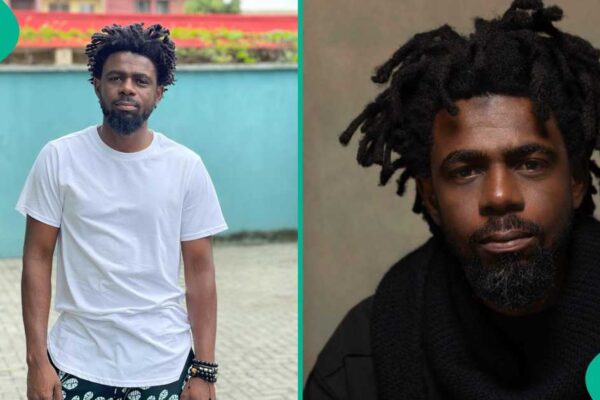
Award-winning Nigerian filmmaker Joel Kachi Benson has earned two prestigious Emmy nominations for Madu, the powerful feature documentary he co-directed with Oscar-nominated filmmaker Matt Ogens. Nominated in the categories of Outstanding Arts and Culture Documentary and Outstanding Direction at the News and Documentary Emmy Awards, this milestone marks a significant breakthrough not just for Benson, but also for Nigeria’s growing documentary film industry on the global stage. Madu tells the remarkable true story of Anthony Madu, a young ballet dancer from Lagos whose viral video—dancing barefoot in the rain—captivated millions and ultimately transformed his life. The documentary follows Anthony’s journey from the streets of Nigeria to the renowned Elmhurst Ballet School in the United Kingdom, capturing the emotional depth and beauty of his path to possibility. Premiering globally on Disney+, Madu has received widespread acclaim for its poetic visual storytelling, emotional resonance, and exploration of themes like resilience, identity, and opportunity. It has been featured at leading international film festivals and is now used as an educational resource in classrooms around the world. These Emmy nominations represent a landmark moment in Benson’s career, whose previous work Daughters of Chibok won the Venice Lion, and whose sequel, Mothers of Chibok, recently premiered in Nigeria to strong reception. More broadly, the recognition of Madu underscores the increasing global appetite for authentic African narratives told with nuance and heart. “Stories like Madu are why I became a filmmaker,” Benson shared. “They remind us that hope can come from the most unexpected places, and that the world is hungry for stories told from an authentic African perspective. This recognition by the National Academy of Television Arts is a win for all of us who believe in the power of documentary to change minds and change lives.” Through his Lagos-based production company, JB Multimedia Studios, Benson has consistently championed impact-driven storytelling, bringing to light stories of everyday heroes, hidden struggles, and extraordinary transformations across Africa. With these Emmy nods, Joel Kachi Benson joins a rising wave of African creators making their mark on the global stage—and signals a new era for documentary filmmaking from the continent.

Read More

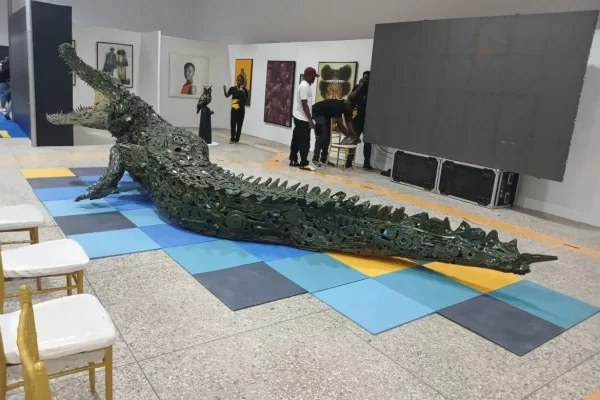
AMIAF 2025 Proves Art’s Power to Drive Economic Growth in Nigeria The 2025 edition of the Artmiabo International Art Festival (AMIAF), held at the Admiralty Conference Center in Victoria Island, Lagos, has powerfully reinforced a timely message: art has the capacity to significantly contribute to Nigeria’s economic revival. Curated by Yusuf Durodola and founded by Ngozi Miabo Enyadike, AMIAF 2025 was themed “Artconomy – Redefining the Global Art Experience”. The event ran from April 29 to May 1, kicking off with a VIP opening night hosted by Moët Hennessy, and featured over 150 stunning works by 110 artists, both emerging and legendary, across various mediums. A Cultural and Economic Showcase From the monumental sculptures of Abu Momogima to the historical plastocasts of Pa Bruce Onobrakpeya, and captivating charcoal portraits by Stephen Osuchuckwu, AMIAF presented diverse visual narratives that explored national issues, personal stories, folklore, and societal reflections. Standout works like “Agbakanogieze” (a 6-foot alligator) and “Mother is Supreme” (a towering giraffe sculpture) wowed audiences with scale and message, emphasizing recycling and cultural storytelling. Pa Onobrakpeya praised the event, saying, “The exhibition is excellent… like any good exhibition that you can find in most developed parts of the world.” Voices of the Vulnerable The festival also amplified voices from underserved communities. Young artists from Makoko, trained by Damilola Moses, displayed well-framed acrylic paintings that depicted life in their floating neighborhood. Moses highlighted how art education transformed these children’s lives, with some gaining admission to the University of Lagos. Sculptor David Debayo and artist Richard Dickson added humor and humanity, with works like “Idle Alayo” drawing laughter and admiration. Meanwhile, Stephen Osuchuckwu’s emotional charcoal piece, “The Story of My Story”, shone a light on the resilience of women and children. A Platform for Inclusion and Commerce AMIAF has evolved into a springboard for unrepresented artists. “I founded AMIAF because I was once an unrepresented artist,” said Enyadike. “Now we give artists a platform to gain visibility, connect with collectors, and sell their work.” She stressed that art isn’t just culture—it’s commerce. “Art contributes to GDP. It funds education, mentors youth, and supports families. We want the world to know that artists can sell in millions and billions too.” The Future of Artconomy Enyadike called on the Nigerian government to support the creative industry through SME initiatives. “Artists won’t run away with your money,” she emphasized. “We’re passionate. We create because we must.” The festival closed on a high note, affirming that art is not just aesthetic—it is economic, cultural, and transformative.

Read More
Nigeria Judicial System

Court Sentences BRT Driver to Death for Rape and Murder: Implications for Nigeria’s Judicial System

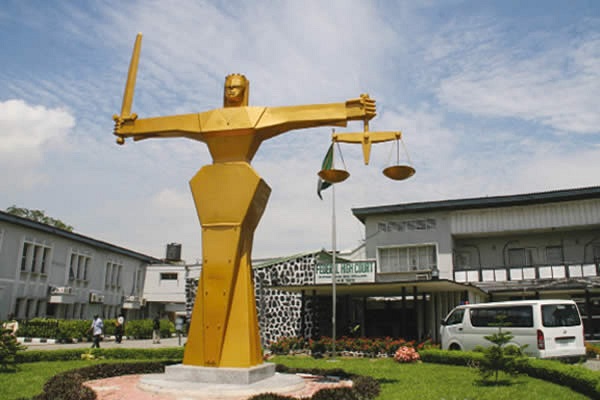
On May 2, 2025, a Lagos State High Court at Tafawa Balewa Square delivered a landmark verdict, sentencing Andrew Nice Ominikoron, a Bus Rapid Transit (BRT) driver, to death by hanging for the murder of 22-year-old fashion designer Oluwabamise Ayanwola. The court, presided over by Justice Sherifat Sonaike, also convicted Ominikoron of raping Nneka Maryjane Ozezulu, sexually assaulting Dr. Victoria Anosike, and attempting to rape Ayanwola. This high-profile case, which sparked nationwide outrage in 2022, has reignited debates about Nigeria’s judicial system, the use of the death penalty, and the broader implications for justice and public safety. This blog post explores the details of the case, the judicial process, and the significance of the death penalty in Nigeria’s legal framework. The Case: A Tragic Loss and a Public Outcry On February 26, 2022, Oluwabamise Ayanwola boarded a BRT bus driven by Ominikoron at the Chevron Bus Stop in Ajah, Lagos, en route to Oshodi. What should have been a routine commute turned into a nightmare. Ayanwola, sensing danger when the driver failed to pick up other passengers, sent a chilling voice note to a friend, expressing her fear. That was the last time her family heard from her. Nine days later, her body was found on Carter Bridge, Lagos Island, bearing signs of sexual violence. The incident triggered widespread protests, highlighting the vulnerability of women in public spaces and exposing systemic flaws in Lagos’s public transportation system. Ominikoron was arrested by the Department of State Services (DSS) in Ogun State, where he had fled. He faced a five-count charge, including conspiracy, rape, attempted rape, sexual assault, and murder. Despite pleading not guilty, the prosecution presented compelling evidence, including Ayanwola’s dying declaration via her voice note, the “last seen” doctrine implicating Ominikoron as the last person with the victim, and testimonies from other victims of his assaults. The court found him guilty on multiple counts, sentencing him to death for Ayanwola’s murder, life imprisonment for raping Ozezulu, 14 years for attempting to rape Ayanwola, and three years for sexually assaulting Anosike. The Judicial Process: A Testament to Circumstantial Evidence The trial of Andrew Ominikoron showcased the strength of Nigeria’s judicial system in handling complex cases with no direct eyewitnesses. Justice Sonaike relied on the doctrine of “last seen,” which holds that the person last seen with a deceased individual bears the burden of explaining their death. Ayanwola’s voice note, admissible as a dying declaration under Section 34 of the Evidence Act, was pivotal in establishing Ominikoron’s guilt. Additional evidence, such as forensic reports, torn clothing from another victim, and a bank transfer of N3,000 from Ominikoron to Ozezulu for painkillers, further corroborated the prosecution’s case. The prosecution, led by the Lagos State Government, called nine witnesses, while Ominikoron was the sole witness for the defense. His claim that three unidentified passengers were responsible for Ayanwola’s death was dismissed as inconsistent with the evidence. The court’s meticulous approach, including its acquittal of Ominikoron on the conspiracy charge due to insufficient evidence, demonstrates a commitment to fairness and the principle of proving guilt beyond reasonable doubt. The Death Penalty: A Controversial Tool in Nigeria’s Judicial Arsenal The sentencing of Ominikoron to death by hanging has reignited discussions about the death penalty in Nigeria’s judicial system. Capital punishment is legal in Nigeria under Section 33(1) of the 1999 Constitution and is prescribed for offenses like murder under Section 319 of the Criminal Code (applicable in Southern Nigeria) and Section 221 of the Penal Code (applicable in Northern Nigeria). However, its application remains contentious. Arguments in Favor of the Death Penalty: Arguments Against the Death Penalty: Implications for Nigeria’s Judicial System The Ominikoron verdict has far-reaching implications for Nigeria’s judicial system, particularly in the context of gender-based violence, public safety, and institutional accountability. A Call for Systemic Reform The sentencing of Andrew Ominikoron is a significant victory for justice, but it also exposes deeper systemic issues. The Nigerian judicial system must address these challenges to ensure that justice is not only served but seen to be served consistently. Key reforms include: Conclusion: A Step Toward Justice, but More Work Lies Ahead The conviction of Andrew Ominikoron for the rape and murder of Oluwabamise Ayanwola is a testament to the resilience of Nigeria’s judicial system in delivering justice for a crime that shook the nation. However, the death penalty, while satisfying public demand for retribution, does not address the systemic issues that enabled this tragedy. As Nigeria grapples with rising gender-based violence and public safety concerns, the judiciary must evolve to ensure swift, fair, and effective justice. The memory of Bamise Ayanwola demands not just punishment for her killer but a commitment to preventing such horrors in the future. Let this verdict be a catalyst for change, ensuring that no one else suffers her fate.

Read More
GTB bank silences Very dark man

GTB Bank’s Arrest of VDM: An Attempt to Silence the Voice of the Voiceless

On May 2, 2025, a troubling incident unfolded in Abuja, Nigeria, that has sparked widespread outrage and raised critical questions about the abuse of power by institutions meant to serve the public. Martins Vincent Otse, popularly known as VeryDarkMan (VDM), a vocal social media activist and self-proclaimed advocate for the marginalized, was arrested at the premises of Guaranty Trust Bank (GTB). The reason? VDM had publicly called out the bank for alleged unauthorized deductions from his mother’s salary account, accusing GTB of debiting funds for a loan she never took. This arrest, reportedly orchestrated with the involvement of the Nigeria Police Force and the Economic and Financial Crimes Commission (EFCC), is being widely condemned as an attempt to silence a voice that has consistently spoken out for the voiceless. Additionally, GTB Bank is one of Nigeria’s most vulnerable banks to hackers and fraudsters. There have been several reported and unreported cases of people having their accounts hacked, with nothing concrete being done. The Incident: A Stand for Justice Met with Suppression VDM’s activism has made him a polarizing yet influential figure in Nigeria. Known for his unapologetic approach to confronting perceived injustices, he has built a reputation as a champion for ordinary citizens facing exploitation. In this case, VDM accompanied his mother to GTB’s Abuja branch to demand answers about unauthorized deductions from her account. According to reports, these debits, which began earlier in 2025, were linked to a supposed loan tied to her National Identification Number (NIN)—a loan she claims she never applied for. Frustrated by the bank’s alleged inaction, VDM took to social media to publicize the issue, a move consistent with his advocacy style. Instead of addressing the complaint transparently, GTB’s response was shocking. VDM was arrested on the bank’s premises, reportedly after being locked inside an exit door for over five minutes to facilitate his apprehension by security operatives. His friend, who accompanied him, was also detained. According to VDM’s lawyer, Deji Adeyanju, the social media critic was subjected to “inhumane treatment” during the ordeal, prompting plans for legal action against GTB and the involved security agencies. A Pattern of Silencing Dissent This incident is not just about VDM; it reflects a broader pattern of powerful institutions attempting to suppress those who challenge their authority. VDM’s arrest sends a chilling message to ordinary Nigerians: questioning a bank’s practices or demanding accountability can lead to intimidation and detention. As Adeyanju stated on X, “Demanding accountability is not a crime, and no one should be punished for standing up for their rights.” GTB’s actions raise serious concerns about the state of consumer rights in Nigeria. If a bank can allegedly order the arrest of a customer for raising a legitimate grievance, what hope is there for the average citizen without a platform or resources to fight back? VDM’s outspokenness has made him a target, but it also underscores his role as a voice for the voiceless—those who face systemic exploitation but lack the means to challenge it. The Voiceless and the Power of VDM’s Platform VDM’s activism, while sometimes controversial, has resonated with millions because it amplifies the struggles of everyday Nigerians. From exposing fraudulent practices to advocating for the marginalized, he has used his platform to hold powerful entities accountable. His arrest at GTB is seen by many as an attempt to intimidate not just him but anyone who dares to speak out against institutional malpractice. As one X user put it, “VDM was only seeking justice for his mother. GTBank should be answering questions, not silencing voices.” The public reaction on platforms like X has been swift and fierce. Netizens have condemned GTB, with some calling for a boycott of the bank and others labeling the arrest as “draconian.” The sentiment is clear: GTB’s alleged role in VDM’s detention is perceived as an attack on free speech and consumer rights. Posts on X highlight the growing frustration with institutions that prioritize their image over addressing legitimate grievances. The Bigger Picture: Accountability and Institutional Power This incident exposes a deeper issue in Nigeria’s financial and legal systems: the lack of accountability for powerful institutions. Banks like GTB wield significant influence, and their ability to allegedly mobilize security agencies against a customer raises questions about the misuse of power. If VDM, a public figure with a large following, can be treated this way, what happens to ordinary Nigerians who face similar issues but lack the visibility to draw attention? Moreover, the involvement of the EFCC in VDM’s detention adds another layer of concern. The anti-corruption agency’s role in what appears to be a civil dispute between a customer and a bank suggests a possible overreach of authority. This incident underscores the need for clearer boundaries between financial institutions, security agencies, and the judiciary to prevent the weaponization of state power against individuals seeking justice. A Call to Action: Amplifying the Voiceless VDM’s arrest is a wake-up call for Nigerians to demand greater transparency and accountability from institutions like GTB. It also highlights the importance of protecting voices like VDM’s, which, despite their imperfections, shine a light on issues that affect the marginalized. His detention is not just an attack on him but an attempt to silence the voiceless—those who rely on advocates like him to expose injustices. As this story continues to unfold, it’s crucial for citizens to rally behind the cause of consumer rights and free speech. Legal action against GTB, as promised by VDM’s lawyer, could set a precedent for how banks and institutions handle customer complaints. Nigerians must also hold security agencies accountable for their role in what many see as an unjust arrest. Conclusion: The Fight for Justice Continues The arrest of VeryDarkMan at GTB is a stark reminder of the challenges faced by those who dare to challenge powerful institutions. It’s a test of Nigeria’s commitment to justice, free speech, and the protection of consumer rights. VDM’s fight is not just his own—it’s a fight for every Nigerian who has ever felt…

Read More

FG Orders Foreigners With Expired Visas to Leave Nigeria Within 3 Months

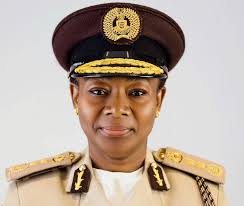
The Federal Government of Nigeria has issued a firm directive mandating all foreign nationals with expired visas to exit the country within a three-month grace period. This was announced in a statement by the Nigeria Immigration Service (NIS) on Friday, May 2, 2025. Signed by NIS spokesperson Akinsola Akinlabi, the directive warns that beginning September 2025, any foreigner who overstays their visa will incur a daily penalty of $15 and may face a re-entry ban of up to five years or permanent blacklisting. The NIS emphasized that the grace period will end on August 1, 2025, and that those affected must either regularize their status or leave Nigeria to avoid penalties. The agency reiterated its commitment to enforcing immigration rules and urged all foreigners to comply fully with the updated guidelines. As part of the new enforcement framework, the NIS also announced the rollout of a mandatory online landing card for all inbound foreign travelers and an exit card for those departing the country. These documents must be completed at lecard.immigration.gov.ng before entry or exit. The announcement comes amid broader efforts by Nigerian authorities to tighten border controls and enhance national security. Immigration officials are expected to begin strict monitoring and enforcement once the grace period expires.

Read More