JAMB Admits to Technical Glitch In 2025 UTME

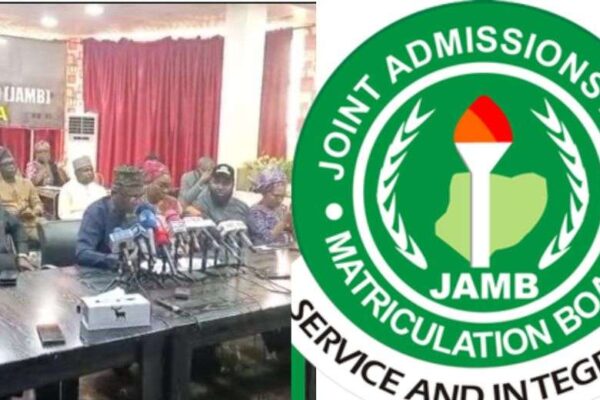
The Joint Admissions and Matriculation Board has admitted that there were errors that affected the performance of candidates during the 2025 Unified Tertiary Matriculation Examination held across different centres in the country. The Registrar of the board, Ishaq Oloyede, who made the admission during a media briefing in Abuja on Wednesday, also broke down in tears while admitting to the error. “Once again, we apologise and assure you that this incident represents a significant setback…. We remain committed to emerging stronger in our core values of transparency, fairness and equity. “It is our culture to admit error because we know that in spite of the best of our efforts, we are human; we are not perfect,” Oloyede said as he wiped tears off his eyes with a white handkerchief. He also announced that about 379,997 candidates in the just concluded 2025 exercise would retake the examination. This followed widespread complaints of technical glitches, unusually low scores, and alleged irregularities in the questions and the answers during the exercise. However, in a post on its X handle on Wednesday, the examination body said it established that a technical glitch affected 157 centres out of the 887 centres. This, it said, was responsible for the general low performance of the candidates. It said, “Man Proposes, God Disposes! It has been established that a technical glitch affected 157 centres out of the 887 centres in the 2025 UTME. This was basically responsible for the general low performance of the candidates scheduled to sit the examination in those centres. “As such, all the affected candidates will be contacted to reprint their examination slips towards retaking their examinations starting from 16th May, 2025.” JAMB had released a statistical breakdown of the 2025 UTME, where it revealed that over 1.5 million of the 1.95 million candidates who took the examination scored below 200. In a post on its official X on May 5, it highlighted that a total of 1,955,069 candidates sat for the examination, and of this number, a significant 1,534,654 candidates—representing 78.5 percent —scored below the 200 mark. A breakdown of the results showed that only 4,756 candidates (0.24 percent) achieved scores of 320 and above, while 7,658 candidates (0.39 percent) scored between 300 and 319. In total, just 12,414 candidates (0.63 percent) scored 300 and above. For the 250-299 score range, 73,441 candidates (3.76 percent) were recorded, while a larger proportion, 334,560 candidates (17.11%), scored between 200 and 249. The category with the highest number of candidates was the 160 to 199 range, with 983,187 candidates (50.29 percent). Further down the scale, 488,197 candidates (24.97 percent) scored between 140 and 159, and 57,419 candidates (2.94 percent) scored between 120 and 139. A percentage of candidates, 3,820 (0.20 percent), scored between 100 and 119, while 2,031 candidates (0.10 percent) fell below the 100 mark. In addition to the overall results, JAMB also disclosed that 40,247 underage candidates were allowed to participate in the examination due to their “exceptional abilities.” However, only 467 of these candidates (1.16 percent) achieved scores that met the defined threshold for “exceptional ability.” In 2024, over 1.94 million candidates registered for the UTME, with 1,904,189 candidates taking the examination across 118 towns and more than 700 centres. JAMB also said that only 0.4 percent of candidates who took the 2024 examination scored above 300, while 24 percent scored 200 or higher. JAMB also reported that 97 candidates were involved in examination infractions in the 2025 UTME, while 2,157 others were under investigation for “suspected malpractices.” The board further noted that 71,701 candidates were absent from the examination, and those facing biometric challenges were being investigated. JAMB also noted that those cleared would be rescheduled for examination at designated centres. It added that some results, including those of blind candidates and candidates in the JEOG category, are still being processed and will be released once finalised. JAMB had assured that candidates who faced biometric challenges or were involved in investigations would be given fair treatment, with rescheduling for those cleared.
Read More

EFCC Presents Ninth and Final Witness against Suswam in Alleged N3.1b Fraud

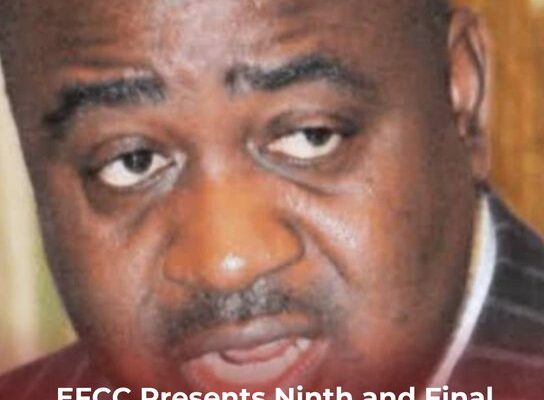
The Economic and Financial Crimes Commission, EFCC on Wednesday, May 14, 2025 presented the Ninth and last Prosecution Witness, PW9, Ape Sunday against the former governor of Benue State, Gabriel Suswan. The Commission is prosecuting Suswan alongside his then Commissioner of Finance, Omodachi Okolobia on amended 11-count charge, bordering on diversion of public funds to the tune of N3.1 billion (Three Billion, One Hundred Million) being part of the proceeds from the sale of the state government’s shares, held on its behalf by Benue Investment and Property Company Limited. During Wednesday proceedings, prosecuting counsel, A.O Atolagbe informed the court that the prosecution was presenting its ninth and the last of its witnesses, implying that it was closing its case with the testimony of the witness. The closing of its case with PW9 followed the inability of the 10th Prosecution Witness, PW10, Mrs Shiedu Awade to testify in court due to ill health. The Ninth Prosecution Witness, PW9, an investigator with the EFCC, while being led in evidence informed the court that PW10, a former cashier and executive officer of Benue Investment and property Ltd has been on admission in National Hospital, Abuja and that it was impossible for her to show up in court to testify due to the serious nature of her illness. In response to prosecution’s final presentation of witnesses, counsels to the first and second defendants C.E Ugbozor and Paul Erokoro, SAN, respectively informed the court that they will be filing “a no case submission” and requested that the judge grants them 14 days period to so, while prosecution counsel on his part requested the court to grant him 21days to enable him file his response to the defence’s “no case submission.” Justice Lifu adjourned the matter till June 24, 2025 for the adoption of the defence “no case submission.”

Read More
Navy Dismantles Nine Illegal Refineries in Rivers, Seizes 175,000 Litres of Stolen Products

Navy Dismantles Nine Illegal Refineries in Rivers Seizes 175,000 Litres of Stolen Products

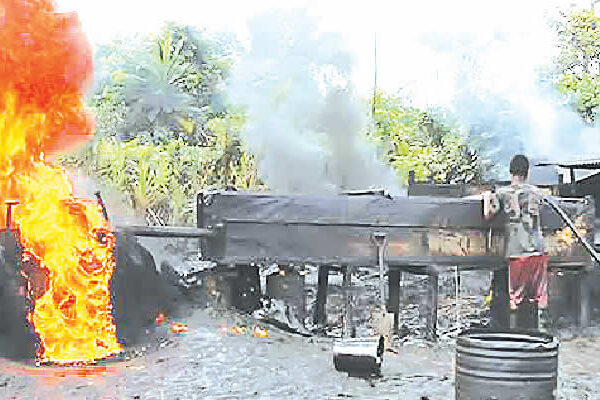
Port Harcourt, May 14, 2025 — The Nigerian Navy Ship (NNS) Pathfinder has dismantled nine illegal refining sites and seized approximately 175,000 litres of suspected stolen petroleum products in Ogba/Egbema/Ndoni Local Government Area of Rivers State. The operation, carried out on May 12, exposed an extensive network of illicit activities, including 45 refining ovens, 30 storage reservoirs, and 75 dugout pits, according to a statement by Commodore Cajethan Aniaku, Commander of NNS Pathfinder. Details of the Seizure: The illegal facilities were destroyed on-site to prevent further exploitation and environmental harm. The Navy also discovered two wellheads connected via underground pipes used by oil thieves to siphon crude directly to their camps. The pipes were dismantled as part of the operation. “The Nigerian Navy, under the leadership of Vice Admiral Emmanuel Ogalla, remains committed to combating crude oil theft and illegal bunkering,” said Commodore Aniaku. “These activities pose grave threats to our national economy and energy security.” No arrests were made as the perpetrators fled before the arrival of the tactical squad. Aniaku praised the personnel for their bravery and professionalism, reaffirming the Navy’s commitment to safeguarding Nigeria’s oil infrastructure through ongoing anti-theft and bunkering operations.

Read More
CBN Launches Non-Resident BVN, Opens Nigeria’s Financial System to Diaspora

CBN Launches Non-Resident BVN Opens Nigeria’s Financial System to Diaspora

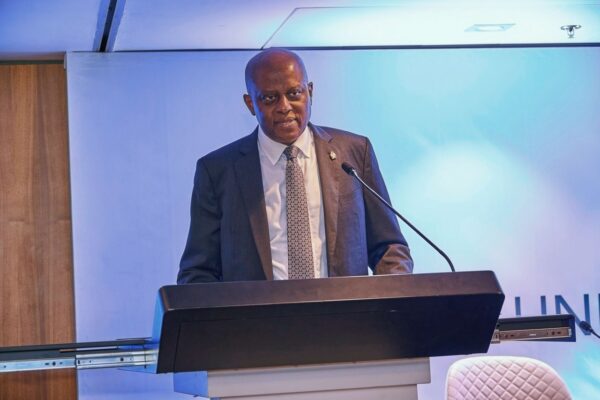
Abuja, Nigeria – May 13, 2025The Central Bank of Nigeria (CBN) has taken a major leap toward bridging the financial gap between Nigeria and its diaspora population with the official launch of the Non-Resident Bank Verification Number (NRBVN). The initiative, unveiled yesterday in Abuja, is being hailed as a historic move that will allow millions of Nigerians abroad to access and participate in Nigeria’s financial ecosystem without the previous bureaucratic and logistical barriers. Speaking at the launch, CBN Governor Olayemi Cardoso described the program as a “transformational milestone” that reflects the Bank’s commitment to full financial inclusion for Nigerians, regardless of their geographical location. “This is not the final destination, but the beginning of a broader journey,” Cardoso stated. “Every Nigerian, no matter their location, remains connected and empowered to contribute to Nigeria’s vibrant future.” Eliminating Key Barriers for the Diaspora The NRBVN initiative tackles several longstanding obstacles that have hindered the financial participation of Nigerians living overseas. Here’s how it addresses seven critical pain points: 1. Mandatory Physical Presence for Banking Services Before: Nigerians abroad had to travel home to open or manage accounts.Now: With NRBVN, digital verification replaces the need for physical presence, saving time and money.Impact: “Considerable costs in terms of time and financial resources” are now eliminated, Cardoso said. 2. Limited Access to Financial Institutions Before: Distance restricted diaspora Nigerians from accessing banking services.Now: A new digital platform connects users to Nigeria’s entire banking ecosystem from anywhere in the world.Impact: A “single digital gateway” now ensures seamless service delivery to all Nigerians, according to the CBN. 3. Restricted Investment Opportunities Before: Bureaucratic bottlenecks locked diaspora Nigerians out of investment markets.Now: With the NRBVN and the complementary Non-Resident Nigerian Investment Account (NRNIA), full access to stocks, bonds, real estate, and pension products is unlocked.Impact: Investors can now participate with ease—and repatriate profits freely. 4. High-Cost, Insecure Remittance Channels Before: Fees as high as 7% and unreliable channels made remittances costly and risky.Now: Formal, regulated remittance pathways now ensure lower costs and higher security.Impact: Remittance inflows are expected to surge, supporting the CBN’s $1 billion monthly target. 5. One-Size-Fits-All Banking Products Before: Few financial products were designed with diaspora lifestyles in mind.Now: Banks have been directed to develop customized products like diaspora mortgages, savings, and investment bundles.Impact: Financial offerings now reflect the unique needs of cross-border customers. 6. Inconsistent Regulatory Framework Before: Unclear rules discouraged long-term diaspora engagement.Now: A stable regulatory model inspired by India and Pakistan ensures consistency and clarity.Impact: Greater confidence among diaspora investors, with Nigeria aiming to replicate India’s $160 billion diaspora deposits. 7. Disconnection from Nation-Building Before: Lack of formal mechanisms limited diaspora contributions to development.Now: New investment channels allow Nigerians abroad to support local infrastructure and job creation.Impact: Strengthened economic ties and social impact, even from thousands of miles away. A Global Vision with Local Impact The launch of the NRBVN represents a strategic pivot in Nigeria’s efforts to unlock diaspora capital and involvement. With over 15 million Nigerians living abroad, the CBN sees enormous potential for boosting the economy through improved remittances, investment flows, and community development. Governor Cardoso emphasized that the initiative would be refined based on ongoing feedback, underscoring the Bank’s commitment to a dynamic, inclusive financial system. “Your financial connection to Nigeria should be as strong as your cultural one,” he said.

Read More

Boko Haram Deploying Armed Drones Nigerian Army Warns

Maiduguri, Nigeria – May 14, 2025 The Nigerian Army has raised concerns over the increasing use of armed drones by Boko Haram insurgents in the North East, describing it as a dangerous shift in tactics that poses significant challenges to national security. Major General Abdulsalam Abubakar, Theatre Commander of Operation Hadin Kai (OPHK), disclosed this development during a press briefing on Tuesday in Maiduguri, Borno State. According to the commander, the terrorist group has begun deploying drones similar to those used in conflict zones such as Israel and Ukraine, which are difficult to detect using conventional radar systems. “The terrorists have changed tactics, resorting to multi-pronged attacks on isolated and vulnerable deployments. They use these attacks as propaganda,” General Abubakar said. “This is why we are reviewing our deployments to counter their evolving strategies.” The army chief warned that insurgents who continue to resist and engage in violence face “certain elimination,” urging them to surrender and emulate those who have already laid down their arms and are being treated humanely. Despite the new threat posed by drone warfare, General Abubakar reassured Nigerians that the troops remain highly motivated, attributing improved morale to enhanced welfare packages instituted by the military leadership. “This shows the seriousness with which the government is tackling this conflict,” he said. “We are confident that in due time, we will achieve complete victory over terrorism.” The Theatre Commander highlighted significant progress in the fight against insurgency, noting that normalcy has largely returned to many parts of the North East compared to five or ten years ago. “In just the past week, over 20 terrorists have been neutralised and several weapons recovered. Operations are ongoing on multiple fronts,” he said, adding that thousands of displaced residents have returned to their communities. “Malam Fatori and Kukawa are recent success stories, with nearly 20,000 IDPs returning to their ancestral homes.” However, General Abubakar acknowledged that insecurity across the wider Sahel region is impacting Nigeria’s counterterrorism efforts. He noted that arms looted from overrun military barracks in neighboring countries are often smuggled into Nigeria through porous borders. “Two years ago, we were on the verge of declaring the conflict over,” he revealed. “But the deterioration in the Sahel has had a direct impact on us. The terrorists have also adapted—thanks in part to the ease with which they access new technology.” He cited the deployment of weaponised drones since November 2024 as a major concern, prompting the military to reassess and reorganize its strategy. “The Chief of Army Staff visited last week and major changes have been implemented. I assumed command just three weeks ago as part of those changes,” he said. General Abubakar confirmed that coordinated attacks were recently launched in Rann, Dikwa, and Gajiram. While most were repelled, the attack on Rann breached military defenses, resulting in the loss of four personnel. Despite the setback, he reaffirmed the military’s determination to end terrorism. “Our resolve remains firm. We will defeat terrorism and restore peace to this region as swiftly as possible. But we need the full support of the nation,” he said. The commander urged Nigerians to grasp the complexity of the mission, noting that the OPHK theatre covers over 150,000 square kilometers—larger than several countries combined. “In asymmetric warfare, as Sun Tzu said, you must separate the fish from the water. Security is a collective responsibility,” he added. As a sign of growing community collaboration, he cited the recent interception of 13,000 litres of petrol being smuggled to terrorist enclaves—a cache capable of powering insurgent operations for a year. “The fight against terrorism cannot be won by the armed forces alone,” he concluded. “We need the cooperation and vigilance of every citizen to overcome this challenge.”

Read More

Reps Reject Bill Seeking Six-Year Single Term and Rotational Presidency Across Nigeria’s Geopolitical Zones

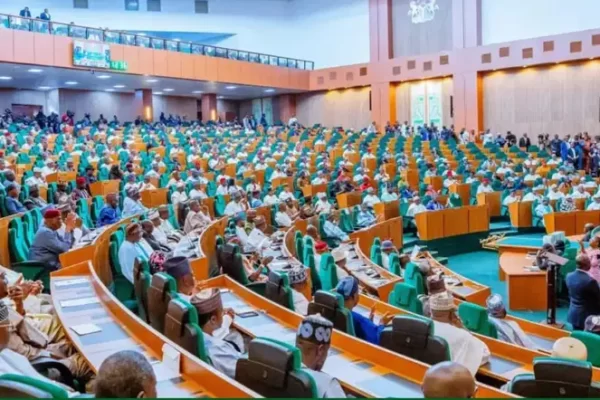
The House of Representatives has rejected a bill seeking to amend Nigeria’s constitution to provide for a single six-year term for the President, state governors, and local government chairpersons, as well as rotational presidency among the country’s geopolitical zones. The bill, sponsored by Hon. Ikenga Ugochinyere (PDP, Imo) and 33 other lawmakers, was debated on the floor of the House on November 21, 2024. It failed to scale through second reading following strong opposition during a voice vote. Key provisions of the bill included: However, the proposal was met with resistance from several lawmakers who argued that enforcing a rotational presidency through the constitution could fuel regional division, undermine democratic rights, and trigger political instability. Critics warned that the amendment could also infringe on the right of every Nigerian to contest elective offices and might complicate leadership selection based on merit. Despite the setback, the bill’s proponents have vowed to continue pushing for the reforms. Ugochinyere described the rejection as a temporary roadblock and expressed the intention to reintroduce the bill after further consultations and legislative engagement. He maintained that the proposed reforms are aimed at promoting inclusion, cutting governance costs, and ensuring that leaders focus on service delivery rather than re-election campaigns. The debate underscores the broader national conversation about constitutional restructuring, power rotation, and equitable representation in Nigeria’s complex multi-ethnic and multi-regional political landscape.

Read More

AMMC partners NUJ FCT On Infrastructural Development 

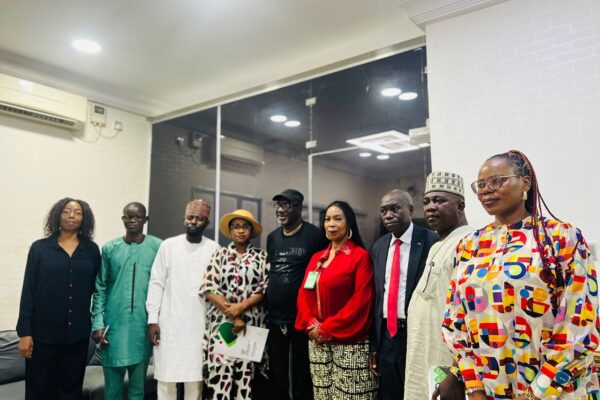
The Abuja Metropolitan Management Council (AMMC) has expressed commitment to partner the Nigeria Union of Journalists (NUJ), FCT Council on infrastructural development in the Federal Capital Territory (FCT). This was disclosed when the NUJ FCT Chairperson, Ms Grace Ike, led her executive team on a courtesy visit to the AMMC Coordinator, Chief Felix Amechi Obuah, on Tuesday. Chief Obuah while welcoming members of the NUJ FCT, expressed his readiness to collaborate with the council having recognised the vital role the media play in informing the public in activities of the AMMC which is helping the agency to ensure full compliance of the FCT master plan. “I welcome you and your team to our corporate office today. I have listened to you and I just have to say that, I am indeed very happy to partner with the NUJ FCT. We need to partner together to be able to achieve our core and corporate mandate. And in partnering together we support each other and grow together and educate the public so as to attain infrastructural development in the FCT in line with the master plan of the nation’s capital city,” he said. While expressing his willingness to support the NUJ FCT Council, Chief Obuah explained that current financial constraints make it difficult to make any immediate commitment but hope to accommodate the unions needs in the next budget “Even though I am a bit handicapped to make any promises because of budgetary constraints. But in the subsequent budget, I assure you that whatever we can do to help your dream come true for NUJ and your members, the agency will do everything humanly possible to contribute their quota to the growth of the union in line with the FCT master plan He also added, “You can write my office on what you feel we can do officially. I will also present it in the next budget and I will go to my superior, the Honourable Minister of FCT, and say these people visited me and came with a very solid, verified programme—how do we assist? Because whatever we are doing, with the media, the public would not know and be able to key into it. He said the media play a very vital role in the growth and development of any organisation.” Dr Obuah used the occasion to congratulate the first female chairperson of the union after four years of its existence and pray for a successful tenure. Earlier, Chairperson of the NUJ FCT Ms Ike thanked Chief Obuah for receiving her team and commended the AMMC Coordinator for the effective management and coordination of municipal services as well as infrastructural development in the Federal Capital Territory (FCT). She used the occasion to commend his support for workers welfare which earned him the employee’s advocate award of the year award She said “ I must commend your leadership efforts in ensuring proper maintenance and sustainable management of the city’s infrastructure, utilities, and services” She highlighted major infrastructural challenges currently facing the NUJ FCT Council and requested support to improve their facilities such as the completion of the pentagon building, and a hall that cannot house more than 2, 000 journalists during her monthly congress. She also made a strong case for the NUJ FCT “Journalists’ Village”, which would offer journalists affordable housing and a suitable environment to carry out their work. She said, “On behalf of the Nigeria Union of Journalists, Federal Capital Territory Council, I express our heartfelt gratitude for your unwavering commitment to the welfare of workers, including media professionals. Your kind gestures and support have not gone unnoticed and have greatly encouraged us in our mission. “Today, we come with a sincere appeal for your support towards the establishment of a Journalists’ Village here in the FCT. This initiative is vital for providing affordable housing, professional facilities, and a conducive environment that will enhance the welfare and productivity of journalists who play a critical role in our democracy. “We believe that with the AMMC’s collaboration, we can secure the necessary resources, land, and policy backing to bring this vision to fruition. Such a village will not only improve the living standards of journalists but also serve as a hub for capacity building, relaxation, and professional growth. “We appreciate your past efforts and hope to count on your continued partnership to make this project a reality, thereby restoring dignity and stability to journajlists who tirelessly serve the public interest” she added

Read More
Natasha’s Constituents Submit Petition To INEC For Her Recall 

Court to pass judgement on Sen Natasha’s suspension June 27

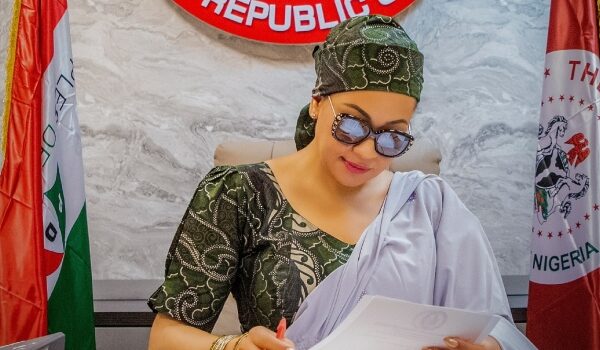
A Federal High Court in Abuja, presided over by Justice Binta Fatima Nyako, has set June 27, 2025, for the delivery of judgment in the case filed by Senator Natasha Akpoti-Uduaghan.  The Kogi Central Senator is challenging her suspension by the Senate Committee on Ethics, Privileges, and Public Petition, which she claims was due to allegations of gross misconduct. In her suit, Akpoti-Uduaghan has named the Clerk of the National Assembly, the Senate, Senate President Godswill Akpabio, and the Chairman of the Senate Committee on Ethics, Senator Nedamwen Imasuen as defendants. After listening to the arguments from both sides, Justice Nyako announced that judgment will be delivered on the stated date. Additionally, the judge will rule on the contempt applications filed against Akpoti-Uduaghan and Akpabio. Counsel for the Senate, Paul Daudu, SAN, had accused Akpoti-Uduaghan of acting in breach of an order of the court by posting a satirical apology on her Facebook page. Akpoti-Uduaghan’s legal team also alleged that Akpabio did same with comments by Olisah Agbakogba and Monday Ubani (both senior lawyers), in his favour, during media appearances. The actual order of 4th April by Justice Nyako stopped Akpoti-Uduaghan, Akpabio, the Clerk of the National Assembly, the Senate, and Imasuen from granting media interviews or making social media posts relating to the case while it remained pending before the court. While adopting the documents that contain the closing arguments, counsel for Akpoti-Uduaghan, Michael Numan, urged the court to grant his client’s relief by reversing the Senate Committee’s decision. He also countered the allegations of contempt of court. In their arguments, the Clerk of the National Assembly, the Senate, the Senate President, and the Chairman, Senate Committee on Ethics Privileges and Public Petitions, all challenged the jurisdiction of the court to hear the matter. They further urged the court to dismiss the case instituted by the suspended Kogi Central senator. The dispute between Akpabio and Akpoti-Uduaghan started from a disagreement over seating arrangements during a Senate plenary session on February 20, 2025. Akpoti-Uduaghan subsequently made allegations of sexual harassment against Akpabio during a programme on ARISE News. She then approached the Federal High Court seeking an order stopping the Senate Committee on Ethics, Privileges and Public Petitions from investigating her, an action that led to her six-month suspension, following the recommendation of the Senate Committee. Justice Obiorah Egwuatu, who was initially assigned the suit, withdrew from presiding over the case after allegations by Akpabio’s camp.

Read More