Senate Steps In To End ASUU Strike, Sets Meeting With Education Minister And NUC

Senate Slashes Election Notice Period To 300 Days to Grant INEC More Flexibility

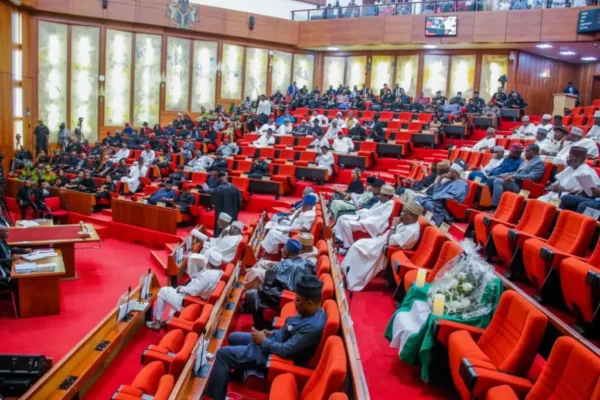
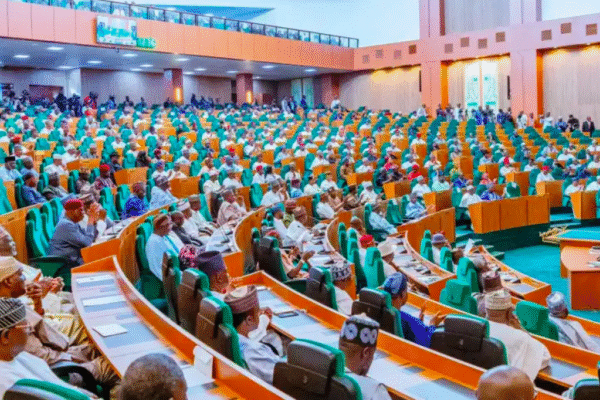
Nigeria’s upper legislative chamber has approved fresh changes to the Electoral Act Amendment Bill, trimming the statutory election notice period from 360 days to 300 days in a bid to give the Independent National Electoral Commission more flexibility in fixing poll dates. The adjustment effectively grants INEC an extra 60 days to review and realign its timetable, particularly to prevent any overlap between national elections and the Ramadan fasting season. Senate Leader Opeyemi Bamidele said the chamber reconvened mainly to fine-tune sections of the bill that would allow the electoral body reconsider its schedule without breaching legal timelines. Earlier, INEC had announced February 20 for presidential and National Assembly elections, while governorship and state assembly polls were slated for March 6. The timeline drew public concern over a possible clash with Ramadan. Chairman of the Senate Committee on Electoral Matters, Simon Lalong, noted that the commission did not deliberately create the scheduling tension, explaining that the framework guiding the timetable had been put in place before the current leadership took charge. Lawmakers also revisited Clause 60 of the bill, which addresses the mode of transmitting election results. During debate, Senator Eyinnaya Abaribe advocated mandatory real-time electronic transmission, insisting it would strengthen transparency and deepen public trust in the electoral system. After deliberations in a closed session, however, the Senate resolved to retain a safeguard allowing manual transmission where electronic networks fail. Senate President Godswill Akpabio said the provision would guarantee continuity of the electoral process in situations where technological systems encounter difficulties.

Read More

Lagos DSVA Appeals for Help to Locate TikToker Who Alleged Apartment Rape

The Lagos State Domestic and Sexual Violence Agency (DSVA) has called on the public to assist in locating a TikToker who claims she was raped in her apartment by a stranger. In a statement posted on its official social media accounts on Tuesday, the agency said it is actively trying to contact the survivor to provide support and verify her location. “The Lagos State Domestic and Sexual Violence Agency has taken note of the multiple tags and public concerns regarding a video circulating on social media, in which a young woman recounted her experience of sexual assault at her residence on TikTok,” the agency stated. “We are making efforts to reach the survivor to offer immediate assistance and appropriate intervention. Our team has initiated contact through available channels and will continue efforts to establish communication. Anyone with credible information that can help us reach her safely is urged to send a DM to the Agency on any of our official social media platforms.” DSVA stressed that sexual assault is a crime, and survivors are entitled to protection, care, and justice. The agency also noted that all reports are handled confidentially and with urgency. The TikToker, identified as Mirabel, said in a video posted on Monday that the alleged assault occurred on Sunday, February 15. She explained that she had consumed alcohol to help her sleep around 6 a.m., and heard knocks at about 9 a.m. “I thought it was my neighbour… when I opened the door, I was pushed back, hit my head on the fridge, and passed out,” she said. She added that she later regained consciousness and found a man over her. Mirabel also shared messages allegedly sent by a suspect named “Priston,” who claimed responsibility for the attack and made threats regarding the case. In a follow-up video on Tuesday, she revealed she attempted to take her life by ingesting a substance but was rescued and taken to a hospital by a friend. The incident has sparked outrage on X, formerly Twitter, with the hashtag #StopRapingWomen trending as users demand stronger action against sexual assault.

Read More

Zamfara Governor Dauda Lawal Claims APC-Led States Receive N500 Billion While His State Gets None

Zamfara State Governor Dauda Lawal has accused President Bola Tinubu’s administration of favouring APC-led states with billions in federal intervention funds, while his state has reportedly received nothing. Speaking to Radio DW Hausa, Lawal said that since assuming office in 2023, Zamfara has not benefited from any federal intervention programs. He suggested that the exclusion is linked to his membership in the opposition Peoples Democratic Party (PDP). “The Federal Government has never disbursed any intervention fund to Zamfara State unlike other states. I have it on good authority that some states have received over N500 billion from the Federal Government, but my state has not received a single kobo. I believe it is because I am not in the same party as them. I am in an opposition party,” he said. Despite the alleged lack of support, Lawal said his administration has continued to implement projects for the welfare of the people. “Since I became governor in 2023, if not for the allocation we are entitled to, the Federal Government has not given us any additional intervention. But that has not stopped us from doing our best to execute projects for the betterment of our people,” he added. He also clarified that Zamfara has not taken any new loans to fund state operations, noting that the state is still servicing debts left by the previous administration. “I have never borrowed any loan to run our state, not even one cent. Every month, N1.2 billion is deducted before the money is sent to us,” Lawal said. On the possibility of leaving the PDP amid internal party crises, Lawal said he has no plans to defect. “As a Muslim, I believe only God gives power, no one else. I can’t betray my party just because we have internal issues within it. I will do my best to see the end of this issue we are facing. I can’t make that decision alone. I have to consult with my supporters before I can make such a decision. But if PDP is fixed, then there will be no reason for me to move to any party,” he stated.

Read More

BREAKING: Saudi Arabia Confirms February 18 As Start Of Ramadan 2026

Saudi Arabia has announced that Wednesday, February 18, will mark the beginning of Ramadan 2026, following the sighting of the crescent moon, the Saudi Press Agency (SPA) reported. The announcement aligns with decisions in other countries, including Qatar, which have also declared February 18 as the start of the holy month. During Ramadan, Muslims engage in daily fasting from dawn to sunset, refraining from eating, drinking, and smoking, while dedicating time to prayer, reflection, and spiritual growth. Evening gatherings at mosques for isha and extended Taraweeh prayers are a hallmark of the month. Charitable giving is strongly encouraged, with many believers supporting the needy and participating in community initiatives. Ramadan, the ninth month of the Islamic calendar and one of the five pillars of Islam, also draws thousands of pilgrims to Saudi Arabia for Umrah. While this pilgrimage can be performed any time of the year, many prefer Ramadan for its added spiritual significance. Muslims around the world, including those in the United States and Canada, often follow Saudi Arabia’s official declaration to determine when to begin their observance of Ramadan.

Read More

Police Disperse Electoral Reform Protesters At National Assembly With Tear Gas

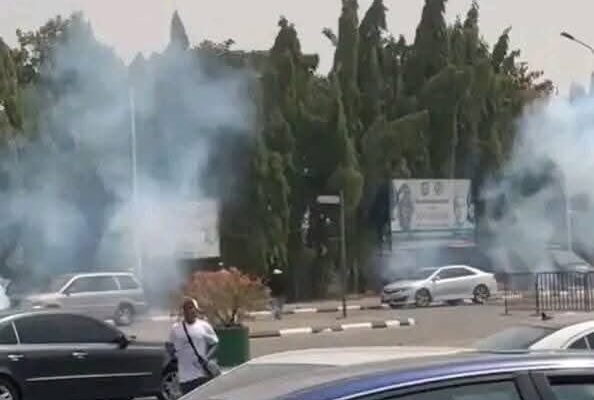
The Nigeria Police Force on Tuesday, February 17, used tear gas to disperse protesters gathered outside the National Assembly in Abuja, amid rising tensions over proposed changes to the country’s electoral laws. Among those present were activist and former presidential candidate Omoyele Sowore and former minister Solomon Dalung, who joined the demonstration calling for reforms to ensure greater transparency ahead of the 2027 general elections. Sowore condemned the police action, describing it as a violent crackdown on peaceful demonstrators. He said several protesters collapsed after being exposed to tear gas and urged Nigerians to mobilize in defense of electoral integrity and civil liberties. “This has translated now to a total declaration of war on Nigerians. This is a coup against democracy…for the first time the police is using compressed containers that penetrate through your skin on Nigerians. Over two people have collapsed in this place now. This is not going to be accepted. We are calling on Nigerians to be heading down to the National Assembly,” Sowore stated. The protesters demanded the implementation of real-time electronic transmission of election results, restoration of a 360-day statutory timeline for issuing election notices, and stricter penalties for vote buying. They insisted that these measures are essential to enhance transparency, improve preparations by electoral stakeholders, and restore public confidence in Nigeria’s electoral process. Despite the dispersal, the demonstrators vowed to continue pressing their demands, urging members of the National Assembly Conference Committee to prioritize public interest and strengthen electoral accountability. Just look at the Nigerian Police in their full glory on National TV. pic.twitter.com/dtG9Bz9IYs — Morris Monye (@Morris_Monye) February 17, 2026

Read More

WAEC Launches Digital Certificate Platform Across Member States

The West African Examinations Council (WAEC) has launched its Digital Certificate Services System, WAEC DigiCert, across all member states, including The Gambia, Ghana, Liberia, Nigeria, and Sierra Leone. Announced in a press release from WAEC Headquarters on Nelson Mandela Avenue, Okponglo, Accra, the new platform allows candidates, schools, and other stakeholders to request, access, verify, and share digital copies of WAEC certificates. It also provides a feature to recover lost examination numbers. WAEC emphasized that the DigiCert system is secure, reliable, and cost-effective, reducing administrative delays and challenges linked to manual certificate processing. Commenting on the launch, Demianus G. Ojijeogu, Head of Public Affairs at WAEC, said, “Following a successful pilot in Nigeria, WAEC DigiCert has received positive feedback from candidates and institutions worldwide. We encourage the public to adopt this platform to make certificate verification faster and easier.” The council assured that traditional printing and issuance of certificates will continue alongside the digital service. WAEC DigiCert is accessible via mobile and web platforms, with the app available on the App Store and Google Play. Stakeholders can find more information at www.waec.org or through @WAECDigicert on social media.

Read More
Garba Muhammad Raises Alarm Over Terrorist Threats To Bomb National Assembly Complex

Reps Stage Walk Out As Protest Continues Over Electronic Transmission

Some members of the House of Representatives have walked out of the green chamber in protest against the move to rescind the passage of the Electoral Act Amendment bill. Trouble started after Francis Waive, Chairman of the House of Representatives Committee on Rules and Business, moved a motion for the House to reverse its decision on the bill which was passed on December 23, 2025. The Speaker, Tajudeen Abbas, had put the motion to a voice vote. While the “nays” were louder than the “ayes”, he ruled that the ayes had it, a development which triggered protest. Abbas subsequently called for an executive session, but that did not resolve the issue as the house was plunged into another rowdy session. The lawmakers continued their protest over Clause 60(3) which deals with compulsory electronic transmission of results. They stood on their feet and prevented the Deputy Speaker, Benjamin Kalu, from continuing with the proceedings. Eventually, aggrieved members walked out of the plenary. https://twitter.com/i/status/2023755871176765758

Read More

Tinubu Unveils Nigeria Industrial Policy 2025, Demands Speedy Implementation

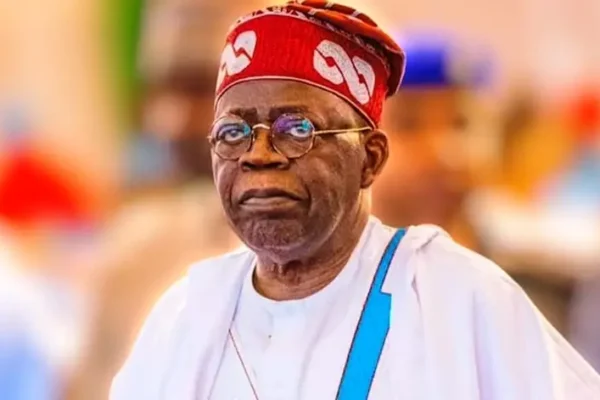
President Bola Ahmed Tinubu, on Tuesday, unveiled Nigeria Industrial Policy 2025 with a charge to relevant ministries, departments and agencies (MDAs) of government to ensure speedy implementation. According to him, the policy, which is a roadmap for re-engineering Nigeria’s industrial base, unlocking value across sectors, and placing production, competitiveness, and jobs at the centre of the nation’s economic strategy, has already established a clear implementation architecture, because policies rarely fail at conception but at execution. Speaking during the official launch of the Nigeria Industrial Policy 2025 at the Bola Ahmed Tinubu International Conference Centre, Abuja, the President who was represented by his deputy, Vice President Kashim Shettima, regretted that for too long, Nigeria has grappled “with fragmented value chains, high production costs, infrastructure gaps, policy inconsistency, and insufficient coordination between government and industry.” Emphatically, the Nigerian leader noted, however, that “this stops now,” as the Nigeria Industrial Policy 2025 is an acknowledgement of such deficiencies. “We have realised that industrialisation is not a wish you think about; it is an action you perform. More than that, we must remind ourselves that this task demands coherence across energy, trade, infrastructure, finance, skills, and innovation. It requires partnership between government and the private sector,” he stated. President Tinubu insisted on timely implementation and execution of the policy, noting that when his administration came on board in 2023, it did so with a promise to redefine Nigeria’s industrial ambition. He said, “The defining strength of this policy is its insistence on implementation. This administration will not measure success by the number of documents we produce. “We will measure success by the number of factories that open their gates at dawn, by the jobs created for our young men and women, by the exports that leave our ports bearing the mark of Nigerian excellence, and by the value retained within our own economy.” Outlining key aspects of the policy, the President said it prioritises strategic sector focus anchored on the nation’s comparative and competitive advantages. He continued: “It advances value chain development so that Nigeria moves steadily from exporting raw materials to producing finished goods. It integrates our micro, small, and medium enterprises into the heart of industrial growth, because prosperity must not be exclusive. “It aligns infrastructure and energy with industrial ambition, for factories cannot run on policy alone. It strengthens skills, technology, and innovation to prepare our people for the industries of today and tomorrow.” While calling for more private sector participation, the Nigerian leader urged support for the sector “to invest with confidence and responsibility, to deepen local value chains, to create jobs and transfer skills, and to partner with government in building a productive economy.” President Tinubu commended the Minister of State for Industry, Senator John Owan Enoh, “for his disciplined leadership and clarity of purpose in driving” the process, adding that the Minister “has demonstrated that policy leadership is not about noise, but about substance, coordination, and follow-through.” He also applauded the Ministry’s technical teams, industry stakeholders, manufacturers, investors, and practitioners for shaping the “policy into a document grounded in reality and informed by experience” with their insights. Earlier, the Minister of State for Industry, Chief John Owan Enoh, said the campaign marked a turning point aimed at building an industrial Nigeria that produces, competes, and prospers. On his part, business mogul and Chairman of Dangote Group of Companies @DangoteGroup , Alhaji Aliko Dangote, thanked the federal government for introducing a progressive industrial policy, observing that Nigeria is the only country in Africa where the private sector is bigger than the government. Dangote said domestic manufacturers are pleased with the policy the Tinubu administration has created, expressing firm belief that “the naira, this year, will be at ₦1,000 to $100.” Announcing that many investors are willing to invest in Nigeria due to FX stability and other reforms, Dangote suggested that the only thing remaining is the protection of indigenous industries, saying “if there is no protection, there is no way any industry will thrive here.” For his part, the United Nations Resident and Humanitarian Coordinator in Nigeria, Mr. Mohamed Malick Fall, expressed confidence that, with the official launch of the policy, Nigeria has taken a step into its future where hope is turned into action, resulting in inclusive economic growth. He explained that the policy is the outcome of an ongoing partnership between the United Nations Industrial Development Organization (UNIDO) and Nigeria, aimed at transforming the country into a beacon of prosperity and a key player in regional and global value chains. Also, the President of the Manufacturers Association of Nigeria (MAN), Otunba Francis Meshioye, commended the President over the launch of the policy, noting that manufacturers are focused on the effective implementation of the policy. He backed the promotion of indigenous entrepreneurship enshrined in the policy, assuring that MAN will give its full support to ensure its successful implementation.

Read More