Wike Pledges Pay Raise for Band After Hilarious ‘Chinese’ Performance at Road Commissioning

Wike Pledges Pay Raise for Band After Hilarious Chinese Performance at Road Commissioning

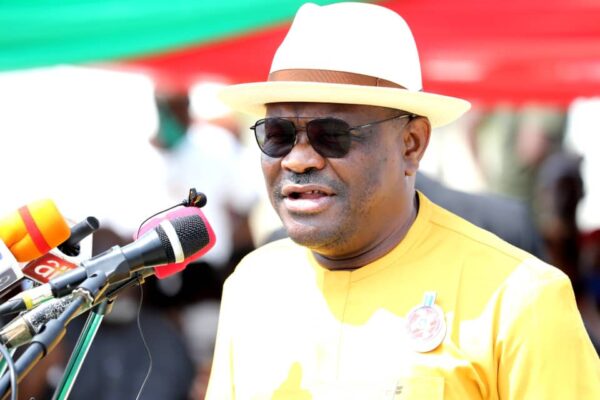
By Kamal Yalwa | June 21, 2025 Minister of the Federal Capital Territory (FCT), Nyesom Wike, on Thursday delighted his audience when he announced an impromptu pay raise for his official music band following a comical and spirited performance at a public event in Abuja. The occasion was the commissioning of a newly completed collector road linking Mabushi to the Judges’ Quarters in Katampe, a project undertaken by a Chinese construction firm. During the event, the band’s lead singer unexpectedly broke into a humorous imitation of a Chinese-language song, a playful nod to the nationality of the contractors. The performance sparked laughter across the gathering, with Wike himself visibly amused. Impressed by the gesture, the minister declared, “Now that my band can sing in Chinese language, I’ll increase their fees!” His announcement was met with cheers and applause from the audience. Seizing the moment, the band broke into a new tune on the spot, chanting “Agreement is agreement,” while joyfully calling out Wike’s name—adding another layer of comedy and festivity to the event. The light-hearted moment underscored Wike’s rapport with his staff and drew praise for injecting humour and human connection into official proceedings.

Read More

NADECO Urges Trump to Impose Visa Ban on Akpabio, Abbas, Ibas Over Alleged Subversion of Democracy

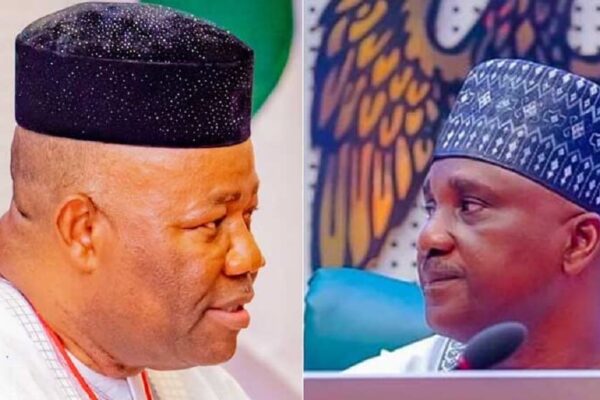
By Kamal Yalwa, June 21, 2025 The United States chapter of the National Democratic Coalition (NADECO-USA) has called on U.S. President Donald Trump to impose a visa ban on Nigeria’s Senate President Godswill Akpabio, Speaker of the House of Representatives Tajudeen Abbas, and the Sole Administrator of Rivers State, Ibok-Ete Ibas. The group made the appeal in a letter signed by its Executive Director, Lloyd Ukwu, accusing the three of playing pivotal roles in what it described as the “subversion of democracy” in Rivers State. According to NADECO-USA, President Bola Ahmed Tinubu orchestrated an unconstitutional “state of emergency” in Rivers on March 18, 2025, which led to the suspension of Governor Siminalayi Fubara, his deputy Ngozi Odu, and members of the State House of Assembly. Ukwu alleged that the move was a deliberate attempt to undermine democratic institutions and consolidate power. He said the subsequent appointment of Ibas as Sole Administrator of Rivers State was not only unconstitutional but a flagrant violation of both Nigerian law and international democratic norms. “It is crucial to note that the president’s illegal actions could not have succeeded without the support of the Senate, led by Senator Godswill Akpabio, as well as the Speaker of the House of Representatives, Mr. Tajudeen Abbas,” Ukwu stated in the letter. The group urged the U.S. State Department to immediately impose visa restrictions on the trio and their immediate families, saying the action would reinforce the U.S.’s commitment to democracy and send a strong message against anti-democratic practices. NADECO-USA also disclosed plans to petition the United Kingdom and the European Union for similar sanctions, pledging to pursue legal and diplomatic efforts to hold those responsible accountable. “We are determined to ensure that those attempting to destabilise Nigeria’s democracy and the peace of the Niger Delta region are held responsible,” Ukwu said. The group expressed confidence that the international community, especially the United States, would act in defence of democratic values in Nigeria.

Read More

El-Rufai Declares Tinubu’s 2027 Re-Election Impossible, Slams APC and Defectors

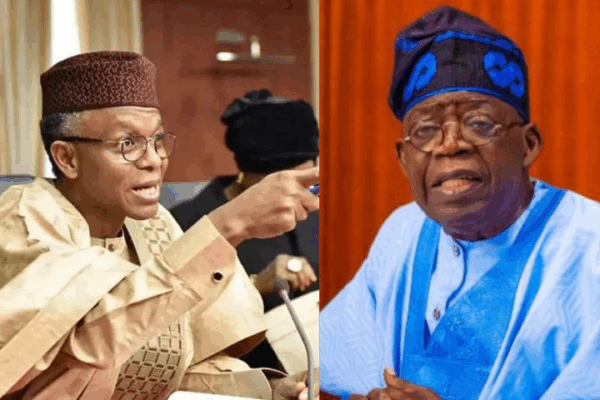
Former Kaduna State Governor Nasir El-Rufai has declared that President Bola Tinubu has no realistic chance of winning re-election in 2027, insisting that anyone who believes otherwise is “living in another country.” In a bold statement shared via his verified X (formerly Twitter) account, the Social Democratic Party (SDP) chieftain said the Nigerian people have lost confidence in the All Progressives Congress (APC) and the presidency, citing growing dissatisfaction with the government’s policies. “Anybody that thinks it is possible for President Bola Tinubu to get re-elected is living in another country, not Nigeria. It is impossible for Bola Tinubu to get re-elected,” El-Rufai said during the interview. He further argued that even the weakest opposition candidate would defeat the president in a head-to-head contest due to mounting public frustration and economic hardship. “I don’t see a pathway for him,” he added. The former FCT Minister dismissed the ongoing wave of defections to the APC as politically motivated, saying many of those joining the ruling party are either “greedy” or fearful of prosecution by anti-corruption agencies. “It is greedy and hungry politicians and those that are looking for money, contract, appointment, office that are defecting,” he stated. “The other class of those defecting are those that know that the EFCC or ICPC can intimidate them, because they know what they have done if they have done what is not quite right.” El-Rufai, a former Tinubu ally during the 2023 elections, has since defected to the SDP and is now building an opposition coalition ahead of 2027. He revealed that the alliance includes prominent figures like former Rivers State Governor Rotimi Amaechi and former Vice President Atiku Abubakar. According to him, the real contest in the next general election will not be between political parties but between the APC and ordinary Nigerians. “The ruling party’s popularity has faded across the country,” El-Rufai declared. The former governor’s remarks have further intensified speculation about cracks within the APC and the likelihood of a formidable opposition emerging ahead of the next presidential election.

Read More

Tinubu to Choose 2027 Running Mate After Party Convention – Presidency

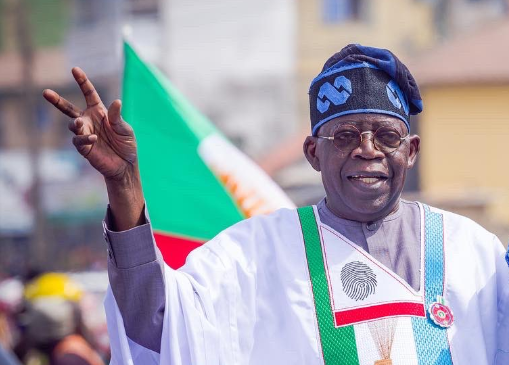
President Bola Ahmed Tinubu will not name his running mate for the 2027 presidential election until after the All Progressives Congress (APC) holds its nomination convention in 2026, according to his Special Adviser on Information and Strategy, Bayo Onanuga. In an exclusive interview with Daily Trust, Onanuga dismissed the ongoing controversy surrounding the apparent exclusion of Vice President Kashim Shettima from recent endorsements for Tinubu’s second term, calling it “a non-issue.” He clarified that Nigeria’s presidential system allows a candidate to first emerge before selecting a running mate—just as Tinubu did with Shettima in 2023. “People always like to speculate about vice presidents and deputy governors in this country, but as far as I know, there’s no problem between them,” Onanuga stated. When asked whether the controversial Muslim-Muslim ticket would be repeated, he responded that public concerns had largely subsided. “Early fears of religious domination have since been proved unfounded,” he added. The comments come amid rising political tension within the APC, particularly following the North-East Summit held in Gombe. The event turned controversial when the party’s National Vice Chairman (North-East), Salihu Mustapha, declined to endorse Vice President Shettima alongside President Tinubu. The incident nearly turned violent, with Mustapha forced to exit the venue under duress. Defending his stance, Mustapha said party procedure must be respected. “Nowhere in the party constitution does it mandate us to endorse a running mate during the nomination process. It’s the exclusive right of the presidential candidate,” he said. Meanwhile, Borno State Governor Babagana Zulum publicly reaffirmed his region’s support for Shettima, urging President Tinubu to retain him for the 2027 race. “It’s a rare privilege to have the vice president from our region. His leadership and experience have greatly benefited this administration,” Zulum stated. Speculation has continued to swirl over possible alternatives to Shettima. Some political analysts suggest Tinubu may consider selecting a northern Christian, a current North-West governor, or even Senator Rabiu Kwankwaso of the NNPP, should he defect to the APC. The Muslim Rights Concern (MURIC) has warned against dropping Shettima, describing such a move as politically risky and potentially divisive. The group called for wide consultations before any final decision is made. Despite the growing undercurrents, the presidency and the APC maintain that no official conflict exists between Tinubu and Shettima. Still, the jostling ahead of 2027 suggests strategic political realignments are already taking shape behind the scenes.

Read More

War Powers Act in Focus as Trump Hints at Possible Strike on Iran

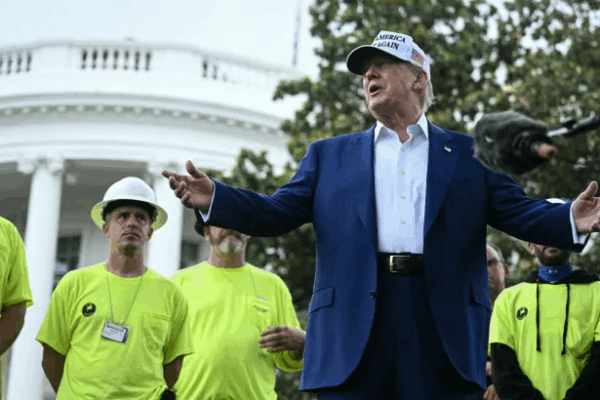
As tensions escalate in the Middle East, renewed attention is being drawn to the War Powers Act of 1973 amid speculation that former U.S. President Donald Trump may order a military strike on Iran. Trump recently refused to rule out U.S. involvement in Israel’s conflict with Iran, telling reporters: “I may do it. I may not.” While the U.S. Constitution grants Congress the sole authority to declare war, presidential military actions in modern times have largely sidestepped formal declarations, raising fresh questions about the balance of power between the executive and legislative branches. Trump’s allies have emphasized that any decision to engage militarily would rest squarely with him, with Department of State spokeswoman Tammy Bruce stating: “He is the singular guiding hand about what will be occurring from this point forward.” However, critics and anti-war advocates argue that Congress must play a decisive role in matters of war and peace, as stipulated under the Constitution. This has prompted some lawmakers to reassert congressional authority through the War Powers Act. The War Powers Resolution, enacted in 1973 during the aftermath of the Vietnam War, requires the president to notify Congress within 48 hours of deploying armed forces into hostilities. It also limits military engagement to 60 days—plus a 30-day withdrawal period—unless Congress authorizes continued involvement. Legal experts note that while the act exists to check presidential powers, it has rarely been enforced. Previous administrations, including Trump’s, have carried out strikes abroad—such as the killing of Iranian General Qassem Soleimani in 2020—without prior congressional approval. “Presidents have often cited national security and self-defense to bypass formal authorization,” said Ayodele Oni, a constitutional analyst. “The courts have also been reluctant to intervene in these political questions.” The last time the U.S. formally declared war was in 1942 during World War II. Since then, successive administrations have conducted military actions in Korea, Vietnam, Iraq, Libya, and elsewhere without formal declarations of war. Should Trump move forward with military action against Iran, Congress could invoke the War Powers Act to force a withdrawal. However, enforcement would likely face political hurdles, including the possibility of a presidential veto and the challenge of securing a two-thirds override in both chambers. As diplomatic tensions rise, the debate over war powers underscores the enduring struggle between executive authority and congressional oversight in U.S. foreign policy.

Read More

Wase: Over 80 Bandits 4 Vigilantes Killed in Fierce Plateau Clash

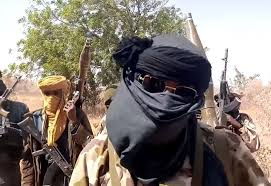
A deadly clash between bandits and a combined team of vigilantes and soldiers around Dutsen Zaki forest in Wase Local Government Area of Plateau State has reportedly left over 80 bandits and four vigilantes dead, with 16 others injured. The operation, which began Saturday morning and lasted until Wednesday, was confirmed by Abdullahi Hussaini, a local vigilante leader, who stated that over 300 vigilantes participated in the offensive targeting known hideouts in the dense forest. “We are forced to face these armed men… The activities of the armed men have become a daily occurrence,” Hussaini said, adding that the forest is now under vigilante control. The bandits—who had been using the forest around Zurak, Aduwa, Kinashe, and Odare villages—reportedly fled following heavy casualties. Among the dead were also wives of the bandits, according to vigilante accounts. Shapi’i Sambo, a youth leader, confirmed the death of four vigilantes, including a commander, with a new leader already appointed to continue the operation. The Federal Medical Centre (FMC) in Wase and a hospital in Bauchi State are currently treating the injured vigilantes. Abdullahi Bin Umar, a resident, reported that many villagers had fled their homes amid fears of retaliation, noting the magnitude of the killings has created deep anxiety across the region. Efforts to obtain comments from the military’s Operation Safe Haven were unsuccessful as Major Samson Zhakom had not responded at press time. This incident follows an earlier clash two weeks ago in Kadil Masudu village, also in Wase LGA, where five bandits were killed.

Read More

Delay in Terminal Benefits: Court Awards N2m Cost Against BUA International

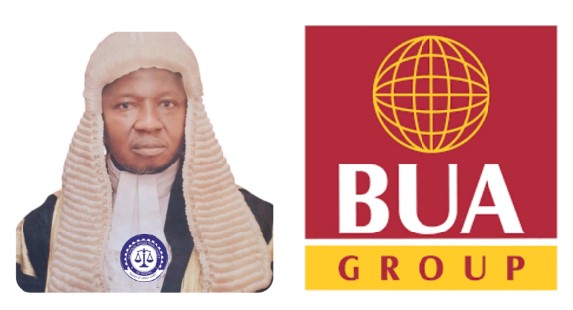
Hon. Justice Sanda Yelwa of the Lagos Judicial Division of the National Industrial Court has ordered BUA International Limited to pay Mr Chinedu the sum of Two Million Naira costs of action following the payment of Chinedu’s terminal benefits by the firm after litigation had commenced. The Court held that the main aim of cost is to indemnify the successful party for her out-of-pocket expenses and be compensated for the true and fair expenses of the litigation taking the facts of each case into consideration. From facts, the claimant- Mr. Chinedu had submitted that upon his resignation, BUA International Limited refused to compute his terminal benefits despite several demands. Mr. Chinedu averred further after the suit had commenced, BUA International Limited paid his retirement benefits and refused to pay the interest accruing on the principal sum, as well as the sum of Two Million Naira paid to his attorney in pursuit of the case. However, the Defendant- BUA International Limited did not enter any appearance and likewise never defended the case despite being served. In addition, Mr Chinedu’s counsel, Samson Okeh Esq argued that BUA International Limited’s act of undue delay in the computation and payment of his client terminal benefits for a period of 2years after tendering his resignation which has necessitated an accruing interest of 21% from January, 2023 till judgment sum is fully liquidated is justifiable and urged the Court to grant the reliefs sought. In a well-considered judgment, the Presiding Judge, Justice Sanda Yelwa reiterated that costs are not meant to be a bonus to the successful party or serve as punishment against the losing party, and the main aim of cost is to indemnify the successful party for her out of pocket expenses and be compensated for the true and fair expenses of the litigation taking the facts of each case into consideration. The Court held satisfactorily that costs claimed by Mr. Chinedu specifically pleaded and strictly proved by credible evidence in the sum of N2,000,000.00 are grantable. However, the court refused the claim for a 21% judgment sum for the dearth of proof.

Read More

Media Rights Agenda Launches Practical Guide for Journalists

Media Rights Agenda (MRA) on Thursday announced the publication and official launch of a comprehensive new guide titled “Leveraging Digital Tools for Journalism Practice,” aimed at equipping journalists and other media professionals with essential knowledge and tools for modern-day reporting, investigation, and storytelling. According to Ms Ayomide Eweje, MRA’s Programme Officer and author of the 164-page guide, the publication identifies and explains how to use dozens of digital tools and technologies that can enhance the work of journalists across the entire gamut of the journalistic process, from news and information gathering, to news processing as well as news and information dissemination while also giving them cutting-edge tools to protect themselves, their sources of information, their devices and other journalistic materials. She said in a statement issued in Lagos that “The publication is a necessary response to the realities of journalism in a rapidly evolving digital age. It offers practical, hands-on information for journalists about various digital tools to enable them effectively navigate today’s fast-paced digital environment, covering tools for news gathering, fact-checking, cybersecurity, multimedia storytelling, audience engagement, countering misinformation and disinformation, online harassment, and surveillance.” Ms Eweje explained that the publication is also intended to equip journalists with the tools they need not just to survive, but to lead and innovate in their profession while safeguarding their rights, protecting their sources of information, and ensuring the integrity of their work.” She noted that over the past two decades, the tools, devices and platforms used in journalism have evolved at an extraordinary pace with the traditional reporting methods, across the entire spectrum of information gathering, processing and dissemination now being augmented by an ever-increasing array of digital tools for real-time communication and collaboration, multimedia storytelling, investigative research, verification and fact-checking, among others. These tools, Ms Eweje said, have boosted the capacity of journalists to report from remote locations, tell more compelling stories, and engage directly with audiences in ways that were previously unimaginable, although at the same time, they have introduced new layers of complexity and threats, forcing journalists to pay more attention to data privacy, online harassment, platform algorithms, and digital literacy as integral parts of their work. She argued that as journalism continues to evolve, so too must the knowledge, skills, mindsets and equipment of those who practice it, and urged journalists to use the guide and other resources to build their digital capacity and leverage all available digital tools and technological devices in all aspects of their professional practice. She also called on media organisations to invest in digital literacy programmes for their journalists and, where necessary, provide them with financial resources to acquire the required facilities, since not all the tools and devices are available free of charge. In the Preface to the publication, MRA’s Executive Director, Mr. Edetaen Ojo, said: “For journalists, the digital era presents both unprecedented opportunities and significant challenges – from the ability to report stories in real time and reach global audiences or even previously marginalised communities, to navigating constantly evolving online threats, including surveillance, online harassment and trolling, hacking and account takeovers, misinformation, disinformation, deepfakes, and censorship, among others. Ms Eweje said MRA would make the guide available to media organisations and newsrooms, journalism training institutions, and media development organisations across Nigeria and the continent and also make it accessible on its website.


Read More