Labour Party Disowns Datti Baba-Ahmed’s ‘Questionably Constitutional’ Remarks on Tinubu’s Government
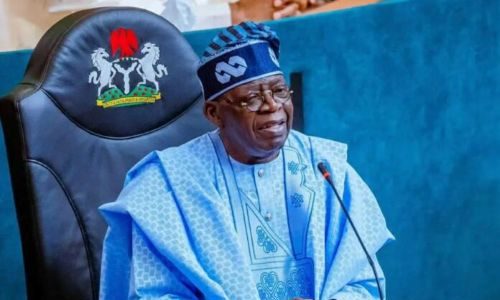
In a dramatic turn of events, a faction of the Labour Party (LP) in Nigeria has publicly distanced itself from controversial statements made by its former vice-presidential candidate, Senator Yusuf Datti Baba-Ahmed, who described President Bola Ahmed Tinubu’s administration as “questionably constitutional.” The remarks, made during a meeting on April 9, 2025, and reiterated in a television interview, have sparked significant backlash, prompting the LP to issue a strong rebuttal. This blog post delves into the details of Baba-Ahmed’s statements, the Labour Party’s response, the political context, and the broader implications for Nigeria’s political landscape. The Controversial Remarks On April 9, 2025, at a meeting held at the Transcorp Hilton in Abuja, reportedly organized by Abia State Governor Alex Otti and former LP presidential candidate Peter Obi, Senator Datti Baba-Ahmed made headlines by questioning the legitimacy of President Tinubu’s government. Speaking at the Labour Party’s National Executive Council (NEC) meeting, Baba-Ahmed reiterated his long-held stance that the Labour Party won the 2023 presidential election and that Tinubu’s administration remains “questionably constitutional” despite the Supreme Court’s ruling affirming Tinubu’s victory. In a subsequent interview with a national television station, Baba-Ahmed escalated his rhetoric, stating, “The appointments they are making are fake, the appointments they are making are illegal. The paraphernalia of government they are enjoying, destroying our country, spending our money is only for a little time.” He further described Tinubu’s presidency as a temporary phase, implying that the Labour Party would continue to challenge its legitimacy. These comments were perceived by many as a call for mass action against a constitutionally recognized government, raising concerns about their potential to incite unrest. Labour Party’s Swift Disavowal The Labour Party, under the leadership of National Chairman Julius Abure, wasted no time in condemning Baba-Ahmed’s remarks. In a statement issued on April 19, 2025, in Kaduna by National Publicity Secretary Dr. Arabambi Abayomi and National Secretary Umar Ibrahim, the party labeled the comments as “undemocratic” and “inciting.” The LP emphasized that it had accepted the Supreme Court’s ruling on the 2023 presidential election, despite its initial objections, for the sake of national peace and the finality of the court’s judgment. Dr. Abayomi expressed astonishment at Baba-Ahmed’s persistence in questioning Tinubu’s presidency, particularly given the Supreme Court’s validation of the election results. He stated, “For us in the Labour Party, this statement is clearly inciting and a call for mass action against a constituted authority. We think there should be a limit to whipping up public sentiments against a legitimate government.” The party explicitly dissociated itself from any actions or statements that could be seen as surreptitiously inciting Nigerians against the current administration. The LP also referenced historical examples to underscore the dangers of inflammatory rhetoric, citing the Arab Spring, which began with subtle grievances and escalated into widespread unrest across the Middle East. Abayomi warned, “The Arab Spring that rattled the entire Middle East started when the Arab leaders paid no attention to Bouazizi’s subtle [actions].” This analogy highlighted the party’s concern that Baba-Ahmed’s statements could galvanize public discontent and lead to instability. Context: Baba-Ahmed’s History of Contention This is not the first time Datti Baba-Ahmed has challenged the legitimacy of Tinubu’s presidency. Since the 2023 presidential election, where he served as Peter Obi’s running mate, Baba-Ahmed has consistently maintained that the Labour Party was robbed of victory. In March 2023, he urged then-President Muhammadu Buhari and Chief Justice of Nigeria Olukayode Ariwoola not to swear in Tinubu, arguing that the All Progressives Congress (APC) failed to meet constitutional requirements under Section 134 (2)(a) and (b). He described Tinubu’s certificate of return, issued by the Independent National Electoral Commission (INEC), as “reckless” and tantamount to ending democracy. In November 2023, Baba-Ahmed went further, calling for the resignation of Tinubu and Vice President Kashim Shettima, suggesting that Senate President Godswill Akpabio should oversee a fresh election. He labeled Tinubu’s swearing-in as “unconstitutional” and refused to recognize the administration’s legitimacy, accusing it of delivering “nothing but disaster” in its first six months. These statements reflect Baba-Ahmed’s unwavering stance, which has put him at odds with the Labour Party’s current leadership. Internal Party Tensions The Labour Party’s disavowal of Baba-Ahmed’s remarks also sheds light on internal divisions within the party. The statement criticized the April 9 meeting, organized by Governor Otti and Peter Obi, as “illegal and unconstitutional,” suggesting a rift between factions led by Julius Abure and those aligned with Otti and Obi. The Abure-led faction accused Otti of issuing threats against the party’s national leadership, prompting a call for security agencies to protect LP executives. This factionalism is not new. The Labour Party has faced leadership crises since the 2023 elections, with competing factions vying for control. Baba-Ahmed’s alignment with the Otti-Obi faction, as evidenced by his participation in the NEC meeting, appears to have deepened the divide. The Abure-led faction’s swift response suggests an effort to maintain political relevance and avoid being associated with rhetoric that could alienate moderate supporters or provoke government backlash. Public and Political Reactions Baba-Ahmed’s remarks have elicited mixed reactions. On platforms like X, posts from outlets such as @SaharaReporters and @NAT_ACCORD amplified the Labour Party’s condemnation, framing Baba-Ahmed’s statements as a potential threat to national stability. Some users expressed support for the LP’s decision to distance itself, arguing that such rhetoric risks destabilizing Nigeria’s fragile political environment. Others, however, sympathized with Baba-Ahmed, citing ongoing economic hardships and governance challenges as justification for questioning the administration’s legitimacy. The broader political context adds complexity to the situation. Nigeria continues to grapple with economic difficulties, insecurity, and public dissatisfaction with governance. Baba-Ahmed’s comments tap into a vein of frustration among some Nigerians, particularly Labour Party supporters who believe the 2023 election was flawed. However, the Supreme Court’s ruling and the LP’s acceptance of it have shifted the narrative for many, making Baba-Ahmed’s persistence a point of contention. Implications for Nigeria’s Political Landscape The Labour Party’s disavowal of Baba-Ahmed’s remarks carries significant implications. First, it signals an attempt to reposition the…