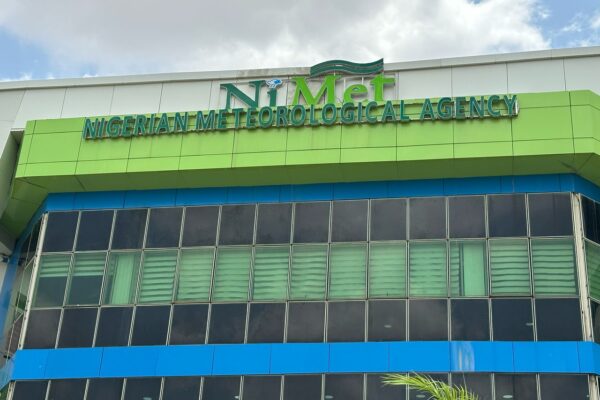
NiMet Issues Thunderstorm and Flood Warning Across Nigeria

Abuja | August 4, 2025 — The Nigerian Meteorological Agency (NiMet) has issued a nationwide alert warning of widespread thunderstorms and heavy rainfall beginning Monday, heightening concerns over potential flash floods in several states. In a three-day weather forecast released on Sunday in Abuja, NiMet said the country is entering a critical phase of the rainy season, with increased risks of flooding and severe weather events. According to the forecast, northern states including Adamawa, Taraba, Sokoto, Kebbi, Zamfara, Jigawa, Kano, and Katsina are expected to experience morning thunderstorms on Monday, with conditions worsening later in the day. “There is a high possibility of flood occurring over parts of Adamawa, Taraba, and Bauchi states during the forecast period,” NiMet warned. In the North Central region, light morning rains are expected in Benue, Niger, Kogi, Nasarawa, and the Federal Capital Territory (FCT), followed by heavier showers by afternoon across Plateau, Kwara, and neighboring states. Southern states are also likely to see significant rainfall. NiMet forecast cloudy skies and light morning showers in Ebonyi, Enugu, Imo, Anambra, Abia, Ogun, Edo, Delta, Lagos, Rivers, Cross River, Akwa Ibom, and Bayelsa. More intense and widespread rainfall is expected later in the day, with a flood watch in effect for Oyo, Ogun, Edo, and Delta. Tuesday and Wednesday Outlook For Tuesday, thunderstorms are expected to continue across the northern belt, notably in Taraba, Katsina, Kebbi, Sokoto, Kaduna, and Zamfara, with moderate rains likely later in the day. The central region, including Abuja, will see intermittent rainfall, while persistent showers are forecast from Lagos to Calabar in the south. NiMet has flagged Anambra, Delta, Bayelsa, Cross River, and Akwa Ibom as high-risk areas for flooding. By Wednesday, morning thunderstorms are forecast for Taraba and Kaduna, followed by scattered storms and moderate rain across Borno, Bauchi, Gombe, Jigawa, and Kano. Central states are expected to experience widespread afternoon rains, while intermittent showers are likely in the south, particularly in Lagos, Rivers, Bayelsa, and Cross River. Bayelsa faces the highest flood risk mid-week. Safety Advisory NiMet has urged residents to take precautionary measures: The agency also advised airline operators to obtain airport-specific weather briefings to ensure safe flight planning. Nigerians are encouraged to stay informed through official NiMet platforms for real-time updates.
Read More
Petrol Price Hits ₦945/Litre at NNPC Stations Amid Soaring Global Oil Prices Petrol Price Hits ₦945/Litre at NNPC Stations Amid Soaring Global Oil Prices

Marketers Shun Local Refineries as Fuel Imports Surge, Dangote’s Monopoly Fears Grow

Lagos | August 4, 2025 — Despite the commencement of fuel supply by the $20bn Dangote Petroleum Refinery, petroleum marketers in Nigeria have resumed large-scale importation of refined products, relying on foreign sources for over 70 per cent of the nation’s petrol needs in May and June. This was revealed in fresh data from the Nigerian Midstream and Downstream Petroleum Regulatory Authority (NMDPRA), which showed that 71.38 per cent of Nigeria’s Premium Motor Spirit (PMS) consumption during the two-month period was sourced from imports, while only 28.62 per cent came from local refining, predominantly the Dangote refinery. The figures were presented to the Federation Accounts Allocation Committee (FAAC) for June 2025 and obtained by The PUNCH on Sunday. Out of 3.25 billion litres of PMS consumed in May and June, 2.32 billion litres were imported, while 927 million litres came from local production. In May alone, 43.22 million litres were imported daily, compared to 34.10 million litres per day in June. Despite Dangote’s refinery contributing about 15 million litres daily, imports remain the dominant supply source — a development that raises critical questions about the viability of local refining amid heavy investment in domestic capacity. Marketers Spend N2.1tn on Fuel Imports With an average pump price of ₦905 per litre, marketers spent an estimated ₦2.1 trillion on fuel imports during the two months under review. Lagos State topped the list of fuel consumption, with 205.66 million litres trucked out, followed by Ogun (88.69 million litres) and the FCT (77.5 million litres). Other major consumers included Oyo, Delta, and Kano, indicating higher demand in densely populated and industrialised areas. In contrast, states like Jigawa (9.4 million litres), Yobe (11.7 million litres), and Ekiti (15.3 million litres) recorded the least truck-out volumes. Imports Dominate Other Fuel Segments Similar import dominance was noted across other fuel types. Over 99 per cent of Aviation Turbine Kerosene (ATK) and Household Kerosene (HHK) were imported. Diesel imports also increased from 7.3 million litres/day in May to 8.7 million litres/day in June, despite a slight uptick in local production. Notably, Liquefied Petroleum Gas (LPG) was entirely imported, with zero local output recorded in both months. Dangote Pushes for Fuel Import Ban Amid the surge in imports, Aliko Dangote, President of the Dangote Group, has urged the Federal Government to include refined petroleum products in the list of banned items under the ‘Nigeria First’ policy. Speaking at the Global Commodity Insights Conference co-hosted by NMDPRA and S&P Global, Dangote said continued importation undermines domestic refining and discourages investment in the sector. “The Nigeria First policy should apply to petroleum products. Fuel importation is killing local refining,” Dangote said, calling for deliberate protectionist policies similar to those in the US, Canada, and the EU. Stakeholders Reject Monopoly Push However, his call has drawn strong opposition from industry stakeholders who fear it could create a monopoly. Chinedu Ukadike, National Publicity Secretary of the Independent Petroleum Marketers Association of Nigeria (IPMAN), warned that banning imports would hurt independent marketers and reduce competition. “If Dangote wants to dominate, let it be through cheaper pricing, not by eliminating competition,” Ukadike said. “Despite being locally refined, Dangote’s PMS isn’t the cheapest.” He also criticised the high port and lifting charges imposed on marketers sourcing from the refinery, many of which are denominated in dollars — counterproductive to easing foreign exchange pressures. Similarly, Billy Gillis-Harry, President of the Petroleum Products Retail Outlets Owners Association of Nigeria (PETROAN), insisted Nigeria should maintain a free market. “No company should dominate the downstream sector in a free economy. Importation actually stabilises supply,” he said. Cheaper Imports Undercut Dangote Sales According to Jeremiah Olatide, CEO of PetroleumPrice.ng, importers have managed to land petrol at lower costs than the Dangote refinery’s ex-depot rate, leading to reduced demand for locally refined fuel. “Eighty per cent of private depots sold below Dangote’s price in July. This forced Dangote’s refinery into a supply slump,” Olatide said, noting that importers ramped up supplies in June ahead of Dangote’s August 15 fuel roll-out. He predicted significant changes in Nigeria’s fuel market post-August, as players brace for a power tussle between importers and local refiners. Experts Warn Against Ban, Advocate Market Diversity Prof. Dayo Ayoade, an energy law expert at the University of Lagos, cautioned against banning fuel imports, saying it would undermine energy security and contradict international trade laws. “We can’t rely solely on Dangote. That would create a monopoly, which is unacceptable for national and energy security,” Ayoade said. He called on the government to incentivise the development of other refineries and support a more competitive energy sector before considering restrictions on imports.

Read More

FG Launches 50 Million Date Palm Project in Jigawa to Combat Desertification

By Kamal Yalwa August 2, 2025 The Federal Government has inaugurated a major environmental restoration initiative in Jigawa State with the launch of a project to plant 50 million date palm trees, aimed at combating desert encroachment and restoring degraded land in northern Nigeria. The project was officially flagged off by the Minister of Environment, Balarabe Abbas Lawal, in collaboration with the Deputy Governor of Jigawa State and the Director-General of the National Agency for the Great Green Wall (NAGGW) during a ceremony marking the 10th anniversary of the agency. Held under the theme “Sustaining the Momentum – Ten Years of NAGGW’s Contributions to Environmental Sustainability,” the event underscored the government’s commitment to environmental protection and sustainable development in the Sahel region. The Minister described the initiative as a crucial intervention to address the growing threat of desertification, which continues to displace communities, degrade farmlands, and threaten food security in the North. “This ambitious project will not only mitigate the harsh effects of climate change and desertification but will also enhance livelihoods, improve food security, and generate green jobs for thousands of Nigerians,” Lawal stated. According to the NAGGW, the date palm trees—well-suited to arid environments—will be planted across key frontline states affected by desert encroachment, with Jigawa serving as the starting point due to its critical ecological vulnerability. The project is also expected to bolster economic activities in rural communities through the commercial value of date palm fruits, fostering both environmental and economic resilience. Stakeholders present at the event praised the Federal Government’s continued investment in climate adaptation strategies, and reaffirmed support for the Great Green Wall programme—Nigeria’s contribution to the African Union’s vision of restoring 100 million hectares of land across the continent’s drylands by 2030.

Read More

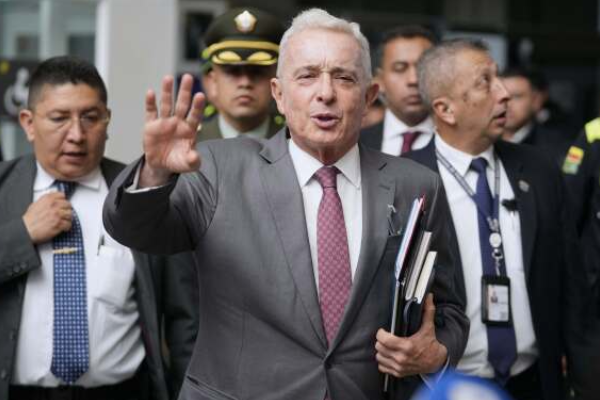
Former Colombian President Álvaro Uribe Sentenced to 12 Years House Arrest for Bribery and Witness Tampering

By Kamal yalwa August 2, 2025 In a historic ruling, a Colombian court has sentenced former President Álvaro Uribe to 12 years of house arrest on charges of fraud and witness tampering—making him the first former head of state in Colombia’s history to be criminally convicted. The 73-year-old, who governed Colombia from 2002 to 2010, was also barred from holding public office and fined $578,000 by the court. The decision marks a significant chapter in Colombia’s ongoing reckoning with political accountability. Uribe, once hailed as a hardliner against guerrilla insurgents and still widely respected in conservative political circles, denied all allegations, labeling the case a politically motivated attack aimed at silencing “a voice for the democratic opposition.” “I maintain my innocence,” Uribe said, confirming that he will appeal the ruling. Despite his legal troubles, Uribe remains a polarizing yet influential figure in Colombian politics, known for his tough stance on security and for founding the right-wing Democratic Center party. His attorney had requested bail while the appeal process was ongoing, but Judge Sandra Heredia rejected the request, citing the former president’s resources and political connections as potential risks. “It would be easy for the defendant to leave the country and evade the imposed sanction,” Judge Heredia said in court on Friday. The sentencing comes amid a wave of high-profile cases across Latin America involving former leaders facing corruption charges. Similar cases in Gabon and Myanmar have seen ex-leaders placed under house arrest, reflecting growing judicial assertiveness across the Global South.

Read More

Senator Lawal Slams Tinubu for Prioritizing Kaduna Airport Over Abuja-Kaduna Road

Kaduna, Nigeria – Senator Shehu Lawal has criticized President Bola Tinubu’s administration for what he described as a misplaced priority in infrastructure development, accusing the government of abandoning the critical Abuja-Kaduna highway in favor of an airport project that already exists. Senator Lawal, a former Kaduna Central lawmaker, expressed his concerns in response to recent remarks by National Security Adviser (NSA) Nuhu Ribadu, who claimed that improved security has made it safe for top officials, including ministers, to now travel by road from Abuja to Kaduna. “You drove on the Abuja-Kaduna highway to make a political statement, but your government still abandoned the road and chose instead to start constructing a new airport in Kaduna, even though there’s already one,” Lawal stated via his official X (formerly Twitter) handle. The Abuja-Kaduna expressway has long been plagued by insecurity, including kidnappings and armed banditry, making it one of the most dangerous routes in Nigeria. While the NSA claimed the recent killing of key terrorist leaders had restored safety, Senator Lawal believes that investment in actual road infrastructure is more critical than optics or symbolic gestures. The Tinubu administration recently commenced construction of a second airport in Kaduna, a move that has sparked mixed reactions from stakeholders who argue that funds could have been better utilized to fix deteriorating roads or bolster other essential services. “If the road is truly safe, then the priority should be to fix it properly — not sidestep it with an expensive project that serves the elite,” Lawal added. As the debate continues, public scrutiny grows over how federal infrastructure spending is being allocated, especially in regions still grappling with insecurity and poor transportation networks.

Read More
Kemi Badenoch Recalls Harsh Boarding School Experience in Nigeria, Compares It to Prison

Kemi Badenoch Recalls Harsh Boarding School Experience in Nigeria, Compares It to Prison

London, UK — UK Conservative Party leader and Member of Parliament for Saffron Walden, Kemi Badenoch, has spoken candidly about her difficult upbringing in Nigeria, describing her time at a Federal Government Girls’ boarding school in Sagamu as comparable to being in prison. In a recent podcast interview recorded at Westminster, Badenoch reflected on her early life in Lagos, Nigeria, where she lived above her father’s medical clinic. She shared vivid memories of her childhood across three countries — Nigeria, the United States, and the United Kingdom — and how those experiences shaped her values, political views, and resilience. Now a rising star in British politics, Badenoch opened up about being sent to boarding school at the age of 11 — a formative period she characterized by hardship and discomfort. “It was very grim,” she said. “There was no running water. We fetched it with buckets. We had to cut the grass with machetes because there were no lawnmowers.” She revealed that about 300 students were housed in the school’s dormitory, with 20 to 30 girls crammed into each room. The living conditions, she said, were physically and emotionally demanding. She recalled swapping her meals for books and losing a significant amount of weight due to the poor diet and her aversion to certain foods, particularly fish. Reflecting on Family, Identity, and Nigeria’s Legacy Badenoch also offered intimate insights into her family history, including how her parents — both medical professionals — met at university. Her father, a doctor, and her mother, Professor Feyi Adegoke, a physiology lecturer, raised their family in Lagos during what she described as a relatively prosperous period for Nigeria. Born in Wimbledon in 1980, Badenoch explained that her birth in the UK was the result of fertility treatment her parents sought abroad, at a time when Nigeria’s oil wealth enabled affluent families to access private healthcare overseas. “Mr. Roberts, a surgeon based in Wimbledon, helped facilitate my mother’s pregnancy,” she said. “It turned out she had endometriosis, which at the time, doctors in Nigeria said only affected Europeans.” The interview also touched on Nigeria’s colonial legacy and how it influenced the social culture of her parents’ generation. She described seeing photos of her parents from the 1970s, surrounded by what she called “funky, jazzy” Western influences — from disco music to fashion trends — at a time when Nigeria was transitioning out of British colonial rule. Politics, Pain, and Personal Growth Throughout the interview, Badenoch credited her challenging upbringing with shaping her conservative worldview and approach to public service. “Those tough experiences made me who I am,” she said. “They gave me the tools to succeed in a country like the UK, where grit, ambition, and resilience are essential.” Badenoch’s comments have sparked mixed reactions, particularly among Nigerians on social media, where some defended the country’s public boarding school system, while others agreed with her depiction of its harsh realities. As she continues to rise within British politics, Badenoch’s dual identity as both British and Nigerian remains central to her narrative — one that fuses personal adversity with political ambition.

Read More

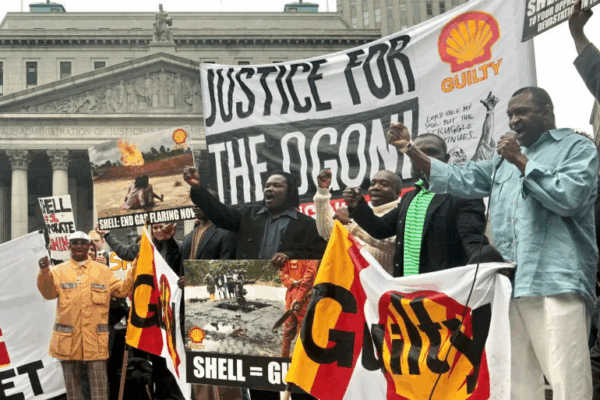
Nigeria Pardons Ken Saro-Wiwa and Ogoni Nine, 30 Years After Execution

Lagos, Nigeria – On June 12, Nigeria’s Democracy Day, President Bola Ahmed Tinubu granted posthumous pardons to Ken Saro-Wiwa and eight other environmental activists known as the Ogoni Nine, executed by the military regime of General Sani Abacha in 1995. The announcement came with national honours and a declaration: they are now national heroes. For many, it was a long-overdue vindication. For others, including the families of the executed men, it is too little, too late. Saro-Wiwa, a celebrated writer and leader of the Movement for the Survival of the Ogoni People (MOSOP), was convicted by a military tribunal for inciting the murder of four local chiefs—charges widely condemned as politically motivated. The execution, carried out by hanging on November 10, 1995, triggered international outrage. Nigeria was suspended from the Commonwealth, and countries including the U.S. imposed sanctions. “I want the convictions quashed, not pardoned,” said Noo Saro-Wiwa, Ken’s daughter, speaking from London. “A pardon suggests guilt. My father committed no crime.” A Writer Turned Activist Ken Saro-Wiwa once aspired to be remembered as a writer. He authored more than two dozen books, including the prescient short story Africa Kills Her Sun, a fictional account of a man facing execution. But his legacy was shaped by his real-life advocacy. In the 1990s, Saro-Wiwa led a non-violent campaign demanding environmental justice for Ogoniland, a small region in Nigeria’s oil-rich Niger Delta devastated by oil spills and gas flaring. In 1993, MOSOP mobilized 300,000 Ogonis to protest against Shell and the federal government. The scale of the protests prompted Shell to halt operations. The military responded with brutal force. Saro-Wiwa’s calls for autonomy and environmental reparations drew global attention—and local ire. Following a mob killing of four Ogoni leaders during a MOSOP rally in 1994, the military arrested Saro-Wiwa and eight others. Their trial, marred by irregularities and alleged torture, was condemned by Amnesty International as a “sham. International Outcry, but No Justice Despite appeals from global figures like Nelson Mandela and the Pope, the executions went ahead. Saro-Wiwa reportedly uttered, “Lord, take my soul, but the struggle continues,” before being hanged. In 2009, following a civil lawsuit in the U.S., Shell agreed to a $15.5 million out-of-court settlement with the families of the Ogoni Nine. The company denied wrongdoing, saying the payment was for legal fees and humanitarian aid. A separate case in The Hague filed by the widows of the executed men was dismissed in 2017. Meanwhile, a 2011 UN report found benzene levels in Ogoni water up to 900 times higher than safe limits. The clean-up project launched in 2012—Hydrocarbon Pollution Remediation Project (HYPREP)—has made limited progress. Though Shell has contributed $270 million, critics say the Nigerian government has underfunded and neglected the initiative. Political Motives? For some, Tinubu’s timing raises suspicion. Nigeria is battling a financial crisis and seeking to boost oil production. Resuming operations in Ogoniland—halted since the 1993 protests—could generate 500,000 barrels of crude per day. “The pardon is political,” said Nubari Saatah, president of the Niger Delta Congress. “The state needs oil, so it needs Ogoni consent.” But consent seems unlikely. Many Ogonis remain wary of government promises. Old wounds remain unhealed, especially among the families of the four men whose deaths in 1994 led to the arrest of the Ogoni Nine. Tinubu’s pardon did not mention them. “Rather than bring healing, it’s reopened divisions,” Saatah said. The Legacy Lives On Now 49, Noo Saro-Wiwa has returned to Ogoniland several times. A travel writer based in London, she’s working on a new book about the environmental devastation in her ancestral land. Her family has suffered deeply—her brother and mother have since passed away—but she continues the struggle her father died for. “My father was a real David versus Goliath,” she said. “He made the world see Ogoni. What he did was incredible.” For Ogoni people, and for Nigeria, the question remains: Is symbolic honour enough, without justice or restitution?

Read More

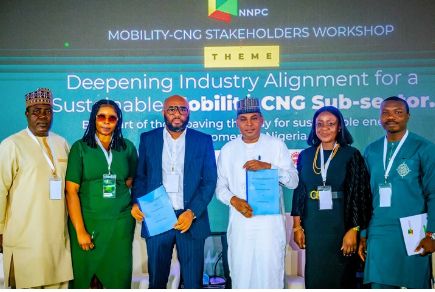
NNPC, Zuid Energies Partner on New CNG and LNG Plants in Ajaokuta

By Kamal Yalwa August 2, 2025 The Nigerian National Petroleum Company (NNPC) Gas Marketing Limited (NGML), a subsidiary of NNPC Limited, has signed a joint venture agreement with Zuid Energies Limited to construct compressed natural gas (CNG) and liquefied natural gas (LNG) plants in Ajaokuta, Kogi State. The announcement was made during the Mobility-CNG Stakeholders Workshop in Abuja, themed “Deepening Industry Alignment for a Sustainable Mobility-CNG Sub-Sector.” The event brought together regulators and downstream operators to explore collaborative solutions for Nigeria’s energy transition and expansion of commercial gas opportunities. Under the agreement, the new gas infrastructure will include: According to a statement from the NNPC, the initiative underscores NGML’s commitment to “leveraging private sector partnerships to deliver innovative virtual pipeline solutions for efficient gas supply to off-grid and underserved areas.” The new project adds to a growing list of gas infrastructure developments in Ajaokuta. Earlier in January, NNPC began constructing five mini-LNG plants in the area with a combined target output of 97 mmscfd. These include: The Federal Government continues to prioritize CNG as part of its clean energy and mobility agenda, in line with its national gas expansion program.

Read More