Tinubu Presents ₦58.18 Trillion 2026 Budget, Prioritises Security and Economic Recovery

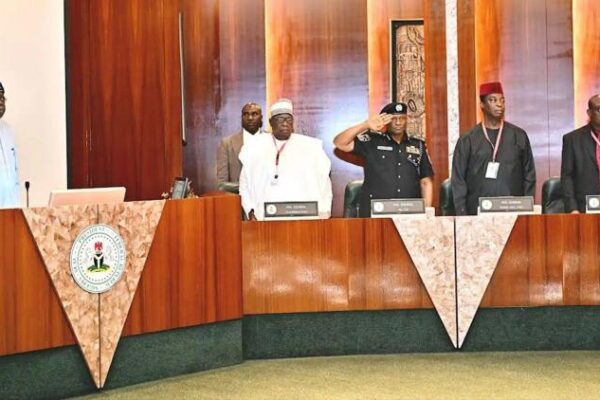
President Bola Ahmed Tinubu has presented the ₦58.18 trillion 2026 Appropriation Bill to a joint session of the National Assembly, unveiling a detailed plan aimed at boosting Nigeria’s economy, strengthening security, and improving living standards. Tagged “The Budget of Consolidation, Renewed Resilience and Shared Prosperity,” the 2026 proposal reflects the administration’s focus on fiscal discipline, economic reforms, and national stability. Speaking in Abuja on Friday, Tinubu acknowledged the economic challenges Nigerians have faced over the past two and a half years but noted signs of recovery. He highlighted that GDP growth reached 3.98 per cent in the third quarter of 2025, inflation has eased for eight consecutive months to 14.45 per cent in November, and Nigeria’s external reserves have risen to $47 billion—the highest in seven years—providing over ten months of import cover. The budget projects total revenue at ₦34.33 trillion and total expenditure at ₦58.18 trillion. Debt servicing is pegged at ₦15.52 trillion, non-debt recurrent expenditure at ₦15.25 trillion, and capital spending at ₦26.08 trillion. The budget deficit is estimated at ₦23.85 trillion, equivalent to 4.28 per cent of GDP. Assumptions include a crude oil price of $64.85 per barrel, daily production of 1.84 million barrels, and an exchange rate of ₦1,400 to the dollar. Security remains the top priority with an allocation of ₦5.41 trillion, followed by infrastructure (₦3.56 trillion), education (₦3.52 trillion), and health (₦2.48 trillion). Tinubu stressed a tougher approach to national security, declaring that all armed groups operating outside government authority—including bandits, kidnappers, militias, violent cult groups, and their sponsors—will be classified as terrorists and face decisive action. The President also pledged stricter budget execution, directing ministries, departments, and government agencies to meet revenue targets and eliminate leakages through full digitisation. In other sectors, Tinubu highlighted investments in education, healthcare, and agriculture, noting that over 418,000 students have benefited from the education loan scheme, while agricultural reforms will focus on mechanisation, irrigation, and food security. He called on lawmakers to support the budget, emphasising that collaboration between the executive and legislature is key to delivering the Renewed Hope Agenda. “The true value of a budget is not in its announcement, but in its delivery,” Tinubu said as he formally submitted the bill to the National Assembly.

Read More

Senate Confirms Oritsemeyiwa Eyesan As NUPRC CEO, Saidu Mohammed As NMDPRA CEO

The Nigerian Senate has approved the appointments of Oritsemeyiwa Amanorisewo Eyesan as Chief Executive Officer of the Nigerian Upstream Petroleum Regulatory Commission (NUPRC) and Engineer Saidu Aliyu Mohammed as CEO of the Nigerian Midstream and Downstream Petroleum Regulatory Authority (NMDPRA). The nominations, made by President Bola Tinubu, were expedited by the upper chamber to ensure uninterrupted regulation of Nigeria’s petroleum sector. Eyesan, a petroleum economist, has over 30 years of experience in the oil and gas industry, having served in various capacities within the Nigerian National Petroleum Company Limited (NNPCL) and its subsidiaries, with a strong focus on upstream operations. Mohammed, a chemical engineer, is well-regarded for his expertise in refining, gas management, and policy formulation, having held several senior leadership roles in the sector. The appointments come amid recent leadership changes in the regulatory agencies, part of broader efforts to enhance oversight and improve efficiency across the upstream, midstream, and downstream petroleum segments under the Petroleum Industry Act (PIA). Both CEOs are expected to strengthen investor confidence, ensure strict regulatory compliance, and advance Nigeria’s domestic refining and gas development initiatives.

Read More

FEC Approves 2026 Budget, Sets Stage For Tinubu’s National Assembly Presentation

The Federal Executive Council has given the green light to the 2026 Budget, clearing the way for President Bola Ahmed Tinubu to present it to a joint session of the National Assembly this afternoon. The approval was confirmed on Friday by the President’s Special Assistant on Social Media, Dada Olusegun, via his X account. “The Federal Executive Council has approved the 2026 Budget, and it is now ready for presentation to a joint session of the National Assembly this afternoon by the President and Commander-in-Chief of the Armed Forces of the Federal Republic of Nigeria, Bola Ahmed Tinubu,” Olusegun’s statement read. The decision follows extensive FEC discussions reviewing key elements of the 2026–2028 Medium-Term Expenditure Framework (MTEF) and Fiscal Strategy Paper. Among the key parameters approved, the Council set an oil price benchmark of $64.85 per barrel and a budget exchange rate of ₦1,512 to one US dollar for the 2026 fiscal year.

Read More

Trump Suspends US Green Card Lottery Following Brown University Shooting

President Donald Trump has suspended the US green card lottery programme following a mass shooting at Brown University last week that left two people dead. The suspect, a Portuguese national found dead on Thursday, had entered the United States through the Diversity Visa (DV1) lottery programme in 2017 and was issued a green card. Homeland Security Secretary Kristi Noem said the visa scheme has been paused under Trump’s directive to “ensure no more Americans are harmed by this disastrous programme.” US authorities also believe the 48-year-old suspect, Claudio Neves Valente, was responsible for the killing of Portuguese MIT professor Nuno Loureiro earlier this week. The diversity visa programme allocates up to 50,000 visas annually through a random selection process for applicants from countries with low immigration rates to the US. Noem noted on social media that Trump had previously “fought to end” the lottery in 2017 after eight people were killed in a truck attack in New York City carried out by Uzbek national Sayfullo Saipov, an Islamic State supporter who had also entered the US through the DV1 programme and is now serving multiple life sentences.

Read More

NNPCL Announces Fresh Petrol Price Reduction In December, Cuts Pump Rate By N80

The Nigerian National Petroleum Company Limited has carried out another reduction in the pump price of petrol, making it the third adjustment recorded in December 2025. A check at NNPCL retail outlets in Abuja on Thursday showed that petrol is now selling for N835 per litre, down from the previous price of N915. This reflects an N80 cut in the pump rate. The latest price drop follows similar moves by other fuel marketers in the Federal Capital Territory. MRS, BOVAS and AA Rano had earlier reviewed their prices, with petrol selling between N739 and N865 per litre across their stations. The reductions are coming on the back of lower ex-depot prices by Dangote Refinery and depot owners, who recently adjusted their rates to between N699 and N800. NNPCL and several other filling stations had previously reduced petrol prices earlier in the month, specifically on December 4 and December 10, 2025.

Read More

House of Representatives Approves Electoral Act Reforms, Imposes Two-Year Jail or N5 Million Fine for Vote Buying

The House of Representatives has approved targeted changes to the Electoral Act, introducing tougher penalties for vote buying and selling. Offenders are now liable to a minimum of two years in prison, a N5 million fine, or both, in addition to a 10-year ban from participating in elections. The amendments were passed during a clause-by-clause review of the House Committee on Electoral Matters’ report, chaired by Deputy Speaker Benjamin Okezie Kalu. Under the updated Clause 22(a and c), penalties have been significantly increased from previous limits, which allowed fines of up to N500,000 or two years’ imprisonment. To strengthen election transparency, Section 60(3) has been revised to require the Independent National Electoral Commission (INEC) to transmit results electronically from polling units to the INEC Result Viewing Portal (IREV) in real time, alongside traditional physical collation. Presiding officers who intentionally violate procedures in counting, announcing, or transmitting results now face a minimum N500,000 fine, six months’ imprisonment, or both. Other key reforms include: Releasing election funds to INEC at least a year before general elections to improve planning and execution. Increasing penalties for multiple voter registration to a minimum N100,000 fine or one year imprisonment, or both. Extending the deadline for political parties to submit candidate lists from 180 to 210 days before elections. Allowing electronically generated voter identification, including downloadable voter cards with unique QR codes, for accreditation and voting. Chairman of the House Committee on Electoral Matters, Adebayo Balogun, explained that the House abandoned plans to repeal the Electoral Act 2022, instead choosing targeted amendments after broader proposals such as early voting, inmate voting, and PVC replacement failed to secure wide support. Balogun described the amendments as “very meaningful,” aimed at strengthening the Electoral Act 2022, addressing gaps, and improving election administration without destabilizing the legal framework. He stressed that the process was transparent and consultative, involving INEC, security agencies, civil society organizations, political parties, professional bodies, development partners, and citizens. While some innovative proposals were not adopted, they remain part of ongoing discussions on electoral reform. “Our goal remains clear: to ensure that every election in Nigeria is transparent, inclusive, secure, and truly reflective of the will of the Nigerian people,” Balogun stated.

Read More

Why We Made Emergency Landing In Burkina Faso — Detained Nigerian Air Force Personnel

An unexpected technical failure forced a Nigerian Air Force aircraft carrying eleven personnel to make an emergency stop in Burkina Faso, leading to their detention in the country. One of the affected officers explained the situation during a visit by a Nigerian delegation led by the Minister of Foreign Affairs, Yusuf Tuggar. He said the aircraft was on its way to Portugal when it developed a fault that made it unsafe to continue the journey. The officer noted that the problem has since been repaired and the aircraft is now fit to resume operations. During the engagement, Tuggar passed along a personal message from President Bola Ahmed Tinubu to the detained Air Force personnel, assuring them of the government’s commitment to resolving the situation. The minister further disclosed that Burkina Faso’s leader, Ibrahim Traoré, had indicated his willingness to offer technical assistance to Nigeria if the need arises.

Read More

Bishop Kukah Visits Nnamdi Kanu At Sokoto Prison

The Catholic Bishop of Sokoto, Most Rev. Matthew Hassan Kukah, has paid a visit to Nnamdi Kanu, leader of the Indigenous People of Biafra (IPOB), at the Sokoto Correctional Centre. Former African Action Congress (AAC) presidential candidate Omoyele Sowore commended the visit, describing it as a strong show of support. “Thank you so much, Bishop Matthew Hassan Kukah, for taking the time to visit Mazi Nnamdi Kanu today. Your visitation represents the solidarity of Sokoto Diocese with #MNK during this challenging time,” Sowore said. Kanu was convicted on terrorism charges by the Federal High Court in Abuja on November 20, 2025, and sentenced to life imprisonment. He was transferred to the Sokoto Correctional Centre the following day, following a court order that barred him from being held at Kuje Prison. The conviction followed prosecution on seven terrorism-related counts, including incitement and unlawful broadcasts. Justice James Omotosho found Kanu guilty on all counts and sentenced him to life imprisonment. Since his transfer, Kanu’s legal team has filed motions requesting his return to Abuja to facilitate his appeal. They argue that the distance makes it difficult to access court records, prepare his defense, and meet with lawyers. His team also contends that Nigeria lacked jurisdiction over broadcasts made in the UK, describing the trial as rushed and flawed. The court had ruled that Kanu could be detained in any correctional facility except Kuje Prison. Notable figures, including Abia State Governor Dr. Alex Otti and Sokoto State Governor Ahmad Aliyu, visited Kanu at the custodial centre in late November.

Read More