President Tinubu Condemns Recent Tragic Attacks, Vows Justice and Protection for All Nigerians

FULL SPEECH: President Tinubu’s 65th Independence Day Address to Nigerians

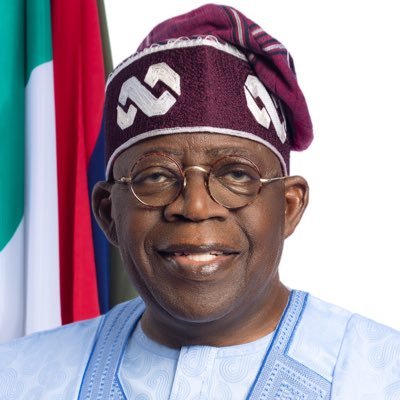
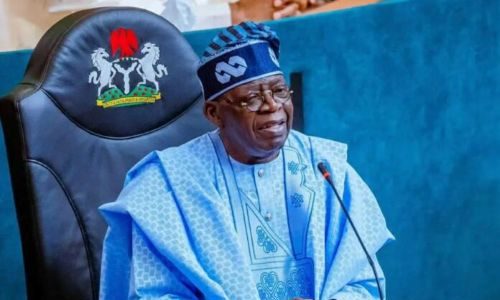
  Fellow Nigerians, Today marks the 65th anniversary of our great nation’s Independence. As we reflect on the significance of this day and our journey of nationhood since October 1, 1960, when our founding fathers accepted the instruments of self-government from colonial rule, let us remember their sacrifice, devotion, and grand dream of a strong, prosperous, and united Nigeria that will lead Africa and be the beacon of light to the rest of the world. 2. Our founding heroes and heroines—Herbert Macaulay, Dr Nnamdi Azikiwe, Sir Abubakar Tafawa Balewa, Chief Obafemi Awolowo, Sir Ahmadu Bello, Margaret Ekpo, Anthony Enahoro, Ladoke Akintola, Michael Okpara, Aminu Kano, Funmilayo Ransome-Kuti, and other nationalists—believed it was Nigeria’s manifest destiny to lead the entire black race as the largest black nation on earth. 3. For decades, the promise of our Independence has been tested by profound social, economic, and political challenges, and we have survived. While we may not have achieved all the lofty dreams of our forebearers, we have not strayed too far from them. In 65 years since our Independence, we have made tremendous progress in economic growth, social cohesion, and physical development. Our economy has experienced significant growth since 1960. 4. Although it is much easier for those whose vocation is to focus solely on what ought to be, we must recognise and celebrate our significant progress. Nigerians today have access to better education and healthcare than in 1960. At Independence, Nigeria had 120 secondary schools with a student population of about 130,000. Available data indicate that, as of 2024, there were more than 23,000 secondary schools in our country. At Independence, we had only the University of Ibadan and Yaba College of Technology as the two tertiary institutions in Nigeria. By the end of last year, there were 274 universities, 183 Polytechnics, and 236 Colleges of Education in Nigeria, comprising Federal, State, and private institutions. We have experienced a significant surge in growth across every sector of our national life since Independence – in healthcare, infrastructure, financial services, manufacturing, telecommunications, information technology, aviation and defence, among others. 5. Our country has experienced both the good and the bad times in its 65 years of nationhood, as is normal for every nation and its people. We fought a bitter and avoidable civil war, experienced military dictatorships, and lived through major political crises. In all these, we weathered every storm and overcame every challenge with courage, grit, and uncommon determination. While our system and ties that bind us are sometimes stretched by insidious forces opposed to our values and ways of life, we continue to strive to build a more perfect union where every Nigerian can find better accommodation and find purpose and fulfilment. 6. Fellow Compatriots, this is the third time I will address you on our independence anniversary since I assumed office as your President on May 29, 2023. In the last 28 months of my administration, like our founding fathers and leaders who came before me, I have committed myself irrevocably to the unfinished nation-building business. 7. Upon assuming office, our administration inherited a near-collapsed economy caused by decades of fiscal policy distortions and misalignment that had impaired real growth. As a new administration, we faced a simple choice: continue business as usual and watch our nation drift, or embark on a courageous, fundamental reform path. We chose the path of reform. We chose the path of tomorrow over the comfort of today. Less than three years later, the seeds of those difficult but necessary decisions are bearing fruit. 8. In resetting our country for sustainable growth, we ended the corrupt fuel subsidies and multiple foreign exchange rates that created massive incentives for a rentier economy, benefiting only a tiny minority. At the same time, the masses received little or nothing from our Commonwealth. Our administration has redirected the economy towards a more inclusive path, channelling money to fund education, healthcare, national security, agriculture, and critical economic infrastructure, such as roads, power, broadband, and social investment programmes. These initiatives will generally improve Nigerians’ quality of life. As a result of the tough decisions we made, the Federal and State governments, including Local Governments, now have more resources to take care of the people at the lower level of the ladder, to address our development challenges. 9. Fellow Nigerians, we are racing against time. We must build the roads we need, repair the ones that have become decrepit, and construct the schools our children will attend and the hospitals that will care for our people. We have to plan for the generations that will come after us. We do not have enough electricity to power our industries and homes today, or the resources to repair our deteriorating roads, build seaports, railroads, and international airports comparable to the best in the world, because we failed to make the necessary investments decades ago. Our administration is setting things right. 10. I am pleased to report that we have finally turned the corner. The worst is over, I say. Yesterday’s pains are giving way to relief. I salute your endurance, support, and understanding. I will continue to work for you and justify the confidence you reposed in me to steer the ship of our nation to a safe harbour. 11. Under our leadership, our economy is recovering fast, and the reforms we started over two years ago are delivering tangible results. The second quarter 2025 Gross Domestic Product grew by 4.23%—Nigeria’s fastest pace in four years—and outpaced the 3.4 per cent projected by the International Monetary Fund. Inflation declined to 20.12% in August 2025, the lowest level in three years. The administration is working diligently to boost agricultural production and ensure food security, reducing food costs. 12. In the last two years of our administration, we have achieved 12 remarkable economic milestones as a result of the implementation of our sound fiscal and monetary policies: i. We have attained a record-breaking increase in non-oil revenue, achieving the 2025 target by August with over…
Read More

Nigeria Immigration Service Begins Nationwide Crackdown On Visa Overstays After Amnesty

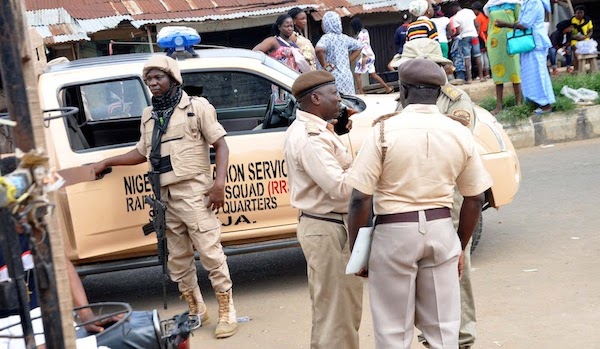
The Nigeria Immigration Service (NIS) has announced the start of nationwide enforcement against foreigners who have overstayed their visas or breached immigration regulations, following the conclusion of the Federal Government’s visa amnesty programme. The amnesty, which ran from July 5 to September 30, 2025, allowed foreign nationals with expired immigration documents to regularize their status without penalties. The programme officially ended at midnight on September 30. In a statement issued Tuesday just before the deadline, NIS Public Relations Officer ACI Akinsola Akinlabi confirmed that enforcement operations would commence on October 1. The initiative will target holders of expired Visa on Arrival (VoA), single or multiple-entry short visit and business visas, as well as individuals with expired Comprehensive Expatriate Residence Permits and Automated Cards (CERPAC). Foreign nationals found violating immigration laws face sanctions including deportation, payment of fines, or restrictions on future entry. The NIS outlined the penalties as follows: Less than three months’ overstay: removal, $15 per day fine, or a two-year entry ban. Three months to one year: removal, $15 per day fine, or a five-year entry ban. Over one year: removal and a 10-year or permanent entry ban. The agency stressed that the enforcement is aimed at ensuring lawful migration, protecting national security, and promoting transparency within Nigeria’s immigration system.

Read More

Top Nigerian Leaders, Civil Society Groups to Convene for National Electoral Reforms Dialogue

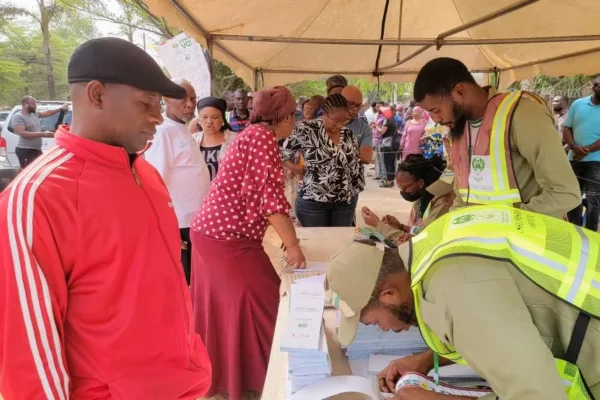
As Nigeria prepares for the 2027 general elections, a high-level National Electoral Reforms Dialogue is set to take place on October 1st, drawing participation from some of the country’s most prominent political figures, labour leaders, and civil society actors. The event, organised by the National Consultative Front (NCFront), the Labour and Civil Society Front (LCSF), in collaboration with the Nigeria Electoral Reforms Coalition (NERCO) and Partners for Electoral Reforms, will be held virtually as part of the activities marking Nigeria’s 65th Independence Anniversary. According to a statement issued on Tuesday by the Secretary of the Local Organising Committee, Mallam Hamisu San Turaki, the dialogue will serve as a platform to discuss constitutional and institutional reforms needed to ensure free, fair, and credible elections in 2027. Among the key figures expected to attend are former President Goodluck Jonathan, former Vice President Yemi Osinbajo, 2023 Labour Party presidential candidate Peter Obi, and former INEC Chairman Prof. Attahiru Jega. They are scheduled to participate as discussants during the national webinar. Other notable invitees include Nigeria Labour Congress (NLC) President Joe Ajaero, Trade Union Congress (TUC) President Festus Osofo, former Minister of Education Dr. Oby Ezekwesili, and political economist Prof. Pat Utomi. Also expected to contribute to the debate are former governors Rabiu Musa Kwankwaso (Kano) and Rotimi Amaechi (Rivers), along with former Kaduna Central Senator Shehu Sani. The Secretary to the Government of the Federation (SGF), the Chairman of the Nigeria Governors Forum, and the chairpersons of the Senate and House Committees on Electoral Reforms have also been invited, as well as the INEC Commissioner in charge of Information. Organisers say the event will focus on advancing constitutional amendments and reforms aimed at improving the integrity and transparency of Nigeria’s electoral system. With less than two years to the next general elections, calls for comprehensive electoral reform have intensified among stakeholders across the country. The dialogue is expected to generate actionable recommendations to help shape the legal and institutional framework for future elections, as Nigeria looks to strengthen its democracy ahead of 2027.

Read More

William Saliba Reveals Why He Rejected Real Madrid to Commit Long-Term Future to Arsenal

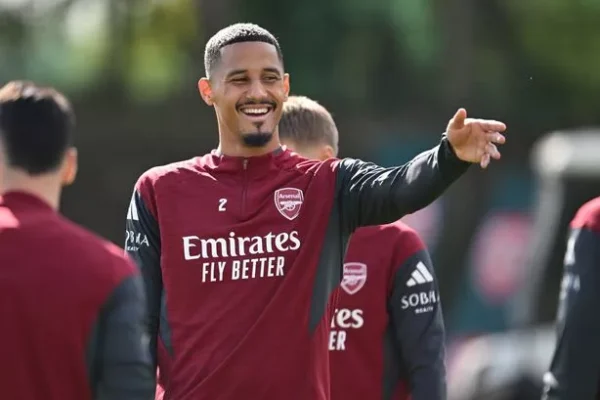
Arsenal defender William Saliba has revealed he turned down interest from Real Madrid to extend his stay in North London — stating his desire to “win a lot of trophies” with the Gunners was the driving force behind his decision. The 24-year-old French international recently signed a new five-year contract with Arsenal, keeping him at the Emirates Stadium until the summer of 2030. Although his previous deal was set to run until 2027, Spanish giants Real Madrid had been closely monitoring his situation. Speaking ahead of Arsenal’s Champions League clash against Olympiacos on Wednesday, Saliba explained why staying at Arsenal was a clear choice. “To be honest, I was not thinking about clubs from the outside. I wanted to stay here for more years,” said Saliba. “I was not focused on the other clubs. I’m focused on my club.” When asked about the contrasting move of Trent Alexander-Arnold — a lifelong Liverpool supporter who joined Real Madrid this past summer — Saliba made his motivations clear. “He won some titles with Liverpool. With me, I didn’t win anything here except the Community Shield,” he admitted. “I want to stay here and win a lot of trophies. I love this club. I couldn’t leave without giving something back. I’ve won nothing — I want to stay here and win.” Saliba’s renewal marks another key move by Arsenal sporting director Andrea Berta, who has already overseen new contracts for Gabriel Magalhães, Ethan Nwaneri, and Myles Lewis-Skelly during a busy summer of squad retention. With his long-term future secured, Saliba remains central to Mikel Arteta’s plans as Arsenal aim to challenge for major silverware both domestically and in Europe this season.

Read More
Presidency Refutes Kwankwaso’s Claims of Northern Marginalisation

FG Cancels Independence Anniversary Parade

The Federal Government has cancelled the Independence Anniversary parade, previously scheduled to mark the 65th Independence on Wednesday, 1st October. The cancellation, according to a statement issued by the Director, Information & Public Relations, Mr. Segun Imohiosen, on Monday, is in no way a diminishment of the significance of this milestone anniversary, and the government remains committed to celebrating Nigeria’s 65th year of independence with dignity and enthusiasm. “Accordingly, all other programmes slated for the Independence Anniversary will remain in effect. “The Government deeply regrets any inconvenience caused by this cancellation. “The Federal Government appreciates the understanding, support and cooperation of all Nigerians, members of the diplomatic community, and invited guests, and urges Nigerians to support the reforms of President Bola Ahmed Tinubu, GCFR in making Nigeria a greater nation,” the statement read.

Read More

President Tinubu Condemns The Killing of Arise News Anchor Sommie Maduagwu

President Bola Ahmed Tinubu receives with deep sorrow the news of the tragic passing of Ms Somtochukwu ‘Sommie’ Maduagwu, a brilliant news anchor with Arise News Television, who was killed during an attack by robbers at her residence in Katampe, Abuja. President Tinubu extends his heartfelt condolences to the family of Ms Maduagwu, the management and staff of Arise News Television, and the entire Nigerian media fraternity over this painful loss. President Tinubu said: ” Ms Maduagwu was a promising professional journalist whose life was cut short in a cruel and condemnable manner. “Security and law enforcement agencies should conduct a quick and thorough investigation into the incident and ensure that the perpetrators are apprehended and brought to justice without delay”. While commiserating with the bereaved family, President Tinubu assured Nigerians that his administration remains committed to ensuring the safety and security of all citizens, and will continue to strengthen measures aimed at combating crime in all its forms.

Read More

Divided Opinions in the Middle East: But Trump’s Peace Plan May Offer a Way Forward

As Israeli Prime Minister Benjamin Netanyahu returns home from Washington, he faces a country – and a government – deeply split over the latest proposed peace deal brokered by former U.S. President Donald Trump. The plan, which has dominated headlines since its announcement, has triggered both praise and outrage across the political spectrum. Within Netanyahu’s own cabinet, anger is palpable. Two of his most hardline ministers, Itamar Ben-Gvir and Bezalel Smotrich, have publicly condemned the prime minister’s apology to Qatar for the airstrike on Doha earlier this month. Ben-Gvir, leader of the far-right Otzma Yehudit party, called the attack “an important, just and supremely moral” act, claiming that “Qatar supports, funds and incites terrorism.” Smotrich went further, likening Netanyahu to Neville Chamberlain, accusing him of “grovelling” and calling the apology a “disgrace.” Their fierce reaction raises questions about the stability of Netanyahu’s coalition. Can they remain in the same government? And if not, how long before the government falls? While a collapse of the current coalition may not derail the peace initiative – which is expected to gain enough support in the Knesset through opposition parties – it could trigger a new election cycle. That would set the stage for Netanyahu to recast himself as the leader who secured a hostage deal, while opponents would hold him accountable for the events of October 7. Despite the internal turmoil, the plan has been positively received in some quarters. Israeli President Isaac Herzog has voiced support, as has the Hostages and Missing Families Forum. Across the Arab world, leaders have cautiously welcomed the plan, though most have credited Trump rather than Netanyahu. But Hamas, the key party holding Israeli hostages, was reportedly not consulted before the announcement. Their immediate reaction was telling: the plan lacks legitimacy in their eyes if it does not address Palestinian self-determination—something the current proposal notably excludes. That omission may prove critical. For the Israeli public, the return of the hostages is paramount. Without Hamas’s cooperation, that outcome remains in doubt. And without guarantees on the political future of Palestinians, Hamas is unlikely to engage. The plan’s governance element—reportedly involving a leadership role for former UK Prime Minister Tony Blair in Gaza—has also drawn scorn from Palestinian leaders. “Tony Blair is a war criminal who should be in The Hague, not Gaza,” said longtime Palestinian politician Mustafa Barghouti. That sentiment is echoed across much of the Palestinian political landscape, casting further doubt on the plan’s viability on the ground. Among Israeli officials, reactions range from wary optimism to outright skepticism. “I’ll believe it when it happens,” said one senior military source. Another added: “I’m more confident than before—but before, I wasn’t confident at all.” Negotiations are still in the early stages, and much remains uncertain. The deal may yet evolve as both sides are pushed to make concessions. But for the first time in months, there is a flicker of momentum—and the possibility that events could move quickly if the right levers are pulled. The coming days will be critical. For Netanyahu, the stakes couldn’t be higher—politically, diplomatically, and personally. Whether Trump’s plan leads to peace or yet another round of conflict remains to be seen. But one thing is certain: no one in the region is watching indifferently.

Read More

Iraqi Man Sentenced to Life for Trafficking Fighters to Join Russian War in Ukraine

An Iraqi man has been sentenced to life in prison for trafficking individuals to fight for Russia in its ongoing war against Ukraine, in what is believed to be the first case of its kind in Iraq. The Najaf Criminal Court announced on Monday that the man had organized and sent groups of people to fight in a foreign conflict in exchange for money. The court issued the life sentence under a 2012 law that criminalizes recruiting or transporting individuals for exploitation. Judicial and security sources later identified the man as Risan Falah Kamel, though no further names or details about the network have been released. The official text of the indictment has not been made public. According to Iraqi officials, many of those recruited were reportedly promised financial rewards or hoped to use Russia as a stepping stone to reach Europe. Local media have estimated that thousands of Iraqi nationals may be fighting on the Russian side, though this has not been independently verified. Earlier this month, Iraq’s parliamentary Foreign Relations Committee confirmed the presence of Iraqis in the conflict and pledged to investigate further. The issue reflects a broader trend in the conflict, which has entered its fourth year. Thousands of foreign fighters have joined both Russian and Ukrainian forces since the war began. In recent months, Ukraine has reported detaining Chinese nationals fighting for Russia, and last year, a British national fighting for Ukraine was captured in the Russian border region of Kursk. North Korea has also reportedly sent thousands of soldiers and large volumes of ammunition to aid Russian forces, especially during Ukraine’s offensives in the border areas. This military cooperation was recently affirmed during talks in Beijing between Russian President Vladimir Putin and North Korean leader Kim Jong Un. Both leaders praised their growing alliance, with Kim calling it a “fraternal duty” to support Russia. China, meanwhile, continues to back Russia economically but has avoided direct military involvement, maintaining a formal position of neutrality and calling for diplomacy to end the conflict. The case in Iraq underscores the increasingly global dimensions of the war in Ukraine and the complex networks now involved in recruitment and participation. Iraqi authorities say further legal actions are likely as investigations continue.

Read More