Moniepoint Turns Staff Into Millionaires as Unicorn Deal Pays Off Big

When Moniepoint secured a $110 million funding round in October 2024 and officially joined the unicorn club, it wasn’t just early investors who smiled to the bank. At least two long-serving employees cashed out big—one taking home a jaw-dropping ₦1.3 billion ($850,000) by selling part of their shares, while another made $20,000, according to internal documents seen by TechCabal. These share sales were part of a rare but growing trend in Nigeria’s tech space: employee secondary liquidity, where workers sell their vested equity to incoming investors. Moniepoint reportedly allowed only employees with at least three years of tenure to participate, capping how much equity could be sold. The deals were facilitated through Carta, a startup equity marketplace. While the shares were sold at a discount to the unicorn valuation—a common practice—the impact was life-changing. “I had personal financial plans, and this gave me the push I needed,” said one of the employees, who had spent nearly a decade at the company. The move has boosted staff morale and deepened loyalty, especially as local tech firms rarely offer such liquidity events. As exits like IPOs remain elusive in Africa’s startup scene, Moniepoint’s bold move signals a shift in how equity is viewed—not just as compensation, but as real wealth. It also adds pressure on other startups to follow suit, making employee ownership a powerful tool for hiring, retention, and motivation in the ecosystem.

Read More

Tinubu to Commission 17 Landmark Projects in Abuja Starting June 10 — FCT Minister Wike

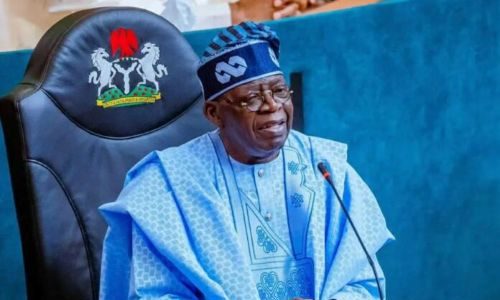
President to personally inaugurate 10 projects as FCT undergoes historic infrastructure transformation Abuja is set to experience an unprecedented wave of infrastructural development as President Bola Ahmed Tinubu has approved the commissioning of 17 landmark projects in the Federal Capital Territory (FCT), beginning Tuesday, June 10, 2025, immediately after the Eid-el-Kabir celebrations. The announcement was made by Minister of the FCT, Nyesom Wike, during an inspection tour of ongoing projects in the capital on Wednesday. Wike confirmed that the commissioning will begin with the International Conference Centre (ICC), describing the rollout as a significant milestone in the development of the nation’s capital. “Mr. President has finally approved the commissioning of projects to start on the 10th of June, which is Tuesday, after the Sallah holiday. And that will start with the International Conference Centre. As you can see, we are good to go,” Wike said. On Wednesday, June 11, attention will turn to the Gishiri Interchange, which connects key parts of the city including Jahi, Maitama, and Mabushi, highlighting the administration’s drive to enhance mobility and connectivity in the FCT. Wike disclosed that President Tinubu will personally commission 10 of the 17 projects, while the remaining seven will be inaugurated by other senior government officials. These include: “We want to thank the President. It is not easy for him to give us 10 good days to commission these projects. This level of presidential involvement shows the importance of what we are doing here. Abuja is truly being transformed,” the minister stated. Wike emphasized that the projects are part of the Renewed Hope Agenda, the national development initiative spearheaded by President Tinubu. He noted that residents, especially children, are already experiencing the benefits of enhanced infrastructure and urban planning. “You can see the joy of the children, and they are all feeling the impact of the Renewed Hope Agenda. All the promises we made, we’ve been able to accomplish them,” Wike added. Describing the rollout as “unprecedented,” the minister praised the coordination and support from the Presidency and affirmed the FCT administration’s commitment to continued service delivery and urban transformation. “We give God Almighty the glory and thank Mr. President for all his support,” Wike concluded. As the capital braces for the historic 10-day commissioning period, residents can expect visible improvements across key sectors, reflecting the federal government’s renewed commitment to infrastructure, mobility, and quality of life in Abuja.

Read More

Fubara Visits Tinubu in Lagos

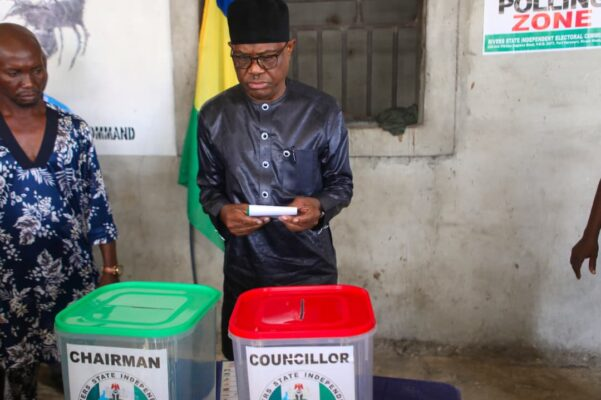
Suspended Rivers Governor Siminalayi Fubara has paid a courtesy visit to President Bola Tinubu in Lagos. The Special Adviser on Media and Information Strategy to the President, Bayo Onanuga, confirmed the visit. Tinubu, in a nationwide broadcast on March 18, 2025 declared a state of emergency citing the need to restore law and order as the crisis between Fubara and his predecessor, Nyesom Wike festered. He also announced the suspension of Fubara, his Deputy, Mrs Ngozi Odu and all elected members of the Rivers Assembly for an initial six months. This was followed by the nomination of retired Vice Admiral Ibokette Ibas administrator to steer the affairs of the state, during the period of the emergency rule. Onanuga on his verified Facebook page on Tuesday said: “Governor Sim Fubara of Rivers, now on suspension from office visited President Bola Tinubu in Lagos on Tuesday.”

Read More

Ondo Deputy Speaker, Majority Leader Resign

The Deputy Speaker of the Ondo State House of Assembly, Abayomi Akinruntan has resigned his position, citing the need to align with the conventional arrangement of elective position in the state. The resignation letter of the former deputy speaker – representing Ilaje Constituency 1, – who is the son of the Olugbo of Ugbo Kingdom, Oba Fredrick Akinruntan, was read at the floor of the Assembly by the Clerk, Benjamin Jayeiola. Akinruntan, who was absent during the plenary, was elected as the Deputy Speaker of the Assembly in June 2023, a position he occupied until his resignation. The resignation letter read: “I hereby tender my resignation from the office of the Deputy Speaker effective from today, 2nd June, 2025. Recall the House was inaugurated June, 2023 and I was unanimously elected as Deputy Speaker by members as stipulated in our standing order. “My resignation is borne out of the need to align with the conventional arrangement in power sharing of elective positions in the state. I want to appreciate all members and staff for their contributions and support.” Following Akinruntan’s resignation, the lawmaker representing Okitipupa Constituency 2, Ololade Gbegude was subsequently nominated by Oluwatoyin Japheth (Akoko North East Constituency) and seconded by Chris Ayebusiwa (Okitipupa Constituency 1) as the new Deputy Speaker. Following the nomination of Gbegudu, which was not contested, he was subsequently sworn in as the Deputy Speaker with the pledge that he will serve in his new role with due diligence. Similarly, the Majority Leader of the Assembly, Oluwole Ogunmolasuyi, also stepped down from his position, with the lawmaker representing Ose Constituency, Olatunji Oshati, announced as the new Majority Leader. Also, Muritala Sulaiman, representing Akoko South East, was announced as the new Chief Whip, while Fabiyi Olatunji, Odigbo Constituency 1, becomes the Whip of the Assembly. The Speaker, Olamide Oladiji, commended the former deputy speaker and the erstwhile majority leader for their maturity. He said: “He (Akinruntan) has been a peaceful ally. He has support the house. I want to appreciate him for the maturity displayed for ensuring a peaceful transition. “The same thing goes to the former majority leader. He has been a stabilizer in the House and also a good and dependable ally.” It was gathered that the change of the positions of the principal officers became imperative in order to balance the unwritten elective political arrangements in the state. Akinruntan and Governor Lucky Aiyedatiwa hail from the same Ilaje Local Council Area of the state, while the erstwhile Majority Leader, Ogunmolasuyi is from Owo Local Council, where the Deputy Governor, Olayide Adelami hails from.

Read More

Bill Gates Pledges $200bn Fortune to Transform Health and Education in Africa by 2045

Microsoft founder Bill Gates says that most of his $200bn (£150bn) fortune will be spent on improving health and education services in Africa over the next 20 years. The 69-year-old said that “by unleashing human potential through health and education, every country in Africa should be on a path to prosperity”. Speaking in Ethiopia’s capital Addis Ababa, he also urged Africa’s young innovators to think about how to build Artificial Intelligence (AI) to improve healthcare on the continent. Gates announced last month that he would give away 99% of his vast fortune by 2045, by when his foundation planned to end its operations. “I recently made a commitment that my wealth will be given away over the next 20 years. The majority of that funding will be spent on helping you address challenges here in Africa,” he said in an address at the African Union (AU) headquarters. Mozambique’s former First Lady Graça Machel welcomed his announcement, saying it came in a “moment of crisis”. “We are counting on Mr Gates’ steadfast commitment to continue walking this path of transformation alongside us,” she said. The US government has cut aid to Africa, including programmes to treat patients with HIV/Aids, as part of US President Donald Trump’s “America First” policy, raising concerns about the future of healthcare on the continent. Gates said his foundation, which has a long history of operating in Africa, would focus on improving primary healthcare. “What we’ve learned is that helping the mother be healthy and have great nutrition before she gets pregnant, while she is pregnant, delivers the strongest results,” he said. “Ensuring the child receives good nutrition in their first four years as well makes all the difference.” In a message to young innovators, the tech billionaire noted that mobile phones had revolutionised banking in Africa, and argued that AI should now be used for the continent’s benefit. “Africa largely skipped traditional banking and now you have a chance, as you build your next generation healthcare systems, to think about how AI is built into that,” he said. Gates pointed to Rwanda as an example, saying it was already improving services using AI-enabled ultrasound to identify high-risk pregnancies. The Gates Foundation said it had three priorities: ending preventable deaths of mothers and babies, ensuring the next generation grows up without having to suffer from deadly infectious diseases, and lifting millions of people out of poverty. “At the end of 20 years, the foundation will sunset its operations,” it said in a statement. Last month, Gates said he would accelerate his giving via his foundation. “People will say a lot of things about me when I die, but I am determined that ‘he died rich’ will not be one of them,” he wrote in a blog post. Giving away 99% of his fortune could still leave the fifth-richest person in the world a billionaire, according to Bloomberg. Along with Paul Allen, Gates founded Microsoft in 1975, and the company soon became a dominant force in software and other tech industries. Gates has gradually stepped back from the company in recent decades, resigning as its chief executive in 2000 and as chairman in 2014. He said he had been inspired to give away money by investor Warren Buffett and other philanthropists. However, critics of his foundation say Gates uses its charitable status to avoid tax and that it has undue influence over the global health system.

Read More

Russia-Ukraine Peace Talks End Without Ceasefire Deal Prisoner Exchange Agreed

Kyiv demands full ceasefire, Moscow pushes “lasting peace” amid deep divides A second round of direct peace talks between Russia and Ukraine, held in Istanbul, Turkey, has ended without a major breakthrough. The only agreement reached was on a limited exchange of prisoners of war, with both sides pledging to swap all sick and heavily wounded captives, as well as those under 25. Ukraine’s negotiating team, led by Defence Minister Rustem Umerov, accused Russia of rejecting its key demand for an “unconditional ceasefire” across land, sea, and air for at least 30 days. Kyiv said it had submitted a ceasefire proposal days before the talks, but Russia only presented its plan during the session. Russia’s delegation, led by Vladimir Medinsky, offered a limited truce in unspecified areas of the front line for two to three days. Medinsky also confirmed that Russia would return the bodies of 6,000 Ukrainian soldiers to Kyiv next week. No timeline was given for the agreed prisoner exchange. Deep Divisions Persist The talks, lasting just over an hour, highlighted the ongoing rift between both sides. Moscow insists on Ukraine’s withdrawal from its four partly occupied regions—Donetsk, Luhansk, Kherson, and Zaporizhzhia—as well as Crimea, which Russia annexed in 2014. Russia also demands Kyiv’s demilitarisation, a ban on NATO membership, Russian as an official language, and an end to sanctions. Kyiv and its Western allies have firmly rejected these demands, calling them tantamount to Ukraine’s de facto surrender. Ukrainian officials also presented a list of hundreds of children allegedly deported to Russia, demanding their return. Next Steps Unclear Umerov said Ukraine expects Russia’s formal response to its ceasefire proposals by the end of June and called for a direct meeting between Ukrainian President Volodymyr Zelensky and Russian President Vladimir Putin. However, no concrete plans have been made for such talks. In Vilnius, where he was attending a summit, Zelensky said, “While there are no meaningful signals from Russia to end the war, it is important to strengthen our defence.” He also urged for more sanctions pressure on Russia. Meanwhile, US President Donald Trump has continued to advocate for a quick settlement but has delayed imposing tougher sanctions on Moscow. Trump, who previously called Putin “absolutely crazy” after a wave of Russian drone and missile attacks, has been criticised for what some see as a soft stance on Russia. With no major progress from the peace talks, the war—now in its third year since Russia’s full-scale invasion in February 2022—grinds on, with Moscow still controlling around 20% of Ukrainian territory.

Read More
Fitch Upgrades Fidelity Bank’s National Rating to ‘A+(nga)’ on Strong Capital Position and Resilient Earnings

Fitch Upgrades Fidelity Bank’s National Rating to A+(nga) on Strong Capital Position and Resilient Earnings

By [Kamal Yalwa] Global credit rating agency, Fitch Ratings, has upgraded Fidelity Bank Plc’s National Long-Term Rating to ‘A+(nga)’ from ‘A(nga)’, while affirming its Long-Term Issuer Default Rating (IDR) at ‘B’. The upgrade, announced on May 29, 2025, reflects the bank’s strengthened capital buffers, sustained earnings growth, and prudent risk management practices. According to Fitch, Fidelity Bank’s Fitch Core Capital (FCC) ratio improved to 29.9% at the end of 2024, significantly above the regulatory minimum and one of the highest in Nigeria’s banking industry. The rating agency cited the bank’s robust capital base, improved profitability, and stable deposit structure as key factors driving the upgrade. The development comes on the back of successful capital-raising initiatives by Fidelity Bank, including a rights issue and a public offer, which boosted its capital base. Fitch also noted expectations of further capital inflows ahead of the Central Bank of Nigeria’s (CBN) N500 billion minimum capital requirement deadline for international banks in 2026. Commenting on the development, Dr. Nneka Onyeali-Ikpe, Managing Director/Chief Executive Officer of Fidelity Bank Plc, said: “This upgrade by Fitch Ratings affirms the resilience of our business model, the strength of our risk management practices, and our unwavering focus on delivering sustainable value to stakeholders. Despite a challenging macroeconomic environment, we have continued to maintain strong asset quality, solid profitability, and ample liquidity.” Fidelity Bank recorded improved earnings in 2024, driven by higher net interest income and efficiency in deposit mobilization. As of year-end 2024, 93% of the bank’s total deposits were low-cost current and savings accounts (CASA), reflecting one of the strongest deposit structures in the Nigerian banking industry. Fitch also ranked Fidelity Bank as the sixth-largest bank in Nigeria by total assets, controlling approximately 5% of the industry’s asset base. The bank’s well-diversified funding profile, robust risk controls, and expanding digital banking footprint further supported the positive rating action. The rating upgrade is expected to enhance investor confidence and support the bank’s capital market activities, including efforts to expand its operations locally and across key international markets. Fidelity Bank currently serves over 9.1 million customers through 255 business offices in Nigeria and its UK subsidiary, FidBank UK Limited. The bank has earned multiple recognitions for innovation, SME support, and digital transformation, including: As regulatory and macroeconomic pressures continue to shape the Nigerian banking landscape, Fidelity Bank’s improved rating underscores its strong fundamentals, capital adequacy, and operational resilience—positioning it to capture future growth opportunities across retail, commercial, and investment banking segments.

Read More

Ondo Vice Principal Beaten by Thugs for Stopping Exam Malpractice

By [Kamal Yalwa] A Vice Principal of Complete Child Development College, Aule, Akure, Ondo State, Mr. Rotifa, has been brutally assaulted by suspected thugs allegedly hired by the parent of a student he prevented from cheating in the ongoing West African Senior School Certificate Examination (WASSCE). The attack followed an incident on Monday, May 26, when Mr. Rotifa seized an Android phone from an SS3 student who attempted to use it to cheat during the exam. The student’s mother reportedly confronted the school, demanding the phone’s return and allegedly threatening to deal with any teacher who tried to stop her child from using the device during the exams. Despite the threats, Mr. Rotifa maintained that no student would be allowed to cheat in the examination hall. On Thursday, May 29, the student’s brother—an alumnus of the school—reportedly stormed the school premises, threatening to assault the vice principal. Following the confrontation, Mr. Rotifa reported the matter to the police. However, while returning from an attempt to apprehend the suspects, the police van he was in was ambushed by the gang. The thugs reportedly dragged Mr. Rotifa out of the police vehicle and beat him severely. The injured vice principal was rushed to a hospital for treatment and discharged the following day. However, due to safety concerns, he has not returned to his residence, fearing further attacks. In a statement, the Ondo State Ministry of Education, through its Director of Schools, condemned the attack and assured that those responsible would be brought to justice. The statement reads in part: “The incident started on Monday, May 26, when an Android phone was found with one SS3 student, which is contrary to the rules and regulations of the school. Mr. Rotifa, the vice principal, seized the phone. On Thursday, the student’s mother came to the school to fight with the management, prompting the proprietor to order the phone’s return. Despite this, the student’s brother later harassed the vice principal and threatened to deal with him. After school hours, the boys were seen loitering near the school. Mr. Rotifa was advised to report to the police station, and two policemen accompanied him in a patrol van. However, they were ambushed, and Mr. Rotifa was dragged from the van and assaulted. He was treated and discharged from the hospital but has not returned home due to fear of further attacks. The state government is working with security agencies to ensure the safety of staff and students for the remaining WASSCE papers and to bring the culprits to book.” The Ondo State Government has reiterated its commitment to ensuring a safe learning environment across all schools and has promised that all necessary measures will be taken to protect the lives of teachers and students.

Read More