
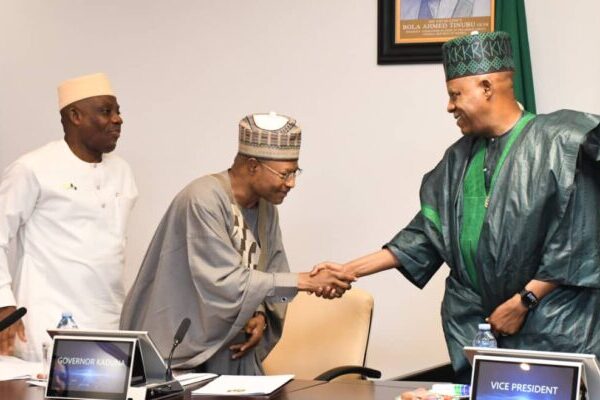
VP Shettima Urges National Council on Skills to Embrace Unity, End Fragmentation in Skills Development

By: Kamal Yalwa: September 10, 2025 Vice President Kashim Shettima has called on the National Council on Skills (NCS) and all relevant stakeholders to work collectively in advancing the federal government’s skills acquisition drive, declaring that the era of working in silos is over. Speaking during the 7th meeting of the NCS held Tuesday at the Presidential Villa, Abuja, Shettima emphasised that building a future-ready workforce requires unified action across government agencies, ministries, and the private sector. He described skills development as a core pillar of the Renewed Hope Agenda of President Bola Tinubu’s administration. “Let me be clear about what this means. The era of operating in silos is over. We must move towards a new streamlined workflow that embeds collaboration directly into the process of curriculum development and funding,” the Vice President stated. He noted that the ongoing “skills revolution” is a national commitment and must be driven with purpose and synergy to unlock opportunities for Nigerian youth and workers nationwide—from the aspiring artisan in Kaura Namoda to mid-career professionals in Ebute-Metta. Shettima lauded Kaduna State Governor, Senator Uba Sani, for establishing and chairing the state’s first Council on Skills, calling it a model for other subnational governments to emulate. “We cannot build a future-ready workforce on a foundation of division,” Shettima stressed, urging the council to enforce a unified structure and eliminate institutional friction within the country’s skills ecosystem. He further emphasized that sustainable funding and implementation of the national skills agenda depend on strong inter-agency collaboration, not isolated action. Earlier in the meeting, Governor Uba Sani revealed that over 30,000 students were recently admitted into the Kaduna Vocational and Skills Development Institute. He thanked the Vice President for his continued support and dedication to job creation and skills development. Also speaking, Minister of Education Olatunji Alausa praised the Kaduna State Government’s efforts and announced that technical colleges have been directed to focus solely on relevant, practical courses for the upcoming academic year—aligning with the administration’s skills acquisition strategy. The council meeting reaffirmed the federal government’s commitment to building a coordinated and inclusive framework to equip Nigerians with the skills needed to thrive in an evolving economy.
Read More

Nigerian National Arrested in New Orleans for Fraud-Related Offences

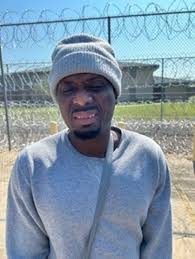
New Orleans, USA — U.S. Immigration and Customs Enforcement (ICE) has confirmed the arrest of a Nigerian national, Rotimi Oladimeji, in New Orleans for fraud-related crimes. In a statement posted on X (formerly Twitter) on Monday, ICE identified Mr. Oladimeji as a “criminal alien” and shared a photograph of him wearing a grey shirt and headwear. According to ICE, Oladimeji has a prior criminal record that includes charges of mail and wire fraud. He was previously ordered to pay over $1.1 million in restitution linked to those offences. “ICE New Orleans arrested him following his fraud conviction,” the agency said in the statement. Mr. Oladimeji now faces potential jail time and may be deported to Nigeria upon completion of his sentence.

Read More

NAS Demands Increased Funding, Digital Inclusion, Accountability in Education Sector

The National Association of Seadogs (Pyrates Confraternity) has described Nigeria’s worsening literacy crisis as a “national emergency,” warning that millions of out-of-school children are being condemned to lives of poverty, exclusion, and crime unless urgent action is taken. In a statement issued on Sunday to mark this year’s International Literacy Day themed “Promoting Literacy in the Digital Era: Bridging the Gap,” NAS Cap’n, Dr Joseph Oteri, said the scale of Nigeria’s challenge was unprecedented. “Despite being Africa’s largest economy, Nigeria harbours the world’s highest number of out-of-school children. UNICEF puts the figure at 10.2 million children of primary school age, while UNESCO estimates it rises to 18.3 million when adolescents are included. In real terms, one in every five out-of-school children worldwide is Nigerian,” Oteri stated. He noted that this crisis undermines the country’s ability to meet global development benchmarks, particularly the Sustainable Development Goals (SDGs) relating to quality education, poverty reduction, gender equality, and reduced inequalities. According to him, persistent obstacles such as insecurity, poverty, child labour, gender discrimination, and poor infrastructure continue to push millions of children out of school and into risky environments where they are exposed to drugs, crime, exploitation, and even trafficking. “Literacy in the 21st century must be holistic, inclusive, and digitally empowered. Nigeria cannot achieve meaningful development while millions of its children remain uneducated, digitally excluded, and socially disenfranchised,” Oteri stressed. The NAS leader also raised concerns over Nigeria’s growing digital divide. He explained that while children in urban centres increasingly benefit from technology-enabled learning, millions in rural communities remain locked out due to lack of affordable internet, digital devices, and ICT centres. “This uneven access is widening inequality and could create a generation of digitally illiterate citizens in a world driven by knowledge and innovation,” he warned. To reverse the trend, NAS unveiled a six-point rescue plan for Nigeria’s education sector. First, Oteri called for greater public investment, with at least 20 percent of national and state budgets earmarked for education and closely monitored to prevent diversion of funds. He demanded the strict enforcement of the Universal Basic Education policy, ensuring free, compulsory, and quality schooling for every child, free from hidden costs. Thirdly, he pressed for digital inclusion, urging government to provide affordable broadband, digital learning devices, and community ICT hubs to bridge the technological gap. NAS also advocated expanded social protection measures, including larger school feeding schemes, scholarships, and conditional cash transfers to keep children from dropping out due to economic hardship. The fifth proposal stressed partnerships for change, with government collaborating more effectively with NGOs, civil society, faith-based organisations, and the private sector to mobilise resources and expertise. Finally, Oteri insisted on accountability and governance, demanding that anti-corruption safeguards be extended to the education sector to ensure resources actually reach classrooms and students. “Every child left uneducated today becomes a burden on society tomorrow. The cost of inaction is dire,” he warned. As part of its own contribution, Oteri announced that NAS would launch a month-long National Back-to-School Advocacy and Humanitarian Project from September 8 to October 8, 2025. The campaign, to be carried out by NAS chapters across Nigeria and abroad, will combine advocacy with direct support to children and families. According to him, this builds on existing initiatives such as the NAS Street Child Project and its Back-to-School Tuition Support Programme, which provide scholarships, educational materials, and community outreach to vulnerable children. The NAS Cap’n appealed to government at all levels, civil society, private sector, communities, and international partners to act decisively. “Literacy is more than the ability to read and write; it is the passport to economic participation, resilience against crime, and empowerment for citizenship. Together, we can bridge the gap. Together, we can secure a brighter future for every Nigerian child,” he concluded.

Read More
Dozens of people killed in assault on village in Nigeria’s Borno State

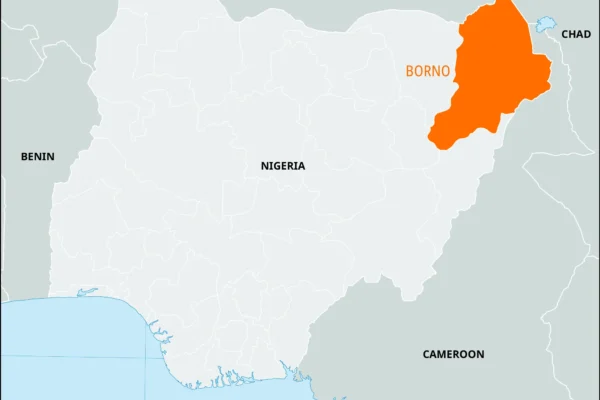
Dozens Killed in Boko Haram Attack on Borno Village Amid Security Lapses

By Kamal Yalwa: BORNO STATE, NIGERIA – September 6, 2025 At least 55 people, including six soldiers, have been killed in a brutal attack on the village of Darul Jama in northeastern Nigeria’s Borno State, as concerns mount over renewed Boko Haram activity and the government’s policy of returning displaced civilians to vulnerable areas. Eyewitnesses and local officials said the assault occurred late Friday night when suspected Boko Haram fighters stormed the village on motorbikes, opening fire on residents and torching homes. The attack targeted a community near Nigeria’s border with Cameroon, where many families had only recently resettled after years in displacement camps. Estimates of the death toll vary. While a government-aligned militia commander, Babagana Ibrahim, confirmed 55 fatalities to AFP, the village’s traditional leader told Reuters that at least 70 bodies had been recovered by Saturday morning, with more residents missing in the surrounding bush. “They went house to house, killing men and leaving women behind. Almost every household is affected,” the traditional leader said, speaking anonymously for security reasons. Over 20 houses and 10 vehicles were destroyed in the assault. According to survivors, the military was warned three days in advance about the gathering of Boko Haram fighters in the area but failed to act. “They overwhelmed the soldiers, who fled with us to Bama,” said Babagana Mala, a resident who escaped the attack by fleeing 46km to the town of Bama. Many of the victims were among recently relocated families from a displacement camp at Bama’s Government Secondary School, which the authorities had shut down earlier this year as part of a broader resettlement policy. “The government told us we would be safe here,” said Hajja Fati, a mother of five who lost her brother in the attack. “Now we are burying our people again.” The massacre has reignited debate over Nigeria’s strategy of closing internally displaced persons (IDP) camps and relocating civilians back to rural communities—areas that remain targets for militant groups. Boko Haram has been waging an insurgency in Nigeria’s northeast since 2009, seeking to establish an Islamic caliphate. The conflict has killed over 40,000 people and displaced more than two million, mostly in Borno, Yobe, and Adamawa states. A splinter group, the Islamic State West Africa Province (ISWAP), broke away in 2016 and has been increasingly active. According to Good Governance Africa, a nonprofit tracking insecurity in the region, there were approximately 300 attacks in the first half of 2025, mostly by ISWAP, resulting in around 500 civilian deat A security source told AFP that the Darul Jama assault was likely led by Ali Ngulde, a notorious Boko Haram commander believed to operate in the region near the Cameroon border. Despite intensified military operations in Borno State, including airstrikes and ground patrols, communities continue to face high risks from armed groups operating across forested terrain and porous borders.

Read More

Lagos APC Slams Peter Obi Over Criticism of Tinubu’s Vacation, Urges ‘Responsible Opposition’

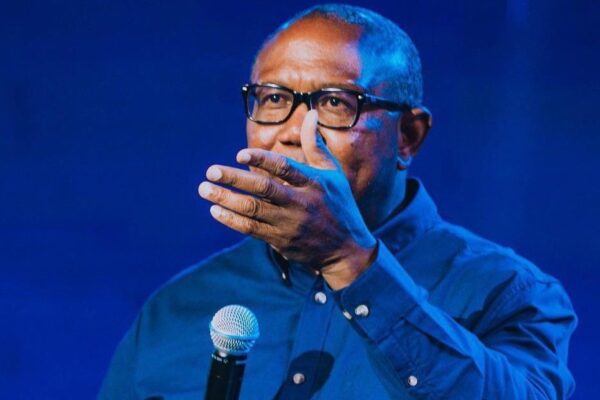
LAGOS, NIGERIA – The Lagos State chapter of the All Progressives Congress (APC) has issued a stern warning to former presidential candidate of the Labour Party, Mr. Peter Obi, urging him to adopt a more constructive approach to opposition politics and refrain from what it described as “habitual knee-jerk reactions” to national developments. The warning was contained in a statement released by the APC’s Lagos State Publicity Secretary, Mogaji Seye Oladejo, in response to Obi’s recent remarks questioning President Bola Ahmed Tinubu’s short private vacation and its alleged impact on national security. Oladejo criticized Obi’s frequent public comments on national issues, accusing him of seeking “cheap relevance” and portraying himself as a moral authority while offering little in the way of substantive policy contributions. “Must Peter Obi comment on everything?” Oladejo asked. “Nigerians are not deceived. His constant moralising of the President’s every move is less about patriotism and more about political desperation.” He described Obi’s approach as reactionary and populist, reducing complex governance issues to “social media talking points,” rather than engaging in serious, solutions-oriented discourse. The APC spokesman also defended President Tinubu’s decision to take a brief vacation, insisting that the president remains fully in charge of the country’s affairs. “In modern governance, leaders remain in constant communication with their security and intelligence teams, regardless of location. Mr. Obi knows this, but prefers posturing over pragmatism,” Oladejo stated. He further cautioned Obi’s aides to carefully assess the former governor’s public engagements, warning that his pattern of criticism may harm his image as a credible opposition figure. “Leadership requires knowing not only what to say, but also when and how to say it. Constant agitation and reflexive commentary do not equal leadership—they undermine it,” Oladejo said. The APC reiterated its commitment to delivering on national priorities including economic recovery, national security, and public sector reforms, while dismissing Obi’s contributions as lacking depth. “Peter Obi’s comments amount to noise, not leadership or patriotism,” Oladejo concluded. “If he has meaningful contributions to make, let him present them responsibly. Otherwise, silence is an honourable option. For us in the APC, under the leadership of President Bola Ahmed Tinubu, our focus remains on governance, not political theatre.”

Read More
Dangote By Prince Iroka

Dangote advocates urgent prioritisation of manufacturing over raw materials export in Africa…..…As Dangote marks Special Day at ongoing Intra-African Trade Fair in Algiers

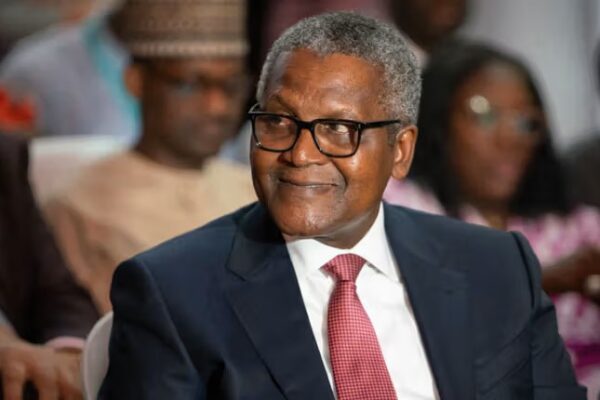
By Prince Iroka Africa’s wealthiest man and President of Dangote Industries Limited, Aliko Dangote, has called on Africans to leverage on internal strengths and global opportunities to fill existing gaps, and adopt a deliberate re-orientation toward industrialisation of Africa’s manufacturing sector, as a panacea against the current global economic instability. The renowned entrepreneur encouraged operators in the manufacturing and industrial sectors across the continent to embrace a fundamental shift in mindset and develop robust regional value chains and deepen intra-African trade as inward solutions to boost overall development across the continent. Dangote, who noted that current geo-political tensions and trade wars have caused major economies to reevaluate their traditional trade partnerships with a view to diversifying their supply chains, also urged African exporters to benefit from the current process to fill the gap by competitively supplying the required products. These recommendations were contained in Dangote’s welcome address at the company’s Special Day at the ongoing 4th Intra-African Trade Fair holding in Algiers, Algeria, where he was represented by his Special Adviser and Representative, Engr. Ahmed Mansur. “I am glad to be here at the 4th Intra-African Trade Fair (IATF). I am immensely grateful to the organisers – not only for inviting me and giving me the opportunity to speak – but also for going a step further by dedicating this remarkable day to my organisation, Dangote Group. To have today officially set aside as Dangote Day is both an honour and a privilege. “I thank the conveners – The African Export Import Bank, the African Union Commission and the Africa Continental Free Trade Area Secretariat – for organising this event. We appreciate the invaluable contributions you have made and the excellent work you continue to do in promoting, facilitating, and deepening trade and investment across the continent”, Dangote added. According to him, “this year’s theme, “Gateway to New Opportunities,” resonates deeply as a powerful reminder of the huge potential and prospects that abound across the African continent. For too long Africa’s resources have been exported as primary commodities in their raw and unrefined state with limited domestic processing or beneficiation. “There must be a fundamental shift in mindset and a deliberate re-orientation toward industrialisation and the development of Africa’s manufacturing sector. While this was always necessary in the past, it is even more urgent today, given the alarming rise in youth unemployment, and the need for sustainable, inclusive growth”, he added. The business tycoon observed that current geo-political tensions and trade wars have caused major economies to reevaluate their traditional trade partnerships with a view to diversifying their supply chains. “African exporters could benefit if they can fill the gap by competitively supplying the required products. Furthermore, global instability has encouraged African nations to look inward and actively pursue greater regional self-reliance. This inward focus can catalyse the development of robust regional value chains and significantly deepen intra-African trade”, he advised. “At Dangote, we are very proud of our Afrocentric posture, driven by an unwavering commitment to the continent’s growth and industrial transformation. We have added value to limestone and created the largest cement company in sub Saharan Africa with an aggregate cement production capacity of about 52MMtpa across 10 countries,” Dangote stated. “Similarly, our 3MMtpa urea plant has contributed to the attainment of fertiliser self-sufficiency. Nigeria, once solely reliant on imports is now a net exporter of granulated urea to destinations in Africa as well as to South America, North America and Europe. “More recently, we have witnessed the commencement of operation of Africa’s biggest oil refinery – also the world’s largest single-train facility, with a capacity of 650kbpd. This landmark project is gradually reducing the region’s long-standing dependence on imports of refined petroleum products, particularly from Europe, while also generating surplus for export to global markets. As Africa becomes more self-sufficient in energy it should reduce our vulnerability to external shocks and supply disruptions.“Africa’s potential and prospects are immense. However, this potential will only be fully actualised if individual nations take deliberate steps to improve their business environment. Unlocking new economic opportunities requires the implementation of appropriate policy reforms, investment in infrastructure, and attractive sector wide incentives to facilitate the inflow of private capital” Dangote concluded. At the Dangote Special Day, which drew admirers and various attendees, various Business Units of the conglomerate such as Dangote Cement, Dangote Sugar, Dangote Salt (NASCON), Dangote Fertiliser, Dangote Polypropylene, and Dangote Packaging did presentations and urged greater collaboration among trade partners and manufacturers across Africa for the development of the continent.

Read More

UK Deputy Prime Minister Angela Rayner Resigns

Angela Rayner has resigned as deputy leader of the Labour Party, housing secretary and deputy prime minister. It comes two days after she admitted that she should have paid more tax when she bought a flat in Hove, a seaside resort in East Sussex, earlier this year. An ethics report released on Friday said Ms Rayner’s actions were in breach the ministerial code – a set of rules which tells people with positions in the government the behaviour expected of them. In a letter Prime Minister Keir Starmer has said that he’s “very sad” that her time in government has ended but she will remain “a major figure” in the Labour Party. Opposition parties have criticised Ms Rayner and the prime minister’s handling of the situation. Ms Rayner was born in 1980 in Stockport. After leaving school she didn’t go to university but got a job in her local council in social work. She later became a representative for the trade union, Unison, which works to support workers in public services, like local government, education and health. In 2014 she was selected as the Labour Party’s candidate for Ashton-under-Lyne, and despite her party losing the 2015 general election, she won her seat and became an MP. She briefly became a member of the housing, communities and local government select committee, before going on to more senior roles. Angela Rayner bought a flat in Hove in May 2025. When someone buys a property they often have to pay a type of tax called stamp duty. Ms Rayner admitted that she made an “error” and didn’t pay the right amount of tax when she bought the flat. Government ministers are expected to follow all the rules on paying tax, and there are supposed to be serious consequences if they don’t. A report looking into what had happened found that she did not “did not heed the caution” in legal advice she received and had breached the ministerial code. She says she is sorry for not getting the right advice on how much to pay. Ms Rayner will now need to pay money to the tax authorities, which she says she will do. Ms Rayner has said that she “deeply regret[s]” her decision not to seek additional specialist tax advice given her position in the government and her “complex” personal situation. “I take full responsibility for this error,” she added, saying: “I would like to take this opportunity to repeat that it was never my intention to do anything other than pay the right amount.” Prime Minister Sir Keir Starmer seen leaving Downing Street carrying folders. In a handwritten letter from Prime Minister Keir Starmer to his former deputy, Angela Rayner, he wrote about feeling “very sad that your time as deputy prime minister, secretary of state and deputy leader of the Labour Party has ended in this way”. The PM added that Ms Rayner was “right” to refer herself to the independent adviser on ministerial standards and “right to act on his conclusion”. In a video posted to X, Conservative Party leader Kemi Badenoch has said: “It’s only because of Keir Starmer’s weakness that she wasn’t sacked three days ago”, adding: “Britain deserves better.” She said Starmer showed “no principle, no backbone” and claims “questions remain” about what the PM knew, and when. Lib Dem leader Ed Davey said it had become “clear” that her position became “untenable”, and said he hopes the government can “move on and deal with the huge problems millions of people in our country face”. Reform UK leader Nigel Farage said in a speech, “you can’t be housing secretary and avoid £40,000 of stamp duty”. He went on to accuse Labour’s cabinet ministers of being “wholly unqualified people to run our country”.

Read More
Youth Unemployment Hits 53% in Nigeria, Threatening National Stability

Youth Unemployment Hits 53% in Nigeria, Threatening National Stability – Report

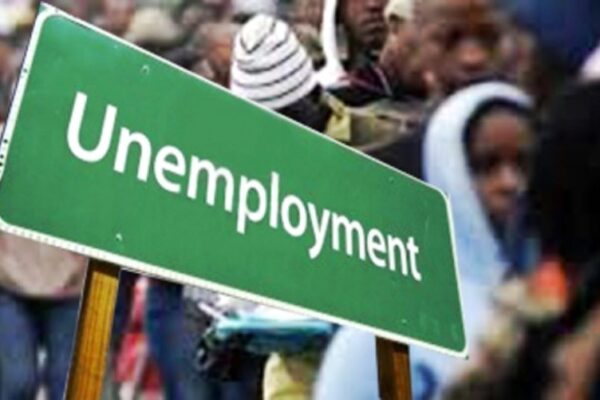
ABUJA, Nigeria — Over 80 million Nigerian youths are currently unemployed, according to a new report that paints a stark picture of the challenges facing Africa’s most populous country. The State of the Nigerian Youth Report 2025, launched Thursday in Abuja by Plan International Nigeria in collaboration with ActionAid Nigeria, reveals that youth unemployment has surged to 53 percent, posing what the report describes as the “single greatest threat” to Nigeria’s future. The report was officially presented at the Nigerian Youth Dialogue, an event organized by the House of Representatives Committee on Youth in Parliament to commemorate International Youth Day 2025. Speaking during the presentation, Jonathan Abakpa, Advocacy and Youth Programme Officer at Plan International Nigeria, said that widespread unemployment, rising insecurity, and poor governance are driving young Nigerians into dangerous alternatives such as irregular migration, cybercrime, and other illicit activities. “This is not just a statistic—it represents shattered dreams and wasted talent,” the report warns. “Unless urgent action is taken, Nigeria risks losing its greatest asset.” According to the report, approximately 1.7 million graduates enter the job market annually, but face limited employment opportunities in an economy plagued by stagnation. Data from the National Bureau of Statistics indicates youth unemployment rose by 5.3 percent in Q1 2024, with only marginal improvement in Q2. Beyond joblessness, the report highlights insecurity as a significant obstacle to youth development. Over 600,000 people have been killed and 2.2 million kidnapped in recent years, with young people disproportionately affected. Additionally, more than 1,500 schools have been closed in the past two years due to violence, leaving over 1 million children out of school. Quoting UNICEF, the report also notes that armed conflict has displaced 2.6 million people, crippling agricultural activities and threatening food security for more than 25 million Nigerians. The authors emphasize that widespread poverty, affecting 40.1 percent of the population (about 82.9 million Nigerians), continues to limit opportunities for youth advancement. Structural challenges such as poor infrastructure, corruption, and digital exclusion further exacerbate the problem. Findings from a nationwide “We Listen” survey revealed regional disparities: Despite the grim outlook, the report underscores the resilience of Nigerian youth, particularly in the technology and creative sectors. It calls for urgent interventions including: One key recommendation is for Universal Basic Education to be enshrined as a constitutional right, ensuring that no child is excluded from schooling due to poverty, insecurity, or geographic barriers. In his remarks, Hon. Ayodeji Alao-Akala, Chairman of the House Committee on Youth in Parliament, reaffirmed the National Assembly’s commitment to youth-focused legislation. “Nigerian youths are the future of our nation,” Alao-Akala said. “Our task as leaders is to make sure the children of tomorrow inherit a country better than what we met—one with more opportunities and less hardship.” He added that the National Assembly has dedicated considerable effort toward passing bills and motions aimed at improving the lives of young people. As one of the younger members of parliament, Alao-Akala said he remains passionate about ensuring that policies from the House of Representatives translate into tangible outcomes for Nigerian youth. He pledged continued collaboration with stakeholders to strengthen youth development programmes and prepare the next generation for leadership, innovation, and economic growth.

Read More