
Crude oil losses drop to 16-year low at 9,600 bpd

Crude oil losses drop to 16-year low at 9,600 bpd

By Prince Iroka Nigeria’s upstream oil sector is witnessing a dramatic turnaround, with crude oil losses from theft and metering issues dropping to their lowest levels in nearly 16 years. In July 2025, daily losses stood at 9,600 barrels per day (bpd), the lowest figure since 2009 when losses dropped to all-time low of 8,500 bpd. This is based on trends of crude oil losses year-to-date July 2025, released by the Nigerian Upstream Petroleum Regulatory Commission (NUPRC). This progress marks a major leap forward in the Commission’s relentless drive to eliminate all forms of crude losses across Nigeria’s oilfields and pipelines. Between January and July 2025, crude oil losses were contained at 2.04 million barrels, averaging 9,600 barrels per day over the seven-month period. This marks a clear departure from the high-loss years that have long plagued the industry. By comparison, the entire 2024 calendar year recorded 4.1 million barrels lost at a daily average of 11,300 barrels. Remarkably, in just the first seven months of 2025, losses were cut by 50.2%, with only 2.04 million barrels lost over the period. The figures for the period ending July 2025 also represent a dramatic 94.57% drop in crude oil losses compared to the full year of 2021, when Nigeria lost a staggering 37.6 million barrels at a daily average of 102,900 barrels. So far in 2025, only 2.04 million barrels have been lost, which is a reduction of 35.56 million barrels compared to the 37.6 million barrels lost in 2021, underscoring the scale of progress made in just four years. Crude oil losses in 2021 were the highest recorded in nearly 23 years, making it the peak year between 2002 and July 2025. Since the implementation of the Petroleum Industry Act in 2021, Nigeria has recorded steady progress in reducing crude oil losses. In 2021, losses stood at 37.6 million barrels, averaging 102,900 barrels per day. By 2022, this dropped to 20.9 million barrels at a daily average of 57,200 barrels. The downward trend continued in 2023, with losses reduced to 4.3 million barrels at 11,900 barrels per day. Even more progress was made in 2024, as losses were further contained to 4.1 million barrels, averaging 11,300 barrels per day. The Commission has adopted a balanced mix of kinetic and non-kinetic strategies in tackling oil losses. On the kinetic front, the Commission has continued to collaborate closely with security agencies, operators and communities. On the non-kinetic front, NUPRC has implemented strategic regulatory measures to close systemic loopholes. One key initiative is the metering audit across upstream facilities to ensure accurate measurement of production and exports. To further strengthen control, the NUPRC under the leadership of Engineer Gbenga Komolafe approved 37 new crude oil evacuation routes to combat oil theft.
Read More
Fresh Crisis Hits NUPENG, Dangote Relationship As Union Halts Fuel Loading

Fresh Dispute Erupts Between NUPENG and Dangote Group Despite DSS-Brokered Truce

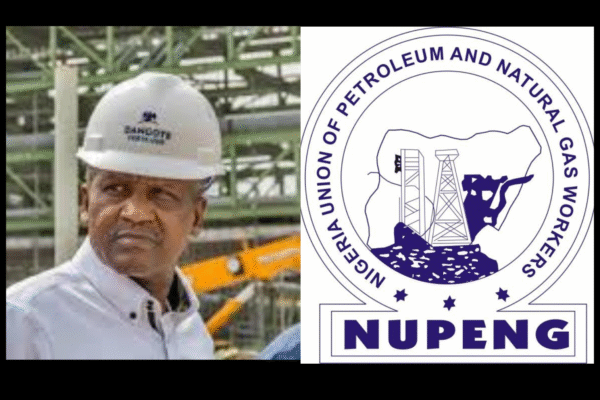
By Kamal Yalwa | Lagos, Nigeria Barely 48 hours after the Department of State Services (DSS) brokered a truce between the Dangote Group and the Nigeria Union of Petroleum and Natural Gas Workers (NUPENG), a fresh crisis has emerged, Daily Trust has confirmed. The renewed face-off began on Thursday when NUPENG officials halted fuel loading operations at the Dangote Refinery, citing a breach of the peace agreement reached earlier in the week. At the heart of the dispute is an alleged directive issued by Dangote Refinery logistics lead and MRS Managing Director, Alhaji Sayyu Dantata, instructing MRS tanker drivers to remove all NUPENG stickers from their trucks—an act the union views as a violation of workers’ rights and prior commitments. Background to the Crisis On Tuesday, the DSS convened a high-level closed-door meeting at its Abuja headquarters following a failed reconciliation attempt on Monday at the Ministry of Labour. That Tuesday meeting, which lasted nearly six hours, included three federal ministers: Wale Edun (Finance), Mohammed Maigari Dingyadi (Labour and Employment), and Nkeiruka Onyejeocha (Minister of State for Labour and Employment). Following the discussions, NUPENG announced a suspension of its planned nationwide industrial action and allowed operations at the Dangote Refinery to resume. However, union officials say the latest development betrays the terms of that agreement. Union Reacts to Sticker Removal Speaking to Daily Trust, a union leader said the removal of the stickers was carried out less than a day after the truce was reached. “On Wednesday morning, based on the agreement reached at the DSS headquarters, we distributed stickers to our members. But within hours, we received reports that the company had instructed drivers to remove them,” the official said. “By Thursday morning, when we arrived at the refinery, we discovered the stickers had been removed from all trucks. This is a clear violation of what was agreed.” NUPENG President: “It’s Not Yet Uhuru” Confirming the renewed standoff, NUPENG President, Williams Akporeha, issued a stern warning to the Dangote Group, accusing Dantata of undermining the peace process and violating workers’ rights. “This is to alert the general public and the Federal Government that despite the resolution signed in the presence of three Ministers and a DSS Deputy Director-General, Alhaji Sayyu Dantata ordered NUPENG members to remove union stickers,” Akporeha said in a statement on Thursday. He alleged that Dantata also attempted to forcefully resume loading operations and called in the Nigerian Navy to intervene, following union officials’ decision to stop non-compliant trucks from accessing the loading bay. “He even flew over the union members in a helicopter while calling in the Navy, ostensibly to crush union officials,” Akporeha added. Union Mobilizes for Possible Strike NUPENG has now placed its members on “red alert” for the possible resumption of the suspended nationwide strike. Akporeha called on the Nigeria Labour Congress (NLC), Trade Union Congress (TUC), civil society groups, and international labor organizations to stand in solidarity. “We will not allow one man’s wealth to place him above the law. NUPENG remains a patriotic and law-abiding union that will not tolerate disregard for agreements reached under official auspices.” He urged the federal government to ensure that state security apparatus is not misused to suppress union activities or enforce unilateral corporate directives. Dangote Group Yet to Respond As of press time, the Dangote Group had not issued an official statement on the new development. However, a company source who declined to be named told Daily Trust that a response may be released “soon.”

Read More
Pilots Tested Positive for Alcohol in Air Peace Runway Incident — NSIB Report By Amanabo Ocholi | Lagos, Nigeria

Pilots Tested Positive for Alcohol in Air Peace Runway Incident — NSIB Report

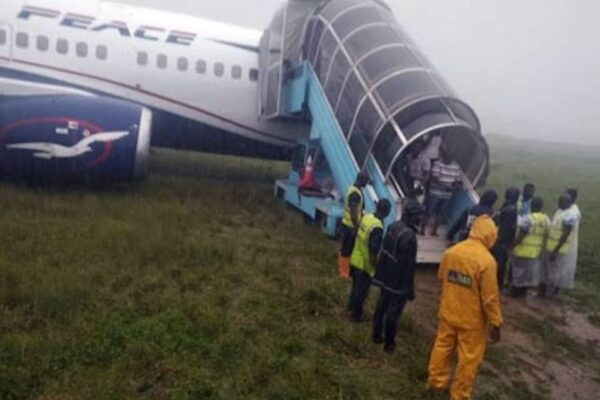
By Kamal Yalwa | Lagos, Nigeria The Nigerian Safety Investigation Bureau (NSIB) has released its preliminary report on the July 13 runway overrun involving an Air Peace Boeing 737-500 at Port Harcourt International Airport, revealing critical safety lapses — including alcohol and drug use among crew members. The flight, which departed Lagos with 96 passengers and seven crew members, landed under reportedly clear weather conditions. However, investigators found that the aircraft touched down nearly three-quarters down the 3,000-metre runway, leaving insufficient distance for a safe stop. The plane skidded off the paved surface onto a grassy area. No injuries were reported. Alcohol, Cannabis Found in Crew Tests In a troubling revelation, toxicology tests conducted after the incident showed that both pilots tested positive for alcohol, while a cabin crew member tested positive for cannabis. The NSIB described this as a “serious breach of aviation discipline and safety culture.” According to the report, the first officer had recommended a go-around after assessing the approach as unstable. However, the captain — a 64-year-old veteran with over 10,000 flight hours — reportedly dismissed the advice and proceeded to land, resulting in the runway excursion. Aviation analysts have warned that such breakdowns in cockpit communication and chain-of-command dynamics are hazardous and can lead to preventable accidents. NSIB Issues Directives to Air Peace In response to the findings, the NSIB has directed Air Peace to take immediate corrective actions, including: “Flying demands absolute discipline. There can be no compromise when safety is at stake,” the Bureau emphasized. Though no lives were lost in the incident, aviation stakeholders say the findings raise serious concerns about flight crew oversight and substance abuse within Nigeria’s aviation industry. Broader Implications for Nigerian Aviation The incident adds to mounting pressure on Nigerian carriers and regulators to tighten safety enforcement. Industry observers are calling for a comprehensive review of crew monitoring systems, enhanced oversight by the Nigerian Civil Aviation Authority (NCAA), and stiffer penalties for safety violations. As investigations continue, the NSIB is expected to release a full report with further recommendations in the coming months.

Read More
You have no business telling me how to criticise Tinubu

Sowore Responds to DSS Letter Demanding Retraction of Comments on President Tinubu

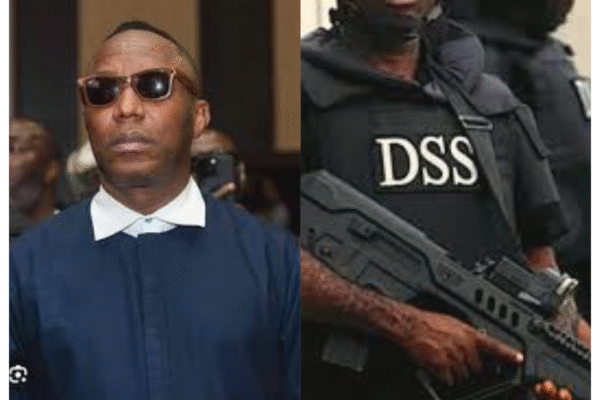
Abuja, Nigeria – September 12, 2025 Omoyele Sowore, publisher of Sahara Reporters and former presidential candidate of the African Action Congress (AAC), has publicly responded to a letter from the Department of State Services (DSS) demanding that he delete a social media post critical of President Bola Ahmed Tinubu. Sowore, in a strongly worded open letter addressed to the Director General of the DSS, Uwem Davies, described the agency’s actions as an “unlawful” attempt to suppress freedom of expression and shield the president from public criticism. The DSS had reportedly delivered a letter—via a security guard at the Abuja office of Sowore’s legal team—demanding the retraction of what the agency termed “criminal, false, and malicious” publications against the president. In his response, Sowore challenged the legal basis for the DSS’s interference in what he characterized as a civil matter, asserting that the agency was overstepping its constitutional mandate. “Your horrendous attempt at holding an unwarranted brief for the President is not only insidious but fundamentally defective, flawed in principle, and absolutely unlawful,” Sowore wrote. He referenced the origins and historical abuse of the security agency, stating that it has consistently acted as a tool of oppression under successive administrations. Sowore recounted multiple instances of his past detentions, including a 1993 arrest during a student protest, a 1996 detention during his NYSC service in Yola, and a more recent 2019 arrest on charges that were later dropped. Sowore criticized what he described as a pattern of the DSS “serving the whims of dictatorial regimes,” and referenced previous failed legal actions against him, including a 2021 defamation lawsuit tied to former Attorney General Abubakar Malami, which was dismissed by the court. Quoting constitutional and international provisions on freedom of expression, Sowore emphasized that public officials are subject to scrutiny and criticism in a democracy. “You have no business telling me how to criticize the President,” he stated, adding that any aggrieved party has the option of pursuing civil libel, not state-backed intimidation. He also drew attention to Nigeria’s legal precedents, including Arthur Nwankwo v. State (1985), where the Court of Appeal invalidated sedition laws as unconstitutional, and other rulings affirming the importance of press freedom. Sowore closed his letter by reaffirming his commitment to holding leaders accountable, asserting that the struggle for a better Nigeria would continue. “Freedom cometh by struggle. Aluta continua, victoria ascerta,” he wrote. The DSS has not publicly commented on the matter as of the time of this report.

Read More

Federal High Court Jails Ansaru Commander for 15 Years Over Terror-Financing Mining Operations

Kamal Yalwa: ABUJA, NIGERIA – September 11, 2025 A Federal High Court in Abuja has sentenced Mahmud Usman, a senior commander of the proscribed terrorist group Ansaru, to 15 years imprisonment after he pleaded guilty to charges of engaging in illegal mining used to fund terrorism and kidnapping operations. Justice Emeka Nwite delivered the judgment on Thursday, ordering that Usman remain in the custody of the Department of State Services (DSS) while facing trial for 31 additional terrorism-related charges. The court fixed October 21 for the continuation of the trial. Usman, alongside his associate Abubakar Abba, is being tried on a 32-count charge that includes acts of terrorism committed in 2022. Among the most serious accusations are involvement in the deadly attack on the Nigerian Army’s Wawa Cantonment in Kainji, Niger State, and coordinating the high-profile Kuje prison break in July 2022, which led to the escape of over 600 inmates. According to court filings and DSS investigations, the two men are also accused of undergoing weapons and tactical training in Mali, fabricating improvised explosive devices (IEDs), and plotting attacks on critical infrastructure — including a planned assault on a uranium facility in Niger State. The DSS further alleges Usman masterminded a series of high-profile abductions, including the 2013 kidnapping of French engineer Francis Collomp and the 2019 abduction of Alhaji Musa Umar Uba, the Magajin Garin Daura. The charge sheet also includes allegations of armed robberies, targeted assassinations, and funding terror cells through illegal resource extraction. National Security Adviser Nuhu Ribadu, who confirmed their arrest earlier this year, described Usman as the “self-styled Emir of Ansaru” and the operational head of terrorist sleeper cells embedded across Nigeria. Ribadu also identified Usman’s close associate, Mamuda, as the “chief of staff” of the Mahmudawa cell, which has operated extensively around Kainji National Park. Ansaru, a splinter group that broke away from Boko Haram in 2012, is notorious for carrying out sophisticated attacks and kidnappings for ransom. The group has pledged allegiance to al-Qaeda and remains one of the most dangerous extremist factions operating in the region. While Thursday’s conviction marks a significant win for Nigeria’s counterterrorism efforts, security analysts note that the broader network remains active, with several other members still under investigation or on the run. The trial continues next month, with the government expected to present evidence on the remaining charges, including acts of treason, conspiracy, and further breaches of national security.

Read More
Tinubu Orders Swift Action to Lower Food Prices, Launches New Agriculture Reforms

Tinubu Orders Swift Action to Lower Food Prices, Launches New Agriculture Reforms

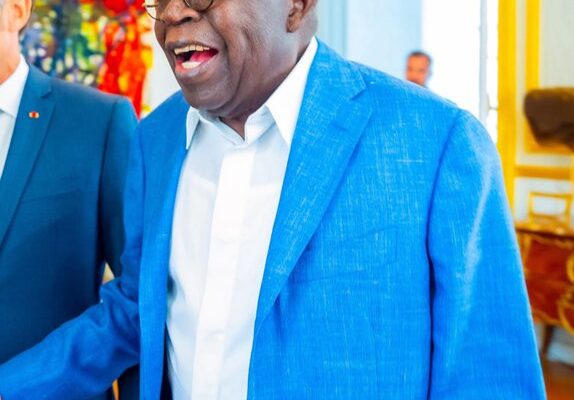
By Kamal Yalwa: ABUJA, NIGERIA – September 11, 2025 President Bola Ahmed Tinubu has directed the immediate implementation of measures aimed at reducing food prices across Nigeria, in a renewed push to tackle the nation’s worsening food insecurity. The directive, which includes the formation of a Federal Executive Council committee, was disclosed on Wednesday by the Minister of State for Agriculture and Food Security, Senator Aliyu Sabi Abdullahi, during a capacity-building workshop for Senate correspondents in Abuja. According to Abdullahi, the primary focus of the presidential order is to ensure the safe and unhindered transportation of agricultural produce across the country’s road networks—an intervention aimed at slashing the high logistics costs that continue to drive up food prices. “The President has given a matching order with a federal executive council committee already handling it on how we are going to promote safe passage of agricultural foods and commodities across our various routes in the country,” Abdullahi stated. Nigeria, Africa’s most populous nation, has been grappling with rising food costs exacerbated by the removal of fuel subsidies, surging transport expenses, and security threats along key supply routes. Despite a series of policy interventions, millions of Nigerians still find basic food items increasingly unaffordable. The minister reiterated that the current strategy aligns with President Tinubu’s broader vision of food sovereignty—one that extends beyond simple availability to include affordability, access, and nutrition. To support this agenda, Abdullahi announced the forthcoming launch of two major initiatives: the Farmer Soil Health Scheme, which is expected to improve agricultural yields through better land management practices, and a revamped Cooperative Reform Programme, aimed at empowering rural farmers through enhanced access to resources and financing. “Mr. President has shown tremendous interest in the cooperative sector as a veritable tool for resource mobilisation, for economic activity generation, and to improve the livelihood of members,” the minister added. The Abuja event, themed “Parliamentary Reporting: Issues, Challenges and Responsibilities,” was also attended by Senate Media Committee Chairman Senator Yemi Adaramodu, former presidential aide Senator Ita Enang, and Director General of the National Institute for Legislative and Democratic Studies (NILDS), Prof. Abubakar Sulaiman. President Tinubu had previously emphasized the importance of food security in his June 12 Democracy Day address at the National Assembly. He highlighted Nigeria’s progress toward achieving food sovereignty, calling for a national shift toward self-sufficiency in food production and market-driven growth. “We must learn to produce and grow most of our food, and we are on the path to achieving food sovereignty,” the President said during his speech. The new efforts come as Nigeria continues to confront the economic aftershocks of policy reforms and the impact of global supply chain disruptions, with food security now central to the administration’s medium-term development agenda.

Read More
EFCC Interrogates Former NNPCL CEO Mele Kyari

EFCC Grills Former NNPCL Boss Mele Kyari Over Multi-Billion Dollar Refinery Spending

By Kamal Yalwa: ABUJA, NIGERIA – September 11, 2025 The Economic and Financial Crimes Commission (EFCC) on Wednesday interrogated Mele Kyari, the former Group Chief Executive Officer of the Nigerian National Petroleum Company Limited (NNPCL), over the controversial spending of billions of dollars on Nigeria’s long-idle refineries. Kyari, who arrived at the EFCC’s headquarters in Abuja early Wednesday morning, had his international passport confiscated and was still being questioned as of 8:30 p.m., sparking speculation that he could be detained overnight. At the centre of the investigation is over $2 billion disbursed for the Turnaround Maintenance (TAM) of Nigeria’s four state-owned refineries, which continue to underperform despite years of public investment. According to EFCC sources, key focus areas include the $1.55 billion allocated for the Port Harcourt Refinery, $740.6 million for Kaduna Refinery, and $656.9 million for the Warri facility. Officials are also scrutinizing more than N4.8 trillion in operating costs reportedly incurred during Kyari’s leadership from 2019 to April 2025, despite the refineries running at minimal or no capacity. Contracts awarded during his tenure are also under review, as investigators try to trace funds allegedly misappropriated. While some former top executives are reported to have refunded portions of the funds voluntarily, Kyari has maintained his innocence and transparency in handling refinery projects. In a prior statement titled “Hard Questions, Honest Answers,” he said: “I have done my part; the EFCC must do theirs. When each of us does our duty – without fear or favour, with honour, respect and commitment – Nigeria moves forward.” Kyari’s invitation by the EFCC comes amid renewed public scrutiny of the nation’s oil sector and longstanding failures to restore refinery operations, despite more than $18 billion having been invested since 2010. Nigeria’s four refineries — two in Port Harcourt, and one each in Kaduna and Warri — have a combined capacity of 445,000 barrels per day but have operated far below capacity for over a decade. During Kyari’s tenure, the Port Harcourt Refinery was ceremoniously reopened in November 2024 after extensive repairs. However, operations were abruptly suspended just six months later, in May 2025, by his successor Bayo Ojulari, who cited unsustainable losses and serious technical setbacks. The EFCC noted that the current phase of the investigation will prioritize the forensic review of TAM-related expenditures before turning attention to what it described as “humongous contracts” approved during Kyari’s administration at NNPCL. The outcome of the probe could set a precedent for accountability in Nigeria’s oil sector, long plagued by allegations of waste, mismanagement, and corruption.

Read More

VP Shettima Urges National Council on Skills to Embrace Unity, End Fragmentation in Skills Development

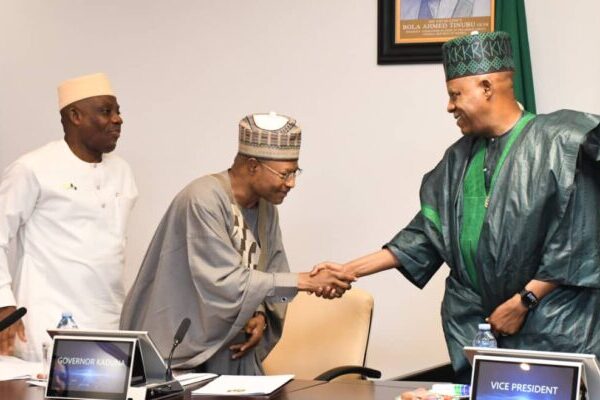
By: Kamal Yalwa: September 10, 2025 Vice President Kashim Shettima has called on the National Council on Skills (NCS) and all relevant stakeholders to work collectively in advancing the federal government’s skills acquisition drive, declaring that the era of working in silos is over. Speaking during the 7th meeting of the NCS held Tuesday at the Presidential Villa, Abuja, Shettima emphasised that building a future-ready workforce requires unified action across government agencies, ministries, and the private sector. He described skills development as a core pillar of the Renewed Hope Agenda of President Bola Tinubu’s administration. “Let me be clear about what this means. The era of operating in silos is over. We must move towards a new streamlined workflow that embeds collaboration directly into the process of curriculum development and funding,” the Vice President stated. He noted that the ongoing “skills revolution” is a national commitment and must be driven with purpose and synergy to unlock opportunities for Nigerian youth and workers nationwide—from the aspiring artisan in Kaura Namoda to mid-career professionals in Ebute-Metta. Shettima lauded Kaduna State Governor, Senator Uba Sani, for establishing and chairing the state’s first Council on Skills, calling it a model for other subnational governments to emulate. “We cannot build a future-ready workforce on a foundation of division,” Shettima stressed, urging the council to enforce a unified structure and eliminate institutional friction within the country’s skills ecosystem. He further emphasized that sustainable funding and implementation of the national skills agenda depend on strong inter-agency collaboration, not isolated action. Earlier in the meeting, Governor Uba Sani revealed that over 30,000 students were recently admitted into the Kaduna Vocational and Skills Development Institute. He thanked the Vice President for his continued support and dedication to job creation and skills development. Also speaking, Minister of Education Olatunji Alausa praised the Kaduna State Government’s efforts and announced that technical colleges have been directed to focus solely on relevant, practical courses for the upcoming academic year—aligning with the administration’s skills acquisition strategy. The council meeting reaffirmed the federal government’s commitment to building a coordinated and inclusive framework to equip Nigerians with the skills needed to thrive in an evolving economy.

Read More