
Fuel marketers accuse Dangote Refinery of distributing substandard petrol

Fuel marketers accuse Dangote Refinery of distributing substandard petrol

By Prince Iroka The Depot and Petroleum Products Marketers Association of Nigeria(DAPPMAN) has accused the Dangote Petroleum Refinery of distributing substandard Petroleum products into the Nigerian market. The claim was contained in a statement by the Executive Secretary of DAPPMAN, Mr. Olufemi Adewole, titled “Clarifying the Role of Market Players in Nigeria’s Downstream Petroleum Sector” released on Saturday. The association said it rejects any insinuation that DAPPMAN members deal in “substandard” petroleum products, saying all imports are subject to independent, regulator-accredited laboratory testing in accordance with NMDPRA protocols and global quality standards. Ironically, it said the same refinery alleging superiority had on multiple occasions sought waivers to distribute products with sulphur levels above approved thresholds, a fact that calls into question its consistency and credibility on product quality. “Nigeria’s downstream petroleum market is highly regulated, transparent, and aligned with international best practices. Attempts to cast doubt on the integrity of other compliant players are unfair and inaccurate,”. The further pointed out that, claims that repeated fuel price reductions by the Dangote Refinery are patriotic gestures ignore their timing and market impact. “These reductions were often strategically timed when other importers had active cargoes at sea or in tank, creating price shocks that undermined competition and imposed financial strain on fellow market participants, including the refinery’s own domestic customers. Even more concerning is the refinery’s pattern of offering lower prices to international buyers while quoting higher rates to local off takers. This contradicts public-facing claims of prioritizing Nigerians and places unnecessary burden on domestic businesses already operating under tight margins,’’. DAPPMAN maintained that, the assertion that Nigeria’s downstream stability rests solely on one refinery is misleading and dismissive of the broader ecosystem. “While we welcome the Dangote Refinery as a major infrastructure project, its contribution has peaked at only 30 to 35 percent of national demand. The balance continues to be supplied by responsible petroleum product marketers, including DAPPMAN members, who import and distribute under strict regulatory oversight by the Nigerian Midstream and Downstream Petroleum Regulatory Authority (NMDPRA),’’. DAPPMAN insisted that, the claim that the refinery offers “free delivery” is also misleading, stating that, in reality, marketers are required to lift at least 25 per cent of their allocations directly from the refinery gantry and must do so using only Dangote-owned trucks, paying commercial rates based on their destination. The arrangement, it said, imposes additional logistical and financial burdens on marketers, limits operational flexibility, and undermines the narrative of cost relief being provided to the local market.

Read More
Bandits Attack Mosque During Isha Prayers in Katsina Kill and Injure Worshippers

Bandits Attack Mosque During Isha Prayers in Katsina Kill and Injure Worshippers

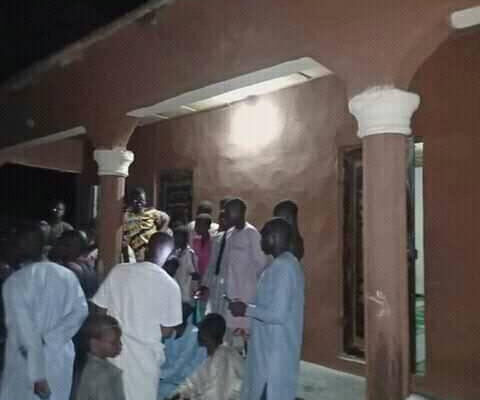
Suspected bandits attacked worshippers during Isha prayers on Thursday night in Matazu town, Katsina State, leaving several people dead and others injured. The gunmen reportedly stormed a mosque while prayers were ongoing, opening fire on those gathered. Security analyst Bakatsine shared the news on X (formerly Twitter), describing the incident as another sign of rising insecurity in Nigeria’s northwest. “Yesterday night, bandits attacked Matazu town in Katsina State, during Isha prayer, killing and injuring worshippers. Government must act urgently because the attacks on worshippers in the northwest region are becoming too frequent,” he wrote. As of the time of filing this report, authorities in Katsina State have not issued an official statement regarding the attack, and the number of casualties has yet to be confirmed. Residents say the area has witnessed repeated raids by armed groups in recent months, with little visible response from security agencies. The attack is part of a troubling trend in which bandits have increasingly targeted rural communities, schools, markets, and now, places of worship. Many in the region are calling for stronger government action and more effective community-based security measures to protect vulnerable populations. Local sources say tension remains high in the area, with some families too afraid to return to the mosque. Emergency response efforts are ongoing, but details remain sketchy as communication in the area is limited. The Matazu incident adds to growing concerns over the ability of authorities to contain the violence in the region, as well as the toll the ongoing insecurity is taking on daily life in northern Nigeria.

Read More
Tax ID not mandatory for ordinary Nigerians to open bank accounts – FG

Tax ID not mandatory for ordinary Nigerians to open bank accounts – FG

The Federal Government has moved to calm public anxiety over reports that every Nigerian must obtain a Tax Identification Number (Tax ID) before opening or maintaining a bank account. Chairman of the Presidential Fiscal Policy and Tax Reforms Committee, Taiwo Oyedele, clarified that the new policy applies only to taxable persons and businesses — not to ordinary citizens without taxable income. In a statement posted on his official X handle, Oyedele said the recently enacted Nigeria Tax Administration Act (NTAA) simply consolidates existing provisions and does not impose fresh obligations on low-income Nigerians. He stated that banks and financial institutions are required to request a Tax ID from taxable persons. However, individuals who do not earn income and are not taxable are not required to obtain one. The NTAA builds on the Finance Act of 2019, which first introduced the requirement for businesses to present a Tax Identification Number when opening accounts. According to Oyedele, the NTAA now replaces multiple identifiers with a single, harmonised Tax ID to reduce duplication and loopholes. He explained that individuals’ National Identification Number (NIN) and companies’ Corporate Affairs Commission (CAC) registration numbers will automatically serve as their Tax IDs. Existing TINs remain valid, while new applicants can obtain theirs online or at tax offices free of charge. Oyedele emphasised that the Tax ID is not a physical card but a unique number linked to your identity, cautioning Nigerians to avoid touts or unofficial agents claiming to issue Tax ID cards. The law also covers non-resident companies doing business in Nigeria, as well as government-owned enterprises and agencies. Nigerians in the diaspora may also obtain a Tax ID using their NIN for banking or investment purposes. From January 1, 2026, taxable persons who fail to register may find themselves unable to operate bank accounts, insurance policies, pension accounts, or investment portfolios. Penalties will also apply under the NTAA for non-compliance. He added that for most ordinary Nigerians, there is no extra burden because their NIN or CAC number will serve as their Tax ID. The goal is to ensure that those who earn taxable income contribute their fair share while low-income citizens remain protected. The committee advised citizens to rely strictly on official government channels for updates on the new tax laws to avoid misinformation and exploitation. The Federal Government hopes the new system will improve compliance and transparency, while protecting citizens outside the tax net from unnecessary bureaucracy.

Read More
After shock Israeli attack on their city, Doha’s residents voice unease

After Shock Israeli Attack Doha Residents Grapple With Fear and Uncertainty

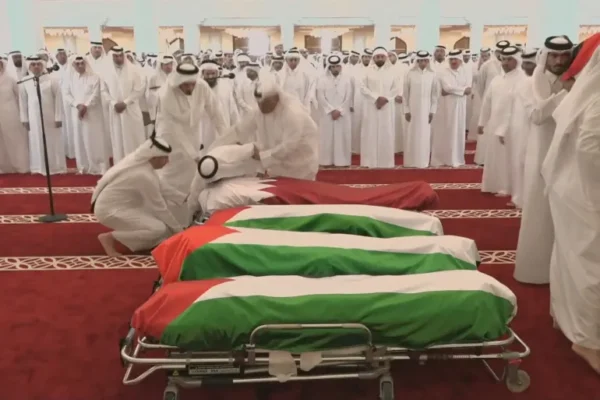
Doha, Qatar – Six coffins, five draped in Palestinian flags and one in the maroon and white of Qatar, were laid before a packed congregation at the Imam Muhammad ibn Abd al-Wahhab Mosque. Standing in the front row was Qatar’s Emir, Sheikh Tamim bin Hamad Al Thani, paying respects to those killed in an unprecedented Israeli drone strike in the heart of Doha. Among the dead was 22-year-old Lance-Corporal Badr Saad Mohammed al-Humaidi al-Dosari, a Qatari Internal Security Forces member. His death, along with five Hamas members, came during an Israeli airstrike targeting a Hamas meeting held in a residential villa in the upscale West Bay Lagoon area — an attack that has left residents stunned and deeply unsettled. The Tuesday strike, carried out in broad daylight, marked the first direct military assault on Qatari soil in the nation’s modern history. For many, the very idea of such an attack within the capital was once unthinkable. Mohammed Asim, a 40-year-old food wholesaler from Bangladesh, lives less than a kilometre from the blast site. “I thought a house was being demolished,” he said. “Only after seeing the news did I realize what had happened.” Emergency crews responded quickly, while drones hovered over the compound late into the evening, illuminating the debris-strewn courtyard with their searchlights. The air around the scene was thick with smoke and tension, as officials sealed off surrounding roads and families peeked from windows, unsure if the threat had truly passed. The targeted building was reportedly used by members of Hamas’s political bureau, who were discussing a U.S.-brokered proposal for a Gaza ceasefire at the time. While the intended targets survived, the attack claimed civilian and security lives and sent shockwaves through a city known for its calm and neutrality in the region’s conflicts. In the days since, regional leaders have poured into Doha, offering condolences and pledging solidarity. Notable among them were UAE President Mohammed bin Zayed Al Nahyan and Pakistani Prime Minister Shehbaz Sharif. Even U.S. President Donald Trump weighed in, describing the attack as unacceptable and promising such strikes would not happen again — though he maintained that “eliminating Hamas” remained “a worthy goal.” But among Doha’s residents, that reassurance has done little to ease the prevailing sense of vulnerability. “Israel behaves however it wants, and after a bit of harsh language, things go back to before,” said a local man who identified himself only as Mohammed. “We’ll see what Trump actually does.” The unease in the city is visible — from the increased security presence to the billboards across the capital carrying messages of resilience. At the City Centre Mall in West Bay, a massive sign bears the words of the Prophet Abraham: “Our Lord, make this land secure.” For a city that has long served as a mediator in regional conflicts — and hosts a major U.S. airbase — the Israeli strike represents a dangerous escalation. What was once a distant war in Gaza has, for many Qataris and residents alike, come crashing violently to their doorstep. Now, the question many in Doha are quietly asking: Is this the beginning of something far more dangerous — or just a warning shot in a conflict that knows no borders?

Read More
Qatar PM Meets Trump After Israeli Strike on Doha

Qatar PM Meets Trump After Israeli Strike on Doha Amid Heightened Tensions

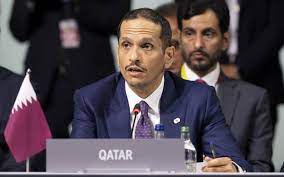
Qatar’s Prime Minister and Foreign Minister, Sheikh Mohammed bin Abdulrahman bin Jassim Al Thani, is holding high-level talks with former U.S. President Donald Trump in New York, following Israel’s deadly strike on the Qatari capital earlier this week. The Israeli air raid, which targeted a Hamas meeting in Doha on Tuesday, killed five Hamas officials and a Qatari security officer. The meeting was reportedly convened to discuss a new ceasefire proposal brokered by Trump aimed at ending the Gaza war. Sheikh Mohammed’s diplomatic efforts in the U.S. come at a tense moment in regional and international relations. Prior to his dinner meeting with Trump on Friday, the Qatari leader met U.S. Vice President JD Vance and Secretary of State Marco Rubio at the White House. According to reports, discussions centered on the fallout from the Israeli strike and the future of U.S.-Qatar security cooperation. Al Jazeera’s correspondent Kimberly Halkett, reporting from Washington, noted that the meetings are part of a broader attempt to navigate the increasingly complicated relationship between Qatar and the U.S. following Israel’s actions. “The concern is that the relationship between Qatar and the United States has become increasingly complicated as a result of those strikes,” Halkett said. “They’re looking for a path forward on both of those issues.” While the exact location and time of the Trump meeting remain undisclosed, sources confirmed the former president is currently in New York, staying at Trump Tower. The attack on Doha has drawn rare international condemnation against Israel, including from the U.S., which typically stands as one of Israel’s staunchest defenders. In a rare move on Thursday, the U.S. joined other United Nations Security Council members in condemning the strike, which many see as an effort to derail ceasefire negotiations. Despite this condemnation, the Trump administration is continuing to walk a diplomatic tightrope. Secretary of State Rubio is scheduled to visit Israel this weekend for a two-day visit, signaling continued U.S. support. The visit comes ahead of a pivotal UN summit on September 22, where several Western nations are expected to back formal recognition of a Palestinian state. According to State Department spokesman Tommy Pigott, Rubio will reaffirm U.S. commitment to Israel’s security and oppose unilateral moves seen as legitimizing Hamas. “He will also emphasise our shared goals: ensuring Hamas never rules over Gaza again and bringing all the hostages home,” Pigott said. Meanwhile, momentum appears to be building globally for a renewed push toward a two-state solution. At a UN General Assembly meeting on Friday, a resolution calling for “collective action” to end the war in Gaza received strong backing, led by France and Saudi Arabia. The Gaza conflict has already claimed more than 64,000 lives, and pressure is mounting on all parties to reach a sustainable political resolution. As tensions escalate, the outcome of Sheikh Mohammed’s meetings in Washington could play a crucial role in shaping the next phase of diplomacy in the region.

Read More
NIDCOM Dismisses Allegations of Ethnic Bias as Spurious and Fabricated

NIDCOM Dismisses Allegations of Ethnic Bias as Spurious and Fabricated

By Kamal Yalwa | Abuja, Nigeria The Nigerians in Diaspora Commission (NIDCOM) has strongly denied allegations of ethnic bias in its operations, describing recent claims that the agency discriminates against the Igbo community abroad as “spurious and fabricated.” In a statement issued on Thursday, NIDCOM’s Director of Media, Public Relations and Protocols, Abdur-Rahman Balogun, said the allegations—made by one Mazi Okechukwu Isiguzoro, who claims to be the Deputy President General of Ohanaeze Ndigbo—are “mere conjecture based on a calculated machinery aimed to distract the NIDCOM boss.” The statement defended the Commission’s Chairman/CEO, Hon. (Dr) Abike Dabiri-Erewa, calling her leadership “dynamic” and her track record “unprecedented” in promoting the welfare of Nigerians abroad regardless of ethnic, religious, or political affiliations. “NIDCOM was established to engage and see to the welfare of all Nigerian citizens abroad—irrespective of sex, age, ethnic group, religion, or political affiliation,” the Commission stated. “The false and ignorant claims of selective treatment toward Ndigbo are not only misleading but dangerously divisive.” NIDO Chairman Backs Dabiri-Erewa Also reacting to the allegation, Chief Chibuzo Ubochi, Chairman of the Nigerians in Diaspora Organisation (NIDO) Europe and Coordinating Chairman of NIDO Worldwide, described the claims as unfounded and harmful. “Hon. Abike Dabiri-Erewa is affectionately known in the diaspora community as Mama Diaspora, a name earned through her consistent care and advocacy for Nigerians abroad, regardless of tribe or state of origin,” Ubochi said. He added that the reshared post by Isiguzoro risks sowing unnecessary division within the diaspora community. “Speaking from direct experience, I can affirm that she has always championed unity, inclusion, and the empowerment of all Nigerians in the diaspora,” he said. NIDCOM’s Record of Engagement The Commission listed several instances where it had intervened on behalf of Nigerians in distress across various countries—regardless of ethnic or regional origin. These include rescue and repatriation missions in the Central African Republic, Libya, Lebanon, Iraq, South Africa, the UK, USA, UAE, Saudi Arabia, Ukraine, and Sudan, among others. The Commission also emphasized that it celebrates Nigerians excelling globally and does not shy away from highlighting crimes committed by Nigerians where necessary—stressing that crime “has no federal character.” Call for National Unity Quoting American writer Mark Twain—“A lie can make its way around the world before the truth can even put on its shoes”—the Commission warned against the dangers of ethnic bigotry, calling on Nigerians to reject divisive narratives. “We cannot remain trapped in archaic ethnic rivalries and divisions,” the statement read. “We are not crabs in a barrel—we are proud Nigerians, at home and abroad, with a duty to join hands with President Bola Ahmed Tinubu to build a united and prosperous nation.” NIDCOM reiterated its commitment to serving all Nigerians in the diaspora with fairness and dignity, while urging citizens to focus on what unites the nation rather than on ethnic or regional differences. The Ohanaeze Ndigbo group has yet to issue a formal response to the statement at the time of this report.

Read More

Charlie Kirk Shooting: Suspect Tyler Robinson, 22, in Custody, Says Utah Governor

Authorities have arrested a suspect in connection with the fatal shooting of conservative activist and media personality Charlie Kirk, Utah Governor Spencer Cox announced Friday. The suspect, identified as 22-year-old Tyler Robinson, was taken into custody less than 48 hours after Kirk was shot and killed during a public event at Utah Valley University. According to law enforcement, a single round was fired from a rooftop, striking Kirk in the neck in what officials are describing as a targeted assassination. “This photo released by the Utah Governor’s Office shows Tyler Robinson,” read a statement accompanying a mugshot of the suspect. The FBI had previously offered a $100,000 reward for information leading to an arrest. President Donald Trump, speaking to reporters in New York, confirmed the development. “I think we have him,” Trump said. He went on to blame what he described as the “radical left” for the killing and hinted at potential punitive actions against political opponents, although he urged his supporters to remain nonviolent in the wake of the assassination. Kirk, a polarizing figure and founder of Turning Point USA, had been delivering remarks at a debate forum before the gunshot rang out, prompting chaos and an immediate lockdown of the venue. He was pronounced dead shortly after arrival at a nearby hospital. The killing has further inflamed political tensions in the U.S., already strained by election season rhetoric and deepening ideological divisions. Law enforcement has yet to release a motive or confirm whether Robinson acted alone or as part of a broader plot. The investigation remains ongoing, with federal and local agencies working in coordination. Authorities have not yet confirmed when Robinson will be arraigned or whether additional charges or suspects are expected. As tributes pour in from conservative leaders and activists nationwide, Kirk’s death is being mourned as a major loss within right-wing political circles, while also sparking renewed debate over political violence and security at public events.

Read More
Crude oil losses drop to 16-year low at 9,600 bpd

Crude oil losses drop to 16-year low at 9,600 bpd

By Prince Iroka Nigeria’s upstream oil sector is witnessing a dramatic turnaround, with crude oil losses from theft and metering issues dropping to their lowest levels in nearly 16 years. In July 2025, daily losses stood at 9,600 barrels per day (bpd), the lowest figure since 2009 when losses dropped to all-time low of 8,500 bpd. This is based on trends of crude oil losses year-to-date July 2025, released by the Nigerian Upstream Petroleum Regulatory Commission (NUPRC). This progress marks a major leap forward in the Commission’s relentless drive to eliminate all forms of crude losses across Nigeria’s oilfields and pipelines. Between January and July 2025, crude oil losses were contained at 2.04 million barrels, averaging 9,600 barrels per day over the seven-month period. This marks a clear departure from the high-loss years that have long plagued the industry. By comparison, the entire 2024 calendar year recorded 4.1 million barrels lost at a daily average of 11,300 barrels. Remarkably, in just the first seven months of 2025, losses were cut by 50.2%, with only 2.04 million barrels lost over the period. The figures for the period ending July 2025 also represent a dramatic 94.57% drop in crude oil losses compared to the full year of 2021, when Nigeria lost a staggering 37.6 million barrels at a daily average of 102,900 barrels. So far in 2025, only 2.04 million barrels have been lost, which is a reduction of 35.56 million barrels compared to the 37.6 million barrels lost in 2021, underscoring the scale of progress made in just four years. Crude oil losses in 2021 were the highest recorded in nearly 23 years, making it the peak year between 2002 and July 2025. Since the implementation of the Petroleum Industry Act in 2021, Nigeria has recorded steady progress in reducing crude oil losses. In 2021, losses stood at 37.6 million barrels, averaging 102,900 barrels per day. By 2022, this dropped to 20.9 million barrels at a daily average of 57,200 barrels. The downward trend continued in 2023, with losses reduced to 4.3 million barrels at 11,900 barrels per day. Even more progress was made in 2024, as losses were further contained to 4.1 million barrels, averaging 11,300 barrels per day. The Commission has adopted a balanced mix of kinetic and non-kinetic strategies in tackling oil losses. On the kinetic front, the Commission has continued to collaborate closely with security agencies, operators and communities. On the non-kinetic front, NUPRC has implemented strategic regulatory measures to close systemic loopholes. One key initiative is the metering audit across upstream facilities to ensure accurate measurement of production and exports. To further strengthen control, the NUPRC under the leadership of Engineer Gbenga Komolafe approved 37 new crude oil evacuation routes to combat oil theft.

Read More