Oshiomhole Tells Politicians To Stop Arming Youths, Says It Fuels Post-Election Violence

Oshiomhole Tells Politicians To Stop Arming Youths, Says It Fuels Post-Election Violence

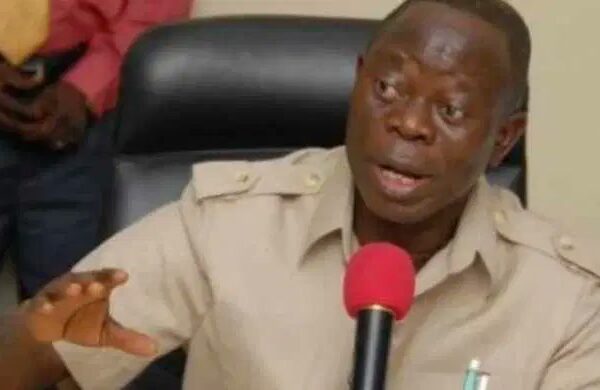
Senator Adams Oshiomhole has warned Nigerian politicians to stop arming unemployed youths during elections, saying the practice is one of the main causes of post-election violence and rising insecurity. Speaking during a recent plenary session of the Senate, Oshiomhole said the problem of electoral violence could be largely solved if politicians reformed their attitudes and embraced integrity. “As elected persons, we as senators shall not, directly or indirectly, secretly or openly, aid and abet unemployed or semi-employed people and arm them to disrupt elections. If we reform our character, this problem is 90% solved,” he stated. He recalled how his “one man, one vote; one woman, one vote” campaign in Edo State helped reduce election-related killings and restored confidence in the democratic process. “It is now possible to hold an election without counting dead bodies,” Oshiomhole said. “The real beauty of democracy is not in holding a powerful office but in knowing that people freely chose you to represent them and manage their collective trust for the common good.” He condemned politicians who win through manipulation or rigging, insisting that such individuals can never truly be at peace with themselves. Oshiomhole also drew a connection between post-election violence and criminality, explaining that many of the weapons distributed to thugs during campaigns are never retrieved afterward. “After every election, there’s always an increase in violent crimes because those politicians who armed hungry youths abandon them, and the weapons end up being used for robbery and other crimes,” he said. He urged political leaders to lead by example through honesty, accountability, and respect for the people’s will, saying character reform is the foundation of peaceful and credible elections.
Read More

Police Arrest Omoyele Sowore At Federal High Court In Abuja

Human rights activist and Sahara Reporters founder, Omoyele Sowore, has reportedly been arrested by the Nigeria Police at the Federal High Court in Abuja. The arrest was made public by human rights lawyer Inibehe Effiong, who condemned the incident in a post on X, describing it as a disgrace to the rule of law. “The arrest of Omoyele Sowore at the Federal High Court in Abuja moments ago is preposterous. The police and the Tinubu regime are making a mockery of our judicial system. He should be freed immediately. Stop the shenanigans,” Effiong wrote. Before the incident, Sowore had shared on Facebook that he was at the Federal High Court with Nnamdi Kanu’s lead counsel, Kanu Agabi, who disclosed that his legal team was withdrawing from Kanu’s case, leaving the IPOB leader to face trial without legal representation. As of the time of this report, the reason for Sowore’s arrest has not been made known by the police.

Read More

Eight Confirmed Dead As Dangote Truck Loses Control in Ondo State

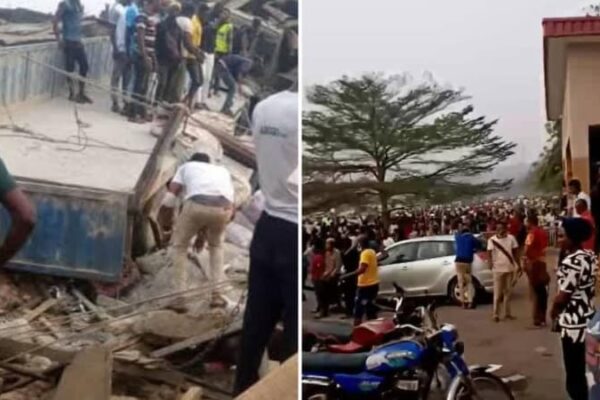
A tragic accident on Wednesday night claimed the lives of eight people, including five men, two women, and a young boy, in Akungba-Akoko, Ondo State. The crash occurred near Adekunle Ajasin University in the Akoko South West area of the state. The Ondo State Sector Commander of the Federal Road Safety Corps (FRSC) confirmed the incident, stating that it happened around 7:30 p.m. and involved a truck loaded with stone dust and a motorcycle. The truck reportedly lost control and rammed into a barricade situated in front of the university. He urged motorists to always exercise caution, especially during the “ember months,” and to ensure their vehicles are in good condition before any trip. The bodies of the victims have been taken to a nearby hospital morgue. According to Mosadoluwa Ajidagba, the Public Relations Officer of the Adekunle Ajasin University Students’ Union Government, the truck belonged to Dangote Cement. Ajidagba explained that the vehicle was coming from Ikare towards Akungba when its brakes failed, causing it to crash into the barricade at the university gate. He said about ten people died in the crash and noted that the Students’ Union had long appealed for a ban on heavy-duty trucks passing through the area. He urged students to remain calm, avoid the accident scene, and stay away from the main highway for safety reasons. In his reaction, the Executive Chairman of Akoko South West Local Government, Ayo Ajana, described the incident as heartbreaking and extended condolences to the victims’ families and the entire community. Ajana promised to work with relevant agencies and authorities to implement lasting safety measures at the accident-prone location and other high-risk areas across the council.

Read More
Senate Set To Screen Professor Joash Amupitan As INEC Chairman Thursday

Joash Amupitan Set To Assume INEC Chairmanship Thursday

Joash Amupitan, newly confirmed chairman of the Independent National Electoral Commission (INEC), will officially take office on Thursday. He is scheduled to meet with INEC directors at the commission’s headquarters, according to Victoria Eta-Messi, director of voter education and publicity. Before taking charge, Mr Amupitan will be sworn in by President Bola Tinubu during a National Executive Council (FEC) meeting. The 58-year-old Law professor at the University of Jos and Senior Advocate of Nigeria was confirmed by the Senate last Thursday through a voice vote led by Senate President Godswill Akpabio.

Read More
UK Slashes Post-Study Work Visa For International Students To 18 Months From 2027

UK Slashes Post-Study Work Visa For International Students To 18 Months From 2027

The United Kingdom will reduce the post-study work period for international students, including Nigerians, from two years to 18 months starting January 2027. Home Secretary Shabana Mahmood announced the change on October 14, explaining that foreign students will now need to meet an A-level standard in English Language. The move is part of the government’s immigration white paper and Plan for Change, designed to tighten control over who enters the country while continuing to attract top global talent. According to a government statement, the time for international students to secure graduate-level jobs after completing their studies will be cut from two years to 18 months, following data showing many graduates have not transitioned into employment as intended. The statement also confirmed a 32% increase in the Immigration Skills Charge (ISC) paid by employers hiring skilled foreign workers. The first rise since 2017, the increase will fund training for the domestic workforce and reduce reliance on overseas recruitment, with the Parliamentary process to approve the change set to begin later this week. Tuition fees for international undergraduate students are also rising, with the 2025/26 academic year seeing a 3.1% increase from £9,250 to £9,535. Stricter English language requirements will now apply to all international students entering the UK for study, work, or settlement. Data shows a decline in foreign students choosing the UK in 2024. January 2024 changes to immigration rules also restricted students from bringing dependants, except for those enrolled in postgraduate research programs or government-funded scholarship courses.

Read More

EXCLUSIVE: DIA Secretly Detains 16 Military Officers Over Alleged Coup Plot, Families Raise Alarm

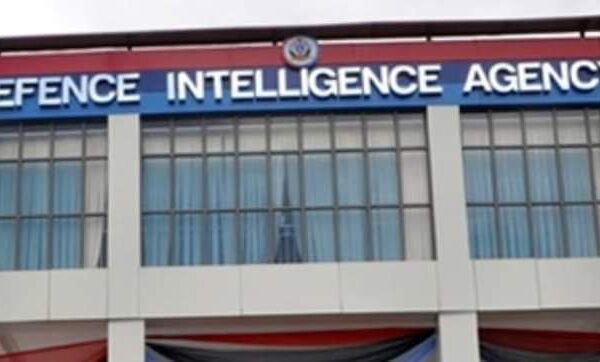
At least 16 Nigerian military officers are being secretly detained by the Defence Intelligence Agency (DIA) in Abuja over an alleged coup plot, multiple sources have told SaharaReporters. The officers have been held for more than three weeks without access to their families or legal representation, sparking widespread concern among relatives and security observers. Family members said they initially feared their loved ones had been kidnapped before learning of their detention through informal channels. “It’s been 18 days since those 16 officers were detained in an undisclosed location. At first, we thought our brother was kidnapped before finding out what transpired from his friend who works in the NSA office,” one family member told SaharaReporters. “No official explanation from the military till date. None of the families has been allowed to visit or even call them. Everyone is scared about their present condition.” The Defence Intelligence Agency, which operates under the Ministry of Defence, is primarily tasked with intelligence gathering and counter-espionage. However, sources say the agency’s role in detaining and interrogating military officers accused of misconduct is unusual and possibly outside its legal mandate. Normally, such cases are handled directly by the relevant service authorities — the Nigerian Army, Navy, or Air Force. A former military officer and security expert told SaharaReporters that the DIA’s involvement raises questions about due process and transparency. “In the military, if an army officer offends, he is to be charged by the Nigerian Army directly. The same applies to the Navy and Air Force,” he said. “We want to know when the DIA started handling cases of indiscipline. When did it become a military court?” He added that the selective detention of 16 officers, allegedly drawn from all three military branches, points to a deeper political motive. “Why only 16 officers? Why pick from all three services and then hand them over to the DIA? This doesn’t follow standard military procedure,” he said. The source also criticised the response of the Director of Defence Information, Brigadier General Tukur Gusau, accusing him of evading direct questions from journalists. “Only two questions about why the officers are with the DIA and why they’re being denied family access would have been enough to clarify things, but he avoided them,” he noted. Reports of the alleged coup plot first emerged in an earlier SaharaReporters exclusive published on Saturday, which revealed that the suspected officers were attached to the Office of the National Security Adviser (ONSA). The office is headed by Nuhu Ribadu, a retired police officer and lawyer serving as National Security Adviser to President Bola Tinubu. While the military has downplayed the situation — claiming the arrests were due to “repeated failure in promotion examinations and perceived career stagnation” — sources maintain that the ongoing detention is directly linked to a suspected coup plot. The secrecy surrounding the officers’ whereabouts and the lack of official communication have only deepened public anxiety about the true nature of the case.

Read More

Taraba State University Student Endurance Dennis Apologizes To CAN Over Controversial Nun Costume

Endurance Dennis, a student at Taraba State University, has apologized to the Christian Association of Nigeria (CAN) after her costume during the university’s recent Costume Day sparked public outrage. In a Facebook post, Dennis admitted that she initially saw her outfit, which resembled a nun’s habit, as harmless fun. She acknowledged, however, that she failed to recognize how it could offend the Christian faith and its sacred symbols. “I write this with a heart full of remorse and deep reflection regarding the pictures circulating online from the recent Costume Day during Taraba State University Students’ Week,” Dennis wrote. “My outfit resembling that of a nun has caused pain, anger, and distress to many, especially in the Christian community. I sincerely apologize for my actions and the way they were perceived.” Dennis stressed that she never intended to mock or insult any religion. She said the experience taught her a valuable lesson about respecting all faiths and sacred symbols and expressed gratitude to those who corrected her with understanding and guidance. She extended her apology to CAN, the university chaplaincy, university management, and the general public, promising to be more thoughtful and respectful in her actions both online and offline.

Read More

Wole Olanipekun Urges Halt to 1999 Constitution Amendments, Calls for New People-Centered Charter

Former Nigerian Bar Association (NBA) President, Chief Wole Olanipekun (SAN), has called on the National Assembly to suspend all ongoing and future amendments to the 1999 Constitution, saying what the nation needs is not another round of patchwork reform but a completely new, homegrown constitution that reflects the collective will of Nigerians. Delivering the 13th Convocation Lecture of Afe Babalola University, Ado Ekiti (ABUAD), on Monday, titled “Nigeria Yesterday, Today and Tomorrow: Imperative of a Sober and Definitive Recalibration,” Olanipekun said the current constitution, which he described as a “military albatross,” had outlived its usefulness and legitimacy. He argued that the 1999 Constitution was imposed without consultation or consent, concentrating power at the centre and perpetuating inequality among the federating units. According to him, Nigeria’s foundational problems stem from its faulty constitutional structure, which emasculates the states and weakens federalism. “The National Assembly should, for the time being, stay action on the ongoing amendment or any further amendment to the 1999 Constitution,” he said. “This constitution needs a complete overhaul, a substitution altogether. It has to be a negotiated document that will pave the way for a new social order.” Olanipekun proposed a transitional phase lasting until 2031 to allow Nigeria to harmonize past constitutional efforts, including reports from various national conferences and restructuring committees. He suggested that during the period, elections would continue as usual, but with a clear understanding that a new constitution would take effect by May 29, 2031. He also called for a national referendum to determine the shape and structure of Nigeria’s governance, insisting that sovereignty lies with the people, as enshrined in Section 14(2)(a) of the 1999 Constitution. “It is the referendum, not the National Assembly, that will decide whether Nigeria needs a National Assembly at all, and if yes, whether full or part-time,” he emphasized. On the state of Nigerian politics, Olanipekun cautioned against the rampant defection culture among politicians, warning that frequent “cross-carpeting” would ultimately lead to instability. He urged fidelity to party ideology, programmes, and manifestos, describing political party membership as a “serious business,” not a “tea party or picnic.” Commending President Bola Ahmed Tinubu for his political consistency and refusal to defect during opposition years, Olanipekun said Tinubu’s resilience exemplified ideological commitment. He also lauded the president for reintroducing the old national anthem, describing it as a unifying step toward national recalibration. He further urged a reconfiguration of Nigeria’s federal system, arguing that states — not the Federal Government — should take charge of determining the country’s governance framework. “It is not the more the merrier,” he said, warning that creating more states only weakens the federating units and strengthens the centre. In his closing remarks, Afe Babalola, SAN, founder and chancellor of ABUAD, praised Olanipekun for delivering a “well-researched” and visionary lecture, aligning with his long-held belief that Nigeria must adopt a new constitution to achieve sustainable growth and true nationhood.

Read More