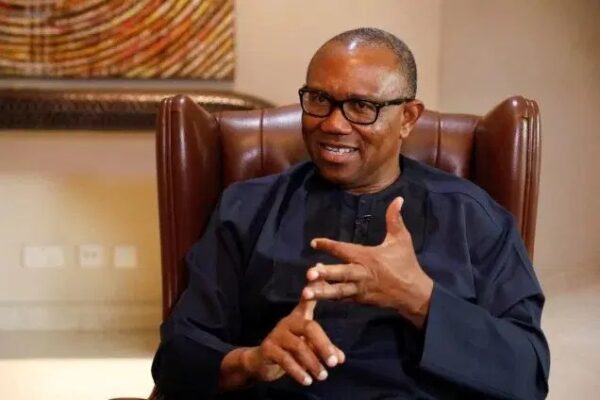
Peter Obi Condemns ‘Street Urchins’ Tag On Supporters, Says No Nigerian Is Without Value

Peter Obi Condemns ‘Street Urchins’ Tag On Supporters, Says No Nigerian Is Without Value

Former presidential candidate of the Labour Party, Peter Obi, has strongly criticized those labeling his supporters as “street urchins” or “low-class Nigerians,” describing such remarks as disrespectful to ordinary citizens and contrary to the values that hold the nation together. In a statement on his X handle on Wednesday, Obi said he found it “deeply unfortunate” that some privileged Nigerians have resorted to class-based insults against citizens who share in his vision for a fair and inclusive society. “Lately, I have heard a few people say that those who follow Peter Obi are low-class Nigerians, and some have even gone as far as calling them ‘street urchins’ and people of no value. It is deeply unfortunate that in today’s Nigeria, citizens now look down on fellow citizens in such a degrading manner,” he wrote. Obi stressed that his politics have always been guided by empathy, inclusiveness, and service to humanity, not elitism. “I have never and will never look down on anyone, except to lift them up. After all, we can only rise by lifting others,” he stated. The former Anambra governor explained that his political commitment has always been to ordinary Nigerians whose voices have been silenced by the powerful elite. “My involvement in politics has never been about mingling with the so-called high and mighty, but about standing with the people whose resources have been plundered by those same ‘big names’ who now parade themselves with titles,” he said. Describing it as “morally wrong” to insult struggling Nigerians already weighed down by economic hardship, Obi maintained that every citizen deserves dignity and respect. “No Nigerian is of no value. No Nigerian is a street urchin,” he said. “It says a lot about our nation when leaders refer to their own citizens as people of no value and as urchins.” Reaffirming his belief in compassionate and people-centered leadership, Obi said governance should be measured by care for the vulnerable. “Every Nigerian deserves dignity, opportunity, and care. True leadership is not about mocking the weak; it is about lifting them up,” he added. His remarks come a day after he appealed to the Lagos State Government to act with compassion in its ongoing demolition exercise, emphasizing that being legally right should never override the need to be morally just.  
Read More
Atiku Demands Investigation Into Tinubu And Cabinet Over Forgery Allegations

Atiku Demands Investigation Into Tinubu And Cabinet Over Forgery Allegations

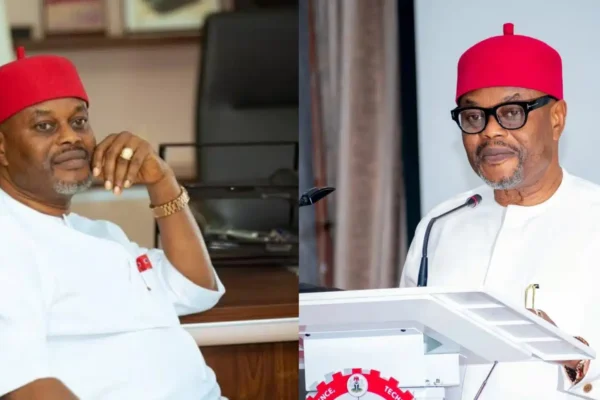
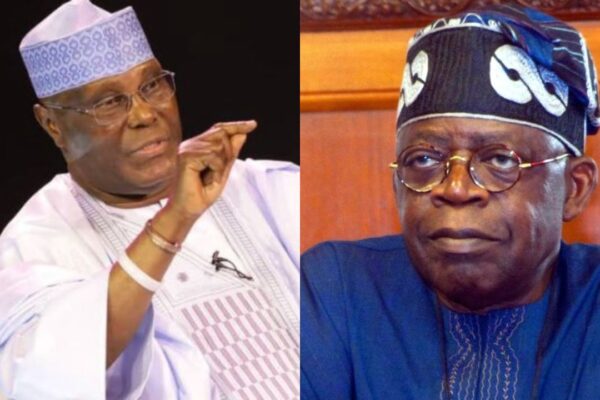
Former Vice President Atiku Abubakar has called for a sweeping investigation into the academic and professional credentials of President Bola Ahmed Tinubu and all members of his cabinet. Atiku made the demand in a statement posted on his official X handle on Wednesday, following the resignation of Uche Nnaji, Minister of Innovation, Science and Technology. Nnaji stepped down after a Premium Times investigation exposed discrepancies in his academic background, revealing that the University of Nigeria, Nsukka (UNN), disowned the Bachelor’s degree he submitted during his ministerial screening. The report also alleged that his NYSC certificate was forged. The scandal sparked outrage among civil groups and political commentators, prompting renewed scrutiny over the vetting process for government officials. Atiku described Nnaji’s resignation as a deliberate attempt to “downplay a national disgrace,” accusing the Tinubu administration of normalizing forgery and deception in governance. He also blamed the Department of State Services (DSS) for failing to detect the inconsistencies during Nnaji’s screening, saying its negligence had embarrassed the country. “Uche Nnaji should not have been allowed the courtesy of resignation. He should have been dismissed and prosecuted for deceit and falsification. By allowing him to quietly bow out, the Tinubu administration has shown that it is an assembly of forgers and morally bankrupt individuals,” Atiku wrote. The 2023 PDP presidential candidate further claimed that the incident reflects a deeper rot within the administration, alleging that President Tinubu himself has faced unresolved controversies about his identity and academic qualifications. “This episode is not isolated. It mirrors a rot that begins from the very top. The man occupying the office of President has for decades been entangled in controversies surrounding his background and certificates,” Atiku said. He called for an independent and transparent inquiry into the credentials of all Federal Executive Council members, starting with Tinubu, warning that failure to do so would erode Nigeria’s moral standing and global reputation. “The time has come to cleanse the system, rescue our country from deceit, and restore integrity to public service,” Atiku added.  

Read More
Uche Nnaji Denies Forgery Allegations, Says Resignation Was Guided By Principle And Integrity

Uche Nnaji Denies Forgery Allegations, Says Resignation Was Guided By Principle And Integrity

Former Minister of Innovation, Science and Technology, Uche Nnaji, has dismissed allegations that he resigned out of guilt over certificate forgery, saying his decision was based on integrity and respect for due process. His resignation came days after a Premium Times report alleged discrepancies in his academic credentials. The University of Nigeria, Nsukka (UNN), was said to have denied awarding him the Bachelor of Science degree he claimed, confirming that while he gained admission in 1981, he did not complete his studies. The report sparked public backlash and calls for investigation from various quarters. In response, Nnaji submitted his resignation to President Bola Tinubu on October 7, 2025, describing the allegations as “malicious blackmail” aimed at damaging his reputation and distracting from the ministry’s progress. In a statement personally signed by him, Nnaji clarified that his resignation was not an admission of wrongdoing but a deliberate choice to uphold transparency and personal honor. “After deep reflection and consultation with family and well-meaning Nigerians, I have tendered my resignation to allow due process to take its course,” he said. “My decision is personal and not an acceptance of guilt, but a matter of principle.”  

Read More

Absence of NMA Medical Report Stalls Nnamdi Kanu’s Terrorism Trial

ABUJA — Justice James Omotosho of the Federal High Court, Abuja, on Wednesday adjourned the terrorism trial of the leader of the Indigenous People of Biafra (IPOB), Nnamdi Kanu, to October 16, 2025, pending the submission of a medical report by the Nigerian Medical Association (NMA), News360 Nigeria reports. The adjournment followed the NMA’s failure to submit its court-ordered medical report on Kanu’s health condition. At the previous sitting, Justice Omotosho had directed the NMA President to constitute a panel of medical experts to assess Kanu’s alleged deteriorating health and present their findings to the court. The examination was expected to determine whether the Department of State Services (DSS) medical facility could adequately handle Kanu’s treatment or if he should be transferred to the National Hospital, Abuja, as requested by his legal team. The report would also help the court establish whether Kanu is medically fit to continue standing trial. However, during Wednesday’s proceedings, DSS counsel, Suraj S’aad, SAN, informed the court that the NMA medical board had communicated that its report was not yet ready for submission. S’aad consequently applied for a one-week adjournment to allow the medical board to conclude its review and finalise the report. With no objection from the defence, Justice Omotosho granted the request and adjourned the case to October 16, 2025, for the NMA board to present its findings and for the court to determine the next line of proceedings.

Read More

FCT Court Arraigns Lawyers Victor Giwa, Ibitade Bukola for Alleged Forgery, Impersonation

Two Abuja-based lawyers, Victor Giwa and Ibitade Bukola, were on Tuesday arraigned before the High Court of the Federal Capital Territory (FCT), Apo Division, on charges of alleged forgery and impersonation. The duo are facing a three-count charge bordering on criminal conspiracy to commit forgery, false personation, and fraudulent execution of documents. According to the charge sheet, the offences were allegedly committed on June 28, 2024, when Giwa and Bukola purportedly forged a letter using the official letterhead of Awa U. Kalu (SAN) and addressed it to the Attorney General of the Federation (AGF). The forged document, titled “Urgent and Solemn Appeal to Suspend the Arraignment of Our Colleague Victor Giwa on Charge Number: CR/222/2023,” allegedly sought to influence the AGF to halt Giwa’s scheduled arraignment before Justice Samira Bature of the FCT High Court, Maitama. The case, presided over by Justice Jude Onwuegbuzie, was previously stalled on September 15, 2025, leading to a bench warrant for Giwa’s arrest. His co-defendant, Bukola, who had been at large, appeared in court for the first time on Tuesday. During proceedings, Prosecution Counsel Asaph Eristo informed the court that the session was for arraignment. Both defendants pleaded not guilty to the charges. Eristo urged the court to remand the defendants to prevent interference with ongoing investigations. However, Edwin Anikpenu, SAN, counsel to the defence, applied for bail, arguing that both defendants are legal practitioners and that Bukola is a nursing mother. He sought to orally amend Giwa’s existing bail application to include Bukola. Justice Onwuegbuzie expressed displeasure at the oral request, criticising the defence team for failing to file a formal bail application despite being represented by over a dozen lawyers. “It is shocking that a lawyer, a Senior Advocate, would come with an oral application and attempt to add another defendant without documentation. With 13 lawyers present, none deemed it fit to file a proper bail application,” the judge remarked. The court subsequently refused bail for Bukola and ordered that she be remanded at the Suleja Correctional Facility in Niger State. Regarding Giwa, the defence urged the court to grant bail on self-recognition or release him to a senior member of the Nigerian Bar Association (NBA), Garki Branch. The prosecution opposed the request, claiming Giwa posed a flight risk and that public funds were used to effect his arrest. After hearing both sides, Justice Onwuegbuzie granted Victor Giwa bail in the sum of ₦30 million, with two sureties in like sum. The sureties must be civil servants not below Grade Level 16, reside in Abuja, possess valid ID cards, and submit their international passports. The case was adjourned to October 15, 2025, for continuation of trial. Also present in court were A.A. Askira of the Civil Liberty Committee of the NBA, who watched briefs for the defendants, and Levi Nwonye, Esq., representing the nominal complainant.

Read More

Emir Sanusi Backs 80% of Tinubu’s Policies, Flags Concerns Over Fiscal Spending, Food Importation

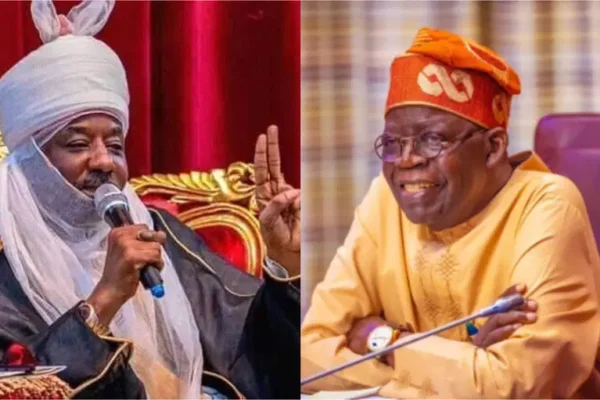
The Emir of Kano and former Governor of the Central Bank of Nigeria (CBN), Muhammad Sanusi II, has expressed strong support for most of President Bola Tinubu’s economic policies, while voicing concerns over the government’s fiscal management and approach to food importation. Speaking in an interview with News Central on Tuesday, Sanusi commended the Tinubu administration for stabilising Nigeria’s economy through improved fiscal discipline and more coherent monetary policy coordination. “In terms of monetary policy and stability, I have nothing but commendation for the government. On the fiscal side, we have had an improvement in revenue-to-GDP ratios, improvement in debt service ratios, and a contraction in the deficit. These are positive steps, but we still have a long way to go,” he said. While applauding progress in revenue generation, the former CBN governor urged the federal government to prioritise the quality and efficiency of public expenditure. “We’re still spending too much money on government—on the cost of governance, too many political appointees, too many officers,” Sanusi said. “If we do not improve the quality of spending and put a rein on expenditure, we’re going to continue borrowing.” Sanusi warned that Nigeria risks falling back into a debt trap if savings from the removal of fuel subsidies are not managed prudently. “After saving money from these expensive subsidies, after building up the government balance sheet, you go and spend it, and then you have to borrow again,” he cautioned. On food security, the Emir criticised the recent wave of food importation, arguing that it undermines local farmers and threatens long-term agricultural development. “I would like to see that we put a stop to the mass importation of food. I know it was driven by a desire to bring down food prices, but it is, in the end, very counterproductive to domestic production and domestic producer prices,” he said. Sanusi urged the government to strengthen the agricultural value chain and invest in domestic production to achieve sustainable food security. “Hopefully, we will get to a point where we go back on track with the reforms in the agricultural sector—fixing the agricultural value chain and relying on domestic production to feed the nation,” he added. Summing up his assessment, Sanusi said the Tinubu administration had made significant strides despite the country’s ongoing economic challenges.

Read More

Traditional Rulers Have No Constitutional Powers to Impose Bans

Let’s be clear: traditional rulers in Nigeria have no constitutional authority to impose or enforce bans. Their functions are largely symbolic, advisory, cultural, and mediatory, particularly on issues related to customs, festivals, and community traditions. If a traditional ruler desires that a particular policy or restriction be made law, the proper democratic process is to present the proposal to the State House of Assembly, where it can be debated and, if found appropriate, passed into law by elected representatives of the people. In the present case, concerned residents of Lagos State should seriously consider challenging such actions in court to reinforce the principle that traditional institutions have no legal power to issue enforceable directives. This issue goes beyond one community or ruler—it is about upholding constitutional order and democratic accountability. Lagos, as Nigeria’s most cosmopolitan and economically vital state, must not set a precedent that allows unelected individuals to wield powers reserved for elected officials. Allowing such practices to stand risks blurring the line between cultural authority and constitutional governance, a development that could undermine both democracy and the rule of law.

Read More
FCT Police Suspend Enforcement Of Vehicle Tinted Glass Permit Pending Court Verdict

FCT Police Suspend Enforcement Of Vehicle Tinted Glass Permit Pending Court Verdict

The Federal Capital Territory Police Command has temporarily halted the enforcement of the vehicle tinted glass permit after receiving a court directive. FCT Police spokesperson Josephine Adeh told AIT, “Information reaching me from the office of the PRO is that the order has been received and the enforcement of the tinted permit is now on hold pending the court’s verdict.” She added that the suspension will remain in effect until the court delivers its judgment. “We are waiting for the verdict. We are not against the courts, and we will continue to wait until we get a verdict,” Adeh said. Adeh also clarified that the tinted glass permit was introduced for security reasons, noting that criminals had exploited vehicles with darkened windows to evade law enforcement. “The law was not made by us. We are enforcers. The policy was purely security-driven. Some criminals were using tinted vehicles to commit offences, making it difficult for law enforcement to identify suspects,” she explained.  

Read More