Senate Confirms Dr. Bernard Doro As Minister Of The Federal Republic Of Nigeria

Senate Confirms Dr. Bernard Doro As Minister Of The Federal Republic Of Nigeria

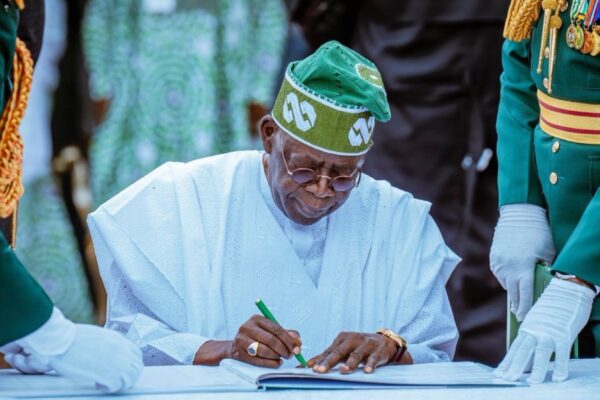
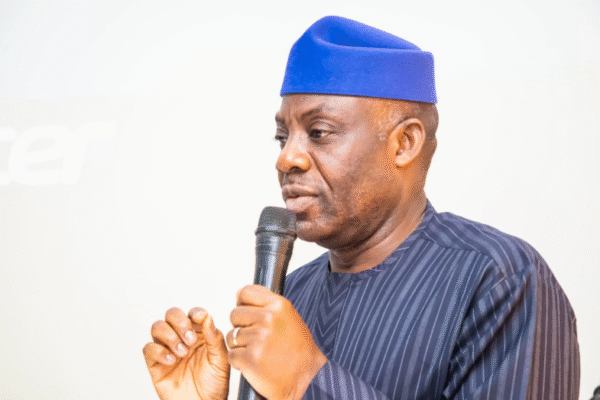
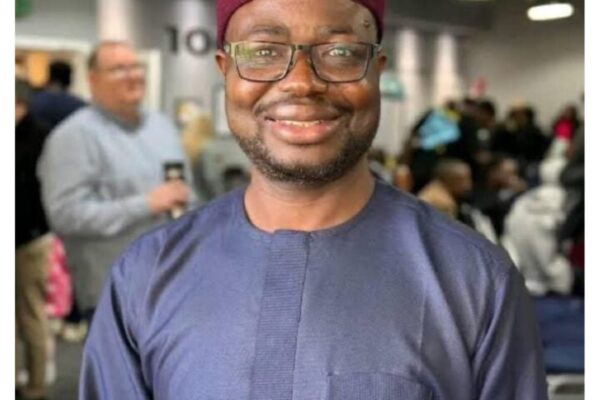
The Senate on Thursday confirmed Dr. Bernard Doro as a minister of the Federal Republic of Nigeria, paving the way for him to join the Federal Executive Council. During a brief screening that lasted under 30 minutes, lawmakers lauded Doro’s extensive experience and leadership credentials. The Plateau-born technocrat, the third minister from the state in the current administration, pledged to uphold transparency and fairness in Nigeria’s humanitarian programs. “I will create a humanitarian ecosystem that is inclusive, guided by impartiality and independence,” Doro assured senators. The lawmakers, satisfied with his background and vision, approved his nomination without objection. President Tinubu had previously written to the Senate requesting Doro’s confirmation in accordance with Section 147(2) of the 1999 Constitution (as amended). Senate President Godswill Akpabio read the letter in plenary and referred it to the Committee of the Whole for immediate action. Doro succeeds Professor Nentawe Yilwatda, who was recently appointed National Chairman of the ruling All Progressives Congress (APC). According to presidential spokesman Bayo Onanuga, Doro is a highly qualified professional with over 20 years of experience in clinical practice, pharmaceutical management, and strategic leadership in both Nigeria and the United Kingdom. Born on January 23, 1969, in Kwall, Bassa Local Government Area of Plateau State, Doro holds degrees in Pharmacy and Law, an MBA in IT-driven business strategy, and a Master’s in Advanced Clinical Practice. “He is an Independent Prescriber and Advanced Clinical Practitioner with NHS frontline experience across urgent care, walk-in centres, GP practices, and hospital settings,” Onanuga added. Following his confirmation, Doro is expected to be sworn in at the next Federal Executive Council meeting.

Read More

Bauchi Governor Signs Law Creating 29 Additional Local Government Areas

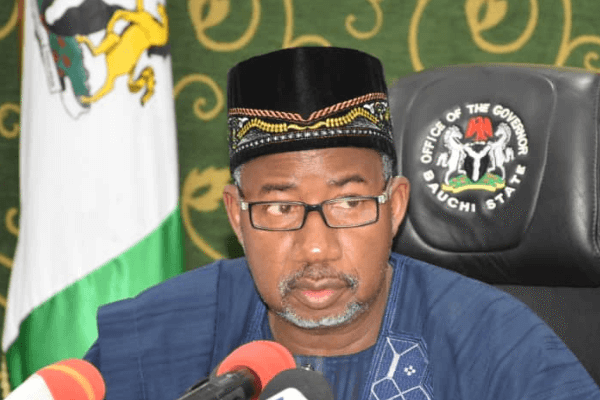
Bauchi State Governor Bala Mohammed has signed a law creating 29 additional local government areas in the state. The Acting Deputy Clerk of the Bauchi State House of Assembly, Musa Yerima, confirmed in a document obtained by Daily Trust that the law has been forwarded to the National Assembly’s Committee on Constitutional Review for approval and ratification under the ongoing constitutional amendment process. Currently, Bauchi State has 20 constitutionally recognized local government areas. With the addition of 29 new LGAs, the state, which has an estimated population of about 10 million, will have a total of 49 local government areas once the National Assembly completes the process. In a letter to Senator Barau Jibrin, Chairman of the Senate Committee on Constitutional Review, Yerima said: “I am pleased to inform you that the Bauchi State House of Assembly has passed into law a bill to provide for the creation of 29 new additional local government areas in Bauchi State, 2025.” He added that the new LGAs will remain provisional until the National Assembly enacts an accompanying law to formalize their names and status, in line with Section 8(5) of the 1999 Constitution. Yerima noted that the law was passed in accordance with Subsection 3 of Section 100 of the Constitution of the Federal Republic of Nigeria, as amended.

Read More

Seven Years On, Nigerians Revive #JusticeForOchanya Campaign Over Unresolved Case

Seven years after the tragic death of 13-year-old Ochanya Ogbanje, the #JusticeForOchanya campaign has resurfaced across social media platforms in Nigeria, reigniting public outrage and calls for accountability. Ochanya, from Benue State, died in October 2018 after allegedly suffering years of sexual and physical abuse. Her case drew nationwide attention after it was revealed that she had been assaulted by a university lecturer, Andrew Ogbuja, and his son, Victor Ogbuja. The abuse reportedly caused severe health complications that led to her death. Despite the public uproar that followed, the case has dragged on for years without resolution, leading to widespread frustration. The renewed campaign has seen Nigerians once again demanding justice, with activists, celebrities, and advocacy groups amplifying their voices on X, Instagram, and Facebook. Human rights advocates say the revival of the movement goes beyond seeking justice for Ochanya — it’s also a reminder of the urgent need for reforms to strengthen Nigeria’s justice and child protection systems. As the hashtag #JusticeForOchanya trends again, many hope that her case will finally reach a fair conclusion and serve as a turning point in the fight against child abuse and gender-based violence in Nigeria.

Read More
Lagos Authorities Seal Three Kosofe Businesses For Violating Single-Use Plastic Ban

Lagos Authorities Seal Three Kosofe Businesses For Violating Single-Use Plastic Ban

The Lagos State Government has shut down three businesses in Kosofe for violating the ban on single-use plastics, intensifying efforts to tackle plastic pollution. Commissioner for the Environment and Water Resources, Tokunbo Wahab, shared the update on X on Wednesday, explaining that the operation was part of measures to enforce the state’s environmental regulations. Enforcement teams inspected several locations within Kosofe Local Government Area and found multiple businesses failing to comply with the ban. “Winny Supermarket has been sealed, with all single-use plastic items confiscated for non-compliance,” Wahab stated. He added that Afia Supermarket at Tipper Garage, Ketu, and Beyond Tastee2Go Restaurant on Ogudu Road, Ojota, were also sealed on Tuesday, October 29, 2025, after ignoring repeated warnings.

Read More

Tinubu Approves 15% Import Duty On Fuel Products

President Bola Tinubu has given approval for a 15 percent ad-valorem import duty to be imposed on petrol and diesel, a move expected to affect the landing cost and possibly pump prices across the country. The approval was contained in a letter dated October 21, 2025, and signed by Damilotun Aderemi, the President’s Private Secretary. The directive was addressed to the Federal Inland Revenue Service (FIRS) and the Nigerian Midstream and Downstream Petroleum Regulatory Authority (NMDPRA). According to the correspondence, the decision followed a proposal from FIRS to apply the 15 percent duty on the cost, insurance, and freight (CIF) value of imported Premium Motor Spirit (PMS) and Automotive Gas Oil (AGO). The tax agency explained that the measure was designed to align import costs with the country’s current economic realities. “The President has approved the application of 15 percent ad-valorem import duty on the cost, insurance, and freight (CIF) value of imported diesel and premium motor spirit (PMS),” the letter stated. With the new tariff, the landing cost of petrol is projected to rise by about ₦99.72 per litre, which could trigger an increase in retail pump prices nationwide. As of press time, neither the FIRS nor the NMDPRA had issued a statement confirming when the policy would take effect.

Read More
FG Clarifies Position on ASUU Agreement, Says 2009 Accord Remains Last Signed Deal

FG To Replace Chalkboards With Smart Boards In Nigerian Schools By 2027

The Federal Government has announced plans to replace chalkboards with smart boards in all schools across Nigeria by 2027, as part of a major push to digitalize the country’s education system. Minister of Education, Dr. Olatunji Alausa, made this known during a ministerial roundtable in Abuja, reaffirming President Bola Ahmed Tinubu’s administration’s commitment to bridging the digital gap in schools and improving the quality of teaching nationwide. Alausa revealed that the transition would begin with the full digitalization of the annual school census in 2026. He disclosed that over 60,000 tablets have already been distributed to students in Adamawa, Oyo, and Katsina States under the Airtech (Amazon Web Services) and BESDA initiatives, while another 30,000 devices are expected soon. He noted that the government recently launched its first smart board, adding that the goal is to equip every school in Nigeria with one by 2027. “This is how we can deliver high-quality education to every child, regardless of where they live or their parents’ background,” he said. The minister explained that the introduction of smart boards would replace traditional chalkboards, creating more interactive classrooms that allow teachers to integrate multimedia, digital textbooks, and real-time participation from students. Alausa also expressed concern about Nigeria’s alarming school dropout rate, citing data from the Nigeria Education Management Information System (NEMIS). According to him, of the 30 million pupils recorded across 21 states, only six million continued to senior secondary level — meaning nearly 24 million dropped out. “The data we’re seeing is alarming,” he said. “Between primary and junior secondary school, we lose about 10 to 20 million children, and another four million before senior secondary. But now that we can see these figures, we can act on evidence and track the impact of our interventions.” He further explained that every student’s biometric information is being uploaded to a digital platform to improve tracking and data-driven planning. “It’s no longer manual. Paper will be completely phased out,” he said, noting that WAEC and JAMB data would also be integrated into the system. The minister commended UNICEF for its technical support and President Tinubu for his political and financial backing of the education reforms. Executive Secretary of the Universal Basic Education Commission (UBEC), Aisha Garba, added that the commission has fully embraced digital technology in its operations, classroom teaching, and ongoing efforts to modernize public schools across the country.

Read More
JAMB Officials Walk Out On Lawmakers During Heated National Assembly Hearing

JAMB Officials Walk Out On Lawmakers During Heated National Assembly Hearing

Tension flared at the National Assembly on Wednesday when officials of the Joint Admissions and Matriculation Board (JAMB) abruptly walked out of an investigative hearing convened by the House of Representatives Committee on Basic Education Examination Bodies. The session, chaired by Hon. Oboku Oforji, was set up to scrutinize JAMB’s 2023–2024 budget performance, Internally Generated Revenue (IGR), remittances to the Consolidated Revenue Fund (CRF), and the board’s financial records from 2023 to date. Lawmakers said the committee had written to JAMB three times—on October 6, 17, and 23, 2025—demanding the appearance of the Registrar, Prof. Ishaq Oloyede, along with relevant documents. But instead of showing up in person, Oloyede sent a director, Mufutau Bello, to represent him. Trouble began when Bello asked journalists covering the hearing to leave, arguing that the financial documents contained sensitive details. The committee rejected the request, insisting that the hearing was a public session and that it alone could decide the manner of its proceedings. The situation quickly escalated when Bello became visibly upset, ordered his team to pack up, and walked out of the session in protest—leaving lawmakers stunned. Furious over the walkout, the committee directed the Sergeant-at-Arms to arrest the JAMB officials, but they had already left the premises. Calling the incident “unfortunate and unacceptable,” Oforji warned that the House would not tolerate attempts by any agency to undermine its constitutional authority. “Our duty is to ensure that every institution under our oversight remains transparent and accountable to Nigerians. This is not about witch-hunting,” he said. The committee has now summoned Prof. Oloyede to appear personally with his management team and all required documents by Tuesday next week. Oforji warned that failure to comply would compel the House to invoke its powers under Sections 88 and 89 of the 1999 Constitution (as amended). Speaking after the rowdy session, committee members described JAMB’s action as a contempt of parliament and a direct challenge to democratic oversight. The hearing was adjourned until next Tuesday, with a final warning that any further defiance by the examination body would attract strict parliamentary sanctions.

Read More
Hurricane Melissa Live: Drone Images Reveal Devastation as 77% of Jamaica Left Without Power and Dozens Dead in Haiti

Hurricane Melissa Live: Drone Images Reveal Devastation as 77% of Jamaica Left Without Power and Dozens Dead in Haiti

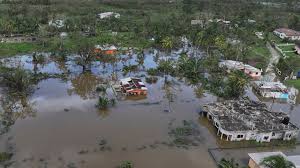
Hurricane Melissa, one of the strongest storms ever recorded in the Atlantic basin, has left a trail of destruction across the Caribbean, killing dozens and crippling infrastructure across multiple nations. In Haiti, at least 25 people have been confirmed dead after a river burst its banks, flooding several communities. In Jamaica, the storm struck with fierce winds and torrential rain, leaving 77% of the island without power and causing widespread damage to homes and public utilities. By Wednesday morning, Melissa had moved across Cuba, though the full extent of the damage throughout the region is still emerging. Drone images show flattened buildings, uprooted trees, and entire neighborhoods submerged under water. Climate Change and Hurricane Severity Experts say climate change is making hurricanes more destructive, fueling both their strength and speed of intensification. Storm Surges One of the most devastating impacts comes from storm surges — sudden rises in sea level driven by high winds and pressure changes. As global sea levels rise, these surges are becoming more severe, causing catastrophic flooding similar to what occurred during Hurricane Katrina in 2005. Rapid Intensification Scientists have also documented a growing trend of rapid intensification, when sustained winds increase by at least 35 mph within 24 hours. Hurricane Melissa’s transformation from a tropical storm to a Category 5 hurricane in just one day is a striking example. This phenomenon is driven by warmer ocean temperatures and greater atmospheric moisture, both fueled by global warming. A 2023 study found that Atlantic tropical cyclones were 29% more likely to undergo rapid intensification between 2001 and 2020 than in previous decades. With storms like Melissa setting new benchmarks for intensity, some researchers are calling for the introduction of a Category 6 classification to reflect the growing power of modern hurricanes.

Read More