Court Dismisses ₦100bn Dangote Refinery Suit Against NNPCL

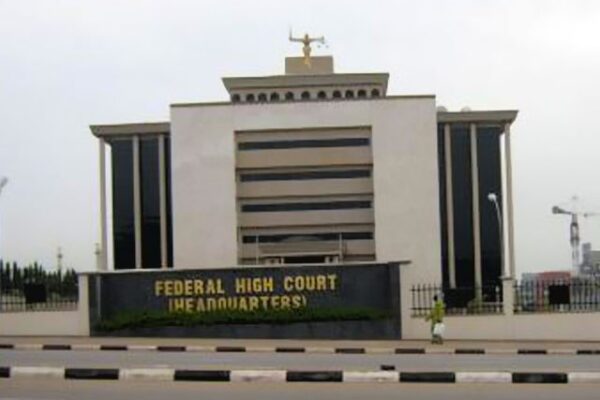
The Federal High Court in Abuja has struck out a ₦100 billion lawsuit filed by Dangote Petroleum Refinery and Petrochemicals FZE against the Nigerian National Petroleum Company Limited (NNPCL) and several others over the issuance of fuel import licences. Justice Mohammed Umar dismissed the case following an application for withdrawal filed by C.O. Adegbe, counsel to Dangote Refinery. After the withdrawal, lawyers representing the defendants made an oral application for the matter to be dismissed, which the court subsequently granted. The defendants in the suit included the Nigeria Midstream and Downstream Petroleum Regulatory Authority (NMDPRA), NNPCL, AYM Shafa Limited, A.A. Rano Limited, T. Time Petroleum Limited, 2015 Petroleum Limited, and Matrix Petroleum Services Limited. Dangote Refinery had sought to invalidate the import licences issued by the NMDPRA to NNPCL and the five other oil marketing companies, arguing that the practice undermined domestic refining capacity. The company also demanded ₦100 billion in damages, alleging that the regulatory agency’s actions were detrimental to the growth of Nigeria’s refining sector. NNPCL Eyes 20% Stake in Dangote Refinery Meanwhile, the Group Chief Executive Officer of NNPCL, Bayo Ojulari, has announced plans by the national oil company to increase its equity stake in the Dangote Refinery to 20 percent. Speaking at the Abu Dhabi International Petroleum Exhibition and Conference (ADIPEC), Ojulari said the move aligns with NNPCL’s broader strategy to enhance transparency and prepare for an eventual Initial Public Offering (IPO). “The IPO journey is by law. The PIA (Petroleum Industry Act) prescribes for NNPCL to journey towards achieving IPO. It’s not an option for us,” Ojulari stated. “We have begun to publish our monthly performance since May this year, and that has continued.” Ojulari, however, did not provide a specific timeline for when the IPO would take place. The Dangote Refinery, Africa’s largest single-train refinery, began partial operations earlier this year and is expected to play a critical role in ending Nigeria’s dependence on imported refined petroleum products.
Read More

Trump Warns Nigeria Again Over Christian Killings, Threatens To End U.S. Aid

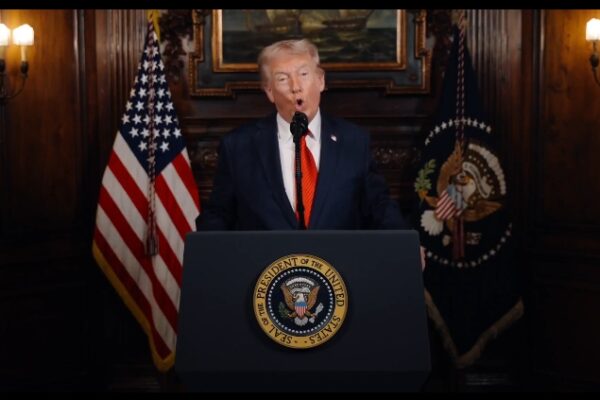
Donald Trump has issued another warning to Nigeria over the persistent killings of Christians, threatening to halt all forms of aid and impose tough measures if the violence continues. Speaking from his podium in Washington, Trump declared: “If the Nigerian government continues to allow the killings of Christians, the USA will immediately stop all aid and assistance to Nigeria. We are going to do things to Nigeria that Nigeria is not going to be happy about.” The U.S. President’s statement marks his second public warning in less than a week, following earlier remarks accusing the Nigerian government of failing to protect its Christian population. His administration has since placed Nigeria on the list of “Countries of Particular Concern” for alleged violations of religious freedom, a move that could lead to sanctions or suspension of development support. Sources in Washington revealed that Trump has directed the Department of Defense to be on standby for “possible actions,” signaling that the warning may not be limited to diplomatic pressure. In response, Nigeria’s Minister of Foreign Affairs, Yusuf Tuggar, dismissed the claims, saying, “State-backed religious persecution is impossible under Nigeria’s constitution.” He maintained that the violence often labeled as religious is, in most cases, rooted in ethnic rivalries, banditry, and terrorism. Trump’s renewed threat has drawn global attention, with international observers cautioning against rash decisions that could damage diplomatic ties between the two countries. However, others argue that the warning might compel the Nigerian government to intensify its efforts to address the ongoing insecurity and protect vulnerable communities. As tensions rise, both nations now face a critical moment that could redefine U.S.–Nigeria relations depending on how Abuja responds to Washington’s escalating stance. "If the Nigerian government continues to allow the killings of Christians, the USA will immediately stop all aid and assistance to Nigeria. We are going to do things to Nigeria that Nigeria is not going to be happy about." – Trump pic.twitter.com/IzSoJNOlpX — Imran Muhammad (@Imranmuhdz) November 5, 2025

Read More

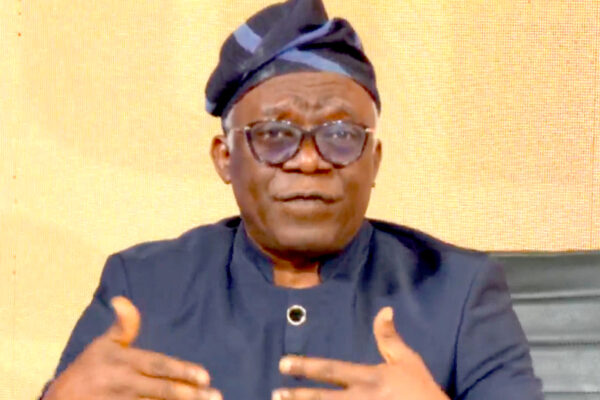
Falana Accuses Trump Of Lying About ‘Christian Genocide’ In Nigeria

Human rights lawyer, Femi Falana (SAN), has accused U.S. President Donald Trump of fabricating claims about an alleged “Christian genocide” in Nigeria, describing him as a leader driven by hostility toward Africa. Speaking on Channels Television’s Politics Today on Wednesday, Falana dismissed Trump’s assertion that thousands of Christians were being systematically killed in Nigeria, calling it a baseless and misleading statement. “My position is that Mr. Trump has lied to the whole world by alleging Christian genocide in Nigeria without any evidence to back it up,” Falana said. He explained that the violence in Nigeria is not religiously motivated but rooted in criminality, insecurity, and economic struggles. “He said about 3,100 Christians have been killed in Nigeria. But when you look at the facts, those behind the killings — terrorists, bandits, kidnappers, or gunmen — do not care about religion. What they are after is ransom or control of territory. It’s not about religion,” he said. Falana highlighted that in states such as Benue and Plateau, most violent clashes are tied to land and grazing disputes. “Those who are killing there are either trying to take land or feed their animals,” he added. The senior lawyer urged the Federal Government not to be alarmed by Trump’s recent threat of military action against Nigeria but to focus on strengthening its internal security. “Instead of losing sleep over Trump’s statement, the government should look inward and identify its own failings,” he said. He further alleged that Trump’s comments form part of a broader geopolitical agenda targeting Africa’s natural resources and global alliances. “I know him, I know his antics, I know his hatred for Africa. This whole issue is about Nigeria’s resources. The same people pushing this agenda are also saying China must be cut down to size in Africa. We must understand the global politics behind it and the mistakes our own leaders have made,” Falana said. His remarks come amid rising diplomatic tension following Trump’s directive for U.S. forces to prepare for possible military intervention in Nigeria.

Read More

Ex-Banker Bags Three-Year Jail Term Over ₦8.56 Billion Fraud

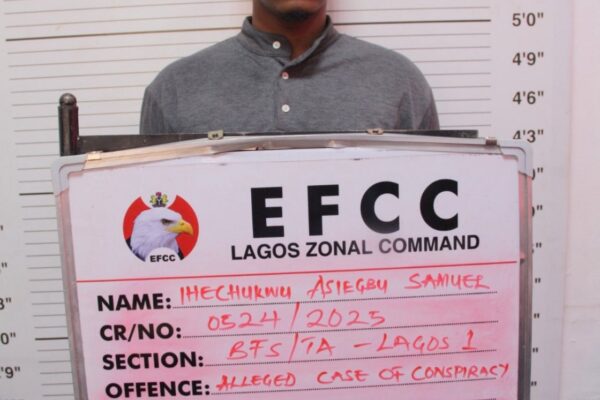
A former banker, Samuel Asiegbu, has been sentenced to three years in prison without an option of fine for his role in an ₦8.56 billion fraud involving a first-generation Nigerian bank. The Economic and Financial Crimes Commission (EFCC) announced the conviction in a statement on Wednesday, November 5, 2025, revealing that Asiegbu was charged alongside several others for conspiracy, stealing, and unauthorised access to a computer system with intent to defraud, contrary to Sections 409 and 386 of the Lagos State Criminal Law, 2011. The defendants were first arraigned before the Federal High Court in Lagos on June 23, 2025, and all initially pleaded not guilty. However, Asiegbu later changed his plea to guilty, leading Justice Rahman Oshodi to convict and sentence him. “The court sentenced Asiegbu to 10 months and eight days’ imprisonment on count three and one year and eight months on count four, both without an option of fine. The sentences are to run concurrently. Consequently, the court struck out counts one and two,” the EFCC stated. The trial of the remaining defendants will continue, with the court adjourning the case to November 14, 2025. In May 2025, PUNCH Online reported that the EFCC arraigned three bankers — Samuel Ihechukwu Asiegbu, Fabian Onyeimachi, and Kingsley Ejim Kelechi — along with four other accomplices, for their alleged roles in manipulating the bank’s internal systems to execute the multibillion-naira fraud. EFCC spokesperson Dele Oyewale disclosed that the accused “tampered with critical banking data in January 2025, causing a financial loss of ₦8,568,090,500,” and conspired with others still at large “to carry out the fraudulent transactions for their personal benefit.”

Read More
Senate Steps In To End ASUU Strike, Sets Meeting With Education Minister And NUC

Senate Approves Up To 14-Year Jail Term For Sexual Harassment In Tertiary Institutions

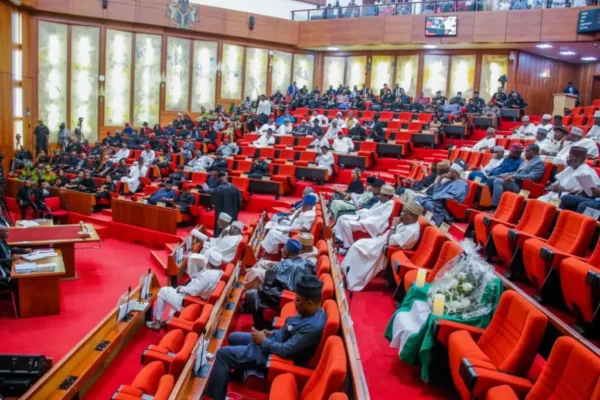
The Senate has approved a new law prescribing prison terms of five to 14 years, without the option of a fine, for anyone found guilty of sexually harassing students in Nigeria’s tertiary institutions. On Tuesday, lawmakers passed the Sexual Harassment of Students (Prevention and Prohibition) Bill, 2025 (HB.1597), during its third reading. Senate Leader Senator Opeyemi Bamidele (APC, Ekiti Central), who presented the bill for concurrence, said it is designed to protect students from all forms of sexual misconduct while providing a clear legal framework for punishing offenders. “The Bill is enacted to promote and protect ethical standards in tertiary education, the sanctity of the student-educator relationship of authority, dependency, and trust, and respect for human dignity in educational institutions,” Bamidele said. Under the law, anyone convicted of sexual harassment faces up to 14 years in prison and not less than five years. Lesser offences carry two to five years in jail, with fines explicitly prohibited. The legislation also allows students or their representatives to initiate civil actions against educators for breach of fiduciary duty. Institutions may conduct internal disciplinary proceedings, but such processes must be suspended if a criminal case on the same matter is pending in court. Sexual harassment is defined in the bill to include “grabbing, hugging, kissing, rubbing, or touching the breasts, hair, lips, hips, or any other sensual part of the body of a woman; displaying, giving, or sending sexually explicit pictures or materials; whistling, winking, making sexual remarks, or stalking a student.” The law clarifies that consent by the student is not a valid defence, except where the educator and student are legally married. Complaints can be filed in writing by the affected student, a relative, guardian, or lawyer to the Nigeria Police Force or the Attorney-General, with copies sent to the Independent Sexual Harassment Committee of the relevant institution. During the debate, some lawmakers called for the bill to extend beyond students. Senator Adams Oshiomhole (APC, Edo North) argued, “There is no need to restrict sexual harassment issues to students. We should craft this law in a way that gives it universal application.” Deputy Senate President Barau Jibrin (APC, Kano North), who presided over the session, noted that the bill is a concurrence from the House of Representatives and could not be substantially altered, adding that existing laws already address sexual harassment in workplaces and other sectors. The Senate passed the bill unanimously, hailing it as a significant step toward ending sexual abuse and safeguarding the rights of students in Nigeria’s higher education institutions.

Read More
Attack on Funeral in Sudan’s Kordofan Region Kills 40 – UN

Attack on Funeral in Sudan’s Kordofan Region Kills 40 – UN

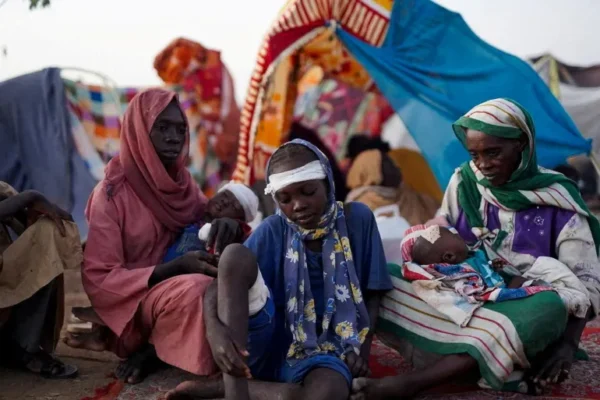
At least 40 people have been killed in an attack on a funeral in el-Obeid, the capital of Sudan’s North Kordofan state, according to the United Nations Office for the Coordination of Humanitarian Affairs (OCHA). Citing local sources, OCHA said on Tuesday that the attack took place in the government-held city, though it did not specify the exact date or identify those responsible. The assault comes amid rising tensions in the region, with reports suggesting that the Rapid Support Forces (RSF) — a powerful paramilitary group — may be preparing a major offensive on el-Obeid, while Sudanese Armed Forces (SAF) troops fortify positions to defend the city. “The security situation in the Kordofan region continues to worsen,” OCHA warned. “Once again, we call for an immediate cessation of hostilities and for all parties to protect civilians and respect international humanitarian law.” Worsening Violence Across Kordofan and Darfur Fighting in the oil-producing Kordofan region has escalated sharply in recent weeks. Thousands of residents fled to el-Obeid last week after the RSF recaptured Bara, a city located about 60 kilometres (37 miles) to the north, from the Sudanese army. Meanwhile, the RSF has also seized control of el-Fasher, the capital of North Darfur, following the withdrawal of SAF forces. The UN reports that more than 70,000 people have fled el-Fasher and its surrounding areas since the takeover. Witnesses and human rights groups have documented widespread atrocities, including summary executions, sexual violence, and civilian massacres. Nathaniel Raymond, Executive Director of the Humanitarian Research Lab at Yale’s School of Public Health, told Al Jazeera that RSF fighters had “begun to dig mass graves and collect bodies throughout the city.” UN officials fear that thousands remain trapped in el-Fasher amid worsening humanitarian conditions. A War of Devastating Scale Sudan’s devastating civil war erupted in 2023, following a power struggle between the RSF and the SAF, plunging the capital, Khartoum, into chaos and spreading across multiple states. The RSF now controls over a third of the country, according to the UN, in a conflict that has claimed tens of thousands of lives and displaced 12 million people — nearly a quarter of Sudan’s population. The crisis is now considered the world’s largest humanitarian disaster. On Tuesday, Sudan’s Defence Minister Hassan Kabroun said the army would continue its campaign against the RSF after the country’s Security and Defence Council met to deliberate on a United States proposal for a ceasefire. As violence continues to engulf Sudan, the UN and humanitarian agencies are renewing calls for peace talks, protection of civilians, and unimpeded access for aid delivery in one of the most dire crises of the 21st century.

Read More

Court Stops Lagos Police Commissioner From Declaring Sowore Wanted

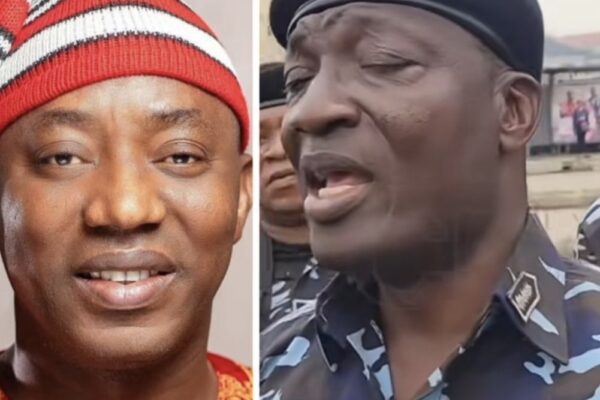
A Federal High Court in Ikoyi, Lagos, has barred the Lagos State Commissioner of Police, Moshood Jimoh, from declaring former presidential candidate and human rights activist Omoyele Sowore wanted. Sowore made the development known on his 𝕏 (formerly Twitter) account on Wednesday, November 5, while describing the Lagos police chief as “incompetent.” “I just left the Federal High Court in Ikoyi, Lagos, where the court restrained the incompetent CP of @policeng Lagos Command, Moshood Jimoh, from declaring Omoyele Sowore WANTED,” he wrote. The ruling follows ongoing tensions between Sowore and the Nigerian Police Force, which he accused of “unlawful intimidation and political persecution.” Earlier, Sowore had filed a fundamental rights enforcement suit against the Inspector-General of Police, Kayode Egbetokun, and the Lagos State Commissioner of Police. In the suit, marked FHC/L/CS/1923/2025, he argued that the attempt to declare him wanted over a protest in Lagos was illegal, defamatory, and a deliberate move to stifle his activism. He urged the court to protect his rights and restrain the police from any further acts of harassment, arrest, or public labeling that could threaten his safety and reputation. Sowore also demanded damages for what he called the violation of his constitutional rights to free expression and peaceful assembly. Following the court’s decision, Sowore described the judgment as a victory for democracy and a reminder that “no one is above the law.” As of press time, the Lagos State Police Command had yet to issue a statement on the ruling.

Read More

Nigeria to Host World’s First UNESCO Category-2 Media and Information Literacy Institute

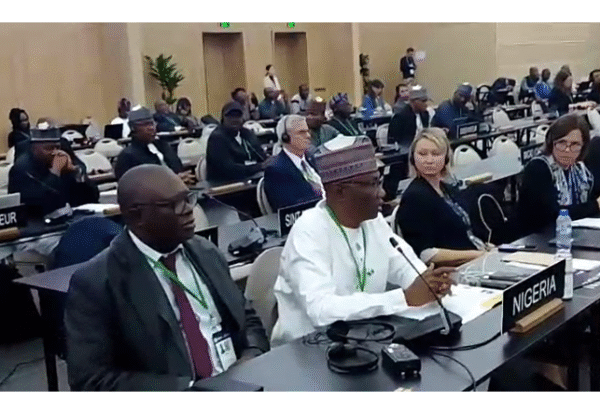
Nigeria has secured the approval of the United Nations Educational, Scientific and Cultural Organization (UNESCO) to host the first-ever Category-2 International Media and Information Literacy (MIL) Institute in the world. The landmark decision was adopted at the 43rd General Conference of the Communication and Information Commission (CI Session) of UNESCO, held in Samarkand, Uzbekistan. With this approval, Nigeria takes a historic step toward global leadership in the fight against misinformation and disinformation, positioning itself as a hub for international research, policy dialogue, and capacity building in digital communication and information literacy. Delivering Nigeria’s address at the conference, the Minister of Information and National Orientation, Mohammed Idris, described the development as “a strong vote of confidence in our nation.” According to the minister, the Institute — to be based in Abuja — will serve as an international observatory and hub to equip individuals and communities worldwide with the skills to navigate the digital age responsibly. “The Nigerian government, under the leadership of President Bola Ahmed Tinubu, is committed to fostering a society where responsible free speech drives national progress,” Idris said. “A central pillar of our strategy is the democratization of digital opportunities, with media and information literacy as the key driver.” The minister explained that this milestone marks the fulfillment of a process initiated in October 2022, when Nigeria hosted the 10th Global Media and Information Literacy and Feature Conference in Abuja and pledged to establish a UNESCO International MIL Institute. “I want to seize this opportunity to congratulate President Bola Ahmed Tinubu on this achievement, which reflects his commitment to the Nigerian project encapsulated in the Renewed Hope Agenda. This is a big win for all Nigerians and for the African continent,” Idris stated. He further pledged Nigeria’s continued collaboration with UNESCO to develop the Institute’s infrastructure and governance structure, noting that a multidisciplinary team of experts would be assembled to deliver on its global mandate. Idris also announced that the formal launch of the Institute will take place in February 2026 in Abuja, with UNESCO officials, member states, and international partners expected to attend. The Nigerian delegation to the 43rd UNESCO General Conference included Senator Kenneth Eze, Chairman, Senate Committee on Information and National Orientation; Hon. Olusola Fatoba, Chairman, House Committee on Information, National Ethics and Values; Dr. Mohammed Bulama, Director-General of the Federal Radio Corporation of Nigeria (FRCN), who represented the Minister; Malam Abdulhamid Salihu Dembos, Director-General of the Nigerian Television Authority (NTA); Dr. Olalekan Fadolapo, Director-General of the Advertising Regulatory Council of Nigeria (ARCON); Malam Jibrin Baba Ndace, Director-General of the Voice of Nigeria (VON); and Dr. Hajo Sani, Nigeria’s Ambassador to UNESCO, among other officials.

Read More