Nnamdi Kanu Appears In Abuja Court Ahead Of November 7 Judgment In Terrorism Case

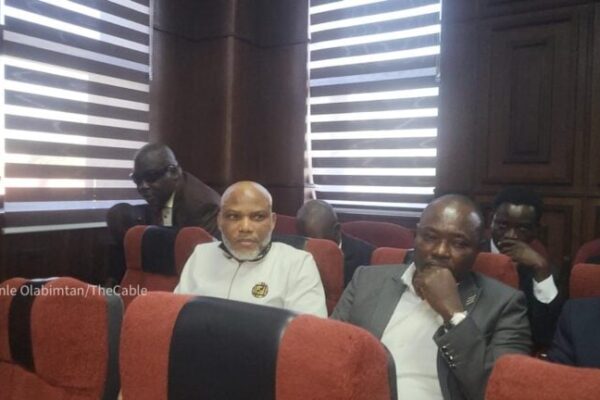
Nnamdi Kanu, leader of the banned Indigenous People of Biafra (IPOB), was present at the Federal High Court in Abuja on Wednesday as the court prepared to deliver judgment in his alleged terrorism case. The ruling will be broadcast live on Channels TV, TVC, and AIT. Presiding Judge James Omotosho had set the judgment for November 7 after Kanu declined to present his defence, having exhausted all available legal options. Kanu has consistently argued that any conviction would be unlawful, insisting that there is no valid charge against him. Photos from the courtroom show Kanu appearing for the hearing today.

Read More

Focus On Your Family, Not AGN Politics – Emeka Rollas Tells Regina Daniels Mum Amid Daughter’s Battle With Ned Nwoko

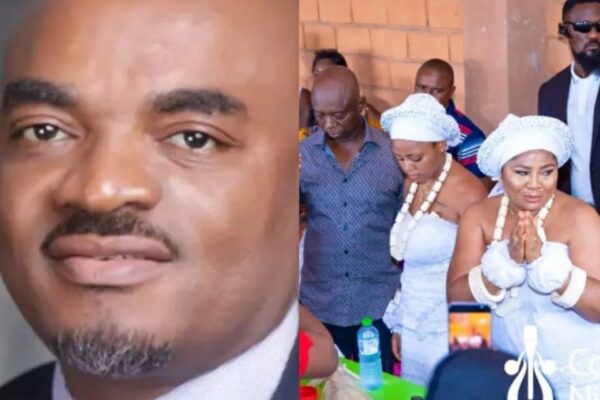
Emeka Rollas, President of the Actors Guild of Nigeria (AGN), has broken his silence on the ongoing controversy involving Ned Nwoko, Regina Daniels, and her family, calling for transparency and responsibility within the industry. In a detailed Instagram post accompanied by a photo of the trio, Rollas explained that his previous silence was out of respect for the family, not fear. He stressed that as AGN President, he has a duty to clarify the truth, particularly as his name has been repeatedly dragged into the matter. On the issue involving Nwoko and Regina Daniels, Rollas noted that while the situation is primarily a family matter, it has implications for the Guild. He criticized the Board of Trustees and senior actors, including Okey Bakassi, Charles Inojie, Chinyere Wilfred, Jide Kosoko, and Sanni Danjuma, for remaining silent despite witnessing troubling incidents on set. Rollas said Regina “needs help,” and the silence of colleagues has unfairly left him exposed. He recounted that during preparations for a roundtable in South Africa, Nwoko allegedly imposed a condition that Regina could only travel if she avoided Lagos, describing the directive as a verified fact amid widespread misinformation. Rollas also highlighted a public incident on Regina’s son’s birthday, where Nwoko reportedly commented on her smoking habit in front of guests and AGN members, suggesting she would “have her own daughter” if she stopped smoking. He emphasized that he witnessed the event personally. Clarifying his intentions, Rollas said his concern is not to shame Regina but to encourage her to seek support, noting that the Guild has assisted many members facing similar challenges. Addressing Rita Daniels, he urged her to prioritize her daughter’s well-being over ambitions for AGN leadership, warning that justifying harmful habits as part of a “celebrity lifestyle” could set a dangerous example for younger actors. Speaking directly to Ned Nwoko, Rollas said publicly calling out his wife was inappropriate and stressed that such matters should be handled privately. He also corrected claims that Nwoko donated ₦200 million to AGN, clarifying that the funds were intended for Regina’s personal projects, not the Guild. Rollas concluded by calling on all parties to protect the integrity of AGN, stressing that the Guild should remain a safe and supportive space for its members, not a platform for personal conflicts.

Read More

FG Warns Trump’s Comments Could Embolden Violent Groups in Nigeria

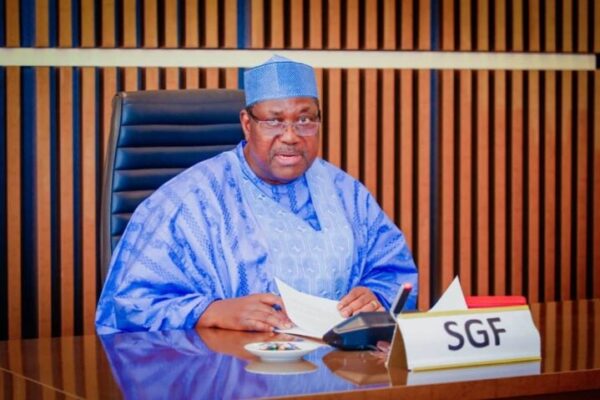
George Akume, Secretary to the Government of the Federation (SGF), has cautioned that recent comments by US President Donald Trump on Nigeria’s security situation may embolden violent groups to exploit international narratives and carry out fresh attacks. Trump had recently described Nigeria as a “country of particular concern” and accused the federal government of ignoring attacks on Christians. Speaking at a press briefing in Abuja on Wednesday, Akume detailed the evolution of violent extremism, Boko Haram and ISWAP insurgency, and banditry in northern Nigeria. He explained that the insurgency has two main fronts: ideological extremism in the north-east linked to global terrorist networks, and economically motivated violence in the north-west, driven by illegal mining, cattle rustling, extortion, and kidnapping-for-ransom. Akume stressed that both Muslims and Christians have been targeted, and no credible international organization has classified the crisis as genocide against Christians. “No credible international institution has designated the crisis as genocide against Christians. Boko Haram and ISWAP attack both churches and mosques, killing Muslims and Christians alike,” he said, adding that bandits attack communities without regard to religion. He traced part of Nigeria’s insecurity to weapons proliferation across the Sahel following the collapse of Libya and instability in Egypt after the 2011 uprisings, noting that Nigeria lacked a legal framework to tackle terrorism until the Terrorism Prevention Act was passed after the Independence Day bombing by Henry Okah. Akume provided a brief history of Boko Haram, from its founding in 2002 under Mohammed Yusuf, its escalation under Abubakar Shekau, to its transformation into ISWAP after pledging allegiance to ISIS in 2015. He also said that north-west banditry is fueled by competition for land and water, illegal mining, cattle rustling, and the commercialization of kidnapping. Highlighting recent attacks, he cited the June 2025 incident in Yelewata, Guma LGA of Benue, where at least 100 people were killed, prompting federal intervention. Akume assured that Nigeria’s armed forces remain “highly capable, experienced and professional,” emphasizing that the country does not require foreign troops but would benefit from targeted support in intelligence, technology, and equipment. “Recent pronouncements from the United States have inadvertently emboldened opportunistic violent groups seeking to exploit international narratives and attack soft targets,” he said, noting that insurgent structures had been significantly weakened prior to these remarks. Reiterating the government’s position, he said Nigeria rejects any claims that the conflict amounts to genocide and remains committed to protecting all citizens, regardless of religion. He underscored the country’s secular nature, reflected in diverse federal appointments, including within the security council. Looking ahead, Akume outlined plans to strengthen nationwide security operations, enhance intelligence-sharing with the US and other allies, tackle illegal mining, and improve border security. “Now is the time to speak with one strong and united voice to confront a common enemy — terrorists, bandits, and extremist insurgents — and eliminate them from our national borders,” he said.

Read More

Kebbi Releases Names Of 24 Abducted Schoolgirls As Massive Rescue Operation Intensifies

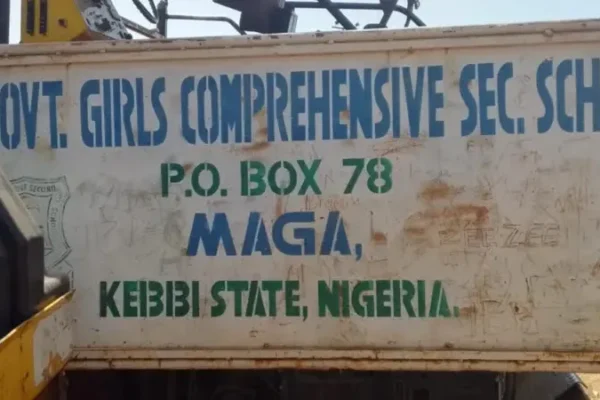
Authorities have released the identities of 24 schoolgirls abducted during the attack on Government Girls’ Comprehensive Secondary School, Maga, in Danko/Wasagu Local Government Area of Kebbi State. The abductions occurred on 16 November 2025, sparking a large-scale security operation to rescue the missing students. The release of the names comes as search teams continue combing forested areas, with one girl escaping during the assault and two others reportedly making their way home afterward. The identified students are listed below: Senior Secondary School (SSS) 3A & 3B Salima Garba Umar Senchi Salima Sani Zirmi Amina G. Umar Rashida Mohammed Dungu Saliha Umar Aisha Usman Jamila Ilyasu Maryam Ilyasu Naja-atu Abdullahi Zaniab Kolo SSS 2A 11. Faitma Sani Zimri 12. Hafsat Ibrahim 13. Nana Fiddausi Jibrin 14. Mas’uda Yakubu Tomo SSS 2B 15. Hauwa’u Saleh Junior Secondary School (JSS) 3A 16. Surayya Tukur 17. Hafsat Umar Yalmo 18. Mary Usman 19. Amina Ilyasu 20. Ikilima Suleiman JSS 2 21. Khadija Nazifi 22. Hauwa’u Ilyasu 23. Hauwa’u Lawali 24. Ummulkursim Abdul-Karim Security officials confirm that specialised police and military units have been deployed around the region, with intensified intelligence gathering and community patrols aimed at tracking the kidnappers. The attack also claimed the life of the school’s Vice Principal, Hassan Makuku, underscoring the growing danger faced by educational institutions in northern Nigeria, where mass abductions have become disturbingly frequent. The Federal Government has declared the incident a national emergency, and President Bola Tinubu has ordered all available security and intelligence assets to be mobilized for the recovery of the girls.

Read More

Alleged N4.6bn Arms Fraud : How ONSA’s Security Funds Were Diverted — EFCC Witness

An operative of the Economic and Financial Crimes Commission (EFCC), Kazeem Yusuf, on Tuesday told the High Court of the Federal Capital Territory (FCT) that the sum of N4.6 billion from the Office of the National Security Adviser (ONSA), meant for the supply of security equipment, was diverted to sponsor pilgrimage to Makkah, the 2015 People’s Democratic Party (PDP) rallies and presidential election, among other uses. Yusuf stated this at the resumed hearing in the ongoing trial of a former Minister of State for Finance, Ambassador Bashir Yuguda; a former National Security Adviser (NSA), Colonel Mohammed Sambo Dasuki (retd); former governor Attahiru Bafarawa of Sokoto; his son, Sagir Attahiru; and a company, Dalhatu Investment Limited, owned by the former governor and his son, before Justice Yusuf Halilu, sitting in Maitama, Abuja. The defendants are being prosecuted by the EFCC, on behalf of the Federal Government, on an amended 25-count charge bordering on misappropriation, criminal breach of trust and receiving stolen property. Led in evidence-in-chief by the prosecuting counsel, Rotimi Jacobs SAN, Yusuf told the court that investigations revealed that while contracts awarded by ONSA for the purchase of security equipment were not executed, the N4.6 billion involved was diverted to other uses. “Investigation revealed that the contracts were for the supply of security equipment. Responses from the Office of the National Security Adviser also showed that the contracts were for security purposes. “Further investigation also showed that the money (N4.6 billion) was not used for the purpose; it was diverted to other uses. “Investigation also showed from a letter from the Office of the National Security Adviser that the contracts were never executed,” the PW2 told the court. He said that when he commenced the investigation and asked the fourth defendant, Sagir Bafarawa, how the money received was spent, Sagir brought a list of expenditures to the commission. According to the PW2, “When I commenced investigation, Sagir brought a list of what he spent the money on. Some of them include payment for pilgrimage to Makkah, organisation of People’s Democratic Party rallies. “Others also include payment of monies to security agencies for monitoring elections, payment for the (2015) presidential election and other political activities.” Asked to read from the United Bank for Africa (UBA) and Guaranty Trust Bank account statements tendered before the court, the witness informed the court that money was transferred to some beneficiaries. He mentioned some of the beneficiaries to include Sheikh AbdurRahman Al-Sudais Foundation, which he said belonged to former governor Bafarawa, its chairman. The Foundation, he said, received the sum of N500 million. The PW2 also mentioned the 2015 PDP gubernatorial candidate in Sokoto State, Abdallah Wali, who received the sum of N580 million for the election through a company. At the end of Yusuf’s testimony, based on consensus, Justice Yusuf adjourned the case to 9–10 December for cross-examination of the PW2 by the defence counsel.

Read More

ISWAP Commander Mai Tangaran Jailed 20 Years for Coordinated 2012 Kano Terror Attacks

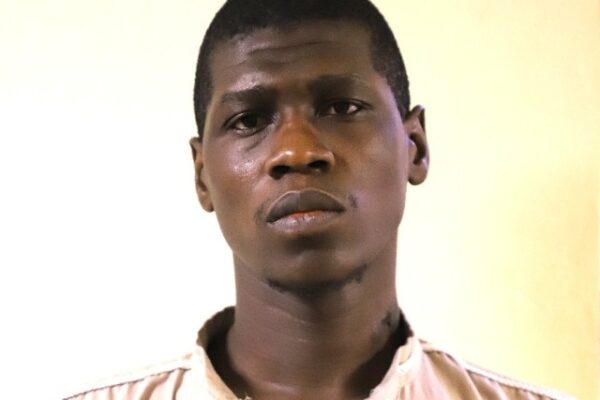
A Federal High Court in Abuja has sentenced Hussaini Ismaila, also known as Mai Tangaran, a commander of the Islamic State West Africa Province (ISWAP), to 20 years in prison after he pleaded guilty to multiple terrorism-related charges. Justice Emeka Nwite delivered the judgment on Tuesday, bringing to a close a case that had been delayed for years due to repeated appeals and a trial-within-a-trial to determine whether Ismaila’s statements were made voluntarily. The prosecution described Ismaila as the mastermind behind a series of coordinated attacks across Kano State in 2012. The assaults targeted several police facilities, including the Police Headquarters in Bompai, the Mobile Police Base along Kabuga Road, Pharm Centre Police Station, and Angwa Uku Police Station, leaving several people injured and contributing to a surge of extremist violence in northern Nigeria. Ismaila was arrested by the Department of State Services (DSS) on August 31, 2017, in Tsamiyya Babba Village, Gezawa Local Government Area of Kano State. He was arraigned on a four-count charge under the Terrorism Prevention (Amendment) Act, 2013. During the trial, the prosecution called five witnesses, including DSS operatives and civilians who had witnessed the attacks. Initially pleading not guilty, Ismaila suddenly changed his plea to guilty after the fifth prosecution witness testified. His lawyer, P.B. Onijah of the Legal Aid Council, appealed for leniency, noting Ismaila’s remorse and his willingness to plead guilty to avoid wasting the court’s time. Onijah said his client regretted his involvement in terrorism. Justice Nwite convicted Ismaila on all four counts, sentencing him to 15 years on the first count and 20 years each on the remaining counts, with all sentences to run concurrently from the date of his arrest. The judge further directed the Controller-General of the Nigeria Correctional Service to place Ismaila in a facility of choice and mandated that he undergo rehabilitation and deradicalisation before re-entering society.

Read More

Nigeria FG Exceeds 2025 Borrowing by 55.6%, Debt Levels Expected to Hit 80% by Year-End

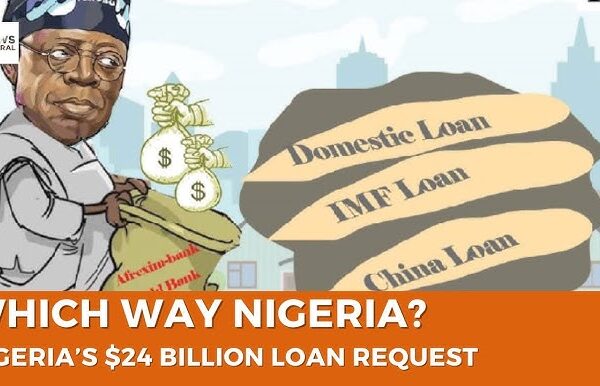
Nigeria’s rising debt profile has once again come under scrutiny as the Federal Government exceeded its 2025 borrowing target by 55.6 percent, sparking concerns over worsening fiscal instability and mounting economic risks. A separate Weekend Trust investigation, titled “Where is the money?”, also questioned the federal government’s management of public funds, highlighting growing worries about transparency and accountability. A Disturbing Financial Trend According to analysts, the FG’s excessive borrowing did not come as a surprise, but the scale of the overrun has triggered alarm among economists and citizens alike. The situation has fueled debates on whether the benefits of subsidy removal and currency devaluation are being siphoned off by a privileged few or wasted on projects with little economic value. Long History of Fiscal Irresponsibility Nigeria’s leadership at both federal and state levels has long been criticised for short-term economic planning focused on election cycles rather than sustainable development. In a previously published analysis, alarming debt figures from the Debt Management Office (DMO) revealed the scale of the crisis: Nigeria’s public debt rose to ₦121.67 trillion as of March 31, 2024, up from ₦97.34 trillion in December 2023. This means the country added ₦24.33 trillion in just three months. The country’s growing addiction to borrowing has been compared to a drug dependency, with successive administrations relying on loans rather than revenue reforms or fiscal discipline. From Obasanjo to Buhari to Tinubu: The Debt Cycle Deepens Since Nigeria’s early debts under the Obasanjo military regime, successive governments have struggled to reduce borrowing. Even periods of high oil prices—such as 2010 to 2013—were marked by waste and expanded debt portfolios. By 2015, Nigeria’s children were already burdened with heavy debts. Under Buhari, future generations—grandchildren and great-grandchildren—were also drawn into the debt trap. Tinubu’s administration, critics argue, is accelerating the trend rather than reversing it. Eurobond Rush Raises More Questions Recently, Nigeria issued a $2.35bn Eurobond, which was oversubscribed by 400 percent. Government officials claimed the oversubscription reflected investor confidence, but analysts argue otherwise: The bonds carry high interest rates of 9.25% and 10.375%, nearly double what developed economies pay. Investors are reportedly attracted by unusually high returns—not trust in Nigeria’s economy. This means Nigeria will be repaying hefty interest for years, long after the current administration leaves office. Who Will Stop the Borrowing? Economists warn that governments rarely stop borrowing voluntarily. When debt becomes unsustainable, external bodies such as the IMF or the United States may be forced to intervene—often imposing harsh conditions. Argentina’s experience offers a cautionary tale: once lenders take control, national sovereignty becomes compromised. The Big Question: Where Is the Money? Despite record borrowing, increased taxes, and savings from subsidy removal, Nigerians say they feel no real impact in their daily lives. Public infrastructure remains weak, inflation remains high, and essential services are under enormous strain. This has left one burning question at the centre of national debate:Where exactly is the money going?

Read More

Reuben Abati Claims Nicki Minaj Just Chasing Clout With UN Speech on Nigeria

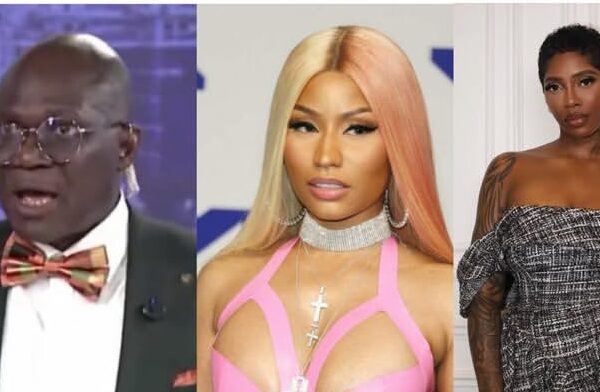
Former presidential aide Reuben Abati has criticized Nicki Minaj’s recent speech at the United Nations on alleged Christian persecution in Nigeria, describing her involvement as inappropriate and attention-seeking. Minaj addressed the UN in New York alongside U.S. Ambassador Mike Waltz, who had praised her for using her platform to highlight the issue. Her remarks generated global attention, but Abati argued that the rapper lacked the background to speak on such a sensitive matter. “Nicki Minaj is a rapper from Port of Spain, Trinidad and Tobago. She should focus on her music — Anaconda, her rap career, and her Barbs — rather than commenting on complex national issues,” he said. Abati also suggested that Minaj’s appearance was more about personal visibility than genuine concern for Nigeria. “She’s chasing clout, even though she was invited by a White House adviser and Michael Waltz,” he added. He proposed that Nigeria counter international influencers by featuring its own prominent figures to defend the nation’s image. “If Americans are bringing in influencers, we should do the same. During Nicki Minaj’s speech, Tiwa Savage or another Nigerian celebrity could have shared patriotic perspectives on national television,” Abati said, emphasizing that local voices should be ready to respond whenever global discussions touch on the country.

Read More