
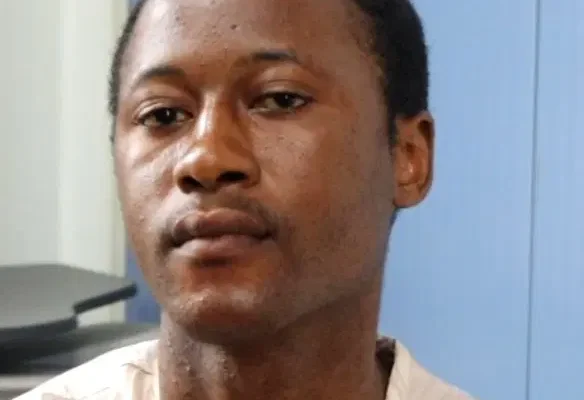
Young Abuja Teacher Sentenced to Life Imprisonment for Raping 9-Year-Old Pupil

Nigeria’s fight against child sexual abuse gained momentum on October 29, 2025, when the Federal Capital Territory High Court in Abuja condemned 19-year-old teacher Abdullahi Abbass to life behind bars for the anal rape of his nine-year-old male pupil. The National Agency for the Prohibition of Trafficking in Persons (NAPTIP) welcomed the decision as a “landmark judgment,” hailing it as a beacon of hope for survivors and a fierce deterrent for predators. Under Justice M. Osho-Adebiyi’s gavel, the court exposed the depths of Abbass’s betrayal. As the boy’s class teacher at a private school in the Kwali Area Council, he weaponized trust on March 19, 2025. After classes ended, Abbass dispatched another student to retrieve the child from home, only to drag him to a shadowed street for the unspeakable assault. In a testament to resilience, the young victim wasted no time in revealing his ordeal to his mother, igniting a chain of events that led to Abbass’s arrest and trial on charges of rape and sexual abuse. The conviction invoked Section 2 of the Violence Against Persons (Prohibition) Act, 2015, enforcing the maximum penalty of life imprisonment and reinforcing the law’s unyielding shield for the innocent.NAPTIP’s Director-General, Binta Adamu Bello, spotlighted the verdict’s ripple effects, applauding the seamless teamwork with the Nigerian Police and judicial partners. “This fitting retribution will echo through our Sex Offenders Register, warding off would-be violators,” she asserted. Bello spotlighted the expedited probe as proof of NAPTIP’s redoubled zeal in dismantling networks of domestic violence, rape, and sexual predation nationwide, vowing an unrelenting push for justice everywhere.Grim Parallel: 12-Year Sentence for Seminary Teacher in Anambra Defilement CaseThe Abuja ruling casts a harsh light on a pervasive scourge, mirrored in Anambra State’s recent reckoning. On June 19, 2025, a Sexual and Gender-Based Violence Court in Awka imprisoned 34-year-old teacher Pascal Ofomata for 12 years after he defiled his 11-year-old male JSS 1 pupil at St. Christopher’s Junior Seminary in Onitsha. Justice Peace Otti, presiding, held Ofomata accountable under Sections 3(1) and 4(1) of the Violence Against Persons Act for rape and bodily harm. As these verdicts unfold against a backdrop of escalating child safety alarms, they affirm the courts’ hardening resolve to uproot abuse from educational sanctuaries. On November 2, 2025, activists implore bolstered school oversight, trauma-informed resources for victims, and societal awakening to safeguard tomorrow’s guardians from yesterday’s monsters.
Read More

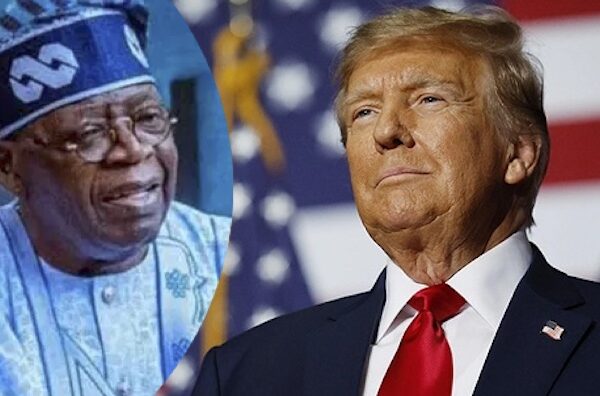
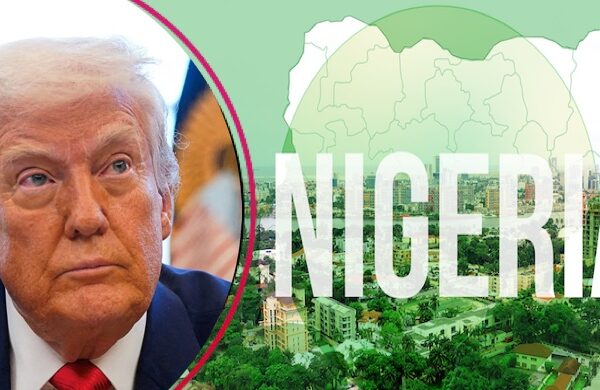
Donald Trump Threatens War Against Nigeria Over Alleged Christian Killings

President Donald Trump has issued a strong warning to Nigeria, threatening to unleash military action if the alleged killings of Christians in the country persist. Just a day after labeling Nigeria a “Country of Particular Concern,” Trump took to his Truth Social platform with a fierce message: “If the Nigerian Government continues to allow the killing of Christians, the U.S.A. will immediately stop all aid and assistance to Nigeria, and may very well go into that now disgraced country, ‘guns-a-blazing,’ to completely wipe out the Islamic Terrorists who are committing these horrible atrocities. I am hereby instructing our Department of War to prepare for possible action. If we attack, it will be fast, vicious, and sweet, just like the terrorist thugs attack our CHERISHED Christians! WARNING: THE NIGERIAN GOVERNMENT BETTER MOVE FAST!” Trump’s remarks came after his earlier statement accusing the Nigerian government of turning a blind eye to what he described as the “mass slaughter of Christians” by radical Islamic groups. He said Christianity in Nigeria faces an “existential threat,” adding that the killings have continued unchecked for years. In response, President Bola Ahmed Tinubu’s administration rejected Trump’s comments, describing them as “misleading and uninformed.” Tinubu reiterated that Nigeria is a secular state that respects freedom of religion and that ongoing violence in the country stems from terrorism, ethnic clashes, and banditry—not religious persecution. The warning from Trump has sparked widespread reactions across global political circles, with many analysts expressing concern that such rhetoric could heighten diplomatic tensions between Washington and Abuja. Experts also caution that the security crisis in Nigeria is complex and cannot be reduced to a simple Christian-versus-Muslim narrative. Under the U.S. International Religious Freedom Act, Nigeria’s designation as a “Country of Particular Concern” could already trigger sanctions or limits on aid. But Trump’s latest statement goes further—signaling potential U.S. military involvement if what he calls “Christian genocide” continues. The development has drawn mixed reactions globally, with Christian advocacy groups praising Trump’s firmness, while others warn that military threats could destabilize relations and worsen Nigeria’s fragile security situation.

Read More

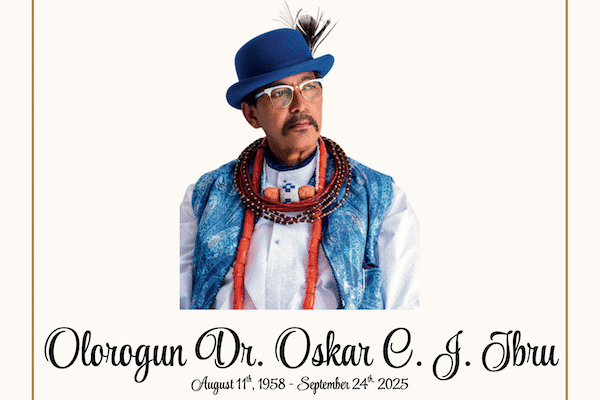
Olorogun Oskar Ibru Goes Home November 27

The family of renowned billionaire businessman and philanthropist, Olorogun Dr. Oskar Christian John Ibru, has announced the schedule of funeral rites to celebrate his remarkable life and enduring legacy. In a statement released by the family, a series of ceremonies will take place in Lagos and Delta States between November 20 and November 30, 2025, to honour the late industrialist who passed away September 24, 2025. According to the announcement, events will begin with a Service of Songs in Lagos on Thursday, November 20, followed by a Church Service the next day, Friday, November 21. The celebrations of life will then move to Delta State, where another Service of Songs will hold on Wednesday, November 26, ahead of the Funeral Service on Thursday, November 27. The rites will conclude with an Outing Service on Sunday, November 30. Dr. Oskar Ibru, born on August 11, 1958, was a towering figure in Nigerian business and public life. He held several revered traditional titles, including the Ochuko R’Ovie of Agbarha-Otor Kingdom, Odomese of Olomu Kingdom, Onekirode of Effurun-Otor Kingdom, and the Otunba Boyejo of Ijebu — the first non-indigene to receive that honour. A scion of the illustrious Ibru family, Dr. Ibru was celebrated for his pioneering leadership in commerce, his philanthropic initiatives, and his efforts to promote unity across communities and cultures. In their message, the Ibru family expressed deep appreciation to friends, associates, and well-wishers for their support and prayers, adding that the forthcoming rites will be “a celebration of a life devoted to faith, family, and service to humanity.”

Read More

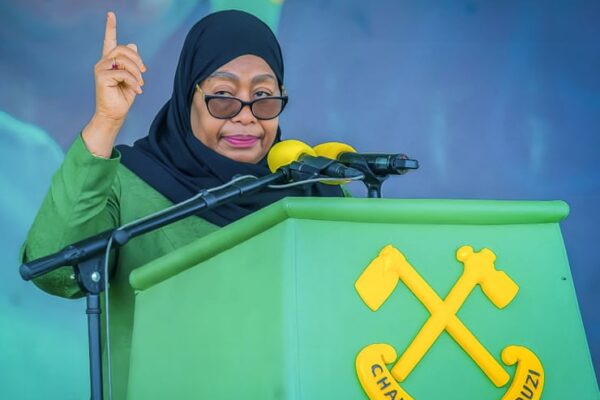
Tanzania’s Samia Suluhu Hassan Wins Second Term Amid Protests

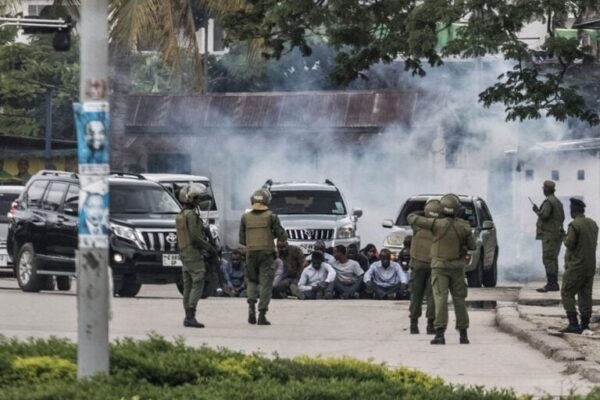
Tanzania’s President Samia Suluhu Hassan has been declared the winner of the country’s presidential election, securing a second term in office despite widespread unrest and allegations of electoral irregularities. According to the National Electoral Commission, Samia won nearly 98% of the votes, receiving around 31.9 million of the 32 million ballots cast, with voter turnout reported at approximately 87% of the nation’s 37.6 million registered voters. Electoral chief Jacobs Mwambegele confirmed the result on Saturday, announcing, “I hereby declare Samia Suluhu Hassan as the winner of the presidential election under the Chama Cha Mapinduzi (CCM) party.” In Tanzania’s semi-autonomous archipelago of Zanzibar, incumbent President Hussein Mwinyi of CCM also won decisively with nearly 80% of the vote. Opposition parties in Zanzibar, however, accused authorities of “massive fraud,” and Mwinyi’s swearing-in ceremony is currently underway at Amaan Complex Stadium. The election period was marred by significant unrest. Demonstrators in Dar es Salaam and other major cities took to the streets, tearing down campaign posters and clashing with security forces, despite warnings from the army chief to end the protests. Most of the protests were led by young Tanzanians who condemned the election as unfair, citing the suppression of opposition leaders—one in jail and another barred from running due to technicalities. Chadema, the main opposition party, claimed that around 700 people were killed in clashes with security forces, while a diplomatic source indicated credible evidence of at least 500 fatalities. The Tanzanian government, however, has downplayed the violence, with Foreign Minister Mahmoud Kombo Thabit describing incidents as “a few isolated pockets” and asserting that security forces acted decisively. Only two main opposition candidates were allowed to contest: Tundu Lissu, detained on treason charges he denies, and Luhaga Mpina of the ACT-Wazalendo party, who was excluded on technical grounds. Sixteen smaller parties also participated but hold little political influence. The ruling CCM party has dominated Tanzania’s politics since independence and has never lost a national election. Ahead of the vote, human rights organizations, including Amnesty International, raised alarms over government repression, citing enforced disappearances, torture, and extrajudicial killings of opposition figures. The government denied these claims, insisting the election would be free and fair. Samia Suluhu Hassan, Tanzania’s first female president, assumed office in 2021 following the death of her predecessor, John Magufuli. Despite the official results, tensions remain high across the country, with heavy security presence continuing in major urban centers.

Read More

Nigeria Dismisses Trump’s Allegations of Christian Persecution, Reaffirms Religious Harmony

The Nigerian Government has rejected former U.S. President Donald Trump’s claims that Christians are facing an “existential threat” in the country, following his decision to redesignate Nigeria as a Country of Particular Concern (CPC). Trump made the announcement on Friday, citing alleged mass killings of Christians by radical Islamists and calling on U.S. lawmakers to investigate. “Christianity is facing an existential threat in Nigeria. Thousands of Christians are being killed… I am hereby making Nigeria a ‘COUNTRY OF PARTICULAR CONCERN,’” he stated, urging Congressman Riley Moore and the House Appropriations Committee to look into the matter. In response on Saturday, Nigeria’s Ministry of Foreign Affairs, through spokesperson Kimiebi Imomotimi Ebienfa, said the claims do not reflect the reality on the ground. “Nigeria notes the recent remarks by U.S. President Donald J. Trump alleging large-scale killings of Christians and calling for the country’s designation as a ‘Country of Particular Concern,’” the ministry said. The statement emphasized that Nigerians of all faiths have coexisted peacefully for decades. It also reaffirmed the government’s commitment under President Bola Ahmed Tinubu to combating terrorism, promoting interfaith harmony, and safeguarding the rights and lives of all citizens. Nigeria further pledged to maintain constructive dialogue with the United States to enhance mutual understanding of the country’s ongoing peace and security efforts.

Read More

Nigerian Resident Doctors Launch Indefinite Strike Over Unmet Government Agreements

The Nigerian Association of Resident Doctors (NARD) has officially begun an indefinite strike to press for the fulfillment of their demands, the association’s president, Dr. Mohammad Suleiman, announced on Saturday via NARD’s official platform. The strike follows the expiration of a 30-day ultimatum previously issued to the Federal Government, which Suleiman says repeatedly failed to honour agreements reached after several rounds of dialogue. Suleiman acknowledged the disruption the strike would cause, stating that the decision was not made lightly. “Our demands are not for personal gain or political reasons,” he said. “They are essential for the survival of Nigeria’s health system and the welfare of every citizen who depends on it.” He explained that resident doctors face excessive workloads, inadequate pay, delayed arrears, poor working conditions, and insufficient medical infrastructure—factors that directly affect patient care. “Doctors who are overworked and underpaid cannot provide the quality care Nigerians deserve,” he said. Suleiman urged Nigerians, civil society organizations, labour unions, and community leaders to support the strike, emphasizing that it is a fight for a fair and functional healthcare system. “This is not a conflict between doctors and the government. It is about ensuring that doctors can work effectively, motivated, and with the tools necessary to save lives,” he said. He warned that the long-term consequences of inaction could be severe. “If doctors are demoralized or forced to seek opportunities abroad, patients will suffer. We appeal to the government to address our demands urgently so hospitals can reopen, doctors can return to duty, and Nigerians can access the care they need.” Earlier on Thursday, resident doctors in Abuja announced their participation in NARD’s strike due to unresolved issues with the Federal Capital Territory Administration. NARD had initially declared its intention to start the indefinite strike on Saturday, 1st November 2025.

Read More
Gunmen Kill Two and Abduct 12 Passengers in Benue

Gunmen Abduct Kebbi State Deputy Speaker Samaila Bagudu In Hometown

The Deputy Speaker of the Kebbi State House of Assembly, Samaila Bagudu, has been kidnapped by unidentified gunmen in his hometown in Bagudu Local Government Area. Reports indicate that the assailants entered the town late Friday, firing shots to create panic among residents. Bagudu was reportedly abducted shortly after finishing prayers at the mosque and while heading home. Ahmed Idris, Chief Press Secretary to the Kebbi State Government, confirmed the abduction, adding that security agencies have been alerted and efforts are ongoing to secure the lawmaker’s release. Attempts to obtain further information from the Kebbi State Police Command were unsuccessful at the time of reporting.

Read More

Tanzania Election Violence Escalates as Opposition Reports Hundreds Dead Amid Internet Blackout

Tanzania is facing a mounting crisis after three days of violent protests following Wednesday’s elections, with the main opposition claiming hundreds have been killed while the government denies using “excessive force.” The country remained under an internet blackout on Friday, restricting access to information. Security sources and a diplomat in Dar es Salaam told AFP that the death toll could be in the “hundreds” as demonstrations continued. President Samia Suluhu Hassan had aimed to secure a strong mandate and consolidate her power, with many of her key challengers either jailed or barred from participating. The elections, however, quickly spiraled into chaos. Protesters took to the streets in Dar es Salaam and other cities, tearing down campaign posters, clashing with police, and attacking polling stations. Authorities responded with a curfew and an internet shutdown. Foreign Minister Mahmoud Thabit Kombo told Al-Jazeera that the government had “no figures” on fatalities and that “no excessive force has been used.” Chadema, the main opposition party, reported far higher numbers. Spokesman John Kitoka said about 350 people were killed in Dar es Salaam and over 200 in Mwanza, with nationwide deaths potentially reaching 700. He warned the toll could rise further during curfew hours. A security source estimated as many as 700–800 fatalities across the country. With foreign journalists largely barred and communications restricted, independent verification has been difficult. The United Nations reported “credible reports” of at least 10 deaths, while Amnesty International cited at least 100 killed. Many hospitals and clinics refused to comment out of fear. Hassan has yet to publicly address the unrest, and local news outlets have not posted updates since Wednesday. Army chief Jacob Mkunda labeled the protesters “criminals” on Thursday. In Zanzibar, Hassan’s party, CCM, was declared the winner of local elections, but opposition party ACT-Wazalendo rejected the results, alleging voter fraud and demanding a rerun. Opposition officials claimed ballot boxes were stuffed, multiple votes were cast without ID, and election observers were removed from counting rooms. Residents in Zanzibar expressed fear, with many unwilling to speak openly due to potential reprisals. Analysts say Hassan has faced resistance from factions within the army and supporters of her late predecessor, John Magufuli, since taking office in 2021. Ahead of the vote, authorities banned Chadema and put its leader on trial for treason. Human rights groups condemned a “wave of terror” across the country, including high-profile abductions in the final days before the election. Much of the public anger has focused on Hassan’s son, Abdul Halim Hafidh Ameir, who is accused of overseeing the crackdown. While ACT-Wazalendo could contest local elections in Zanzibar, its candidate was barred from running against Hassan on the mainland.

Read More