Senate Steps In To End ASUU Strike, Sets Meeting With Education Minister And NUC

Senate Approves Up To 14-Year Jail Term For Sexual Harassment In Tertiary Institutions

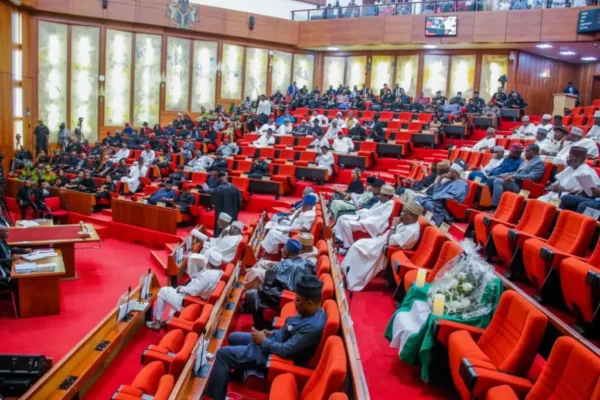
The Senate has approved a new law prescribing prison terms of five to 14 years, without the option of a fine, for anyone found guilty of sexually harassing students in Nigeria’s tertiary institutions. On Tuesday, lawmakers passed the Sexual Harassment of Students (Prevention and Prohibition) Bill, 2025 (HB.1597), during its third reading. Senate Leader Senator Opeyemi Bamidele (APC, Ekiti Central), who presented the bill for concurrence, said it is designed to protect students from all forms of sexual misconduct while providing a clear legal framework for punishing offenders. “The Bill is enacted to promote and protect ethical standards in tertiary education, the sanctity of the student-educator relationship of authority, dependency, and trust, and respect for human dignity in educational institutions,” Bamidele said. Under the law, anyone convicted of sexual harassment faces up to 14 years in prison and not less than five years. Lesser offences carry two to five years in jail, with fines explicitly prohibited. The legislation also allows students or their representatives to initiate civil actions against educators for breach of fiduciary duty. Institutions may conduct internal disciplinary proceedings, but such processes must be suspended if a criminal case on the same matter is pending in court. Sexual harassment is defined in the bill to include “grabbing, hugging, kissing, rubbing, or touching the breasts, hair, lips, hips, or any other sensual part of the body of a woman; displaying, giving, or sending sexually explicit pictures or materials; whistling, winking, making sexual remarks, or stalking a student.” The law clarifies that consent by the student is not a valid defence, except where the educator and student are legally married. Complaints can be filed in writing by the affected student, a relative, guardian, or lawyer to the Nigeria Police Force or the Attorney-General, with copies sent to the Independent Sexual Harassment Committee of the relevant institution. During the debate, some lawmakers called for the bill to extend beyond students. Senator Adams Oshiomhole (APC, Edo North) argued, “There is no need to restrict sexual harassment issues to students. We should craft this law in a way that gives it universal application.” Deputy Senate President Barau Jibrin (APC, Kano North), who presided over the session, noted that the bill is a concurrence from the House of Representatives and could not be substantially altered, adding that existing laws already address sexual harassment in workplaces and other sectors. The Senate passed the bill unanimously, hailing it as a significant step toward ending sexual abuse and safeguarding the rights of students in Nigeria’s higher education institutions.

Read More
Attack on Funeral in Sudan’s Kordofan Region Kills 40 – UN

Attack on Funeral in Sudan’s Kordofan Region Kills 40 – UN

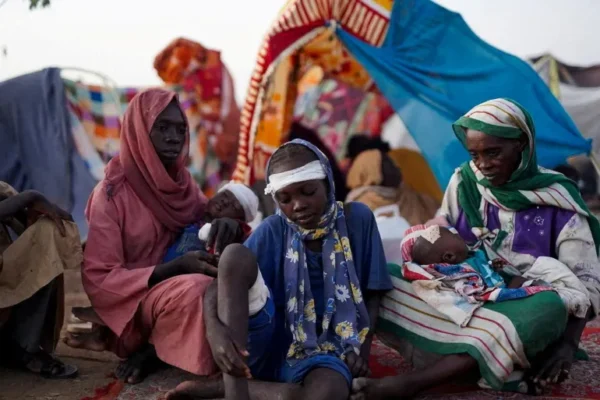
At least 40 people have been killed in an attack on a funeral in el-Obeid, the capital of Sudan’s North Kordofan state, according to the United Nations Office for the Coordination of Humanitarian Affairs (OCHA). Citing local sources, OCHA said on Tuesday that the attack took place in the government-held city, though it did not specify the exact date or identify those responsible. The assault comes amid rising tensions in the region, with reports suggesting that the Rapid Support Forces (RSF) — a powerful paramilitary group — may be preparing a major offensive on el-Obeid, while Sudanese Armed Forces (SAF) troops fortify positions to defend the city. “The security situation in the Kordofan region continues to worsen,” OCHA warned. “Once again, we call for an immediate cessation of hostilities and for all parties to protect civilians and respect international humanitarian law.” Worsening Violence Across Kordofan and Darfur Fighting in the oil-producing Kordofan region has escalated sharply in recent weeks. Thousands of residents fled to el-Obeid last week after the RSF recaptured Bara, a city located about 60 kilometres (37 miles) to the north, from the Sudanese army. Meanwhile, the RSF has also seized control of el-Fasher, the capital of North Darfur, following the withdrawal of SAF forces. The UN reports that more than 70,000 people have fled el-Fasher and its surrounding areas since the takeover. Witnesses and human rights groups have documented widespread atrocities, including summary executions, sexual violence, and civilian massacres. Nathaniel Raymond, Executive Director of the Humanitarian Research Lab at Yale’s School of Public Health, told Al Jazeera that RSF fighters had “begun to dig mass graves and collect bodies throughout the city.” UN officials fear that thousands remain trapped in el-Fasher amid worsening humanitarian conditions. A War of Devastating Scale Sudan’s devastating civil war erupted in 2023, following a power struggle between the RSF and the SAF, plunging the capital, Khartoum, into chaos and spreading across multiple states. The RSF now controls over a third of the country, according to the UN, in a conflict that has claimed tens of thousands of lives and displaced 12 million people — nearly a quarter of Sudan’s population. The crisis is now considered the world’s largest humanitarian disaster. On Tuesday, Sudan’s Defence Minister Hassan Kabroun said the army would continue its campaign against the RSF after the country’s Security and Defence Council met to deliberate on a United States proposal for a ceasefire. As violence continues to engulf Sudan, the UN and humanitarian agencies are renewing calls for peace talks, protection of civilians, and unimpeded access for aid delivery in one of the most dire crises of the 21st century.

Read More

Court Stops Lagos Police Commissioner From Declaring Sowore Wanted

A Federal High Court in Ikoyi, Lagos, has barred the Lagos State Commissioner of Police, Moshood Jimoh, from declaring former presidential candidate and human rights activist Omoyele Sowore wanted. Sowore made the development known on his 𝕏 (formerly Twitter) account on Wednesday, November 5, while describing the Lagos police chief as “incompetent.” “I just left the Federal High Court in Ikoyi, Lagos, where the court restrained the incompetent CP of @policeng Lagos Command, Moshood Jimoh, from declaring Omoyele Sowore WANTED,” he wrote. The ruling follows ongoing tensions between Sowore and the Nigerian Police Force, which he accused of “unlawful intimidation and political persecution.” Earlier, Sowore had filed a fundamental rights enforcement suit against the Inspector-General of Police, Kayode Egbetokun, and the Lagos State Commissioner of Police. In the suit, marked FHC/L/CS/1923/2025, he argued that the attempt to declare him wanted over a protest in Lagos was illegal, defamatory, and a deliberate move to stifle his activism. He urged the court to protect his rights and restrain the police from any further acts of harassment, arrest, or public labeling that could threaten his safety and reputation. Sowore also demanded damages for what he called the violation of his constitutional rights to free expression and peaceful assembly. Following the court’s decision, Sowore described the judgment as a victory for democracy and a reminder that “no one is above the law.” As of press time, the Lagos State Police Command had yet to issue a statement on the ruling.

Read More

Nigeria to Host World’s First UNESCO Category-2 Media and Information Literacy Institute

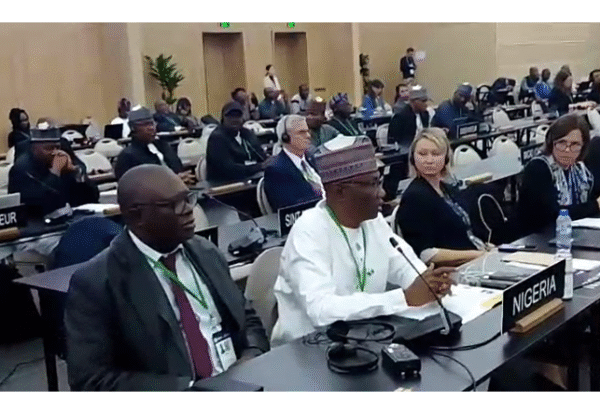
Nigeria has secured the approval of the United Nations Educational, Scientific and Cultural Organization (UNESCO) to host the first-ever Category-2 International Media and Information Literacy (MIL) Institute in the world. The landmark decision was adopted at the 43rd General Conference of the Communication and Information Commission (CI Session) of UNESCO, held in Samarkand, Uzbekistan. With this approval, Nigeria takes a historic step toward global leadership in the fight against misinformation and disinformation, positioning itself as a hub for international research, policy dialogue, and capacity building in digital communication and information literacy. Delivering Nigeria’s address at the conference, the Minister of Information and National Orientation, Mohammed Idris, described the development as “a strong vote of confidence in our nation.” According to the minister, the Institute — to be based in Abuja — will serve as an international observatory and hub to equip individuals and communities worldwide with the skills to navigate the digital age responsibly. “The Nigerian government, under the leadership of President Bola Ahmed Tinubu, is committed to fostering a society where responsible free speech drives national progress,” Idris said. “A central pillar of our strategy is the democratization of digital opportunities, with media and information literacy as the key driver.” The minister explained that this milestone marks the fulfillment of a process initiated in October 2022, when Nigeria hosted the 10th Global Media and Information Literacy and Feature Conference in Abuja and pledged to establish a UNESCO International MIL Institute. “I want to seize this opportunity to congratulate President Bola Ahmed Tinubu on this achievement, which reflects his commitment to the Nigerian project encapsulated in the Renewed Hope Agenda. This is a big win for all Nigerians and for the African continent,” Idris stated. He further pledged Nigeria’s continued collaboration with UNESCO to develop the Institute’s infrastructure and governance structure, noting that a multidisciplinary team of experts would be assembled to deliver on its global mandate. Idris also announced that the formal launch of the Institute will take place in February 2026 in Abuja, with UNESCO officials, member states, and international partners expected to attend. The Nigerian delegation to the 43rd UNESCO General Conference included Senator Kenneth Eze, Chairman, Senate Committee on Information and National Orientation; Hon. Olusola Fatoba, Chairman, House Committee on Information, National Ethics and Values; Dr. Mohammed Bulama, Director-General of the Federal Radio Corporation of Nigeria (FRCN), who represented the Minister; Malam Abdulhamid Salihu Dembos, Director-General of the Nigerian Television Authority (NTA); Dr. Olalekan Fadolapo, Director-General of the Advertising Regulatory Council of Nigeria (ARCON); Malam Jibrin Baba Ndace, Director-General of the Voice of Nigeria (VON); and Dr. Hajo Sani, Nigeria’s Ambassador to UNESCO, among other officials.

Read More

AbdulGaniyu Obasa Takes Charge As Agege Council Chairman Following Tunde Azeez’s Resignation

Hon. AbdulGaniyu Vinod Obasa has officially assumed office as the substantive Chairman of Agege Local Government following the resignation of Hon. Tunde Azeez, popularly known as Disco. The 10th Assembly of the Agege Legislative Council, led by Hon. Adeshina Haruna, approved Obasa’s appointment during its plenary session on Tuesday after accepting Azeez’s resignation, which was attributed to health challenges. Azeez explained that his health had hindered his ability to perform effectively, prompting his decision to step down. The councillors commended his dedication and wished him a speedy recovery. Lawmakers described Obasa’s elevation as a key step toward ensuring continuity, stability, and effective governance in Agege. During the same session, the Assembly reviewed its committee structures and oversight duties, emphasizing transparency, accountability, and improved project monitoring across the local government. Reaffirming its commitment to development-focused leadership, the Assembly pledged to continue delivering initiatives that will benefit residents under its renewed administrative structure. Reacting to the leadership change, All Progressives Congress (APC) chieftain in Agege, Rotimi Sulaiman, praised Azeez’s decision as a selfless act. “Hon. Tunde Azeez has been unwell for a while, and stepping down to prioritize his health rather than being burdened by the responsibilities of office is a wise and commendable move,” he said. He also commended the new chairman, adding, “AbdulGaniyu Vinod Obasa is a visionary young man who proved his capacity during Azeez’s absence. Agege is indeed fortunate to have both men serving its people.”

Read More

Nigeria’s Peace Lies in Unity, Not Division – NCPC Boss

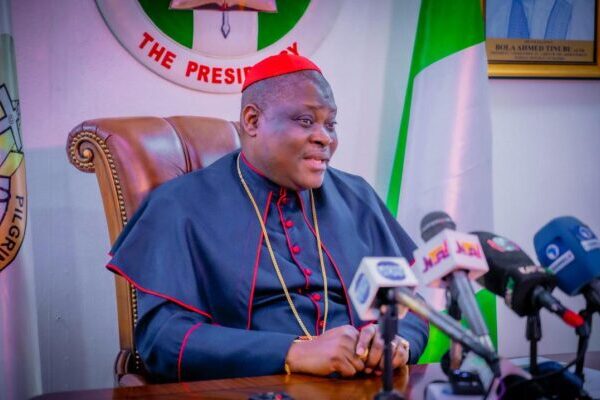
The Executive Secretary of the Nigerian Christian Pilgrim Commission (NCPC), Bishop Prof. Stephen Adegbite, has called on Nigerians to uphold unity and mutual understanding as the foundation for lasting peace and national progress. Speaking during a press briefing on national issues at the NCPC Corporate Headquarters in Abuja, Bishop Adegbite stressed that Nigeria’s peace cannot be achieved through divisive narratives or religious antagonism. The NCPC boss was reacting to recent remarks by former U.S. President Donald Trump, who alleged a “Christian genocide” in Nigeria and hinted at possible foreign military intervention. “While we appreciate global concern for the welfare of Christians, we must clarify that the security challenges confronting Nigeria should not be misconstrued as a religious war,” Bishop Adegbite said. “It is a national security crisis driven by terrorism, banditry, and criminality that have affected citizens of all faiths.” Citing reports from the Armed Conflict Location & Event Data Project (ACLED) and the Observatory of Religious Freedom in Africa (ORFA), he noted that between 2020 and 2025, more than 20,000 civilians—both Christians and Muslims—lost their lives in various violent conflicts across the country. “These figures show that Nigeria’s challenge is not genocide against a particular religion but a multifaceted security emergency,” he explained. Bishop Adegbite commended the Federal and State Governments for their sustained efforts in combating insurgency and restoring stability, noting that substantial progress has been recorded in recent years. “The government has never sanctioned violence against any faith group,” he emphasized. “What Nigeria needs from the international community is partnership, intelligence sharing, counterterrorism training, and humanitarian assistance — not threats of military intervention.” He cautioned that any foreign military action could destabilize the entire West African sub-region, potentially triggering widespread humanitarian and economic crises. “Nigeria is a complex, multi-ethnic democracy with over 220 million citizens and more than 250 ethnic nationalities,” the NCPC Executive Secretary stated. “What we need is cooperation and solidarity, not coercion or divisive rhetoric.” Bishop Adegbite also praised the ongoing collaboration between Christian and Muslim leaders under the Nigeria Inter-Religious Council (NIREC), describing it as a critical platform for fostering peace and dialogue. “We, as religious leaders, stand united against violence,” he said. “Our calling is to heal, not to divide — to build bridges, not walls.” He concluded by reaffirming that Nigeria’s struggle is not a clash of religions but a collective fight against terror and insecurity. “The battle is not Christians versus Muslims; it is Nigerians versus terror,” he declared. “Our nation’s strength lies in our shared humanity, faith, and hope for a peaceful future.” Bishop Adegbite urged the media, international observers, and advocacy groups to rely on verified facts and support initiatives that promote healing, justice, and national reconciliation.

Read More
FG Warns ASUU Against Strike, Vows To Enforce No Work No Pay Policy

ASUU Dismisses Minister’s ₦50 Billion Claim, Issues Warning Of Possible Strike

The University of His branch of the Academic Staff Union of Universities (ASUU) has dismissed the Minister of Education, Dr. Tunji Maruf Alausa’s claim that the federal government released ₦50 billion for university revitalisation, accusing him of making “misleading statements” about the government’s fulfillment of agreements with university staff. In a statement signed by branch chairperson Prof. Jurbe Joseph Molwus, ASUU recalled that it issued a four-week ultimatum to the Federal Government on October 22, 2025, demanding the payment of outstanding entitlements or risk a total strike. The union warned that industrial action may resume if the issues are not addressed within the next two weeks. According to the union, “not much progress has been recorded” since the ultimatum, with staff yet to receive withheld salaries, wage award arrears, promotion arrears, and other entitlements. “As we prepare for our National Executive Council (NEC) meeting scheduled for November 8–9, we expect that outstanding entitlements, including 3.5 months of withheld salaries, 25–35 per cent wage award arrears, promotion arrears, and unpaid salaries of some members, would have been settled. But all we get are press releases from the Honourable Minister of Education. What we need are credit alerts, not misleading statements,” the statement read. Reacting to Dr. Alausa’s claim that ₦2.3 billion had been disbursed to clear salary and promotion arrears across federal universities, ASUU described the figure as “grossly inadequate and almost insulting,” noting it could barely cover three universities. “The Minister’s claim of clearing the backlog exists only in his imagination. He must clarify what portion of the outstanding entitlements this money is meant to cover and for whom,” ASUU said. The union also criticized the minister for “inconsistent and contradictory statements” regarding ASUU’s demands, urging him to engage sincerely with stakeholders rather than issue “empty rhetoric.” “It is time the Honourable Minister of Education recognized that only genuine engagement can resolve ASUU’s demands. Palliatives do not solve systemic problems; perhaps he should take a cue from his counterpart in the Ministry of Health,” the statement added. ASUU further questioned the effectiveness of the Minister of State for Education, stating that, as a former member of the university system, she should have demonstrated greater understanding and commitment to addressing the challenges. The union called on President Bola Ahmed Tinubu to show genuine commitment to resolving the longstanding crisis in tertiary education by appointing a minister who understands the sector’s issues. “If President Tinubu truly wants to end the prolonged dispute with university unions, he needs a competent minister who understands the challenges facing higher education,” ASUU said. The union urged students, parents, and the public to pressure the government to act promptly, warning that the four-week ultimatum expires on November 21, 2025. “The strike was only suspended as a mark of goodwill in collective bargaining. We expect the government to reciprocate by addressing our demands without further delay,” Prof. Molwus said.

Read More

Nigeria Immigration Service Announces Single Travel Emergency Passport for Nigerians Abroad

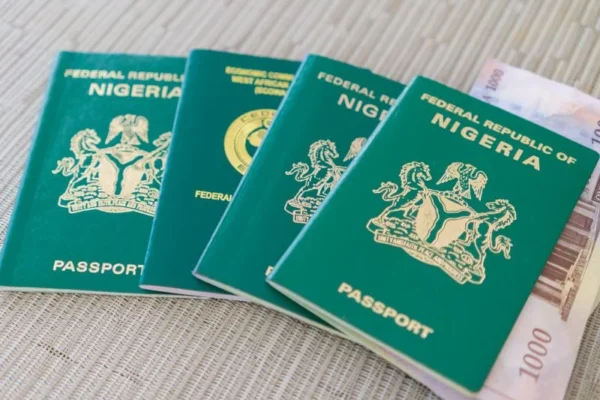
The Nigeria Immigration Service (NIS) has unveiled plans to introduce a new biometric travel document called the Single Travel Emergency Passport (STEP) to help Nigerians abroad whose passports are expired, lost, or stolen return home safely. The announcement was made by Comptroller-General of Immigration, Kemi Nanna Nandap, during the Joint Thematic Meeting of the Khartoum, Rabat, and Niamey Processes held in Abuja, co-hosted with the Government of France. NIS Public Relations Officer, ACI Akinsola Akinlabi, confirmed the development in a statement on Wednesday. According to Nandap, the STEP will replace the current Emergency Travel Certificate (ETC) as part of ongoing reforms aimed at strengthening identity management and border governance in line with global best practices. “The STEP will serve as a temporary travel document for Nigerians abroad whose passports are expired, lost, or stolen, enabling them to return home in a secure and verifiable manner,” she said. Nandap added that the document will be issued at designated Nigerian embassies and consulates abroad and will be valid for single entry only, highlighting the Service’s commitment to efficiency and identity protection. The high-level meeting brought together key stakeholders in migration management, including the National Commission for Refugees, Migrants and Internally Displaced Persons, NAPTIP, ECOWAS, AU, EU, and representatives from various African and European countries. Discussions focused on combating migrant smuggling and human trafficking, emphasizing prevention, protection, and prosecution across regional migration routes. In her keynote address, titled “Insights on Prevention and Protection as Strategic Pillars to Effective Law Enforcement and Prosecution Responses,” Nandap outlined the broader reform agenda of NIS, including enhancing migration management systems, international cooperation, and capacity building. “The Comptroller-General reaffirmed Nigeria’s commitment to regional and global migration dialogues, stressing that the Nigeria Immigration Service will continue aligning its policies and operations with international standards to ensure safe, orderly, and regular migration across borders,” the statement added.

Read More