Divided Opinions in the Middle East: But Trump’s Peace Plan May Offer a Way Forward

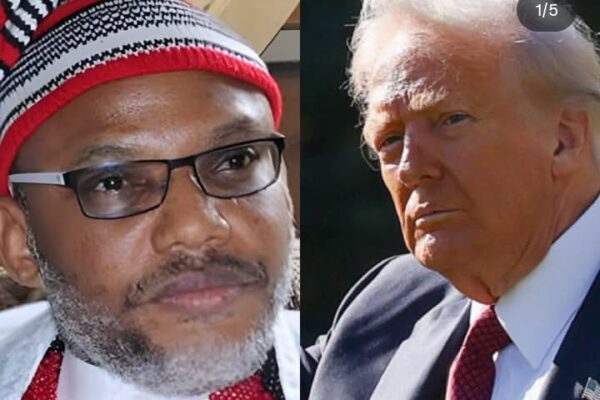
As Israeli Prime Minister Benjamin Netanyahu returns home from Washington, he faces a country – and a government – deeply split over the latest proposed peace deal brokered by former U.S. President Donald Trump. The plan, which has dominated headlines since its announcement, has triggered both praise and outrage across the political spectrum. Within Netanyahu’s own cabinet, anger is palpable. Two of his most hardline ministers, Itamar Ben-Gvir and Bezalel Smotrich, have publicly condemned the prime minister’s apology to Qatar for the airstrike on Doha earlier this month. Ben-Gvir, leader of the far-right Otzma Yehudit party, called the attack “an important, just and supremely moral” act, claiming that “Qatar supports, funds and incites terrorism.” Smotrich went further, likening Netanyahu to Neville Chamberlain, accusing him of “grovelling” and calling the apology a “disgrace.” Their fierce reaction raises questions about the stability of Netanyahu’s coalition. Can they remain in the same government? And if not, how long before the government falls? While a collapse of the current coalition may not derail the peace initiative – which is expected to gain enough support in the Knesset through opposition parties – it could trigger a new election cycle. That would set the stage for Netanyahu to recast himself as the leader who secured a hostage deal, while opponents would hold him accountable for the events of October 7. Despite the internal turmoil, the plan has been positively received in some quarters. Israeli President Isaac Herzog has voiced support, as has the Hostages and Missing Families Forum. Across the Arab world, leaders have cautiously welcomed the plan, though most have credited Trump rather than Netanyahu. But Hamas, the key party holding Israeli hostages, was reportedly not consulted before the announcement. Their immediate reaction was telling: the plan lacks legitimacy in their eyes if it does not address Palestinian self-determination—something the current proposal notably excludes. That omission may prove critical. For the Israeli public, the return of the hostages is paramount. Without Hamas’s cooperation, that outcome remains in doubt. And without guarantees on the political future of Palestinians, Hamas is unlikely to engage. The plan’s governance element—reportedly involving a leadership role for former UK Prime Minister Tony Blair in Gaza—has also drawn scorn from Palestinian leaders. “Tony Blair is a war criminal who should be in The Hague, not Gaza,” said longtime Palestinian politician Mustafa Barghouti. That sentiment is echoed across much of the Palestinian political landscape, casting further doubt on the plan’s viability on the ground. Among Israeli officials, reactions range from wary optimism to outright skepticism. “I’ll believe it when it happens,” said one senior military source. Another added: “I’m more confident than before—but before, I wasn’t confident at all.” Negotiations are still in the early stages, and much remains uncertain. The deal may yet evolve as both sides are pushed to make concessions. But for the first time in months, there is a flicker of momentum—and the possibility that events could move quickly if the right levers are pulled. The coming days will be critical. For Netanyahu, the stakes couldn’t be higher—politically, diplomatically, and personally. Whether Trump’s plan leads to peace or yet another round of conflict remains to be seen. But one thing is certain: no one in the region is watching indifferently.

Read More

Iraqi Man Sentenced to Life for Trafficking Fighters to Join Russian War in Ukraine

An Iraqi man has been sentenced to life in prison for trafficking individuals to fight for Russia in its ongoing war against Ukraine, in what is believed to be the first case of its kind in Iraq. The Najaf Criminal Court announced on Monday that the man had organized and sent groups of people to fight in a foreign conflict in exchange for money. The court issued the life sentence under a 2012 law that criminalizes recruiting or transporting individuals for exploitation. Judicial and security sources later identified the man as Risan Falah Kamel, though no further names or details about the network have been released. The official text of the indictment has not been made public. According to Iraqi officials, many of those recruited were reportedly promised financial rewards or hoped to use Russia as a stepping stone to reach Europe. Local media have estimated that thousands of Iraqi nationals may be fighting on the Russian side, though this has not been independently verified. Earlier this month, Iraq’s parliamentary Foreign Relations Committee confirmed the presence of Iraqis in the conflict and pledged to investigate further. The issue reflects a broader trend in the conflict, which has entered its fourth year. Thousands of foreign fighters have joined both Russian and Ukrainian forces since the war began. In recent months, Ukraine has reported detaining Chinese nationals fighting for Russia, and last year, a British national fighting for Ukraine was captured in the Russian border region of Kursk. North Korea has also reportedly sent thousands of soldiers and large volumes of ammunition to aid Russian forces, especially during Ukraine’s offensives in the border areas. This military cooperation was recently affirmed during talks in Beijing between Russian President Vladimir Putin and North Korean leader Kim Jong Un. Both leaders praised their growing alliance, with Kim calling it a “fraternal duty” to support Russia. China, meanwhile, continues to back Russia economically but has avoided direct military involvement, maintaining a formal position of neutrality and calling for diplomacy to end the conflict. The case in Iraq underscores the increasingly global dimensions of the war in Ukraine and the complex networks now involved in recruitment and participation. Iraqi authorities say further legal actions are likely as investigations continue.

Read More
PENGASSAN Shuts Down Dangote Refinery Over Mass Layoffs

PENGASSAN Shuts Down Dangote Refinery Over Mass Layoffs

Lagos, Nigeria – Sept. 29, 2025 — The Petroleum and Natural Gas Senior Staff Association of Nigeria (PENGASSAN) has enforced a full shutdown of operations at the Dangote Refinery, escalating its industrial action over the mass dismissal of union members. According to an update released by the union on Sunday, its members have shut down all oil installations across the country, including the multibillion-dollar refinery located in the Lekki Free Trade Zone, Lagos. PENGASSAN stated that the refinery plant is 100% shut down, while the fertiliser plant’s train two is also fully halted. Train one of the fertiliser plant is reportedly operating at only 60% capacity, and the diesel plant continues to run — for now. The union said the shutdown has disrupted both crude oil and gas supply to the refinery, though Dangote Refinery has not yet issued a public confirmation of the shutdown. The dispute stems from the sacking of over 800 workers, which the union claims was in retaliation for their membership in PENGASSAN. In response, the union launched a nationwide industrial action, calling it a fight for workers’ rights and union recognition. On Saturday, Dangote Refinery described the strike directive as an act of “economic sabotage”, warning that the move threatens energy security and investor confidence. In a statement on Sunday, the Nigerian Upstream Petroleum Regulatory Commission (NUPRC) urged both parties to engage in dialogue and seek a peaceful resolution to avoid further disruption in the nation’s energy sector. The shutdown of the 650,000-barrel-per-day refinery — Africa’s largest — could have far-reaching implications for Nigeria’s already volatile energy market, as well as its broader economy.

Read More

MRA Calls for Robust Access to Information to Address Nigeria’s Environmental Crises

Media Rights Agenda (MRA) on Monday launched a ground breaking report highlighting the risks posed by an inadequate national response to environmental and climate challenges to ecosystems, public health, livelihoods, and national stability and called for a more robust implementation of frameworks for access to environmental information in Nigeria to mitigate their negative impact. Warning that the cost of environmental and climate challenges in lost lives, displaced communities, and billions of dollars in damage to facilities and infrastructure is already too high, the organization stressed that without timely access to reliable environmental information, citizens and other members of the public cannot effectively participate in environmental governance, protect their rights, and proffer realistic solutions to address the climate and environmental crises. In a statement issued in Lagos announcing the launch of the report to mark this year’s International Day for Universal Access to Information (IDUAI), MRA’s Programme Officer, Ms Ayomide Eweje, said: “Although Nigeria has a layered framework of constitutional guarantees, statutory provisions, regulatory instruments, and international obligations that can serve as a solid foundation for transparency and accountability in an effective national response, the country remains challenged by the lack of willingness on the part of public institutions and officials to disclose information as well as the poor capacity of citizens to demand such information and use it.” According to her, “Critical to a national response framework is the right of citizens to access timely and reliable environmental information, without which their effective participation in environmental governance and the protection of their rights will not be possible. However, ensuring access to environmental information is not just about compliance with the law alone; it is also about empowering people to protect their health, livelihoods, and environment; hold duty bearers accountable; and build a future where development does not come at the expense of sustainability.” Titled: “Access to Environmental Information and the Cost of Ignorance in Nigeria,” the report highlights Nigeria’s severe environmental challenges, including deforestation, flooding, desertification, oil pollution in the Niger Delta, poor disposal of plastic waste, and worsening air and water quality, which it identifies as problems that threaten ecosystems, public health, livelihoods, and national stability. It argues that access to environmental information is not a luxury but a necessity that is central to environmental democracy, public participation, and government accountability. Examining Nigeria’s constitutional guarantees, statutory and regulatory frameworks and international obligations, the report identifies both opportunities and gaps in ensuring effective citizens’ access to environmental information and participation in environmental governance. It examines laws such as the Freedom of Information Act, Climate Change Act, Environmental Impact Assessment Act, and regulations under the National Environmental Standards and Regulations Enforcement Agency (NESREA) among others, while also situating Nigeria’s commitments within the African Charter on Human and Peoples’ Rights, the Revised African Convention on the Conservation of Nature and Natural Resources (Maputo Convention), ECOWAS Environmental Policy, and global agreements such as the Paris Agreement and the UN Convention on Biological Diversity. The report underscores the potential of digital technology, including Artificial Intelligence (AI), to improve environmental monitoring, early warning systems, and public access to real-time data. However, it warns that weak enforcement of laws, including lack of proactive disclosure of relevant information by public institutions and other actors, and the exclusion of marginalized communities, particularly rural women, from decision-making, threaten Nigeria’s ability to manage its environmental crisis. Ms Eweje said: “The cost of environmental devastation in Nigeria is already staggering, running into billions of dollars annually in destruction of public and private property, facilities and infrastructure; the displacement of millions of citizens; and the loss of thousands of lives. Without meaningful and effective access to environmental information, citizens cannot protect their health and livelihoods, or hold decision-makers accountable. This report underscores the urgency of transparency and public participation in environmental governance.” She therefore called on Federal and State Governments to ensure access to environmental information for citizens, particularly in the digital era, where data availability and transparency are crucial to accountability, saying that in order to achieve this, authorities must strengthen and enforce laws that mandate proactive disclosure of environmental information in user-friendly and digital formats; and create centralised, open-access data portals where citizens can easily obtain updates on issues such as pollution levels, deforestation rates, water quality, and climate risks. Ms Eweje argued that it is equally important to address structural inequalities, including the challenges faced by rural communities and women that are often marginalised in both digital access and environmental decision-making, stressing that “Governments must, therefore, invest in broadband expansion, solar-powered digital hubs, and community-based ICT centres to bridge the rural digital divide.” She called on civil society organizations and the media to engage in the monitoring and reporting of environmental hazards and collaborate with other stakeholders, including academic and research institutions, the private sector and technology companies to ensure that environmental information is not only available but also accessible, comprehensible, and actionable.

Read More

Nigerian Man Returns Over $135,000 Mistakenly Credited to His Crypto Wallet

In a rare act of integrity, a Nigerian crypto trader, Sunusi Danjuma Ali, has returned over $135,000 (more than ₦200 million) that was mistakenly credited to his account on the Bitunix cryptocurrency trading platform. Ali, who actively trades on Bitunix, discovered the unexpected balance after logging into his account. Realizing the funds were not his, he immediately contacted Bitunix’s Africa support team and also reached out via the company’s official X (formerly Twitter) handle. Bitunix Confirms System Glitch The platform later confirmed that the massive credit was the result of a system glitch. Instead of exploiting the error, Ali urged the company to correct it — a move that has drawn widespread praise online. The story went viral after former presidential aide Bashir Ahmad shared it on social media, applauding Ali’s uprightness. “It is always good to be good,” Ahmad wrote. “This brother, Sunusi Danjuma Ali, discovered a huge balance in his Bitunix account — over $135,000. He immediately realized it must have been a system error and chose the path of honesty. He contacted Bitunix to fix it. Well done!” Ali’s actions have sparked conversations around ethics in digital finance, with many Nigerians hailing him as a role model for integrity in an increasingly tech-driven world.

Read More

Osun NULGE Alleges FG Mismanaged LG Allocations, Accuses Top Officials of Aiding Sacked APC Council Executives

Osogbo, Nigeria — The Osun State chapter of the Nigeria Union of Local Government Employees (NULGE) has accused top officials of the Federal Government of illegally diverting local government allocations to unauthorized accounts operated by sacked local council chairmen and councillors aligned with the All Progressives Congress (APC). Speaking during a press conference in Osogbo on Sunday, the Osun NULGE president, Dr. Nathaniel Ogungbangbe, named the Minister of Finance, the Accountant-General of the Federation, and the Attorney-General of the Federation as key actors in what he described as an “unprecedented abuse of power.” “We have it on good authority that these three principal officers of the Federal Government have released Osun State’s local government allocations for March to September 2025 into illegal bank accounts opened by court-sacked APC chairmen and councillors,” Ogungbangbe alleged. According to him, the accounts in question were opened without due process in United Bank for Africa (UBA) and are not officially recognized by the state or local government authorities. NULGE Warns of Judicial Disrespect Dr. Ogungbangbe emphasized that the matter is still before the courts, noting that a Federal High Court had on May 15, 2025, ordered all parties to maintain the status quo — an order acknowledged by the Central Bank of Nigeria (CBN) in court filings. “If these federal officers cannot respect our Constitution, they should at least respect the authority of the judiciary, especially since this issue is still pending before the Supreme Court,” he said. The NULGE president insisted that new local government executives have already been elected, replacing the APC officials previously sacked by both the Federal High Court and the Court of Appeal. He further warned the Federal Government not to undermine democratic governance or use the situation as a pretext for a state of emergency in Osun. “We urge citizens to stay calm and not allow enemies of the state to provoke unrest. The ultimate goal of these actions is to create anarchy and force a state of emergency so they can hijack our resources,” he warned.

Read More
Abuja Lawyer Remanded in Police Custody Over Alleged Forgery and Impersonation

Abuja Lawyer Remanded in Police Custody Over Alleged Forgery and Impersonation

Justice Jude Onwuegbuzie of the Federal Capital Territory (FCT) High Court, Apo, Abuja, on Monday ordered the remand of Abuja-based lawyer, Victor Giwa, in police custody following his arrest in Lagos. Giwa was apprehended in compliance with a bench warrant issued by the court after he failed to appear for arraignment on charges of forgery and impersonation. The warrant, issued on September 15, 2025, also named a second defendant, Ibitade Bukola, who remains at large. At Monday’s hearing, the prosecution, led by Theophilus Silas, informed the court that efforts are ongoing to arrest Bukola before the next adjourned date. Giwa Opposes Remand, Cites Health Concerns Representing himself, Giwa strongly opposed the prosecution’s application to remand him under Sections 293 and 43(4) of the Administration of Criminal Justice Act (ACJA). He argued that the cited legal provisions did not apply to his situation, and emphasized that he had previously informed the court of his absence through a formal letter. “I am a minister in the temple of justice. I will never undermine the court,” Giwa said. “Due to health issues, I have been advised to avoid stress to prevent a stroke. I passionately appeal to be granted bail so I can recover and be strong enough for trial.” Giwa insisted that the prosecution’s request for an abridged hearing date came as a surprise and accused them of ambushing the defense. He also noted that since the charges are joint, arraignment could not proceed without the second defendant present. Judge Denies Oral Bail Plea Justice Onwuegbuzie noted that as a legal practitioner, Giwa should have filed a formal bail application rather than making an oral plea. “A written bail application is required. In the absence of that, the defendant is remanded in police custody,” the judge ruled. The matter was adjourned to October 8, 2025, for further proceedings.

Read More

Iyabo Ojo Renews Legal Battle Against Lizzy Anjorin Over Alleged Defamation and Threats

The long-running feud between Nollywood actresses Iyabo Ojo and Lizzy Anjorin has reignited, as Ojo announces plans to pursue fresh legal action over alleged defamatory statements, curses, and threats targeting her and her family. Eyes of Lagos reports. This new development follows a setback earlier this year when the Lagos State High Court, Osborne Division, dismissed Ojo’s ₦1 billion defamation lawsuit against Anjorin due to procedural errors. The court also ordered Ojo’s lawyer, Olabimpe Ajegbomogun, to pay ₦500,000 in legal costs to Anjorin’s counsel, Ademola Olabiyi. Ojo Speaks Out on Instagram Taking to Instagram on Monday, Ojo broke her silence, sharing that her legal team has been monitoring Anjorin’s public statements and preparing for renewed legal proceedings. “My legal team isn’t sleeping. They are taking note of everything. A wise person listens to learned counsel. Everything has its timing,” she wrote. The actress expressed anguish over what she described as relentless verbal attacks from Anjorin — including curses and death wishes allegedly directed at her children and infant grandson. “The insults, curses, even death wishes Liz has directed at my family, especially my grandson, are heartbreaking. Most times, I struggle to hold my peace, but I choose to ignore the distractions. Who God has blessed, no one can curse,” she added. Family First, Then Legal Action Ojo explained that she had taken a step back from the conflict to focus on her family — especially after becoming a grandmother and supporting her daughter, Priscilla Ojo. However, she hinted that with her return to Lagos, firmer legal steps would be taken. A Feud Years in the Making The hostility between Ojo and Anjorin stretches back several years and has played out publicly, from social media spats to court appearances. Tensions reportedly escalated when Ojo publicly supported Folashade Tinubu-Ojo, the Iyaloja-General and daughter of President Bola Tinubu — who is also married to Anjorin’s husband. Anjorin allegedly took this as a personal affront, sparking a series of online tirades. Since then, Anjorin has regularly used Facebook live streams to criticize Ojo, leading to a flurry of parody videos and memes across TikTok and other platforms. Ojo also claimed that her family has been threatened, including a chilling letter received by her daughter in May warning that they were being surveilled. Fire Incident Raises Alarms The situation intensified further after a fire broke out at Ojo’s Lagos office. She linked the incident to the ongoing threats, publicly warning that should anything happen to her or her loved ones, Anjorin should be held accountable. “Silence Can Be Powerful” Despite losing her initial lawsuit, Ojo insists her silence has been strategic and based on legal counsel. Her recent statements suggest she’s now ready to escalate the matter. “Silence can be powerful,” she noted, implying that the time for legal restraint has passed. One of Nollywood’s Most Public Feuds With court cases, social media drama, and escalating threats, the clash between Iyabo Ojo and Lizzy Anjorin continues to be one of Nollywood’s most visible and dramatic celebrity rivalries.

Read More