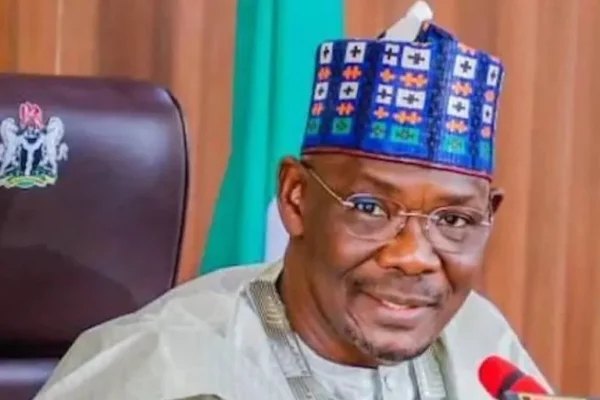
Nasarawa Governor Says Kidnapping Crisis Didn’t Start In North, Urges Nigerians To Unite

Nasarawa State Governor Abdullahi Sule has opened a new conversation on the origins of Nigeria’s escalating kidnapping crisis, stressing that the problem did not begin in the North and warning that no part of the country is immune. Speaking on Sunday Politics, Governor Sule painted a vivid picture of the anxiety gripping Nigerian governors over the country’s security challenges. He described the atmosphere at their recent meeting as tense, with leaders expressing frustration and fear over the rising wave of abductions across the nation. Sule highlighted a common tendency among Nigerians to forget past events quickly, making it easy to assign blame to certain regions. “We usually forget things very, very easily and are quick to point accusing fingers at others,” he said. The governor noted that the intensity of the discussion at the meeting reflected how deeply concerned state leaders are. “You needed to see the stress and tension at that meeting regarding insecurity. People raised their voices, showed anger, warned, and questioned if enough was being done. We even blamed ourselves for not doing enough,” he said. Pushing back against the popular belief that kidnappings originated in northern Nigeria, Sule traced the practice to the country’s oil-producing regions years before the North became a target. “Between 2003 and 2009, kidnappings were not happening in the North, but they were common in oil-rich areas,” he explained. Drawing on his experience in the oil and gas industry, Sule recalled how kidnappers frequently targeted foreign and local oil workers in the Niger Delta, making abductions a routine challenge for companies. He cited repeated incidents, including one involving Tetra Tech, which led staff to refuse returning to Nigeria. “One of them was kidnapped, and they decided not to come back,” he said, recalling how the crisis forced him to operate from Port Harcourt and Trans-Amadi for a time. Sule explained that these early abductions were largely financially motivated, with kidnappers demanding ransom from oil companies. The situation only began to ease during former President Goodluck Jonathan’s administration after negotiations aimed at reducing tensions over resource control and militancy. The governor warned against viewing kidnapping as a regional issue, emphasizing that such divisions only allow the crime to spread. “Kidnapping began in the South with oil workers, and the North assumed it was none of their business. Now it is a major problem in the North. All Nigerians must work together to eliminate kidnapping,” he said. Despite the growing security challenges, Sule expressed confidence that Nigeria would eventually overcome the menace. “Kidnapping has reached northern Nigeria, and while this is troubling, it will come to an end,” he concluded.

Read More

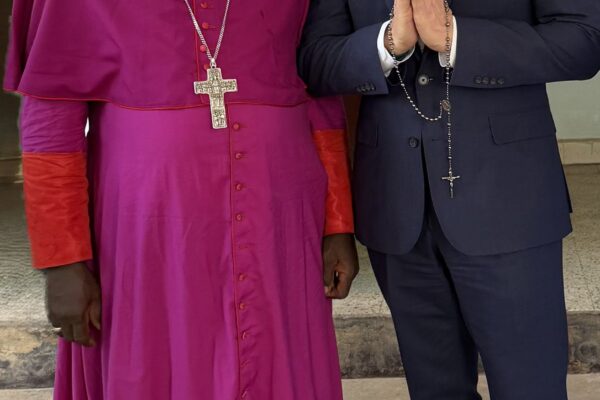
CAN Reveals It Has Not Been Officially Notified About Release Of 100 Abducted Niger State Students

The Christian Association of Nigeria (CAN) has clarified that it has not received any official confirmation about the reported release of 100 students abducted in Niger State. Bishop Bulus Yohanna, Chairman of CAN’s Niger State chapter, said in a statement on Monday that while news of the children’s freedom would be welcomed, the association has yet to receive any formal update on their whereabouts. “It will be a thing of joy if some of our children have been released. We have been praying and waiting for their return. If it is true, then it is cheering news. However, we are not officially aware and have not been duly notified. We hope and pray it’s true and will be looking forward to when the remaining will be released,” the statement read. The students were abducted on November 21, 2025, when bandits attacked St. Mary’s Private Catholic Primary and Secondary School in the remote community of Papiri, taking 315 people—303 students and 12 teachers. Fifty pupils managed to escape the same day and were reunited with their families. Last week, National Security Adviser Nuhu Ribadu visited the school, assuring authorities and parents that the children were safe and would soon be returned. Commenting on the reported release on Channels Television’s Sunday Politics, retired Major General John Enenche, a former director of media operations at the Defence Headquarters, praised the Federal Government and security agencies for their efforts. “My take is that the government and the security agencies have done a lot, and I believe that Nigerians will be happy for this. I can tell you that it is not easy, whichever way or means were used to get these children out,” Enenche said.

Read More

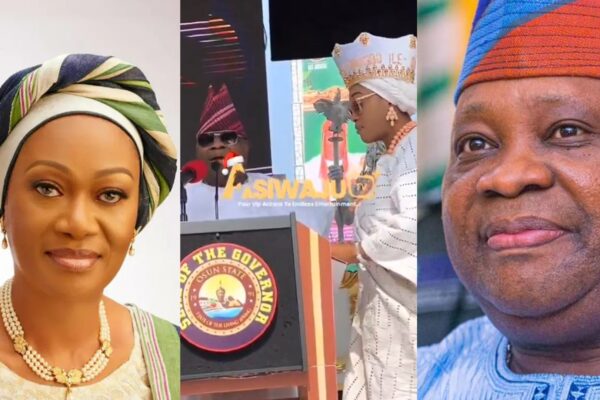
Oluremi Tinubu Threatens To Switch Off Governor Adeleke’s Microphone Over Singing At Public Event

Nigeria’s First Lady, Oluremi Tinubu, sparked reactions after she warned Osun State Governor Ademola Adeleke over prolonged singing during a public event in Ile-Ife. The incident occurred on Sunday during Mrs. Tinubu’s installation as Yeye Asiwaju Gbogbo Ile Oodua. A video trending on social media shows Governor Adeleke singing worship songs while delivering a speech. At one point, the First Lady approached the stage and cautioned him to finish, signaling that she could switch off the microphone if he continued. She was seen mouthing words that read: “I give you five minutes to conclude your speech, enough with the music, or I will switch off the microphone.” The encounter has sparked debate online, with many questioning the appropriateness of verbally warning a governor at a public ceremony. Some users described the intervention as heavy-handed, while others saw it as a straightforward way to manage the event’s schedule. Social media continues to buzz with discussions over the incident, with reactions ranging from amusement to criticism of the First Lady’s conduct. Between Osun State Governor, Ademola Adeleke, and Nigeria’s First Lady, Oluremi Tinubu, at an event yesterday in Osun State👀👀 pic.twitter.com/vzj85CDFjc — CHUKS 🍥 (@ChuksEricE) December 8, 2025

Read More

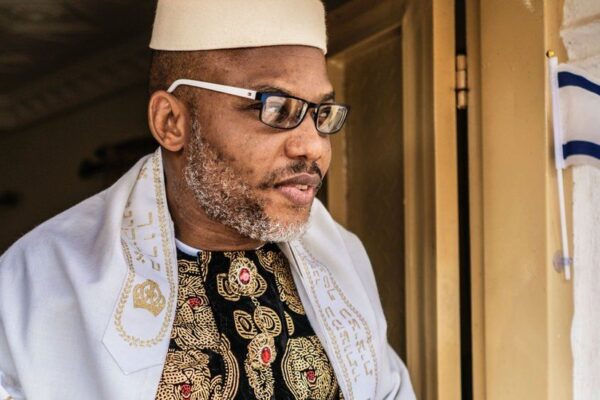
Court Rejects Nnamdi Kanu’s Ex Parte Bid For Transfer From Sokoto Prison

The Federal High Court in Abuja has refused to consider an application filed by the leader of the proscribed Indigenous People of Biafra (IPOB), Nnamdi Kanu, seeking an immediate transfer from the Sokoto Correctional Facility to a custodial centre closer to the court. Kanu had approached the court through an ex parte motion, asking that he be moved either to Suleja or Keffi custodial centres to enable him pursue his appeal more effectively. The application was brought by a lawyer from the Legal Aid Council of Nigeria, Demdoo Asan. However, Justice James Omotosho ruled that such a request could not be granted without hearing from the respondents — the Federal Government and the Nigerian Correctional Service (NCoS). The judge held that since the order sought would directly affect the agencies, they must first be properly notified and given the opportunity to respond. While reviewing the application, the judge specifically questioned the use of the word “compel” in the relief seeking to force the government and the correctional service to transfer Kanu. Following this, the lawyer agreed to withdraw that part of the request, and the court formally struck it out. Justice Omotosho also queried why the application was brought as an ex parte motion when judgment in the matter had earlier been delivered in the presence of both parties. The judge stressed that even a law school student should know such an application must be brought on notice. Asan admitted that the respondents ought to be served and heard before any decision could be made. He explained that he had only just taken over the case on instruction from his superiors while he was on leave. The court further discovered that Kanu’s notice of appeal was filed on November 10, before the judgment was delivered on November 20, making it ineffective. Based on this, Justice Omotosho held that there was no valid notice of appeal before the court. The case was subsequently adjourned to January 27, 2026, to allow Kanu to properly serve the relevant parties and regularise his application.

Read More

US Lawmaker Riley Moore Calls Nigeria Visit “Very Productive” Amid Security And Counter-Terrorism Talks

US House of Representatives member Riley Moore has described his recent visit to Nigeria as “very productive,” highlighting ongoing diplomatic efforts related to the country’s “Country of Particular Concern” designation by former US President Donald Trump. Posting on X on Sunday, Moore wrote, “I came to Nigeria in the name of the Lord and on behalf of the American people. Just ending a very productive visit to Nigeria and rounds of meetings. More details to come. Happy Sunday. God is Great!” While he did not provide immediate specifics about the purpose of his trip or the Nigerian officials he met, Moore promised to share further insights in the coming days. Earlier, National Security Adviser Nuhu Ribadu confirmed that he hosted the US Congressional delegation as part of ongoing security consultations between Nigeria and the United States. Ribadu explained that the visit followed prior discussions in Washington, D.C., centered on mutual security interests. “This morning, I received a US Congressional delegation on a fact-finding mission to Nigeria, following our earlier engagements in Washington, DC, on shared security priorities,” Ribadu said on his official X account. He added that US Ambassador to Nigeria, Richard Mills, attended the meeting, emphasizing that it underscored the importance both nations attach to security cooperation. Discussions reportedly focused on counter-terrorism, regional stability, and ways to strengthen the strategic security partnership between Nigeria and the United States. “I’m optimistic this engagement will deepen trust, collaboration, and shared commitment to peace and security,” Ribadu added. According to previous reports, Moore met with a senior Nigerian delegation led by Ribadu to discuss concerns over rising attacks on Christians and the growing threat of terrorism in the country. The lawmaker had first confirmed the high-level meeting in Washington, D.C., via a statement on his X page.

Read More

TikTok Temporarily Blocks LIVE Feature In Nigeria During Late-Night Hours For Safety Review

TikTok temporarily restricted its LIVE feature for Nigerian users during late-night hours as part of an ongoing safety review, the platform confirmed in an in-app notification to creators. On Sunday at midnight Nigerian time, users received a system alert stating: “LIVE⚫ Notices TikTok LIVE Update in Nigeria We’re temporarily limiting LIVE late at night in Nigeria as part of our investigation to ensure our platform remains safe and our community stays protected.” Checks by PUNCH Online revealed that LIVE sessions, which had been accessible earlier, were blocked between 11 p.m. and 5 a.m., with affected accounts showing a “No Access” label. The restriction also prevented creators from viewing LIVE broadcasts from other countries. Only creators with at least 1,000 followers—the minimum required to host a LIVE session—received the notice. Several users confirmed that all LIVE activities were suspended overnight. Despite the disruption, creators who earn through LIVE gifting retained their balances and previous earnings, easing concerns over potential financial losses. By Monday morning, LIVE access had been restored, sparking widespread speculation on social media about the cause of the nationwide pause. Late-night hours are typically peak periods for Nigerian streamers hosting gaming sessions, entertainment shows, trends, and other interactive content that draw viewers and virtual gifts. The move comes weeks after TikTok released updated safety data for West Africa. At its West Africa Safety Summit in Dakar, Senegal, the company reported taking action against 2,321,813 LIVE sessions and 1,040,356 LIVE creators globally in the second quarter of 2025 for violating LIVE Monetisation guidelines. In Nigeria alone, 49,512 LIVE sessions were banned during the same period. TikTok also disclosed that 3,780,426 videos in Nigeria were removed between April and June 2025 for breaching Community Guidelines, with 98.7% deleted before being viewed and 91.9% removed within 24 hours. TikTok LIVE allows users to broadcast in real-time, engage directly with viewers through comments and virtual gifts, and host interactive sessions such as Q&As, talent showcases, or casual chats. To go LIVE, creators generally need 1,000+ followers, be at least 16 years old (18 to earn money), maintain a clean account, and use the ‘+’ button to select LIVE, adding a title and effects before starting.

Read More

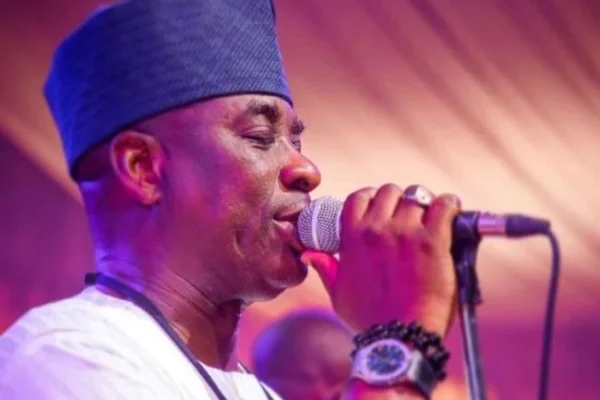
Fusengbuwa Ruling House Directs KWAM 1 To Submit Royal Lineage Form To Confirm Eligibility For Awujale Throne

The Fusengbuwa ruling house of Ijebu-Ode, next in line to select the new Awujale of Ijebuland in Ogun State, has instructed popular Fuji musician Wasiu Ayinde, also known as KWAM 1, to complete the family’s royal lineage data form to confirm his legitimate membership in the ruling house. Abdulateef Owoyemi, chairman of the ruling house and former National President of the Institute of Chartered Accountants of Nigeria, told Sunday PUNCH on Saturday that only bona fide members would be allowed to participate in the Awujale selection process. KWAM 1, in a letter dated December 3, 2025, addressed to the chairman of the Fusengbuwa Ruling House in Agunsebi Quarters, Ijebu-Ode, formally declared his interest in the throne. He described himself as a “bona fide son” of the ruling house, asserting that his candidacy complies with Ijebu customary law and the Ogun State Chieftaincy Laws. The letter went viral on social media, attracting widespread public attention. Owoyemi explained that the Olori Omooba of Ijebu land, like all other aspirants, must first complete the Fusengbuwa ruling house royal lineage data form. The form, which requires tracing ancestry up to seven generations, ensures that only legitimate princes can contest, preventing “strangers” from claiming the throne. “The first step for anyone interested in the Awujale throne is to declare their lineage by filling the standard Fusengbuwa ruling house royal lineage data form. Once confirmed as a legitimate member, they can then apply for the expression of interest form,” Owoyemi said. He added: “We have told him, just like all other aspirants, that he must declare his lineage by completing the royal lineage data form, detailing his full name, parents, grandparents, and tracing up to seven generations. The completed form will be signed and submitted to the head of the ruling house unit, who will affirm his bona fide membership before the process can move forward.” Although the official application window closed on December 5, KWAM 1 was granted a five-day extension, expiring on December 10. “We won’t shut anyone out from contesting for the next Awujale, but legitimacy must be established. Every right comes with responsibility, and in a royal family, lineage must be verified through the royal lineage data form. Once received, we will review it carefully and seek clarification if needed,” Owoyemi said, adding that aspirants should be men of influence who will enhance the throne, not merely claim it. The ruling house expects to have a new Awujale by the second or third week of January 2026. Owoyemi outlined the process: the local government has 14 days to select candidates (ending December 18), after which the kingmakers have seven days to deliberate and choose a candidate for submission to the governor. The government then has 21 days for background checks, security clearance, and to address objections before the State Executive Council ratifies the nominee, culminating in the governor’s announcement and coronation rites. “Combining candidate selection, kingmakers’ deliberation, and legal objection periods, we anticipate the next Awujale to emerge between the second and third week of January,” he concluded.

Read More

Speculation Grows As Rivers Governor Fubara Faces Possible Exit From PDP Amid Lawmakers’ Defection To APC

Tension within Rivers State politics has intensified amid growing talks that Governor Siminalayi Fubara could be weighing a possible exit from the Peoples Democratic Party (PDP) for the ruling All Progressives Congress (APC). The speculation followed a dramatic shift in the State House of Assembly, where 17 lawmakers aligned with former governor Nyesom Wike announced their defection to the APC on Friday. With only three lawmakers still believed to be loyal to Fubara — and none of them returning to legislative duties since the lifting of the six-month emergency rule — uncertainty now hangs over the governor’s political direction and control of the Assembly. Reacting to the development, a PDP leader and former House of Representatives member, Ogbonna Nwuke, said the political realignments unfolding across the South-South region may eventually draw Fubara into the APC. He pointed to recent defections of PDP governors in Delta, Akwa Ibom and Bayelsa states as signs of a wider collapse of the party’s influence in the region. Nwuke explained that instability within the PDP has made defections almost unavoidable. He noted that internal disputes and leadership battles have weakened the party to a level unseen in years. According to him, constitutional provisions on defection also acknowledge that deep divisions at the national level can justify such moves. He further described the PDP’s recent actions, including issuing what he termed an unprecedented “expulsion certificate,” as evidence that the party is in serious trouble. In his words, members are merely reacting to a party that has become deeply fractured. On whether Fubara’s defection is imminent, Nwuke said only the governor can make that decision public, but developments on ground suggest the option is being considered. He added that if Fubara eventually leaves the PDP, he would not be the first to take such a path. However, the Rivers State Government has dismissed the rumours as unfounded. A senior official at Government House, who spoke on condition of anonymity, said the governor has given no indication that he plans to defect. The official also questioned the validity of the lawmakers’ defection claims, insisting they have not met the Supreme Court requirement of formally registering their new party membership at their wards. According to the official, until such evidence is produced, the alleged defection should not be taken seriously.

Read More