Peter Obi: Hardship Pushing Nigerians Into Mental Distress, Crime

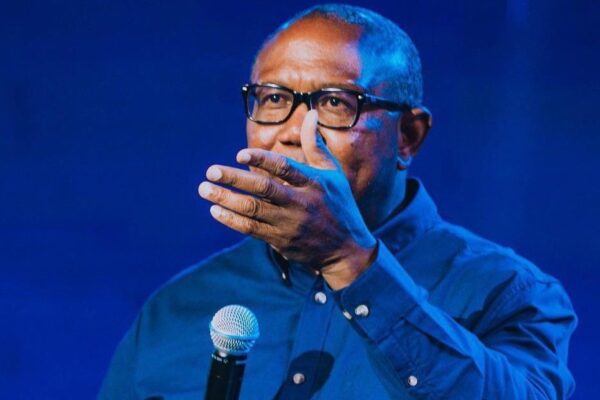
By Trend Brio News Desk | October 12, 2025 ABUJA — Former Anambra State Governor and 2023 Labour Party (LP) presidential candidate, Peter Obi, has raised alarm over what he described as a worsening mental health crisis in Nigeria, saying that the country’s deepening hardship is driving many citizens into psychological distress and criminality. In a post on his X (formerly Twitter) handle to mark World Mental Health Day, commemorated every October 10, Obi said that poverty, unemployment, and the struggle for daily survival have left millions of Nigerians mentally overwhelmed. “As the world celebrates Mental Health Day this weekend, it is troubling to note that a nation like Nigeria has deepening mental health crises,” Obi wrote. “A recent World Health Organisation (WHO) report estimated that about 40 million Nigerians are living with mental health conditions, with fewer than 300 psychiatrists available nationwide.” He lamented that the statistic reflects Nigeria’s “growing disinterest and neglect” of the health sector, emphasizing that mental health should be treated as a national priority. “Mental health is more important than physical health. Nigerians are now feeling so overwhelmed by hardship that they are mentally affected,” Obi stated. “Poverty, unemployment, and the daily battle to survive have pushed many, especially the youth, into hopelessness, criminality, and an increasing rate of suicide.” The LP flag bearer urged the federal government to declare a public health emergency on mental health and to invest massively in mental health infrastructure. He called for the establishment of psychiatric hospitals in all geopolitical zones, alongside the recruitment and training of more mental health professionals to bridge the gap in access to care. “We must also address the issues of poverty, unemployment, and hunger that are contributing to this mental problem and build a nation that heals, uplifts, and gives every citizen a reason to live,” he added. Obi concluded that Nigeria’s true progress should not be measured by the wealth of its leaders but by the well-being and development of its people.
Read More

Absence of NMA Medical Report Stalls Nnamdi Kanu’s Terrorism Trial

ABUJA — Justice James Omotosho of the Federal High Court, Abuja, on Wednesday adjourned the terrorism trial of the leader of the Indigenous People of Biafra (IPOB), Nnamdi Kanu, to October 16, 2025, pending the submission of a medical report by the Nigerian Medical Association (NMA), News360 Nigeria reports. The adjournment followed the NMA’s failure to submit its court-ordered medical report on Kanu’s health condition. At the previous sitting, Justice Omotosho had directed the NMA President to constitute a panel of medical experts to assess Kanu’s alleged deteriorating health and present their findings to the court. The examination was expected to determine whether the Department of State Services (DSS) medical facility could adequately handle Kanu’s treatment or if he should be transferred to the National Hospital, Abuja, as requested by his legal team. The report would also help the court establish whether Kanu is medically fit to continue standing trial. However, during Wednesday’s proceedings, DSS counsel, Suraj S’aad, SAN, informed the court that the NMA medical board had communicated that its report was not yet ready for submission. S’aad consequently applied for a one-week adjournment to allow the medical board to conclude its review and finalise the report. With no objection from the defence, Justice Omotosho granted the request and adjourned the case to October 16, 2025, for the NMA board to present its findings and for the court to determine the next line of proceedings.

Read More

Traditional Rulers Have No Constitutional Powers to Impose Bans

Let’s be clear: traditional rulers in Nigeria have no constitutional authority to impose or enforce bans. Their functions are largely symbolic, advisory, cultural, and mediatory, particularly on issues related to customs, festivals, and community traditions. If a traditional ruler desires that a particular policy or restriction be made law, the proper democratic process is to present the proposal to the State House of Assembly, where it can be debated and, if found appropriate, passed into law by elected representatives of the people. In the present case, concerned residents of Lagos State should seriously consider challenging such actions in court to reinforce the principle that traditional institutions have no legal power to issue enforceable directives. This issue goes beyond one community or ruler—it is about upholding constitutional order and democratic accountability. Lagos, as Nigeria’s most cosmopolitan and economically vital state, must not set a precedent that allows unelected individuals to wield powers reserved for elected officials. Allowing such practices to stand risks blurring the line between cultural authority and constitutional governance, a development that could undermine both democracy and the rule of law.

Read More

Kwara Government Denies Bandit Siege in Nine LGAs, Faults Peter Obi for Spreading False Information

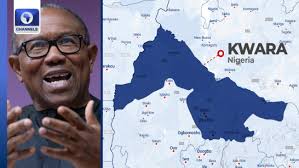
  The Kwara State Government has dismissed reports claiming that nine local government areas in the state are under siege by bandits, describing the allegations as “totally false and reckless.” In a statement on Monday, the government said no part of Kwara is currently under the control or threat of bandits, contrary to viral claims circulating on social media. “We wish to alert the public to some reckless claims that nine local government areas of Kwara State are under siege by bandits. This is totally false. No local government area is under siege in the state,” the statement read. The government admitted that there have been isolated security challenges in some areas but said they do not justify the “wicked escalation and fake news” allegedly promoted by political opponents within and outside the state. It accused certain “opposition elements” of deliberately spreading fear and misinformation, referring to them as “the online promoters and equivalence of bandits.” “These individuals instill fear in the populace through fake news such as the unfounded claim of nine LGAs being under siege and alleged movements of gunmen in parts of Asa Local Government Area,” it added. The statement further expressed disappointment that former Labour Party presidential candidate, Mr. Peter Obi, allegedly shared the false report on his social media platforms. “We regretfully observe that Mr. Peter Obi has lent his social media handles to spreading such fake news. This is not expected from him as a statesman. We request Mr. Peter Obi to bring down the post as it is totally false and inappropriate,” the government said. Kwara authorities urged citizens to desist from spreading unverified information capable of causing panic and undermining the efforts of security agencies. “This irresponsible behaviour only makes things harder for our security forces, who already have enough on their plates,” the statement concluded.

Read More

Oba of Benin Warns Folashade Ojo-Tinubu: ‘Iyaloja-General Title Does Not Exist in Benin’

By Kamal Yalwa October 1, 2025 | Benin City The Oba of Benin, Oba Ewuare II, has cautioned Mrs. Folashade Ojo-Tinubu, daughter of President Bola Tinubu, against referring to herself as Iyaloja-General within the Benin Kingdom, stressing that the title is foreign to Benin culture and traditions. The monarch issued the clarification on Tuesday when Ojo-Tinubu, who is nationally recognised as the Iyaloja-General of Nigerian market women, paid a courtesy visit to his palace in Benin City. During the visit, Ojo-Tinubu informed the monarch that she was in Edo State to inaugurate Pastor (Mrs.) Josephine Isi Ibhaguezejele as the Iyeki-General of the state. Responding, Oba Ewuare II explained that the correct title in Benin tradition is Iyeki — not Iyaloja. He noted that the Iyeki plays both administrative and cultural roles in every market and must be selected by traders before being confirmed by the palace. “The title of Iyaloja is foreign to Benin. Here, our markets have Iyeki, who serve not just as leaders of traders but also perform cultural duties tied to shrines within the markets,” the monarch said. The Oba stressed that Benin remains the custodian of its unique cultural heritage and cannot adopt external titles or practices that conflict with its traditions. He revealed that the matter had been discussed extensively with his chiefs and other knowledgeable persons. To further clarify, Chief Osaro Idah, speaking on behalf of the palace, explained that each market has its own independent Iyeki, such as in Oba Market or Ogiso Market, and none holds authority over the other. “The novelty of a ‘General Iyeki’ is alien to Benin custom. Iyeki is particular to each market. After selection by the traders, the person is brought to the palace for confirmation. The Iyeki does more than coordinate traders; they also perform roles in shrines on behalf of the palace,” he said. He added that while the Iyaloja may be recognised in Yoruba land and other parts of Nigeria, it has no place in Benin culture, where traditional institutions remain firmly rooted in ancestral practices.

Read More
El-Rufai Slams Tinubu Government as Nigeria’s Most Failed Administration

El-Rufai Calls for Federalism, Elite Consensus to Secure Nigeria’s Future

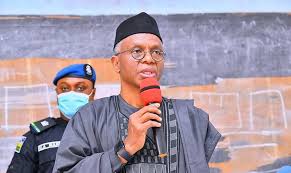
Former Kaduna State Governor, Nasir El-Rufai, has called on Nigerians to embrace true federalism, credible elections, and an elite consensus as the foundation for the country’s stability and progress over the next 65 years. El-Rufai made this appeal while engaging clergy, professionals, and citizens in Owerri, the Imo State capital, where he stressed the urgent need for a shared national vision to address Nigeria’s lingering structural challenges. He noted that despite democratic gains since the return to civil rule in 1999, public participation in elections has drastically declined. “Voter turnout has fallen from over 60 percent in 2003 to barely 27 percent in 2023, reflecting growing estrangement from the electoral process,” he observed. According to him, Nigeria, projected to surpass 400 million people by 2050, remains structurally fragile despite being the world’s most populous Black nation. The former FCT Minister listed widespread poverty, youth unemployment, inflation, and rising public debt as urgent issues that threaten the country’s stability. He emphasized that the solution lies in forging a new elite consensus — an agreement among political leaders, business stakeholders, and civil society on the nation’s direction. “Nigeria needs an elite consensus to define our national priorities, strengthen federalism, and restore faith in the electoral process,” El-Rufai said.

Read More

Top Nigerian Leaders, Civil Society Groups to Convene for National Electoral Reforms Dialogue

As Nigeria prepares for the 2027 general elections, a high-level National Electoral Reforms Dialogue is set to take place on October 1st, drawing participation from some of the country’s most prominent political figures, labour leaders, and civil society actors. The event, organised by the National Consultative Front (NCFront), the Labour and Civil Society Front (LCSF), in collaboration with the Nigeria Electoral Reforms Coalition (NERCO) and Partners for Electoral Reforms, will be held virtually as part of the activities marking Nigeria’s 65th Independence Anniversary. According to a statement issued on Tuesday by the Secretary of the Local Organising Committee, Mallam Hamisu San Turaki, the dialogue will serve as a platform to discuss constitutional and institutional reforms needed to ensure free, fair, and credible elections in 2027. Among the key figures expected to attend are former President Goodluck Jonathan, former Vice President Yemi Osinbajo, 2023 Labour Party presidential candidate Peter Obi, and former INEC Chairman Prof. Attahiru Jega. They are scheduled to participate as discussants during the national webinar. Other notable invitees include Nigeria Labour Congress (NLC) President Joe Ajaero, Trade Union Congress (TUC) President Festus Osofo, former Minister of Education Dr. Oby Ezekwesili, and political economist Prof. Pat Utomi. Also expected to contribute to the debate are former governors Rabiu Musa Kwankwaso (Kano) and Rotimi Amaechi (Rivers), along with former Kaduna Central Senator Shehu Sani. The Secretary to the Government of the Federation (SGF), the Chairman of the Nigeria Governors Forum, and the chairpersons of the Senate and House Committees on Electoral Reforms have also been invited, as well as the INEC Commissioner in charge of Information. Organisers say the event will focus on advancing constitutional amendments and reforms aimed at improving the integrity and transparency of Nigeria’s electoral system. With less than two years to the next general elections, calls for comprehensive electoral reform have intensified among stakeholders across the country. The dialogue is expected to generate actionable recommendations to help shape the legal and institutional framework for future elections, as Nigeria looks to strengthen its democracy ahead of 2027.

Read More
Abuja Lawyer Remanded in Police Custody Over Alleged Forgery and Impersonation

Abuja Lawyer Remanded in Police Custody Over Alleged Forgery and Impersonation

Justice Jude Onwuegbuzie of the Federal Capital Territory (FCT) High Court, Apo, Abuja, on Monday ordered the remand of Abuja-based lawyer, Victor Giwa, in police custody following his arrest in Lagos. Giwa was apprehended in compliance with a bench warrant issued by the court after he failed to appear for arraignment on charges of forgery and impersonation. The warrant, issued on September 15, 2025, also named a second defendant, Ibitade Bukola, who remains at large. At Monday’s hearing, the prosecution, led by Theophilus Silas, informed the court that efforts are ongoing to arrest Bukola before the next adjourned date. Giwa Opposes Remand, Cites Health Concerns Representing himself, Giwa strongly opposed the prosecution’s application to remand him under Sections 293 and 43(4) of the Administration of Criminal Justice Act (ACJA). He argued that the cited legal provisions did not apply to his situation, and emphasized that he had previously informed the court of his absence through a formal letter. “I am a minister in the temple of justice. I will never undermine the court,” Giwa said. “Due to health issues, I have been advised to avoid stress to prevent a stroke. I passionately appeal to be granted bail so I can recover and be strong enough for trial.” Giwa insisted that the prosecution’s request for an abridged hearing date came as a surprise and accused them of ambushing the defense. He also noted that since the charges are joint, arraignment could not proceed without the second defendant present. Judge Denies Oral Bail Plea Justice Onwuegbuzie noted that as a legal practitioner, Giwa should have filed a formal bail application rather than making an oral plea. “A written bail application is required. In the absence of that, the defendant is remanded in police custody,” the judge ruled. The matter was adjourned to October 8, 2025, for further proceedings.

Read More