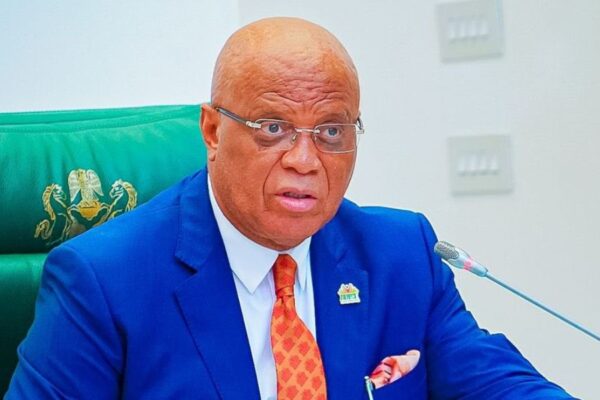
Political Earthquake: Governor Umo Eno Dumps PDP for APC, Cites Alignment with Tinubu

In a stunning political twist, Governor Umo Eno of Akwa Ibom State has officially defected from the Peoples Democratic Party (PDP) to the All Progressives Congress (APC). The announcement, made Wednesday morning, sent shockwaves through Nigeria’s political landscape. Governor Eno, who rose to power under the PDP, said his decision followed “a series of consultations” and was rooted in a desire for “progressive alignment” with President Bola Tinubu’s administration at the federal level. “I am deeply grateful to the PDP for the platform and support, but it is time to take a bold step forward. Akwa Ibom must not be left out of the benefits of full national integration,” the governor stated. Despite the dramatic party switch, Eno promised that his commitment to the people of Akwa Ibom remains unwavering, emphasizing that development would continue across all sectors—“regardless of party lines.” This move, however, is likely to reshape political alliances in the South-South and ignite fierce reactions within the PDP’s national structure.

Read More
Tinubu’s EV Revolution: 12 Nigerian Universities Picked to Build Made-in-Nigeria Electric Vehicles

Tinubu’s EV Revolution: 12 Nigerian Universities Picked to Build Made-in-Nigeria Electric Vehicles

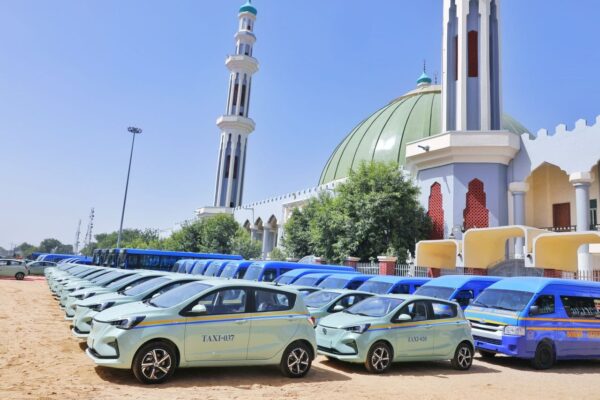
In a bold move to position Nigeria on the global electric vehicle (EV) map, the federal government has selected 12 universities—two from each geopolitical zone—to design and manufacture 100% made-in-Nigeria electric vehicles. The project is part of President Bola Tinubu’s First Nigeria policy, with financing support from the Bank of Industry and other key financial institutions. Director-General of the National Automotive Design and Development Council (NADDC), Mr. Oluwemimo Osanipin, made this announcement in Uyo during a stakeholder engagement session with the Association of Motor Dealers of Nigeria (AMDON) and the Nigerian Automotive Manufacturers Association (NAMA). He emphasized Nigeria’s commitment to EV development and local component production as a pathway to industrial self-reliance. According to Osanipin, these universities are already working on a prototype dubbed the “University Shuttle Bus”—a fully electric vehicle designed and manufactured domestically. “Most parts will be sourced locally,” he said, noting that 10 of the universities already have EV charging stations built in anticipation of the rollout. The project aims not only to reduce import dependency but also to jumpstart a local auto-parts industry with comparative advantages in areas like plastic production and petroleum by-products. “Even global carmakers don’t build all components in-house,” Osanipin explained. “What matters is building a reliable after-sales ecosystem and parts supply chain.” He highlighted the economic opportunity in servicing Nigeria’s 18 million vehicles on the road today, compared to the 500,000 produced annually. “We’re building infrastructure and parts for the future—gradually but deliberately,” he added.

Read More
DSS Moves to Block Pat Utomi’s “Shadow Government” Rallies, Cites Threat to National Security

DSS Moves to Block Pat Utomi’s Shadow Government Rallies Cites Threat to National Security

The Department of State Services (DSS) has filed a fresh legal bid at the Federal High Court in Abuja to restrain Professor Pat Utomi from launching rallies and public events in support of his proposed “shadow government.” In a motion filed on Wednesday, the DSS described Utomi’s actions as a threat to national security and accused him of trying to destabilise the country under the guise of free speech and democratic expression. According to intelligence cited in the application, Utomi—currently outside Nigeria—is planning to return on June 6 to hold roadshows and media engagements promoting the shadow cabinet idea. The DSS warned that such activities are capable of inciting public unrest and undermining the authority of the legitimate government. It urged the court to grant an interlocutory injunction to stop Utomi and his associates from holding any rallies, media events, or public discourse related to the controversial plan until the pending suit is determined. The DSS is seeking a legal declaration that Utomi’s shadow government initiative, which it deems unconstitutional, poses a significant threat to public peace. In its affidavit, the agency likened Utomi’s mobilization efforts to the events that triggered the 2020 End SARS protests, warning that a similar scenario could erupt if not urgently contained. The security agency insisted that it is acting within its constitutional duty to preserve internal stability and protect Nigeria from potential chaos. The controversy stems from a pending case—FHC/ABJ/CS/937/2025—already filed by the DSS, which argues that Utomi’s shadow cabinet plan amounts to an attempted usurpation of governmental authority. The agency highlighted a May 26 lecture in which Utomi defended the legitimacy of a shadow government, suggesting that his group would merely rename the initiative if barred by the court. Justice James Omotosho has fixed June 25 for hearing the substantive case.

Read More
PDP Roars Back: 2027 Will Be a Referendum on Tinubu’s Failures – Ologunagba

PDP Roars Back: 2027 Will Be a Referendum on Tinubu’s Failures – Ologunagba

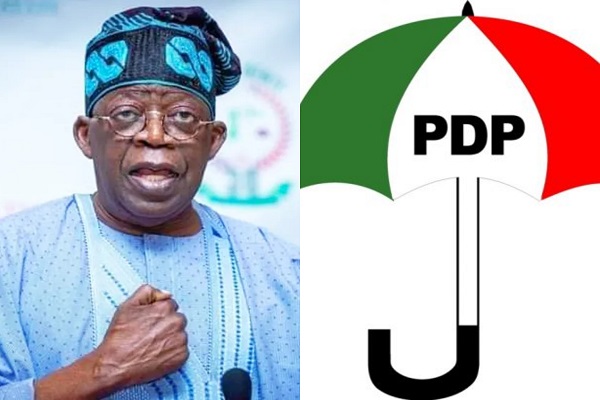
The Peoples Democratic Party (PDP) has declared its readiness to take on the ruling All Progressives Congress (APC) in 2027, calling the upcoming general election a referendum on what it described as the “failures” of President Bola Tinubu’s administration. PDP National Publicity Secretary, Debo Ologunagba, made this bold assertion during a press briefing in Abuja following the party’s 99th National Executive Committee (NEC) meeting. Ologunagba praised the unity displayed at the NEC meeting, brushing aside pre-meeting skepticism and describing the successful gathering as a symbol of the PDP’s resilience. “The meeting held despite all doubts, and it showed our capacity to reorganise, refocus, and stay united. This is a signal that the PDP is back and ready,” he declared. He slammed the APC-led government over worsening insecurity, economic hardship, and policy failures. “People are dying in instalments, and this government is celebrating defections while citizens go hungry. Propaganda won’t feed Nigerians,” Ologunagba said. He insisted that no wave of defections could rescue the APC from electoral backlash in 2027, adding, “The question every Nigerian must ask is: Am I better off today than I was two years ago?” On internal cohesion, the PDP spokesperson revealed ongoing reconciliation efforts ahead of the next national convention. “We’re having critical conversations behind the scenes. The NEC meeting is just the beginning—we’re determined to present a credible alternative to Nigerians and protect this democracy from being reduced to a one-party state,” he concluded.

Read More

Moniepoint Turns Staff Into Millionaires as Unicorn Deal Pays Off Big

When Moniepoint secured a $110 million funding round in October 2024 and officially joined the unicorn club, it wasn’t just early investors who smiled to the bank. At least two long-serving employees cashed out big—one taking home a jaw-dropping ₦1.3 billion ($850,000) by selling part of their shares, while another made $20,000, according to internal documents seen by TechCabal. These share sales were part of a rare but growing trend in Nigeria’s tech space: employee secondary liquidity, where workers sell their vested equity to incoming investors. Moniepoint reportedly allowed only employees with at least three years of tenure to participate, capping how much equity could be sold. The deals were facilitated through Carta, a startup equity marketplace. While the shares were sold at a discount to the unicorn valuation—a common practice—the impact was life-changing. “I had personal financial plans, and this gave me the push I needed,” said one of the employees, who had spent nearly a decade at the company. The move has boosted staff morale and deepened loyalty, especially as local tech firms rarely offer such liquidity events. As exits like IPOs remain elusive in Africa’s startup scene, Moniepoint’s bold move signals a shift in how equity is viewed—not just as compensation, but as real wealth. It also adds pressure on other startups to follow suit, making employee ownership a powerful tool for hiring, retention, and motivation in the ecosystem.

Read More

Tinubu to Commission 17 Landmark Projects in Abuja Starting June 10 — FCT Minister Wike

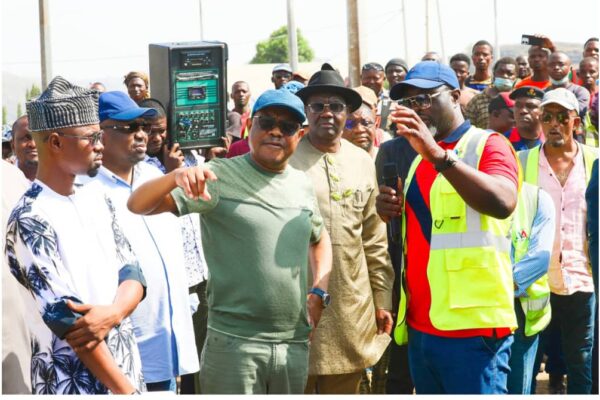
President to personally inaugurate 10 projects as FCT undergoes historic infrastructure transformation Abuja is set to experience an unprecedented wave of infrastructural development as President Bola Ahmed Tinubu has approved the commissioning of 17 landmark projects in the Federal Capital Territory (FCT), beginning Tuesday, June 10, 2025, immediately after the Eid-el-Kabir celebrations. The announcement was made by Minister of the FCT, Nyesom Wike, during an inspection tour of ongoing projects in the capital on Wednesday. Wike confirmed that the commissioning will begin with the International Conference Centre (ICC), describing the rollout as a significant milestone in the development of the nation’s capital. “Mr. President has finally approved the commissioning of projects to start on the 10th of June, which is Tuesday, after the Sallah holiday. And that will start with the International Conference Centre. As you can see, we are good to go,” Wike said. On Wednesday, June 11, attention will turn to the Gishiri Interchange, which connects key parts of the city including Jahi, Maitama, and Mabushi, highlighting the administration’s drive to enhance mobility and connectivity in the FCT. Wike disclosed that President Tinubu will personally commission 10 of the 17 projects, while the remaining seven will be inaugurated by other senior government officials. These include: “We want to thank the President. It is not easy for him to give us 10 good days to commission these projects. This level of presidential involvement shows the importance of what we are doing here. Abuja is truly being transformed,” the minister stated. Wike emphasized that the projects are part of the Renewed Hope Agenda, the national development initiative spearheaded by President Tinubu. He noted that residents, especially children, are already experiencing the benefits of enhanced infrastructure and urban planning. “You can see the joy of the children, and they are all feeling the impact of the Renewed Hope Agenda. All the promises we made, we’ve been able to accomplish them,” Wike added. Describing the rollout as “unprecedented,” the minister praised the coordination and support from the Presidency and affirmed the FCT administration’s commitment to continued service delivery and urban transformation. “We give God Almighty the glory and thank Mr. President for all his support,” Wike concluded. As the capital braces for the historic 10-day commissioning period, residents can expect visible improvements across key sectors, reflecting the federal government’s renewed commitment to infrastructure, mobility, and quality of life in Abuja.

Read More
Fitch Upgrades Fidelity Bank’s National Rating to ‘A+(nga)’ on Strong Capital Position and Resilient Earnings

Fitch Upgrades Fidelity Bank’s National Rating to A+(nga) on Strong Capital Position and Resilient Earnings

By [Kamal Yalwa] Global credit rating agency, Fitch Ratings, has upgraded Fidelity Bank Plc’s National Long-Term Rating to ‘A+(nga)’ from ‘A(nga)’, while affirming its Long-Term Issuer Default Rating (IDR) at ‘B’. The upgrade, announced on May 29, 2025, reflects the bank’s strengthened capital buffers, sustained earnings growth, and prudent risk management practices. According to Fitch, Fidelity Bank’s Fitch Core Capital (FCC) ratio improved to 29.9% at the end of 2024, significantly above the regulatory minimum and one of the highest in Nigeria’s banking industry. The rating agency cited the bank’s robust capital base, improved profitability, and stable deposit structure as key factors driving the upgrade. The development comes on the back of successful capital-raising initiatives by Fidelity Bank, including a rights issue and a public offer, which boosted its capital base. Fitch also noted expectations of further capital inflows ahead of the Central Bank of Nigeria’s (CBN) N500 billion minimum capital requirement deadline for international banks in 2026. Commenting on the development, Dr. Nneka Onyeali-Ikpe, Managing Director/Chief Executive Officer of Fidelity Bank Plc, said: “This upgrade by Fitch Ratings affirms the resilience of our business model, the strength of our risk management practices, and our unwavering focus on delivering sustainable value to stakeholders. Despite a challenging macroeconomic environment, we have continued to maintain strong asset quality, solid profitability, and ample liquidity.” Fidelity Bank recorded improved earnings in 2024, driven by higher net interest income and efficiency in deposit mobilization. As of year-end 2024, 93% of the bank’s total deposits were low-cost current and savings accounts (CASA), reflecting one of the strongest deposit structures in the Nigerian banking industry. Fitch also ranked Fidelity Bank as the sixth-largest bank in Nigeria by total assets, controlling approximately 5% of the industry’s asset base. The bank’s well-diversified funding profile, robust risk controls, and expanding digital banking footprint further supported the positive rating action. The rating upgrade is expected to enhance investor confidence and support the bank’s capital market activities, including efforts to expand its operations locally and across key international markets. Fidelity Bank currently serves over 9.1 million customers through 255 business offices in Nigeria and its UK subsidiary, FidBank UK Limited. The bank has earned multiple recognitions for innovation, SME support, and digital transformation, including: As regulatory and macroeconomic pressures continue to shape the Nigerian banking landscape, Fidelity Bank’s improved rating underscores its strong fundamentals, capital adequacy, and operational resilience—positioning it to capture future growth opportunities across retail, commercial, and investment banking segments.

Read More

FG Declares June 6 and 9 as Public Holidays for Eid-ul-Adha

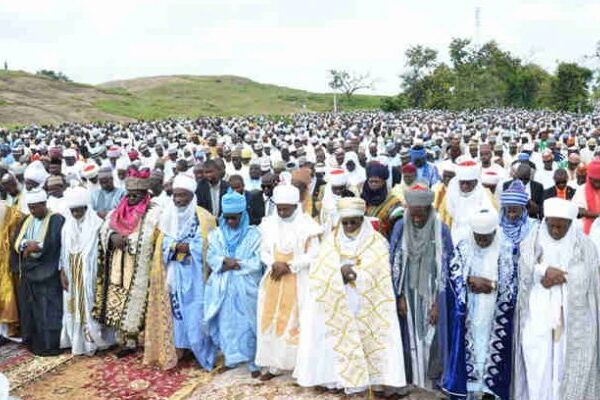
The Federal Government has officially declared Friday, June 6, and Monday, June 9, 2025, as public holidays to mark this year’s Eid-ul-Adha celebration. The announcement was made by the Minister of Interior, Dr. Olubunmi Tunji-Ojo, who extended warm congratulations to all Muslims in Nigeria and across the world on the occasion. Dr. Tunji-Ojo called on the Muslim faithful to emulate the values of sacrifice and faith demonstrated by Prophet Ibrahim (peace be upon him). He also urged Nigerians to use the festive period to pray for peace, unity, and prosperity in the country. The minister reaffirmed the commitment of President Bola Ahmed Tinubu’s administration to reposition Nigeria on the path of sustainable growth and development through its people-focused reforms and the Renewed Hope Agenda. While wishing the Muslim Ummah a joyful Eid-ul-Adha, Dr. Tunji-Ojo appealed to all Nigerians to unite in supporting the administration’s efforts to restore Nigeria’s pride and global standing.

Read More