Peter Obi’s Count the Person” Comment Sparks Debate and Interpretation

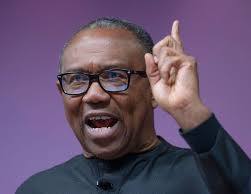
By [Kamal Yalwa] Political Correspondent A recent statement by Labour Party’s presidential candidate, Peter Obi, has stirred conversation and sparked varied interpretations among Nigerians, particularly around a cryptic phrase he used during a campaign address. In an earlier speech, Obi rallied his supporters by declaring: “For those who think they will not count our votes — we count them.” Many interpreted this as a call for electoral vigilance, with some suggesting he meant citizens should take the vote-counting process into their own hands if electoral officials fail to do so. However, the discussion intensified after Obi released a follow-up video in which he urged supporters not to leave polling units after voting. In that video, he stated: “When you vote, don’t go. Stay there. Insist they count it. If they refuse to count it — count the person.” The phrase “count the person” has been widely seen as a parable, prompting questions and various interpretations. While some view it as a metaphor for holding officials accountable, others are seeking further clarification to avoid misinterpretation or potential escalation. Political analysts say Obi’s use of such language reflects growing public frustration with electoral transparency and a push for more civic involvement. Still, they caution that ambiguous rhetoric, especially in a tense political climate, can lead to unintended consequences if not clearly explained. Obi, known for his calm demeanor and grassroots engagement, has yet to elaborate on the exact meaning behind the “count the person” remark. Supporters hope he will provide clarity in future statements to ensure the message remains peaceful and constructive. As Nigeria approaches another critical electoral cycle, calls for clearer communication — from all political leaders — are growing louder.

Read More

Face the Mirror Reno Omokri: A Masterclass in Hypocrisy and Political Opportunism

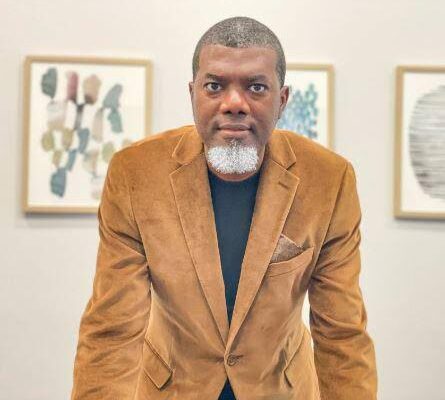
Reno Omokri, a self-proclaimed pastor and political commentator, has once again found himself at the center of a storm of criticism — this time, accused of being the very embodiment of projection, betrayal, and double standards. Observers say Omokri’s recent attacks against political opponents reflect less about their actions and more about his own unchecked insecurities. Once a vocal critic of President Bola Ahmed Tinubu, Omokri now appears to have undergone a dramatic shift in allegiance — a move critics describe as politically expedient and morally bankrupt. “Reno doesn’t hold principles — he holds grudges and opportunities,” a political analyst noted. “He calls others untrustworthy, yet his history of flip-flopping alliances reads like a political soap opera.” Omokri’s credibility has been called into question on several fronts. Despite claiming to support ethical leadership, he has been accused of repeatedly launching unwarranted verbal assaults on figures like Peter Obi — a man he once praised. Critics say this pattern of behavior points to a fear of being overshadowed by genuine popularity and public goodwill. Even more contentious is his self-styled identity as a moral guide and pastor. Detractors point to glaring contradictions, including his open polygamous lifestyle and shifting loyalties between political heavyweights like Atiku Abubakar and Bola Tinubu. “Nigeria isn’t your polygamous playground,” one observer quipped, referring to Omokri’s now-infamous balancing act between rival camps. Critics have also challenged Omokri to address unresolved issues around President Tinubu’s academic records and past drug-related investigations in the United States — topics Omokri once pursued with zeal but now curiously avoids. “Why the sudden silence?” one commentator asked. “What happened to the moral outrage?” In response to Omokri’s recent statements touting his “credibility,” one critic summed it up bluntly: “Reno Omokri and credibility? That’s not irony — that’s parody.” The growing chorus of dissent signals a broader public fatigue with perceived political opportunism dressed in robes of righteousness. As one analyst put it: “You can’t wear a clerical collar on Sunday and sell your conscience by Monday.” Until Reno Omokri addresses these glaring contradictions, many say he remains, at best, a cautionary tale in credibility — and at worst, a polished example of everything wrong with Nigeria’s political class.

Read More

Pro-Tinubu, Alia Supporters Rally in Makurdi Amid Grief Over Fulani Herdsmen Attacks

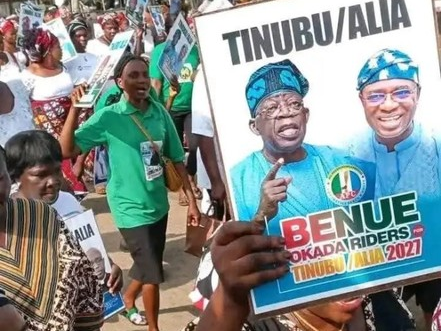
While victims of recent Fulani herdsmen attacks continue to receive treatment in hospitals and grieving families mourn their loved ones, a group of youths and women in Benue State staged a political rally on Thursday in support of the current administration. The demonstrators, under the banner of pro-Tinubu/Alia support groups, marched through major streets of Makurdi, the Benue State capital, expressing solidarity with President Bola Ahmed Tinubu and Governor Hyacinth Alia. Chanting slogans and carrying placards, the group called for second terms for both leaders, praising their policies and leadership style. The rally, however, sparked mixed reactions from residents, many of whom viewed it as insensitive given the recent wave of violent attacks that have left several communities in mourning. Local commentators noted the growing tension between political activities and the humanitarian crisis triggered by insecurity in the state.

Read More

Peter Obi Accuses Tinubu of Reversing Nigeria’s Democratic Progress

Abuja, Nigeria — June 6, 2025Former presidential candidate of the Labour Party (LP), Peter Obi, has accused President Bola Ahmed Tinubu of undermining democracy and failing in key areas of governance, stating that Nigeria’s democratic institutions have suffered significant setbacks under his administration. In a strongly worded statement titled “Democracy in Decline: Reflecting on Two Years of Tinubu’s Governance”, Obi criticised the Tinubu-led government for what he described as poor policy direction, rising poverty, deepening insecurity, and widespread corruption. “Our democracy is in recession. The essential features of a democratic state are missing under this administration. Rules are ignored, institutions are weakened, and impunity reigns,” Obi said. Excessive Foreign Trips Criticised Obi slammed Tinubu’s frequent foreign travels, claiming that the President had embarked on over 30 international trips, spending nearly 150 days abroad, while neglecting pressing domestic issues. “If the President visited all 36 states of Nigeria for just two days each, it would take 72 days—less than half the time he has spent outside the country,” Obi argued, urging Tinubu to engage more with local communities. Economic Decline and Worsening Poverty Obi painted a grim picture of Nigeria’s economic performance under Tinubu, citing several statistics: He also highlighted a surge in rural poverty, referencing recent World Bank data showing that 75% of Nigerians in rural areas are impoverished. “This government is not only failing to grow the economy, it is pushing more Nigerians into poverty,” he said. Collapse of Key Sectors The former Anambra State governor condemned the deteriorating state of education and healthcare, citing the following: He added that mental health issues are on the rise, with 59% of the population reportedly experiencing daily stress. Mass Business Closures, Hunger, and Inflation Obi further disclosed that: “Millions of Nigerians can no longer afford basic meals. The situation is dire, and the government’s response has been propaganda and blame games,” he said. Accusations of Massive Borrowing and Budget Padding Obi criticised the government’s fiscal management, alleging that it has borrowed more in two years than the previous three administrations combined. He estimated Nigeria’s total public debt at nearly ₦188 trillion. He also accused the National Assembly of inflating the 2025 national budget by ₦7 trillion, citing reports by budget tracking group BudgIT. “Our budget has become a crime scene. There is no accountability, and corruption is thriving under this administration,” Obi alleged. Call for Leadership and Accountability The former LP presidential candidate called on Tinubu to emulate former leaders like Umaru Musa Yar’Adua, who publicly admitted the flaws in his election process, and Goodluck Jonathan, who peacefully conceded defeat in 2015. “We must end this era of impunity and restore democratic norms. Nigeria is declining rapidly, and urgent corrective steps are needed to salvage the country,” he concluded.

Read More

Politics Now for the Rich”: Comedian Alibaba Decries Billion-Naira Cost of Contesting Elections in Nigeria

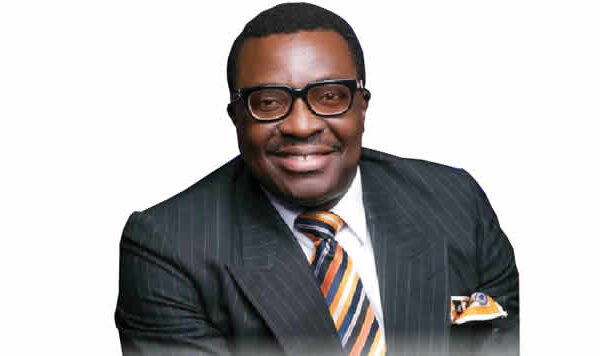
Veteran Nigerian comedian and social commentator, Atunyota Akpobome, popularly known as Alibaba, has expressed deep concern over the escalating cost of contesting political offices in Nigeria, warning that the situation is entrenching corruption and eroding the spirit of public service In a video interview shared by Instagram user @outsidethebox_nix, Alibaba claimed that securing a senatorial seat in Nigeria now demands between ₦1.2 billion and ₦2 billion, depending on the political terrain and regional dynamics. “To win a senatorial seat is now between ₦1.2 billion, ₦1 or ₦2 billion. You need that to win a Senate seat,” Alibaba said, describing political ambition in the country as a “capital-intensive project.” He went further to give a breakdown of the staggering financial requirements for various elective positions. According to him, contesting for a House of Representatives seat could cost up to ₦1 billion, while vying for a position in the State House of Assembly may require ₦500 million. “The cost increases sharply for gubernatorial positions,” he added. “For Delta State, you need about ₦20 billion. For Rivers, about ₦25 billion. For some northern states, maybe ₦4 to ₦6 billion.” Alibaba linked this massive financial demand directly to the rise in corruption among public officials, stating that political office has become an investment venture rather than a call to service. “It’s a capital-intensive project, which is what is driving the corruption in our country right now,” he noted. “People enter office looking to recoup their investment and prepare for the next election, not to serve.” He further emphasized that even policies related to education or health are often approached with profit motives, making genuine development secondary to political survival. This revelation comes amid widespread public outrage over the influence of money in Nigerian politics. In 2022, major political parties pegged their presidential nomination forms at ₦100 million, prompting criticism from citizens and civil society groups. The Independent National Electoral Commission (INEC) has also repeatedly raised alarm about the growing role of money in politics, warning that it threatens democratic processes and excludes credible candidates without financial backing. Alibaba’s comments have sparked renewed debate about the cost of governance and the urgent need for reforms in Nigeria’s electoral financing system.

Read More
President Tinubu Condemns Recent Tragic Attacks, Vows Justice and Protection for All Nigerians

Tinubu Denies Blocking Registration of New Political Parties, Says APC Open to Defectors

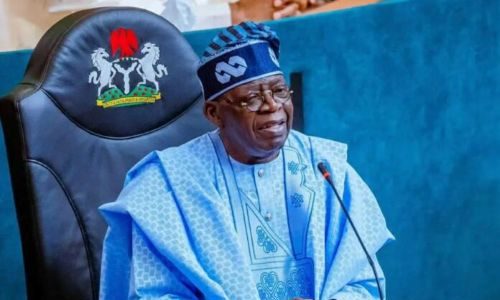
Abuja, June 12, 2025 — President Bola Ahmed Tinubu has denied claims that his administration is obstructing the registration of new political parties in Nigeria. Addressing a joint session of the National Assembly on Thursday as part of activities marking Democracy Day, Tinubu said his government had never issued any directive to the Independent National Electoral Commission (INEC) to halt party registrations. “I have never stopped the registration of any political party,” the President stated. This clarification comes amid allegations that the administration is working to turn Nigeria into a one-party state dominated by the ruling All Progressives Congress (APC). Dismissing such claims, Tinubu stressed that the APC had no intention of closing its ranks to new entrants and that the recent influx of opposition members should not be misconstrued as part of a wider political agenda. “The APC would be guilty of political malpractice if it closed its doors to those who now seek to join,” Tinubu said. Welcoming new defectors from Delta and Akwa Ibom States, Tinubu extended an invitation to others, describing the APC as an inclusive platform for progressive governance. “You are all welcome to the progressives forum,” he told new members. The President, however, took a swipe at opposition parties, accusing them of internal disarray and refusing to take responsibility for their troubles. “I will not help the opposition to put their houses in order,” Tinubu said.“It is indeed a pleasure to watch your houses in disarray.” His comments follow a wave of defections across the country, with several opposition politicians abandoning their parties for the APC in recent months. Democracy Day, held annually on June 12, commemorates Nigeria’s struggle for democratic rule and honours the memory of the annulled 1993 election widely regarded as the freest and fairest in the nation’s history.

Read More

President Tinubu Reaffirms Commitment to Democracy, Economy, and Unity in 2025 Democracy Day Address

Abuja, June 12, 2025 — President Bola Ahmed Tinubu on Thursday addressed a joint session of the National Assembly to mark Nigeria’s 26th year of unbroken democracy, using the occasion to reaffirm his administration’s commitment to democratic values, economic reforms, national unity, and inclusive governance. In a landmark speech delivered before lawmakers, the President honoured the sacrifices of past and present heroes of democracy and outlined his administration’s achievements and policy directions. “Nigeria Will Never Be a One-Party State” — Tinubu Amid growing speculation over political defections and consolidation of power by the ruling All Progressives Congress (APC), Tinubu dismissed rumours that his government is seeking to establish a one-party state. “At no time in the past, nor any instance in the present, and at no future juncture shall I view the notion of a one-party state as good for Nigeria,” Tinubu declared, adding that history would not allow him to repeat the mistakes of political overreach. He acknowledged the recent defections of opposition members into the APC but stressed that parties should focus on fixing internal issues rather than “conjuring up demons.” Tribute to Democracy Heroes In a major highlight of the speech, Tinubu posthumously conferred national honours on notable figures of the pro-democracy struggle, including Kudirat Abiola, Shehu Musa Yar’Adua, Dr. Beko Ransome-Kuti, Ken Saro-Wiwa and the Ogoni 9, among many others. He also extended full presidential pardons to the Ogoni Nine, stating that their sacrifice must not be forgotten. “In this light, I announce the conferment of the posthumous national honour of CFR on Kudirat Abiola, the heroine of the June 12 struggle,” Tinubu said. Living icons including Prof. Wole Soyinka, Bishop Matthew Kukah, and human rights lawyer Femi Falana were also honoured. Democracy Must Defend Free Speech The President emphasized the importance of civil liberties, tolerance of dissent, and a free press, declaring that democracy must not be afraid of “harsh words and stinging insults.” “Call me names… I will still call upon democracy to defend your right to do so,” he stated. Economic Progress and Social Interventions Reviewing the economy, Tinubu highlighted GDP growth of 3.4% in 2024 and a 4.6% surge in Q4—the highest in a decade. He cited stabilised exchange rates, a fivefold increase in foreign reserves, and improving inflation trends. The President announced an expansion of consumer credit initiatives through CREDICORP, aimed at reaching 400,000 young Nigerians starting July. He also pledged increased investment in education, youth employment, and digital infrastructure. “We are committed to giving more opportunities to young people through job creation and skills development,” he noted, referencing programs like NELFUND and a nationwide fibre optic rollout. Legislative Cooperation and Tax Reforms Tinubu called for continued legislative collaboration to pass innovative laws to boost industrialization, food security, and inclusive growth. He praised the National Assembly for its bipartisan work on the Tax Reform Package, which is poised to streamline administration and reduce multiple taxation. He also introduced the National Credit Guarantee Company with ₦100 billion capital and emphasized the importance of transparency through a new Tax Ombudsman Office. Security and National Unity On national security, Tinubu assured Nigerians of improved coordination and intelligence across agencies. He saluted the Armed Forces for their courage, urging continued support for their role in protecting national sovereignty. “Our highways are safer… we invest in technology and training to secure every inch of this country,” he said. Closing: A Call to Renew Democratic Ideals President Tinubu concluded with a passionate appeal for unity, good governance, and national rebirth. “Let us rededicate ourselves to the ideals of June 12—freedom, transparent and accountable government, social justice, and a just society where no one is oppressed.” End of Report

Read More

Tinubu Confers National Honours on Kudirat Abiola, Wole Soyinka, Others at 2025 Democracy Day

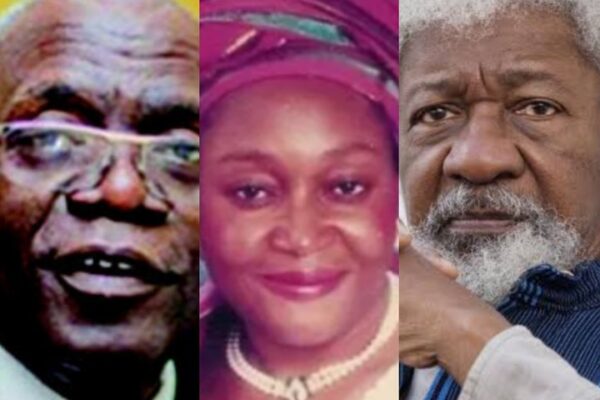
President Bola Ahmed Tinubu has conferred national honours on several distinguished Nigerians in recognition of their roles in promoting democracy, human rights, literature, and national development. The honours were announced during the 2025 Democracy Day celebrations held at a special Joint Session of the National Assembly on Wednesday, June 12. Among the top honourees was the late Kudirat Abiola, posthumously awarded the title of Commander of the Federal Republic (CFR) for her sacrifice in the pro-democracy struggle following the annulled 1993 presidential election. Others awarded the CFR include former Attorney General Bola Ige and Afenifere leader Pa Reuben Fasoranti. Veteran journalist Bayo Onanuga, human rights lawyer Femi Falana, activist and former senator Shehu Sani, and democracy advocate Nurudeen Olowokere were honoured with the title of Commander of the Order of the Niger (CON). Nobel Laureate Prof. Wole Soyinka and respected columnist Prof. Olatunji Dare received the Grand Commander of the Order of the Niger (GCON)—Nigeria’s second-highest national honour. President Tinubu praised the honourees for their commitment to justice and democracy, stating: “These men and women have paid the price, used their voice, pen, and courage to shape the democratic space we now enjoy.” Full citations and further award details are expected to be released soon.

Read More