Where Is President Tinubu? Nigerians Question His Whereabouts After BRICS Summit Ends

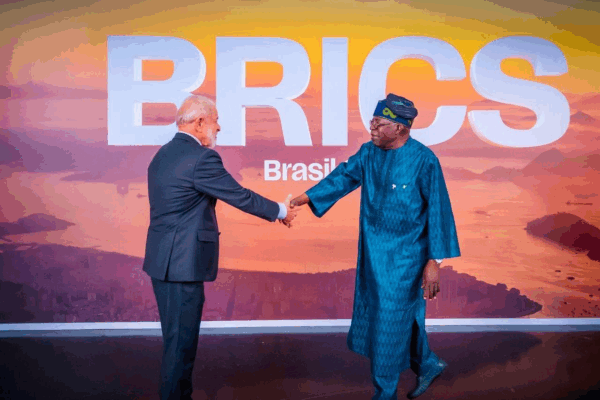
Many Nigerians are raising eyebrows over the whereabouts of President Bola Ahmed Tinubu, days after the conclusion of the 17th BRICS Summit in Rio de Janeiro, Brazil, which ended three days ago. President Tinubu had embarked on a two-nation trip to Saint Lucia and Brazil starting Saturday, June 28, 2025, according to an official statement issued by the Presidency prior to his departure. The itinerary listed no further engagements beyond the BRICS summit and commemorative events in Saint Lucia, leaving many wondering why the President has yet to return — or even be seen publicly — since the summit ended. Despite mounting curiosity, no statement has been released by the Presidency, the Ministry of Foreign Affairs, or any senior government official to clarify the President’s current location or activities. “Is it possible that the Nigerian President’s aircraft is passing through a zone where time is standing still?” a concerned X user sarcastically asked, tagging @grok and other monitoring platforms. The silence has further fuelled speculation on social media, with some questioning whether the President may have extended his trip for undisclosed reasons, or if something more serious is being kept under wraps. This is not the first time President Tinubu’s international travels have sparked opacity concerns. Previous trips have drawn criticism for lack of timely updates, unclear objectives, and absence of media briefings — trends that continue to worry citizens eager for transparency in governance. As of now, the Presidency has remained tight-lipped, and Nigerians continue to wait for answers on where their President is — and why he hasn’t returned home or addressed the nation.
Read More

Tension in Ifako-Ijaiye: APC Loyalists Assault LP Agent at Lagos Polling Unit

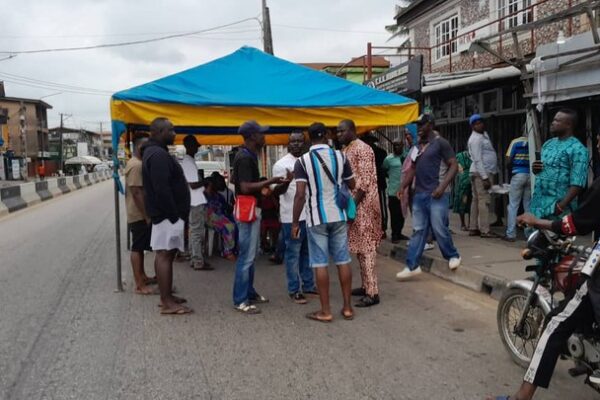
Some aggrieved loyalists of the All Progressives Congress (APC) chairmanship candidate in Ifako-Ijaiye Local Government, Lagos State, reportedly assaulted the Labour Party (LP) polling agent, Spencer Dominic, on Saturday at polling unit 027 along Yaya Abatan, Ogba. The incident occurred during the local government elections, moments before the APC candidate, Usman Akanbi Hamzat, arrived to cast his vote. According to eyewitnesses, APC supporters confronted the LP agent and ordered him to move away from behind the electoral officers. When he refused, insisting on staying to monitor the process for transparency, the situation escalated. The loyalists allegedly dragged, slapped, and shouted at him in full view of security personnel who reportedly failed to intervene. Narrating the incident, Dominic said: “I was standing behind the electoral officers to ensure transparency and verify voter cards as people arrived to vote. Suddenly, the APC supporters told me to leave the spot. I refused, and they began beating me.” In response, an APC leader, Gbenga Adebowale, defended the action, stating that the LP agent had no right to stand behind electoral officials and question the credentials of voters, especially the sitting council chairman. “You don’t question the chairman of the council as a polling agent. There are rules. Polling agents are expected to maintain a certain distance. When you stand behind the electoral officers, it’s seen as an attempt to disrupt the process,” Adebowale said. The election in Lagos was generally marked by low voter turnout, with reports of voter apathy across several polling units in the state. The Lagos State Independent Electoral Commission (LASIEC) is yet to officially comment on the incident.

Read More

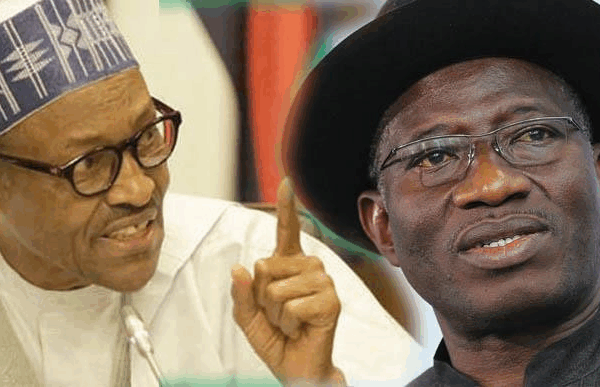
Jonathan: Buhari Targeted My Aides After 2015, Adoke Was Hunted Over OPL 245 Oil Deal

Former President Goodluck Jonathan has said that key officials in his administration were targeted and hunted by the administration of President Muhammadu Buhari shortly after he left office in 2015. Jonathan made this known in Abuja on Thursday during the public presentation of a memoir titled “OPL 245: Inside Story of the $1.3bn Nigerian Oil Block,” authored by Bello Adoke, former Attorney-General of the Federation and Minister of Justice. Represented by ex-Senate President Pius Anyim, Jonathan said the OPL 245 saga was one of the many instruments used to persecute his former aides, with Adoke becoming a global target despite only implementing a presidential directive in the controversial oil deal. “Shortly after my tenure ended in 2015, the succeeding government launched what many saw as a manhunt against key officers of my administration,” Jonathan stated. “Adoke was hunted across the globe. But today, he is alive, he is healthy, and he is here to tell his story.” The OPL 245 case, widely known as the Malabu Oil scandal, involved the sale of a lucrative oil block to Shell and Eni in 2011 for $1.3bn. Allegations later surfaced that $1.1bn of the payment was diverted through intermediaries as bribes to officials and politicians. Adoke, who faced international and local prosecution under the Buhari administration, was eventually discharged and acquitted by courts in Nigeria and abroad. Speaking at the event, Adoke said the book was written not to attack individuals but to set the record straight and provide clarity about his role in the matter. He said he had forgiven all those involved in his ordeal, including former EFCC Chairman Ibrahim Magu, who later apologised. “This book is not written to denigrate anyone. It is meant to set the record straight and offer my account of what transpired,” Adoke said. He alleged that President Buhari’s pursuit of the case was largely influenced by a sense of revenge on behalf of the Abacha family, who had originally been awarded the oil block in 1998. Adoke lamented the massive public resources expended on his prosecution and expressed concern that Nigerian prosecutors who allegedly lied under oath were never held accountable. Vice President Kashim Shettima, who also spoke at the launch, praised Adoke’s forgiveness and described him as a man of conviction. “I admire Adoke for standing by his convictions. He was not praised — he was mocked — and still came out stronger,” Shettima said. Revealing how Adoke once stood up for the rule of law, Shettima shared a personal story of how Jonathan once considered removing him as Borno State Governor, but Adoke advised against it, saying the President lacked such constitutional powers. “That was the beginning of my lifelong bond with Adoke and Tambuwal,” Shettima added. Oyo State Governor Seyi Makinde commended Adoke for uniting political rivals at the book launch and stressed the importance of preserving national history through honest storytelling. Makinde noted that OPL 245 contains over nine billion barrels of crude oil, making the block a highly strategic national asset. Former Senate President Bukola Saraki and ex-Kaduna Governor Nasir El-Rufai also lauded Adoke’s courage. El-Rufai particularly stressed that memoir writing must become a norm among public officials. “We should actually thank Adoke for helping to stabilise democracy in 2015. Instead, he was persecuted,” El-Rufai said. He urged leaders in power today to remember that “everyone’s turn will come.” The event brought together politicians from across Nigeria’s political spectrum, reflecting the broad influence and legacy of Adoke’s career — and his turbulent journey through one of Nigeria’s most contentious oil scandals.

Read More

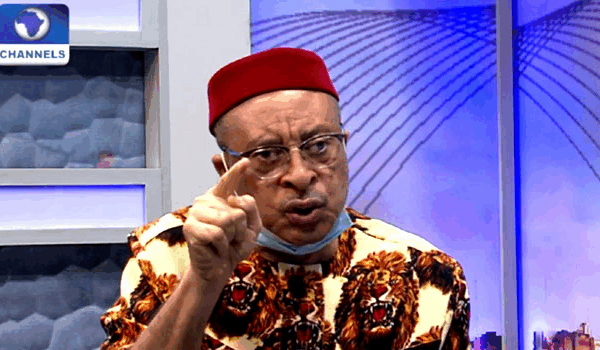
Utomi Faults Tinubu’s Policies, Launches Opposition Shadow Cabinet

In a bold move to reshape Nigeria’s political discourse, Professor Pat Utomi, a renowned political economist, has unveiled a shadow cabinet under the ‘Big Tent’ coalition to provide expert-driven policy alternatives to the administration of President Bola Ahmed Tinubu. Speaking in Abuja after a two-day strategy retreat, Utomi said the shadow cabinet is not designed to compete with the ruling All Progressives Congress (APC) but to offer credible critiques and strategic policy recommendations. The initiative, he said, is rooted in democratic principles that call for informed public debate and accountability. “The progress of any government is to ensure the welfare of the people,” Utomi said. “There must be alternative views and reviews to help government move in the right direction.” Among those named to the shadow cabinet are Nana Kazaure (Information), Riwang Pam (Security), Nike Omola (Women and Gender Development), and Peter Agada (Infrastructure). The group is expected to monitor government policy across sectors and propose reforms grounded in research, data, and public interest. Utomi criticized Nigeria’s current governance model, lamenting a lack of political will and coherent national strategy. He pointed to the controversial Lagos-Calabar coastal highway project as an example of flawed, unilateral policymaking. “We need to stop doing government by impulse,” he said. “The agricultural sector can’t thrive on hoes and cutlasses. We must embrace technology and strategy.” He also called for urgent reform of Nigeria’s security architecture, particularly the decentralization of policing through state police systems. DSS Moves to Block Shadow Government Utomi’s initiative has not gone unnoticed by the authorities. In May, Nigeria’s Department of State Services (DSS) filed a suit at the Federal High Court seeking to declare the shadow cabinet unconstitutional and to restrain Utomi from making public statements or organizing rallies. According to court filings, the DSS alleged that the Big Tent shadow cabinet could incite discontent similar to the 2020 #EndSARS protests and warned of potential public disorder if not curtailed. Utomi, who was abroad at the time but returned to Nigeria in early June, has rejected the accusations and decried what he describes as state efforts to silence dissent. “You cannot build a democracy by criminalizing opposition,” he said, hinting that if the pressure continues, he may be forced to consider leaving the country. Despite legal and political challenges, Utomi insists the shadow cabinet will continue its work of holding the government accountable and offering Nigerians a credible alternative through the African Democratic Congress (ADC), which he described as a coalition vehicle for national transformation. “We’re not here to undermine the government. We’re here to strengthen democracy and ensure the people’s voices are heard,” he said.

Read More

FG Plans End to Power Subsidy as Electricity Debt Hits ₦5tr — Adelabu

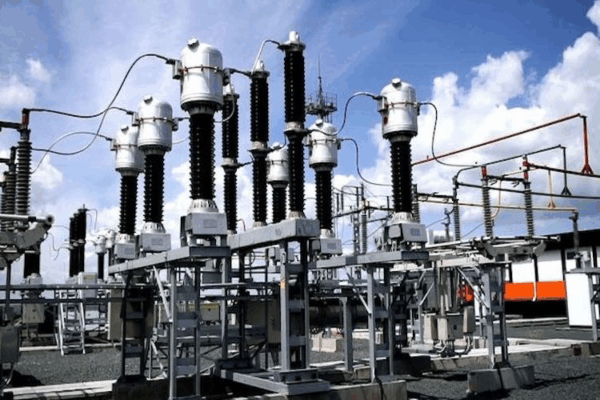
The Federal Government is set to eliminate subsidies in the electricity sector by transitioning to a fully cost-reflective tariff regime, according to Minister of Power, Adebayo Adelabu. This is part of broader reforms aimed at addressing the sector’s mounting debt and ensuring sustainability. Speaking during the Mission 300 Stakeholders’ Engagement in Abuja, Adelabu revealed that Nigeria owes power generation companies over ₦4 trillion in unpaid subsidies as of December 2024. Recent data also shows that an additional ₦1.1 trillion was incurred in the first half of 2025, pushing the total debt to about ₦5 trillion. He emphasized that continuing with the subsidy model is unsustainable and threatens economic development. “To stop the accumulation of further debt, the government is working to transition the sector to a fully cost-reflective regime, while implementing targeted subsidies for the economically vulnerable,” he said. Under the current structure, the allowed tariffs are far lower than the actual cost-reflective tariffs. For example, Band A customers are charged ₦209.50 despite the cost being over ₦220. Band B and C customers pay as little as ₦67 and ₦56, even though the real cost exceeds ₦200 per unit. Adelabu said the reforms would include: The minister noted that the breakdown of local government administration has forced lawmakers to take on executive roles, including power-related infrastructure, thus complicating sector responsibilities. Finance Minister Wale Edun, speaking virtually from Brazil, backed the reforms, saying they were essential for boosting job creation and unlocking Nigeria’s economic potential. He claimed power distribution improved by over 40% in Q1 2025. Consumer Pushback Despite government assurances, consumer rights advocates and energy analysts warn that raising tariffs without service improvements will worsen public dissatisfaction. Kunle Olubiyo, President of the Nigeria Consumer Protection Network, said the public would be unfairly burdened without corresponding improvements in electricity supply. “Between 2015 and now, we’ve only added about 400 megawatts to the grid. Increasing tariffs won’t solve the performance gap,” he said. Bode Fadipe, CEO of Sage Consulting, noted that while liquidity is critical, focusing only on tariff hikes without addressing structural and policy deficiencies will not fix the sector. Consumers like Abubakar Aliyu in Band C areas say they often receive less than six hours of electricity daily. “If service doesn’t improve, any tariff hike will be unjustifiable,” he said. As the nation faces rising inflation and economic strain, stakeholders are urging the government to approach the power sector reforms with a balanced mix of pricing, investment, and accountability.

Read More

Gbajabiamila: Lawmakers Forced Into Budget Insertions Due to Broken Local Governments

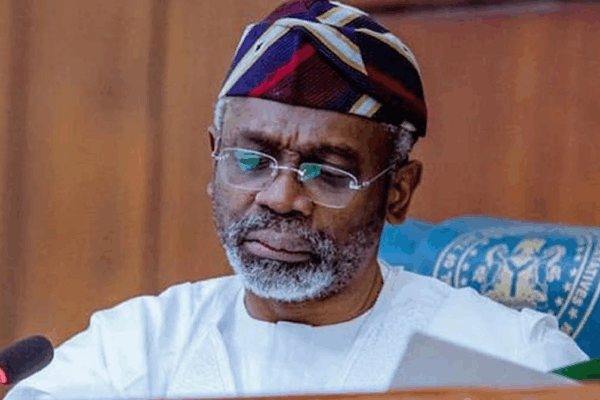
Femi Gbajabiamila, Chief of Staff to President Bola Tinubu, says Nigerian lawmakers are often forced to insert constituency projects into the national budget to meet public expectations caused by the collapse of local government systems. Speaking on Tuesday during the opening of the 2025 Open Week of the House of Representatives in Abuja, Gbajabiamila — a former Speaker of the House — said there is a widening disconnect between the constitutional role of lawmakers and what the public expects of them. “It is a source of frustration that, nearly three decades later, the vast majority of our nation’s people still do not fully comprehend the legislative functions, powers, responsibilities, and limitations of each member of parliament and the institution,” he said. Gbajabiamila explained that the public pressure on legislators to build roads, classrooms, and healthcare facilities — responsibilities assigned to the executive and local governments — has driven lawmakers to rely heavily on budget insertions to deliver tangible projects to their constituents. His remarks follow revelations by BudgIT, a civic tech group, which recently said it uncovered over 11,000 projects worth N6.93 trillion inserted into the 2025 national budget by the National Assembly. The group described the practice as a systemic abuse of power. But Gbajabiamila argued that in the absence of functioning local governance, lawmakers have little choice but to fill the vacuum. “A member of the House of Representatives who isn’t actively engaged in providing education and healthcare facilities, who isn’t doing road construction and waste management, while delivering sustained empowerment for commercial activities, is not going to be a legislator for very long,” he said. He warned that the blurring of legislative and executive roles risks long-term dysfunction and growing public resentment. Legislators, he said, are being judged on duties they were never constitutionally designed to perform. “For example, when the executive builds roads, there is a framework for maintenance through the public works department. No legislator can provide that, nor should they be expected to,” he noted. Gbajabiamila assured that the Tinubu administration is working to restore autonomy and functionality to local governments through improved funding, transparency, and accountability. He emphasized that in more advanced democracies, local governments handle most quality-of-life services — from waste disposal to community policing — now unfairly expected of federal lawmakers. He expressed hope that a strengthened local government system will allow legislators to return to their core constitutional duties: lawmaking, policy development, and oversight of the executive.

Read More
Dangote Refinery Targets 100% Nigerian Crude Supply by End of 2025 — Bloomberg

Dangote Refinery Targets 100% Nigerian Crude Supply by End of 2025 — Bloomberg

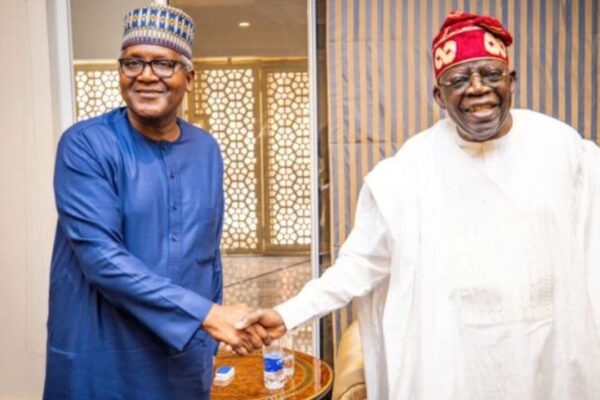
Africa’s largest oil refinery, the 650,000-barrel-per-day Dangote Refinery, is poised to fully transition to sourcing its crude oil exclusively from Nigerian producers by the end of 2025, according to a report by Bloomberg. The refinery, which is already processing 550,000 barrels daily, received 53% of its crude from local sources in June, while the remaining 47% came from international suppliers including the U.S., Brazil, Angola, Ghana, and Equatorial Guinea. Devakumar Edwin, Vice President of Dangote Industries Ltd., told Bloomberg that the transition to 100% local sourcing is underway as several long-term foreign contracts are set to expire. “Personally, and as a company, we expect that before the end of the year we can transition 100% to local crude,” Edwin said during a recent interview at the Lagos-based facility. The $19 billion refinery, inaugurated in May 2023, is seen as a strategic solution to Nigeria’s long-standing reliance on fuel imports. Although Africa’s largest oil producer, Nigeria has historically exported crude for refining abroad and re-imported the finished products—a costly and corruption-prone cycle that the Dangote refinery aims to break. In July and August, Dangote is scheduled to receive five crude oil cargoes each month from the Nigerian National Petroleum Company (NNPC), with each shipment containing nearly one million barrels. Challenges and Outlook The road to full local sourcing has not been without obstacles. Nigeria’s oil sector has been hampered by crude theft, pipeline vandalism in the Niger Delta, and a shift in ownership of oil assets from international oil companies to under-resourced local firms. Despite these challenges, Edwin expressed confidence that improved cooperation between Dangote, local oil traders, and the Nigerian government will stabilize domestic supply chains. A Regional Beacon of Hope During a recent visit to the refinery, ECOWAS Commission President, Dr. Omar Alieu Touray, hailed the project as a “beacon of hope” for Africa, underscoring its significance in driving regional industrialisation and economic independence. The Dangote Refinery, when fully operational, is expected to drastically reduce Nigeria’s import bill, generate jobs, and cement Nigeria’s status as a net exporter of refined petroleum products.

Read More

FG Clears ₦20bn Debt, Processes Over 3.5m Passports Under Tinubu Administration

The Federal Government has cleared a ₦20 billion debt and resolved a backlog of over 200,000 passport applications inherited before President Bola Ahmed Tinubu took office, the Minister of Interior, Olubunmi Tunji-Ojo, announced on Tuesday. Speaking at the inauguration of a new Passport Front Office in Abuja, Tunji-Ojo said the achievement was part of the broader reforms under the Renewed Hope Agenda, which has so far resulted in the issuance of over 3.5 million passports in less than two years. “When we came in, there was a backlog of over 200,000 passports and nearly ₦20 billion in debt. Today, that backlog has been cleared, and the debt has been settled,” the minister stated. From August 2023, a total of 3,546,258 passports have been processed: 3,080,141 locally and 466,117 in the diaspora. He credited the improvements to reforms that also saved the government over ₦1 billion annually. A key move, he said, was the automation of breeder document uploads—such as birth and marriage certificates—previously managed by expensive third-party contractors. “This is a major reform. We no longer pay contractors for what Nigerians can upload themselves. That money stays with government now,” Tunji-Ojo noted. To enhance accessibility and global recognition, the number of centres issuing enhanced e-passports has expanded from 26 to 44 locally, and from five to 47 internationally. All passport offices now issue harmonised, ICAO-compliant enhanced passports, eliminating inconsistencies that previously undermined Nigeria’s global travel credibility. He also announced that a central passport personalisation facility—funded at zero cost to the government by Iris Smart Technologies—will launch in August 2025, further modernising Nigeria’s passport infrastructure. Nigeria has also joined the International Civil Aviation Organization Public Key Directory (ICAO PKD), allowing global digital authentication of its passports. Additionally, the minister revealed that from July 31, 2025, all applications for Special Expatriate Permits and Temporary Work Permits must be submitted online only, citing national security and transparency. “Manual processing will no longer be allowed. We must have the data, biometrics, and documentation of every applicant,” he said. The reforms, according to Tunji-Ojo, are rooted in a commitment to digital transformation, transparency, and national security, while eliminating systemic inefficiencies and ensuring citizens get timely, secure, and world-class services.

Read More