Declaration Bill

WARDC, Stakeholders Push for Passage of Safe School Declaration Bill

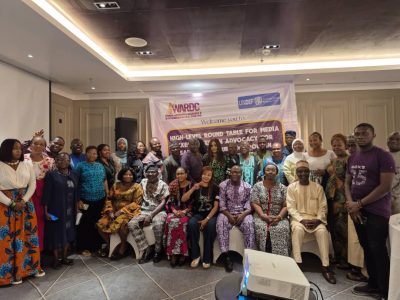
The Women Advocates Research and Documentation Centre (WARDC) and other key stakeholders have called for the urgent passage of the Safe School Declaration (SSD) Bill into law to ensure the protection of students, teachers, and educational institutions across Nigeria. Speaking at a recent advocacy meeting in Abuja, Executive Director of WARDC, Dr. Abiola Akiyode-Afolabi, emphasized that the increasing cases of attacks on schools, particularly in conflict-prone areas, demand immediate legislative action to safeguard the right to education. “The Safe School Declaration is not just a document; it is a commitment to protect our children and their future. Without legal backing, efforts to secure schools remain weak and inconsistent,” Akiyode-Afolabi said. She noted that Nigeria had endorsed the international Safe School Declaration in 2015 but stressed that without an enabling law, implementation has been fragmented. WARDC and its partners are urging the National Assembly to fast-track the legislative process to domesticate the SSD and make its principles legally binding. Several civil society organizations, education experts, security agencies, and representatives from the Ministry of Education joined WARDC in advocating for the bill. They highlighted the disturbing trend of mass abductions of students, school closures due to insecurity, and the resulting setbacks in education, especially for girls in the North. Dr. Akiyode-Afolabi also presented findings from a recent WARDC report, revealing that more than 1,500 students have been kidnapped from schools in the past five years, with many incidents occurring in the North-East and North-West regions. “Our children deserve to learn in a safe environment without fear. We must act now to stop this threat from stealing their dreams,” she urged. Stakeholders also called for greater investment in school security infrastructure, training for school personnel on emergency response, community involvement, and collaboration between security agencies and education authorities. Representatives of the National Assembly present at the event assured participants that steps are being taken to ensure the speedy passage of the bill. They pledged to work closely with civil society groups and other stakeholders to strengthen measures that guarantee safe learning environments. The Safe School Declaration, first launched in Oslo, Norway in 2015, is an inter-governmental political commitment to protect education during armed conflict and to ensure schools and universities are safe spaces for all students.


Read More
Sanwo-Olu Delivers Guest Lecture at Harvard University

Sanwo-Olu Delivers Guest Lecture at Harvard University

I had an amazing experience speaking at Harvard Business School as a guest in Professor Hakeem Belo-Osagie’s course, “Understanding Africa: Business, Entrepreneurship, Political Economy and the Complexities of a Continent.” I presented on “Building the Future: Lagos State’s Infrastructure-Led Transformation,” which allowed me to share our ambitious vision for Lagos and the real progress we’re making in areas like transportation, housing, climate innovation, and industrial development. What truly made the session special was the engaging discussion with the brilliant students. Their insightful and thought-provoking questions, covering topics such as leadership, sustainable revenue generation, infrastructure renewal, and investment partnerships, showcased just how much interest there is in Africa’s urban transformation. Lagos is on the rise, not only in terms of growth but also in importance. We aim to be a shining example of how infrastructure can drive prosperity across the continent, and this reinforces that we’re heading in the right direction. Thank you, Harvard, for the warm hospitality and engaging conversation.

Read More
FG Releases ₦50bn to Clear ASUU, Varsity Staff Earned Allowances

FG Releases ₦50bn to Clear ASUU Varsity Staff Earned Allowances

The Minister of Education, Dr Maruf Alausa, on Wednesday, announced the release of N50 billion by the Federal Government to the academic and non-academic staff unions of federal universities for the settlement of earned allowances, as promised by President Bola Tinubu. This development was disclosed in a statement titled “FG Releases N50bn Earned Allowances to Varsity Unions, Tinubu Reaffirms Education Priority”, issued by Folasade Boriowo, Director of Press at the Federal Ministry of Education. Boriowo stated that the move “stands as yet another testament to Tinubu’s unwavering commitment to fundamentally transform Nigeria’s education sector. It reflects the administration’s bold resolve to transitionthe nation from a resource-based to a knowledge-based economy through strategic investments in education, infrastructure, and human capital.” According to the Minister, “This intervention is not just a financial transaction—it is a reaffirmation of our President’s belief in the capacity of Nigerian youth and the invaluable role that academic and non-academic staff play in nurturing them. “By prioritising their welfare, we are laying the foundation for a future where every Nigerian child receives highly qualitative and globally competitive education.” The Minister expressed President Tinubu’s heartfelt appreciation to both academic and non-academic unions for their sustained trust in his administration and for fostering an atmosphere of peace and cooperation across Nigeria’s federal institutions. “Notably, the country is currently experiencing one of the longest uninterrupted academic sessions in recent history—a feat attributed to the mutual understanding and shared commitment between the government and the university community,” the statement added. The President reiterated: “The youth are the heartbeat of our country. Their future is extremely important to me and my administration. Keeping our children in school is not negotiable. It is my commitment that strikes in our institutions will soon become a thing of the past.” Recall that university-based academic unions have been at loggerheads with past governments over the failure to release earned allowances, among other demands.

Read More
WAEC Introduces Groundbreaking Changes for the 2025 WASSCE: A New Era in Examination Integrity

WAEC Introduces Groundbreaking Changes for the 2025 WASSCE: A New Era in Examination Integrity

The West African Examinations Council (WAEC) has unveiled a series of transformative changes to the 2025 West African Senior School Certificate Examination (WASSCE), signalling a major step forward in the fight against examination malpractice. Among the key reforms is the introduction of computer-based testing (CBT) for objective sections of the exams, marking a significant shift from the traditional pen-and-paper format. According to WAEC, theory and practical papers will still be conducted manually, but the adoption of CBT is aimed at increasing efficiency, accuracy, and speed in the assessment process. The council noted that this hybrid approach will allow students to adapt gradually to a more digital examination structure while maintaining fairness and accessibility across all regions. In addition, WAEC is implementing a revamped registration process that includes enhanced biometric verification to curb impersonation and data falsification. Question randomization technology will also be introduced to reduce the likelihood of cheating, as no two students will receive the same set of questions in the same order. These innovations, WAEC says, are designed to restore public confidence in the examination system and promote a culture of integrity among students and schools. The council emphasized that this marks the beginning of a new era in educational assessment across West Africa, ensuring that results reflect true merit and academic achievement.

Read More