Wale busari

Falana Accuses Trump Of Lying About ‘Christian Genocide’ In Nigeria

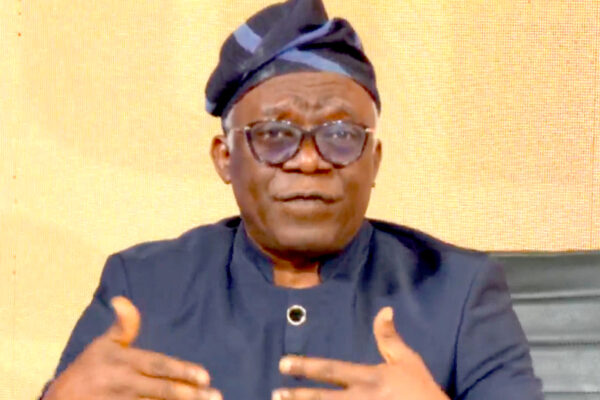
Human rights lawyer, Femi Falana (SAN), has accused U.S. President Donald Trump of fabricating claims about an alleged “Christian genocide” in Nigeria, describing him as a leader driven by hostility toward Africa. Speaking on Channels Television’s Politics Today on Wednesday, Falana dismissed Trump’s assertion that thousands of Christians were being systematically killed in Nigeria, calling it a baseless and misleading statement. “My position is that Mr. Trump has lied to the whole world by alleging Christian genocide in Nigeria without any evidence to back it up,” Falana said. He explained that the violence in Nigeria is not religiously motivated but rooted in criminality, insecurity, and economic struggles. “He said about 3,100 Christians have been killed in Nigeria. But when you look at the facts, those behind the killings — terrorists, bandits, kidnappers, or gunmen — do not care about religion. What they are after is ransom or control of territory. It’s not about religion,” he said. Falana highlighted that in states such as Benue and Plateau, most violent clashes are tied to land and grazing disputes. “Those who are killing there are either trying to take land or feed their animals,” he added. The senior lawyer urged the Federal Government not to be alarmed by Trump’s recent threat of military action against Nigeria but to focus on strengthening its internal security. “Instead of losing sleep over Trump’s statement, the government should look inward and identify its own failings,” he said. He further alleged that Trump’s comments form part of a broader geopolitical agenda targeting Africa’s natural resources and global alliances. “I know him, I know his antics, I know his hatred for Africa. This whole issue is about Nigeria’s resources. The same people pushing this agenda are also saying China must be cut down to size in Africa. We must understand the global politics behind it and the mistakes our own leaders have made,” Falana said. His remarks come amid rising diplomatic tension following Trump’s directive for U.S. forces to prepare for possible military intervention in Nigeria.
Read More

Ex-Banker Bags Three-Year Jail Term Over ₦8.56 Billion Fraud

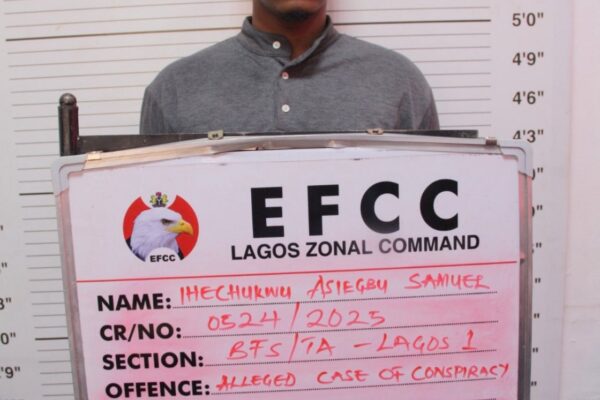
A former banker, Samuel Asiegbu, has been sentenced to three years in prison without an option of fine for his role in an ₦8.56 billion fraud involving a first-generation Nigerian bank. The Economic and Financial Crimes Commission (EFCC) announced the conviction in a statement on Wednesday, November 5, 2025, revealing that Asiegbu was charged alongside several others for conspiracy, stealing, and unauthorised access to a computer system with intent to defraud, contrary to Sections 409 and 386 of the Lagos State Criminal Law, 2011. The defendants were first arraigned before the Federal High Court in Lagos on June 23, 2025, and all initially pleaded not guilty. However, Asiegbu later changed his plea to guilty, leading Justice Rahman Oshodi to convict and sentence him. “The court sentenced Asiegbu to 10 months and eight days’ imprisonment on count three and one year and eight months on count four, both without an option of fine. The sentences are to run concurrently. Consequently, the court struck out counts one and two,” the EFCC stated. The trial of the remaining defendants will continue, with the court adjourning the case to November 14, 2025. In May 2025, PUNCH Online reported that the EFCC arraigned three bankers — Samuel Ihechukwu Asiegbu, Fabian Onyeimachi, and Kingsley Ejim Kelechi — along with four other accomplices, for their alleged roles in manipulating the bank’s internal systems to execute the multibillion-naira fraud. EFCC spokesperson Dele Oyewale disclosed that the accused “tampered with critical banking data in January 2025, causing a financial loss of ₦8,568,090,500,” and conspired with others still at large “to carry out the fraudulent transactions for their personal benefit.”

Read More

Chelsea Salvage 2-2 Draw Against Qarabag After Rocky Start

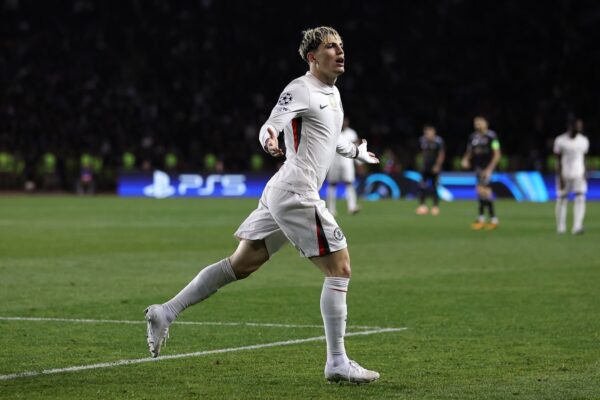
The match got off to a rocky start, with Romeo Lavia picking up yet another injury within the first five minutes, forcing Moises Caicedo to come on unexpectedly and cutting short his planned rest. Despite the early setback, things seemed to be looking up when Estevao opened the scoring just 15 minutes in, giving hope that the game might settle in our favor. That optimism was short-lived, however, as Qarabag struck twice in quick succession. The first came from sloppy defending, and the second followed a somewhat unlucky handball call against Jorrel Hato in the box. Qarabag’s pace on the wings exposed our makeshift defense, creating constant problems throughout the first half. A triple substitution at halftime initially did little to change the momentum, with the home side still posing a threat. But then Alejandro Garnacho fired in a well-taken equalizer, and the match began to find a more familiar rhythm. Chelsea started to dominate possession, while Qarabag looked to hit on the break. Despite several close chances from Delap, Estevao, Enzo, and Bounanotte, the winning goal remained elusive. Both teams had opportunities in stoppage time, but neither could convert, leaving the game level at the final whistle.

Read More
Senate Steps In To End ASUU Strike, Sets Meeting With Education Minister And NUC

Senate Approves Up To 14-Year Jail Term For Sexual Harassment In Tertiary Institutions

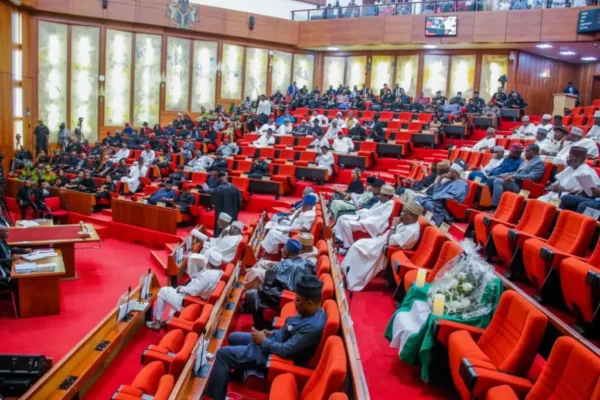
The Senate has approved a new law prescribing prison terms of five to 14 years, without the option of a fine, for anyone found guilty of sexually harassing students in Nigeria’s tertiary institutions. On Tuesday, lawmakers passed the Sexual Harassment of Students (Prevention and Prohibition) Bill, 2025 (HB.1597), during its third reading. Senate Leader Senator Opeyemi Bamidele (APC, Ekiti Central), who presented the bill for concurrence, said it is designed to protect students from all forms of sexual misconduct while providing a clear legal framework for punishing offenders. “The Bill is enacted to promote and protect ethical standards in tertiary education, the sanctity of the student-educator relationship of authority, dependency, and trust, and respect for human dignity in educational institutions,” Bamidele said. Under the law, anyone convicted of sexual harassment faces up to 14 years in prison and not less than five years. Lesser offences carry two to five years in jail, with fines explicitly prohibited. The legislation also allows students or their representatives to initiate civil actions against educators for breach of fiduciary duty. Institutions may conduct internal disciplinary proceedings, but such processes must be suspended if a criminal case on the same matter is pending in court. Sexual harassment is defined in the bill to include “grabbing, hugging, kissing, rubbing, or touching the breasts, hair, lips, hips, or any other sensual part of the body of a woman; displaying, giving, or sending sexually explicit pictures or materials; whistling, winking, making sexual remarks, or stalking a student.” The law clarifies that consent by the student is not a valid defence, except where the educator and student are legally married. Complaints can be filed in writing by the affected student, a relative, guardian, or lawyer to the Nigeria Police Force or the Attorney-General, with copies sent to the Independent Sexual Harassment Committee of the relevant institution. During the debate, some lawmakers called for the bill to extend beyond students. Senator Adams Oshiomhole (APC, Edo North) argued, “There is no need to restrict sexual harassment issues to students. We should craft this law in a way that gives it universal application.” Deputy Senate President Barau Jibrin (APC, Kano North), who presided over the session, noted that the bill is a concurrence from the House of Representatives and could not be substantially altered, adding that existing laws already address sexual harassment in workplaces and other sectors. The Senate passed the bill unanimously, hailing it as a significant step toward ending sexual abuse and safeguarding the rights of students in Nigeria’s higher education institutions.

Read More

Tiwa Savage Sets Record Straight On Second Wife Comment, Says It Was Out Of Heartbreak

Tiwa Savage has cleared the air on her viral statement about being open to becoming a second wife, explaining that it was born out of frustration rather than a genuine desire for polygamy. The award-winning singer said her past relationships have left her emotionally drained and vulnerable, leading to her candid but misunderstood remark. “I was a first wife, and look where that got me. I married as the only wife, yet here I am. I’m exhausted from heartbreak. Perhaps I’m approaching this wrong; maybe I should think about being a second wife,” Tiwa had said. She has now clarified that her words were not meant to suggest she truly wants to be a second wife but were instead an emotional reflection on her experiences with love and heartbreak. “It’s not a choice I want to make. I don’t wish for this. I wish I could express my truth freely, but I fear backlash,” she explained. Her clarification comes after her initial statement went viral, sparking mixed reactions from fans who were surprised by her openness about her personal struggles.

Read More

Court Stops Lagos Police Commissioner From Declaring Sowore Wanted

A Federal High Court in Ikoyi, Lagos, has barred the Lagos State Commissioner of Police, Moshood Jimoh, from declaring former presidential candidate and human rights activist Omoyele Sowore wanted. Sowore made the development known on his 𝕏 (formerly Twitter) account on Wednesday, November 5, while describing the Lagos police chief as “incompetent.” “I just left the Federal High Court in Ikoyi, Lagos, where the court restrained the incompetent CP of @policeng Lagos Command, Moshood Jimoh, from declaring Omoyele Sowore WANTED,” he wrote. The ruling follows ongoing tensions between Sowore and the Nigerian Police Force, which he accused of “unlawful intimidation and political persecution.” Earlier, Sowore had filed a fundamental rights enforcement suit against the Inspector-General of Police, Kayode Egbetokun, and the Lagos State Commissioner of Police. In the suit, marked FHC/L/CS/1923/2025, he argued that the attempt to declare him wanted over a protest in Lagos was illegal, defamatory, and a deliberate move to stifle his activism. He urged the court to protect his rights and restrain the police from any further acts of harassment, arrest, or public labeling that could threaten his safety and reputation. Sowore also demanded damages for what he called the violation of his constitutional rights to free expression and peaceful assembly. Following the court’s decision, Sowore described the judgment as a victory for democracy and a reminder that “no one is above the law.” As of press time, the Lagos State Police Command had yet to issue a statement on the ruling.

Read More

Yvonne Jegede Speaks Out Against Ned Nwoko, Calls For Justice For Regina Daniels’ Brother

Actress Yvonne Jegede has thrown her weight behind Regina Daniels amid reports that her estranged husband, Senator Ned Nwoko, ordered the arrest of Regina’s brother. In a post shared on her Instagram Story, Yvonne expressed outrage over the development, writing, “Evil thrives when good people are silent. We will not sit and watch the ongoing injustice because a young girl decided to exit a union. Sir, your current actions are proving the young girl right. This is a fight for the girl-child and for our democracy as Nigerians. #freesamuelojeagwu” Her message resonated with many fans who praised her courage for speaking up. Yvonne’s statement framed the issue as not just a family dispute but a broader struggle for justice and the protection of women’s rights in Nigeria.

Read More

AbdulGaniyu Obasa Takes Charge As Agege Council Chairman Following Tunde Azeez’s Resignation

Hon. AbdulGaniyu Vinod Obasa has officially assumed office as the substantive Chairman of Agege Local Government following the resignation of Hon. Tunde Azeez, popularly known as Disco. The 10th Assembly of the Agege Legislative Council, led by Hon. Adeshina Haruna, approved Obasa’s appointment during its plenary session on Tuesday after accepting Azeez’s resignation, which was attributed to health challenges. Azeez explained that his health had hindered his ability to perform effectively, prompting his decision to step down. The councillors commended his dedication and wished him a speedy recovery. Lawmakers described Obasa’s elevation as a key step toward ensuring continuity, stability, and effective governance in Agege. During the same session, the Assembly reviewed its committee structures and oversight duties, emphasizing transparency, accountability, and improved project monitoring across the local government. Reaffirming its commitment to development-focused leadership, the Assembly pledged to continue delivering initiatives that will benefit residents under its renewed administrative structure. Reacting to the leadership change, All Progressives Congress (APC) chieftain in Agege, Rotimi Sulaiman, praised Azeez’s decision as a selfless act. “Hon. Tunde Azeez has been unwell for a while, and stepping down to prioritize his health rather than being burdened by the responsibilities of office is a wise and commendable move,” he said. He also commended the new chairman, adding, “AbdulGaniyu Vinod Obasa is a visionary young man who proved his capacity during Azeez’s absence. Agege is indeed fortunate to have both men serving its people.”

Read More