Fola Badmus

Thomas Partey Pleads Not Guilty to Rape and Sexual Assault Charges

By Kamal Yalwa – Wednesday, 17 September 2025 LONDON – Former Arsenal midfielder Thomas Partey has pleaded not guilty to multiple charges of rape and sexual assault during a hearing at Southwark Crown Court. The 32-year-old, who now plays for Spanish side Villarreal, is facing five counts of rape and one count of sexual assault, relating to alleged incidents involving three women between 2021 and 2022, during his time as an Arsenal player. Partey appeared in court on Wednesday for a 14-minute hearing, speaking only to confirm his name, date of birth, and enter his not guilty pleas. His trial is scheduled to begin on November 2, 2026, and will be presided over by a High Court judge. Judge Christopher Hehir acknowledged the lengthy delay, citing a significant backlog in the Crown Court system. Partey remains on bail under existing conditions, including restrictions on contacting the alleged victims and requirements to report any permanent address changes or international travel. Partey was initially arrested in July 2022, though he was not publicly named at the time. He continued to play for Arsenal while investigations were ongoing, with his contract expiring on June 30, 2025. He was officially charged on July 4. Arsenal head coach Mikel Arteta previously stated the club was “100 per cent sure” all proper procedures were followed during the investigation. A club spokesperson confirmed that Partey was no longer under contract and declined further comment due to ongoing legal proceedings. His court appearance came just a day after he featured as a substitute in Villarreal’s Champions League match against Tottenham Hotspur in London. Partey joined Arsenal from Atlético Madrid in 2020 in a £45 million deal. He made 35 Premier League appearances last season, scoring four goals, and has earned over 50 caps for Ghana, representing the national team at both the World Cup and Africa Cup of Nations.

Read More
Yamal to Miss Newcastle Clash as De Jong Returns for Barcelona

Yamal to Miss Newcastle Clash as De Jong Returns for Barcelona

By Kamal Yalwa – September 17, 2025 BARCELONA – Lamine Yamal will miss Barcelona’s Champions League opener against Newcastle United at St James’ Park, with head coach Hansi Flick confirming the Spain international has not been included in the travelling squad. The 18-year-old winger is still recovering from a groin injury that ruled him out of Barcelona’s 6–0 LaLiga win over Valencia on Sunday. He will remain in Catalunya to continue his rehabilitation ahead of this weekend’s league fixture against Getafe. Barcelona, however, are boosted by the return of Frenkie de Jong, who has been declared fit after overcoming a groin problem sustained during international duty with the Netherlands. The Catalan giants will also be without Alejandro Balde and Gavi, who are both sidelined with hamstring and knee injuries, respectively. Flick’s squad flew to England on Wednesday morning, as they prepare to face Eddie Howe’s Newcastle, who return to Champions League action at home.

Read More
Kane Double Sinks Chelsea as Bayern Start Champions League Campaign in Style

Kane Double Sinks Chelsea as Bayern Start Champions League Campaign in Style

By Kamal Yalwa: September 17, 2025 MUNICH – Bayern Munich kicked off their UEFA Champions League campaign with a commanding 3-1 win over Chelsea at the Allianz Arena, thanks to a brace from Harry Kane and an own goal from Trevoh Chalobah. The result sees Bayern move into the top three of their group, while Chelsea slump to the bottom five across the wider group stage rankings after a disappointing start to their European campaign. The scoring began when a dangerous cross from Michael Olise led to an unfortunate own goal by Chalobah, giving Bayern the early advantage. Kane then doubled the lead with a composed finish before capitalising on a defensive error from Malo Gusto to add a third. Cole Palmer managed to pull one back for Chelsea just minutes after Bayern’s third, offering a brief glimmer of hope. The midfielder thought he had grabbed a second late on, but his goal was ruled out for offside by VAR, sealing Chelsea’s fate. This marks Chelsea’s second consecutive defeat in a Champions League opening match, following their 2022–23 loss to Dinamo Zagreb. Remarkably, it’s as many Matchday 1 defeats as they suffered in their previous 18 Champions League campaigns combined (W11 D5 L2). The loss raises early questions for the London side, who will need a swift response in their next group fixture to avoid falling further behind in an already competitive group. Live commentary from the Allianz Arena was provided by Noah Langford and Patrick Rowe, with reports from Gary Cotterill.

Read More

It’s Not Luck– Morrison Defends Liverpool’s Late-Win Mentality

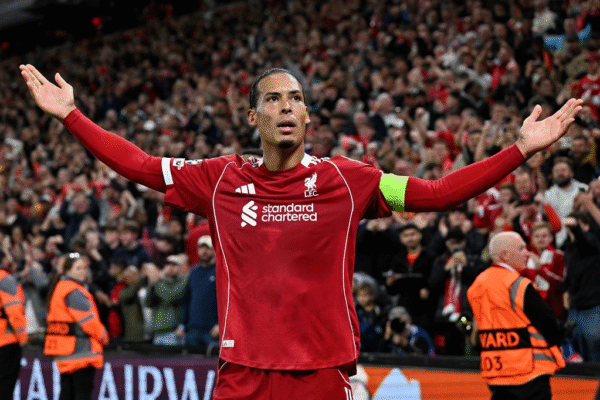
LONDON – Former Premier League striker Clinton Morrison has dismissed suggestions that Liverpool’s repeated late victories this season are down to luck, instead attributing their success to determination and leadership on the pitch. “Everyone keeps saying Liverpool leave it late, but it can’t be lucky the number of times they’ve done it already this season,” Morrison said during post-match analysis. “They keep going; they’ve got that desire to push right until the end. They’ve got big players and big characters. Credit to Liverpool. They would’ve been disappointed had they not won – they were comfortable at 2-0 up.” The latest dramatic finish came courtesy of Virgil van Dijk, who scored a crucial late winner to seal the result. “We found a way again,” Van Dijk said in his post-match interview. “We were dangerous from our set-pieces. They were pretty aggressive. I’m happy I got the winner.” Liverpool’s late-game resilience has become a hallmark of their campaign, further fueling belief in their title credentials as the season progresses.

Read More
A Return to Normalcy: President Tinubu Lifts State of Emergency in Rivers State, Ushering in a New Chapter for Port Harcourt.

A Return to Normalcy: President Tinubu Lifts State of Emergency in Rivers State, Ushering in a New Chapter for Port Harcourt.

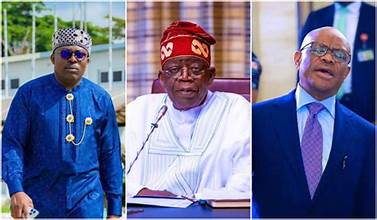
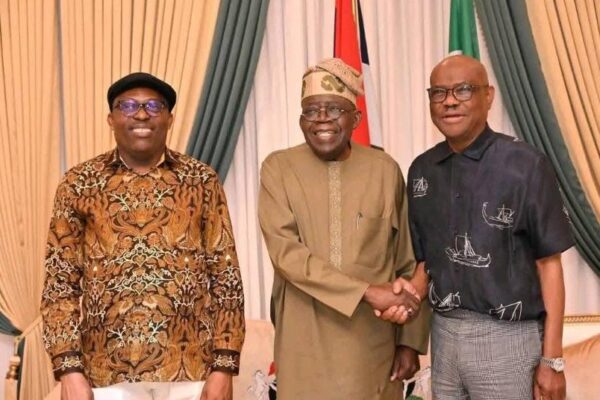
In a landmark decision that signals the end of a turbulent six-month period, President Bola Ahmed Tinubu has lifted the state of emergency imposed on Rivers State, effectively restoring full democratic governance to the oil-rich region and its bustling capital, Port Harcourt. Declared on March 18, 2025, amid escalating political tensions, insecurity, and a constitutional standoff, the emergency rule suspended Governor Siminalayi Fubara, his deputy Ngozi Odu, and the entire State House of Assembly. Today, as the mandate expires, the focus shifts to healing, unity, and progress—offering hope to a state long synonymous with both opportunity and unrest. The Crisis That Prompted Intervention Rivers State, home to Nigeria’s vital oil and gas heartland, had been spiraling into chaos. A bitter feud between Governor Fubara and his predecessor-turned-rival, Federal Capital Territory Minister Nyesom Wike, escalated into a full-blown political crisis. The State House of Assembly became a battleground, with defections, impeachments, and judicial interventions paralyzing governance. Insecurity surged, markets shuttered amid fears of violence, and public services ground to a halt. A devastating explosion at the Trans Niger Pipeline in Ogoniland, suspected by some to be politically motivated, underscored the risks of further instability. President Tinubu, invoking Section 305 of the 1999 Constitution, declared the emergency to avert “anarchy” and restore order. He suspended the elected officials for six months and appointed Vice Admiral Ibok-Ete Ibas (retd.) as Sole Administrator, tasking him with stabilizing the state. The move drew sharp criticism—opposition figures like former Vice-President Atiku Abubakar decried it as “political manipulation,” while the Nigerian Bar Association argued it overstepped constitutional bounds by effectively removing elected leaders. Yet, the National Assembly approved the declaration, paving the way for interim governance. Achievements Under Emergency Rule: From Chaos to Calm Under Ibas’s stewardship, Rivers State saw tangible progress. The administrator prioritized security, leading to improved inter-agency cooperation and a sharp drop in politically motivated violence. Markets in Port Harcourt reopened without fear, civil servants received salaries on time, and public projects resumed—breaking the “paralysis” that had gripped the state. A key milestone was the conduct of peaceful local government elections by the Rivers State Independent Electoral Commission (RSIEC), culminating in the swearing-in of new officials across the 23 local councils. Ibas hailed these polls as “credible” and declared Tinubu’s mandate “sufficiently achieved,” emphasizing restored peace and democratic institutions.The Rivers Peace Congress echoed this sentiment, crediting Tinubu’s intervention with saving the state from descent into disorder. “Rivers people can now go to sleep with both eyes closed,” the group stated, highlighting normalized daily life in Port Harcourt and beyond. Even as the rule ended, Ibas described it as a “necessity” born of “insecurity, political impasse, and breakdown of trust,” underscoring how it rebuilt confidence in governance. Lifting the Emergency: A Call for Unity and Reflection. With the six months concluding today, President Tinubu’s administration has allowed the suspensions to lapse, reinstating Governor Fubara and the assembly members. The Rivers Elders Council, led by Chief Ferdinand Alabraba, issued a poignant appeal for collaboration between Fubara and the lawmakers, urging them to “work together without distractions” for the state’s peace and progress. They commended the patience of Rivers residents and praised Tinubu’s “proactive action” in averting disaster, while lauding FCT Minister Wike’s role in the cabinet as a “cherished leader.”In a public lecture at Government House, Port Harcourt, titled “Good Governance and Democratic Dividends,” Ibas reflected on the transition, calling it a “covenant renewal” with the people. Guest lecturer Prof. Abiodun Amuda-Kanmike, SAN, urged sober reflection, positioning the period as a cautionary tale for other states on the perils of instability. Implications for Port Harcourt and Beyond Port Harcourt, the epicenter of Rivers’ economic and political life, stands to benefit immensely. As Africa’s “Garden City,” it has weathered oil spills, militancy, and now political strife—but this lift offers a fresh start. Enhanced security could boost investment in the Port Harcourt Refinery (recently restarted under Tinubu’s watch) and the broader Niger Delta economy. For residents, it means resumed normalcy: vibrant markets, reliable services, and a government focused on development rather than division.Yet challenges linger. The PDP has labeled the emergency an attempt at “state capture,” and ethnic tensions could resurface if unity falters. Civil society groups stress the need for inclusive dialogue to prevent relapse. Final Thoughts: Stability as the Foundation for Prosperity President Tinubu’s decision to lift the state of emergency is more than procedural—it’s a testament to decisive leadership that prioritized peace over partisanship. As Rivers State transitions back to elected rule, the onus is on leaders like Fubara to honor the progress made under extraordinary circumstances. For Port Harcourt, this marks not just the end of a dark chapter, but the dawn of one where oil wealth translates to widespread prosperity. What lessons can other Nigerian states draw from Rivers’ experience? Share your views in the comments—let’s discuss how to keep the momentum going.


Read More

Breaking: Tinubu Lifts Emergency Rule in Rivers, Reinstates Gov Fubara

By Bunmi Ogunyale Nigeria’s President, Bola Ahmed Tinubu has lifted the State of Emergency rule on Rivers State. The President made this declaration in a statement made available in Abuja on Wednesday. His words; “My Fellow countrymen and, in particular, the good people of Rivers State. “I am happy to address you today on the state of emergency declaration in Rivers State. You will recall that on 18th March, 2025, I proclaimed a state of emergency in the state. In my proclamation address, I highlighted the reasons for the declaration. “The summary of it for context is that there was a total paralysis of governance in Rivers State, which had led to the Governor of Rivers State and the House of Assembly being unable to work together. Critical economic assets of the State, including oil pipelines, were being vandalised. “The State House of Assembly was crisis-ridden, such that members of the House were divided into two groups. Four members worked with the Governor, while 27 members opposed the Governor. The latter group supported the Speaker. As a result, the Governor could not present any Appropriation Bill to the House, to enable him to access funds to run Rivers State’s affairs. That serious constitutional impasse brought governance in the State to a standstill. Even the Supreme Court, in one of its judgments in a series of cases filed by the Executive and the Legislative arms of Rivers State against each other, held that there was no government in Rivers State. “My intervention and that of other well-meaning Nigerians to resolve the conflict proved abortive as both sides stuck rigidly to their positions to the detriment of peace and development of the State. “It therefore became painfully inevitable that to arrest the drift towards anarchy in Rivers State, I was obligated to invoke the powers conferred on me by Section 305 of the 1999 Constitution, as amended, to proclaim the state of emergency. The Offices of the Governor, Deputy Governor, and elected members of the State House of Assembly were suspended for six months in the first instance. The six months expire today, September 17th, 2025. “I thank the National Assembly, which, after critically evaluating the justification for the proclamation, took steps immediately, as required by the Constitution, to approve the declaration in the interest of peace and order in Rivers State. I also thank our traditional rulers and the good people of Rivers State for their support from the date of the declaration of the state of emergency until now. “I am not unaware that there were a few voices of dissent against the proclamation, which led to their instituting over 40 cases in the courts in Abuja, Port Harcourt, and Yenagoa, to invalidate the declaration. That is the way it should be in a democratic setting. “Some cases are still pending in the courts as of today. But what needs to be said is that the power to declare a state of emergency is an inbuilt constitutional tool to address situations of actual or threatened breakdown of public order and public safety, which require extraordinary measures to return the State to peace, order and security. “Considered objectively, we had reached that situation of total breakdown of public order and public safety in Rivers State, as shown in the judgment of the Supreme Court on the disputes between the Executive and the Legislative arm of Rivers State. It would have been a colossal failure on my part as President not to have made that proclamation. “As a stakeholder in democratic governance, I believe that the need for a harmonious existence and relationship between the executive and the legislature is key to a successful government, whether at the state or national level. The people who voted us into power expect to reap the fruits of democracy. However, that expectation will remain unrealizable in an atmosphere of violence, anarchy, and insecurity borne by misguided political activism and Machiavellian manipulations among the stakeholders. “I am happy today that, from the intelligence available to me, there is a groundswell of a new spirit of understanding, a robust readiness, and potent enthusiasm on the part of all the stakeholders in Rivers State for an immediate return to democratic governance. This is undoubtedly a welcome development for me and a remarkable achievement for us. I therefore do not see why the state of emergency should exist a day longer than the six months I had pronounced at the beginning of it. “It therefore gives me great pleasure to declare that the emergency in Rivers State of Nigeria shall end with effect from midnight today. The Governor, His Excellency Siminalayi Fubara, the deputy governor, Her Excellency Ngozi Nma Odu, and members of the Rivers State House of Assembly and the speaker, Martins Amaewhule, will resume work in their offices from 18 September 2025. “I take this opportunity to remind the Governors and the Houses of Assembly of all the States of our country to continue to appreciate that it is only in an atmosphere of peace, order, and good government that we can deliver the dividends of democracy to our people. I implore all of you to let this realisation drive your actions at all times. “I thank you all.” Long live the Federal Republic of Nigeria.

Read More

NNPC Ltd GCEO Calls for Stronger African Collaboration to Achieve Energy Security

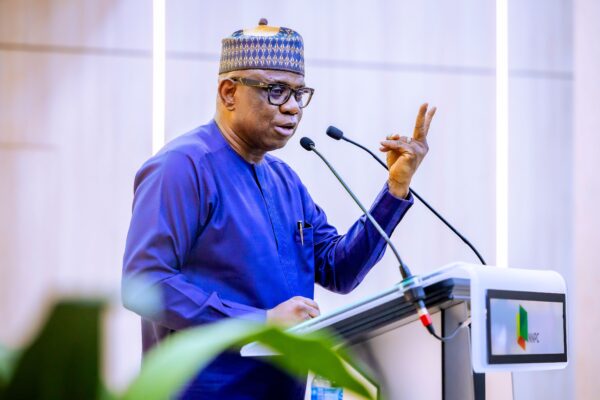
By Prince Iroka The Group Chief Executive Officer of NNPC Limited, Engr. Bashir Bayo Ojulari, has reaffirmed Nigeria’s unwavering commitment to partnering with other African nations to achieve sustainable energy security across the continent. Engr. Ojulari made this assertion while addressing industry leaders at the 7th African Petroleum Producers’ Organisation (APPO) National Oil Companies CEOs Forum, where he stressed the urgency for Africa to accelerate its energy transition and secure its energy future. He highlighted the decline of European investments in fossil fuel refineries, with most set to phase out by 2030, noting that this development makes it imperative for Africa to take decisive action in harnessing its abundant resources for the benefit of its people. “Africa must take ownership of its resources and policies. Our policies should be designed by us. With our vast resource base and improved governance structures, I am confident the continent can secure its energy destiny,” Ojulari said. The GCEO outlined strategic infrastructure projects spearheaded by NNPC Ltd., including the Ajaokuta–Kaduna–Kano (AKK) Gas Pipeline project designed to strengthen connectivity across Nigeria’s energy network. He further emphasised progress on the Nigeria–Morocco Gas Pipeline Project, an expansion of the West African Gas Pipeline (WAGP), which will enhance regional integration and cross-border energy trade. “When we started, we faced challenges with alignment, payments, and collaboration, but today the framework is working. The plan is to extend the pipeline to Côte d’Ivoire as the first phase, and ultimately to Morocco,” he explained. Engr. Ojulari also pointed to the enabling investment environment created by the Petroleum Industry Act (PIA), which continues to open new opportunities for investors across the oil and gas value chain. On security, he disclosed that through strengthened partnerships with host communities and security agencies, Nigeria has achieved 100% pipeline availability for the first time in two decades, a milestone that has restored confidence in the resilience of the country’s energy infrastructure. Benchmarking with global energy leaders such as Petrobras, Petronas, and Saudi Aramco, the GCEO reiterated NNPC Ltd.’s readiness to collaborate, share knowledge, and drive collective progress with African peers to unlock the continent’s full energy potential.

Read More
Fuel marketers accuse Dangote Refinery of distributing substandard petrol

Dangote Refinery Ships Petrol to United States

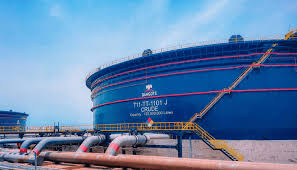
Nigeria’s Dangote Refinery has cleared a major hurdle on its path to global relevance, securing its first U.S. gasoline sales after meeting the country’s stringent fuel standards. The shipment was delivered via the tanker Gemini Pearl to Sunoco’s terminal in New York Harbor. This development positions Nigeria as a significant player in the refined petroleum market globally. Two additional shipments from the refinery are scheduled to arrive in the U.S. later this month. The shipment, carried aboard the tanker Gemini Pearl, was discharged on Monday at Sunoco’s Linden terminal in New York Harbor, according to vessel-tracking data and industry sources familiar with the deal. The move marks a pivotal moment for the 650,000 barrel-per-day refinery, as traders and refiners worldwide had been watching for proof that its output could compete in premium markets like the U.S. Reuters reports that Global trading giant Vitol purchased the Gemini Pearl’s 320,000-barrel gasoline cargo from Switzerland-based Mocoh Oil and resold most of it to U.S. fuel distributor Sunoco, the sources said. The exact volume Sunoco acquired was not disclosed but the delivery has been confirmed through shipping and customs data. The debut shipment will soon be followed by more. Beyond the U.S., the refinery has already tested new waters in Asia, sending about 90,000 metric tons of gasoline eastward in June, its first shipment outside West Africa. Another Dangote cargo, arranged by Glencore and sold to Shell, is scheduled to arrive in New York Harbor on September 19 aboard the MH Daisen. A third parcel, purchased by Vitol on the vessel Seaexplorer, is expected to dock around September 22. Sources cautioned, however, that final destinations may shift depending on market conditions. Dangote’s refinery, Africa’s largest and one of the biggest globally, has been ramping up operations after years of delays and high expectations. Long touted as a potential game changer, the Lagos-based facility is central to Nigeria’s effort to fix a paradox: being one of the world’s top oil producers yet chronically dependent on costly fuel imports. Crude rich but refinery poor, the country spends billions each year bringing in gasoline to meet local demand. Breaking into the U.S. market represents far more than a symbolic win. It demonstrates that the refinery’s products can meet some of the strictest quality and environmental standards in the global fuel trade, paving the way for exports to other premium destinations in Europe and Asia. Industry analysts say that if Dangote can consistently deliver to advanced markets, it could begin to reshape global trade flows and reposition Nigeria as not just a crude exporter but a serious player in refined products. It has also supplied low sulfur straight run fuel oil to Singapore and delivered two consignments of jet fuel to Saudi Aramco, indicating its widening global reach. To date, it has shipped roughly 1.7 million barrels of jet fuel to U.S. ports across six vessels, further cementing its growing role in international energy trade. For Dangote, these exports are more than commercial milestones. They signal a breakthrough into the world’s toughest markets and a step toward reducing Africa’s long standing dependence on imported fuel.

Read More