Fola Badmus

Atletico Madrid 5-2 Real Madrid: Alvarez Leads Stunning Derby Comeback

Atletico Madrid 5-2 Real Madrid: Alvarez Leads Stunning Derby Comeback

By Kamal Yalwa | 27 September 2025 Julian Alvarez delivered a man-of-the-match performance as Atletico Madrid crushed city rivals Real Madrid 5-2 in a thrilling La Liga derby at the Metropolitano. Real Madrid entered Matchday 7 unbeaten but saw their perfect start come crashing down despite taking the lead twice in the first half. Robin Le Normand opened the scoring for Atleti in the 14th minute, heading in from a corner. Kylian Mbappé equalized for Real in the 25th minute with a clinical finish. Arda Güler then put the visitors ahead with a superb long-range strike in the 36th minute. Just before halftime, Alexander Sørloth leveled the match with a powerful header in stoppage time. After the break, Julian Alvarez took control. He converted a penalty in the 51st minute following a VAR-reviewed handball and scored again in the 64th minute after a quick counter-attack. Antoine Griezmann sealed the win in stoppage time with a spectacular finish, igniting celebrations in the stands. Julian Alvarez’s relentless performance earned him the Metropolitano Derby MVP, reaffirming his status as one of the most dangerous forwards in the league this season. The win lifts Atletico Madrid to fourth in the La Liga table, narrowing the gap to league leaders Real Madrid to six points. Real’s defensive vulnerabilities, especially in aerial duels, were once again exposed — a concern for manager Carlo Ancelotti as the season progresses. Speaking after the match, Atletico boss Diego Simeone praised his team: “This is the Atlético we know — fight, grit, and goals. Alvarez was phenomenal.” Carlo Ancelotti admitted disappointment: “We lost our shape. Two leads thrown away isn’t acceptable at this level.” Atletico’s emphatic derby victory sends a strong signal in the title race, while Real Madrid will need to regroup quickly ahead of a crucial run of fixtures.

Read More

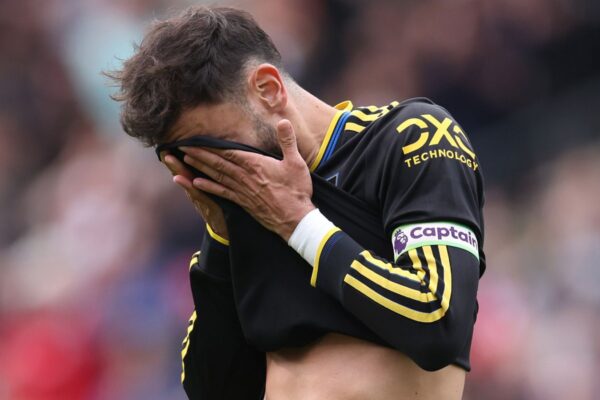
Brentford 3-1 Manchester United: Fernandes Misses Penalty as Pressure Mounts on Amorim

Manchester United slumped to a 3-1 defeat at Brentford, with Bruno Fernandes’ second-half penalty miss proving costly and piling further pressure on manager Ruben Amorim, whose side is now winless in four away Premier League games. United were trailing 2-1 when Fernandes stepped up for a penalty in the 67th minute, but after a four-minute VAR delay over a possible red card for Nathan Collins, his effort was saved by Caoimhin Kelleher. Despite appearing to pull back Bryan Mbeumo with no attempt to play the ball, Collins received only a yellow card — a decision that infuriated United and sparked debate. What the Law Says: If a player commits an offence that denies a goal-scoring opportunity and it’s not an attempt to play the ball (e.g. pulling, pushing), the player must be sent off. In this case, referee Craig Pawson stuck with a caution, and VAR did not recommend an on-field review. A Painful Afternoon for United Brentford took an early 2-0 lead within 20 minutes through Igor Thiago, who capitalized on United’s defensive lapses. Benjamin Sesko pulled one back in the 26th minute — his first goal for the club — but United failed to build on it. After Fernandes’ miss, United faded. Mathias Jensen sealed the win in added time with a swerving shot that beat Altay Bayindir, capping off another disappointing away performance. Brentford leapfrog United in the table, while Amorim’s side slips further down the standings and continues to struggle for consistency. Amorim Questions VAR Call Speaking after the match, Ruben Amorim questioned the decision not to send off Collins: “They told me Bryan was not in control of the ball. I think he wasn’t in control because he was pulled,” Amorim said.“Sometimes the decisions go against you. But we also should have managed the game better.” Former Premier League referee Mike Dean said on Soccer Saturday, “For me, that’s a red card.”Sky Sports pundit Kris Boyd added, “Another poor afternoon for Man United. They’ll be raging — Collins had to go.” Sloppy at the Back, Ineffective Up Front United’s back line struggled from the start, with Harry Maguire caught out for Brentford’s opener. A spilled cross by Bayindir gifted Thiago his second. This match marked the first start for United’s £207m attacking trio — Bryan Mbeumo, Benjamin Sesko, and Matheus Cunha — but the experiment backfired. Their lack of defensive support left Fernandes and Manuel Ugarte outnumbered in midfield. Despite a brief spark after Sesko’s goal, United looked disjointed. The missed penalty marked Fernandes’ second failure from the spot this season — and possibly the most damaging one yet. United’s Away Struggles Continue Up Next:

Read More

New Crowned Olubadan Demands Creation of Ibadan State Before 2027

Ibadan, Oyo State – At his official coronation ceremony, the newly installed Olubadan of Ibadanland, Oba Rashidi Adewolu Ladoja, issued a passionate call for the creation of a new Ibadan State, urging President Bola Ahmed Tinubu to approve the proposal before the end of his tenure. Addressing a jubilant crowd at the historic Mapo Hall, shortly after receiving the Staff of Office from Oyo State Governor Seyi Makinde, the 44th Olubadan emphasized the longstanding desire of his people for statehood. “My people sent me a message to Mr. President,” Oba Ladoja said, speaking in Yoruba. “Mr. President, they said the creation of Ibadan State is their priority.” The call for Ibadan State has persisted for decades, and Oba Ladoja’s public appeal marks a significant moment in the renewed push for administrative autonomy for the region. Governor Makinde, in his remarks at the ceremony, described Oba Ladoja’s coronation as a historic and unifying event for the ancient city. He praised the peaceful transition process and expressed confidence in the monarch’s leadership. “The succession process to the throne of Olubadan is now well established and free from contestation, and this is a source of pride for us all,” Makinde said. “It is my prayer that the reign of Oba Adewolu Ladoja will usher in lasting peace, unity, and greater progress for Ibadanland and for Oyo State as a whole.” The coronation drew dignitaries from across Nigeria, including: Prior to the public ceremony, traditional rites were conducted at the Labosinde Compound in Oja’ba, where Chief Waheed Popoola, the Afobaje of Ibadanland, placed Akoko leaves on Oba Ladoja’s head—an ancient ritual symbolizing the conferment of traditional authority. Following the rites, the monarch led a grand procession through the city, marking his first public appearance as Olubadan before a cheering crowd. Oba Ladoja’s reign begins with strong cultural significance and political ambition, as he positions himself not only as a custodian of tradition but also as a voice for the aspirations of his people.

Read More
Iran Recalls Ambassadors to UK, France, and Germany as UN Sanctions Snap Back

Iran Recalls Ambassadors to UK, France, and Germany as UN Sanctions Snap Back

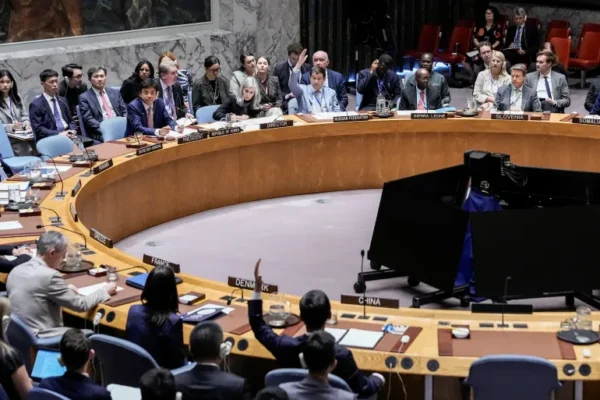
By Kamal Yalwa: Published September 27, 2025 Tehran – Iran has recalled its ambassadors from the United Kingdom, France, and Germany in response to the reimposition of United Nations sanctions, which come into effect on Sunday. State media reported Saturday that the Iranian envoys were summoned back to Tehran “for consultations,” following what the Iranian government described as “irresponsible” action by the three European nations—collectively known as the E3—to trigger the UN’s snapback mechanism. The E3 set the process in motion a month ago, accusing Tehran of non-compliance with nuclear obligations. The move follows a deadly 12-day conflict in June between Iran, Israel, and the United States, which left over 1,000 people dead, according to Iranian authorities. On Friday, efforts by Russia and China to delay the sanctions through a UN Security Council resolution failed, with only four countries backing their proposal. The snapback sanctions officially begin at 00:00 GMT on Sunday, reinstating global bans on cooperation with Iran’s nuclear, military, banking, and shipping sectors. The news triggered an immediate reaction in Iranian markets, with the rial plummeting to an all-time low—trading at over 1.1 million per US dollar on the open market in Tehran. The International Atomic Energy Agency (IAEA) confirmed this week that inspections had resumed at some Iranian sites, but did not specify whether this included facilities damaged in the June airstrikes. In Moscow, Iran’s nuclear chief Mohammad Eslami criticized the IAEA for not condemning the bombings of Iranian nuclear infrastructure by the U.S. and Israel. Despite diplomatic efforts at the recent UN General Assembly in New York, Western powers rejected Iranian proposals to delay the snapback, citing a lack of meaningful progress. Iranian President Masoud Pezeshkian said there was no reason to negotiate further, accusing the U.S. and Israel of attempting to destabilize Iran’s government. “If the goal had been to resolve concerns on the nuclear programme, we could easily do that,” Pezeshkian said, reiterating that Iran has no intention of pursuing nuclear weapons. U.S. envoy to the Middle East Steve Witkoff defended the sanctions, calling them “the right medicine,” but insisted Washington remains open to dialogue. However, global consensus remains fractured. Russia’s deputy UN ambassador Dmitry Polyansky dismissed the sanctions as “null and void,” and China has continued to import Iranian oil despite pressure from Washington. The U.S. has since imposed new penalties on Chinese firms linked to Iranian energy imports. The renewed sanctions mark a full reinstatement of measures previously lifted under the 2015 nuclear deal, which former U.S. President Donald Trump abandoned in 2018 in favor of a “maximum pressure” campaign. At the UN on Friday, Israeli Prime Minister Benjamin Netanyahu urged no delay in implementing the snapback and suggested Israel could again target Iranian nuclear facilities if necessary. Still, Iran’s leadership signaled restraint. Pezeshkian said Tehran would not quit the Nuclear Non-Proliferation Treaty, warning that adversaries were looking for “superficial pretexts to set the region ablaze.” Meanwhile, regional tensions remain high. The Islamic Revolutionary Guard Corps (IRGC) marked the first anniversary of the assassination of Hezbollah leader Hassan Nasrallah and senior Iranian commander Abbas Nilforoushan in Israeli airstrikes on Beirut. The IRGC vowed continued “smart resistance” against Israeli and American actions. In a related development, Iran’s judiciary announced that four individuals had been convicted for allegedly working with Israel’s Mossad and the outlawed MEK group. Two received death sentences; the other two were given life imprisonment. Iran’s top national security official, Ali Larijani, attended a memorial event in Lebanon on Saturday, declaring that “it is now clear Israel shows mercy to no country.” As sanctions take hold, Iran’s response—and how strictly the world enforces the measures—will shape the next chapter in the escalating standoff.


Read More
Europe Faces Escalating Hybrid Threats as Russia’s Shadow Looms Larger

Europe Faces Escalating Hybrid Threats as Russia’s Shadow Looms Larger

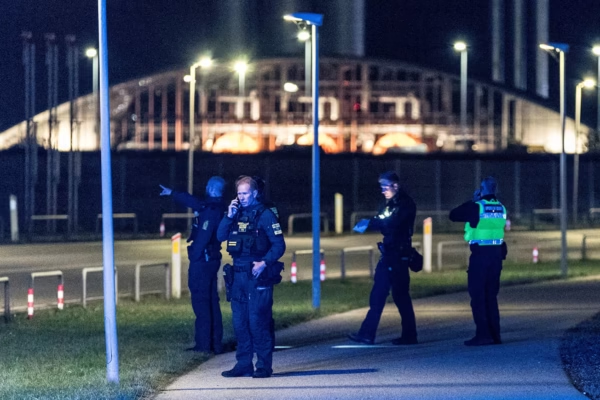
COPENHAGEN — Without firing a single shot, Russian President Vladimir Putin has managed to bring the impact of the Ukraine war to millions of Europeans far from the front lines — through what officials increasingly view as a wave of “hybrid attacks.” The recent disruption of air travel in Denmark — caused by drone sightings that led to multiple airport closures — has highlighted the growing threat. Danish Prime Minister Mette Frederiksen addressed the nation on Thursday, warning that Europe must prepare for “more violent and frequent hybrid attacks as a new reality.” While she stopped short of directly blaming Russia, she made clear where the concern lies. These kinds of incidents — marked by anonymity, uncertainty, and confusion — are becoming more common across the continent. Frederiksen emphasized one of the key goals of such attacks: undermining public trust in state institutions. Similar incidents have raised alarms elsewhere. Over 20 drones reportedly entered Polish airspace, while a 12-minute violation of Estonian airspace has prompted questions about whether such actions are due to pilot error or an intentional escalation by Moscow. A widespread hacking incident affecting airport operations across Europe further deepened suspicions. Despite the presence of a Russian naval vessel off Denmark’s coast, authorities have not definitively attributed the airport disruptions to Moscow. Denmark’s military intelligence admitted they were not yet able to name a culprit. However, the country’s internal security service, PET, warned of a high risk of Russian sabotage. Denmark, which has supplied Ukraine with F-16 fighter jets, drone support, and long-range missile systems, has been one of the more outspoken European nations on the threat posed by Russia. The dilemma facing Western governments is how to respond to hybrid attacks — which can range from cyber intrusions and sabotage to disinformation — without either underreacting or playing into Russian psychological tactics. Officials are caught between the risks of premature blame and the dangers of inaction. As one European military official put it: “It’s easier to justify shooting down a Russian jet if you’ve spent months making the case for what they’ve already done.” Across Europe, the shadow of sabotage is growing. In the UK, suspected Russian operatives have recruited criminals to carry out arson attacks against supply depots for Ukraine. Several individuals have already been convicted under the UK’s National Security Act. Poland has also prosecuted Ukrainian nationals allegedly paid by Russian agents to commit similar acts. Meanwhile, incidents like airport check-in software breaches and cyberattacks on infrastructure — including a London nursery — are muddying the waters, potentially carried out by criminal gangs rather than direct state actors. Still, the broader effect is clear: Russia has successfully extended the psychological footprint of the war, forcing European nations to confront its spillover effects firsthand. The timing is notable, as the U.S. under the Trump administration pressures Europe to shoulder more of its own defense responsibilities. The resulting tension has had a double effect: strengthening the arguments of both those who argue for appeasing Putin to end the chaos, and those who believe Russia’s appetite for aggression demands an uncompromising military response. At the same time, these hybrid threats risk diverting attention and resources from the immediate front lines in Ukraine, where Russia’s summer offensive has failed to capture large territory but continues to bombard civilian infrastructure relentlessly. The cost of countering these hybrid threats is growing. European governments are now facing the dual challenge of bolstering cyber and infrastructure resilience while maintaining a round-the-clock aerial defense along NATO’s eastern border. But the economics are daunting. Intercepting a $30,000 drone with a missile from a Dutch F-35 can cost tens of thousands of euros — a model that becomes unsustainable in the long term. NATO countries may soon face the difficult choice between absorbing minor intrusions or maintaining a prohibitively expensive constant defense. Even for the Kremlin, the strategy carries risks. Outsourced sabotage operations might misfire, resulting in civilian deaths on NATO soil and triggering a stronger-than-intended response. There’s also the chance that criminal organizations take advantage of the confusion, or that political instability in the U.S. — particularly under the unpredictability of Donald Trump — leads to an extreme and uncoordinated reaction. In the end, the hybrid war unfolding across Europe may be a tactical gift for Putin. But like all gifts, it comes with strings — and potentially serious consequences.

Read More

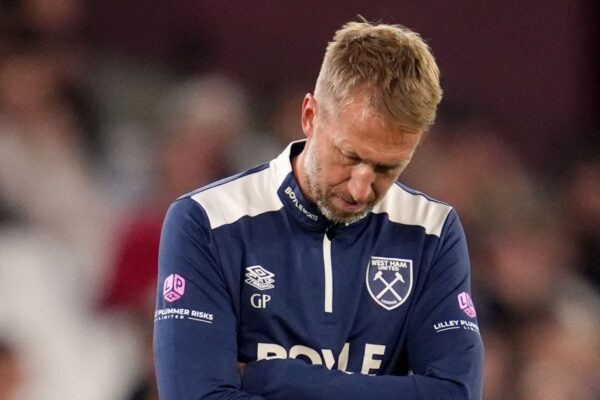
Graham Potter sacked by West Ham after poor start to season; Nuno Espirito Santo expected to replace him

Saturday, 27 September 2025 | UKLondon Stadium West Ham United have parted ways with head coach Graham Potter after just nine months in charge, with the club currently 19th in the Premier League. Potter took over from Julen Lopetegui in January on a two-and-a-half-year contract but failed to turn things around. He managed just six wins in 23 league games, and this season’s slow start—just three points from five matches—proved costly. A statement from the club on Saturday morning read: “Results and performances over the course of the second half of last season and the start of the 2025/26 season have not matched expectations, and the board of directors believe that a change is necessary in order to help improve the team’s position in the Premier League as soon as possible.” The decision comes ahead of West Ham’s Monday night fixture against Everton. Last weekend’s 2-1 home loss to Crystal Palace was understood to be the final straw. West Ham confirmed that the process of appointing a new head coach is underway, with former Wolves and Spurs boss Nuno Espirito Santo expected to take over. Further updates to follow as the story develops.

Read More

Israel Kills Dozens in Gaza as Trump Claims Ceasefire Deal May Be Near

At least 58 Palestinians were killed and dozens more wounded on Friday as Israeli air strikes pounded the Gaza Strip, according to local health officials. Rescue teams continued to search through the rubble in several areas, trying to reach those trapped beneath collapsed buildings. The latest wave of attacks came amid growing speculation that a deal to end the nearly two-year war may be approaching. Speaking to reporters, US President Donald Trump said he believes a ceasefire agreement and hostage release deal is “close,” though he offered no details or timeline. “We’re working on it,” Trump said. “I think we’re very near.” On the ground, however, the situation remains dire. Strikes have intensified in central and southern Gaza, including around the so-called “Netzarim corridor,” where displaced Palestinians have gathered near distribution centres operated by the Gaza Humanitarian Foundation, a US- and Israeli-backed initiative. The rising death toll follows a week of heavy bombardment, and Palestinian officials say many of the victims are women and children. Aid agencies continue to warn of a deepening humanitarian catastrophe, with access to food, water, and medical care severely limited across the enclave. While President Trump’s remarks have raised hopes of a breakthrough, previous talks have repeatedly collapsed over key sticking points, including the terms of a lasting ceasefire and the return of hostages held in Gaza.

Read More

Death Toll from Israeli Strikes on Sanaa Rises to 9, Including Women and Children

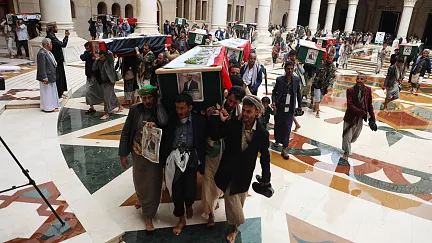
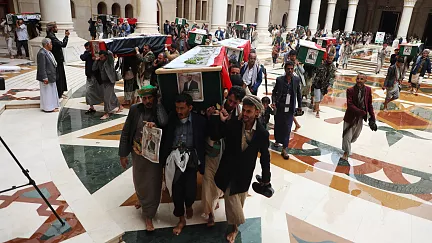
The death toll from Israeli air raids on the Yemeni capital, Sanaa, has risen to nine, including four children and two women, according to the Houthi-run authorities. The strikes occurred on Thursday and targeted what the group described as residential areas and civilian infrastructure. In a statement on Friday, the Houthis said that at least 174 people were also wounded, including 59 children. Rescue and civil defence teams are continuing to search through the rubble for additional victims. The Houthis condemned the air raids, accusing Israel of targeting civilian areas in the capital, which they have controlled since 2014. Yemen’s internationally recognised government remains based in the southern city of Aden. Hamas’s armed wing, the Qassam Brigades, released a video on Friday claiming to show fighters targeting Israeli military vehicles in Gaza. According to the group, one Merkava tank was hit with a Yassin 105 shell in the Tal al-Hawa area of southern Gaza City. The Qassam Brigades also said it struck another tank and a bulldozer in the al-Shati refugee camp earlier this week using a shell and an explosive device. The timing of the attacks was not independently verified. Medical aid group Doctors Without Borders (MSF) announced it has suspended its operations in Gaza City due to intensified Israeli military activity around its clinics. The organisation cited extreme risks to its staff and patients as Israeli tanks and air strikes encircle the area. “Our clinics are encircled by Israeli forces … this is the last thing we wanted, as the needs in Gaza City are enormous,” said Jacob Granger, MSF’s emergency coordinator in Gaza. MSF reported carrying out over 3,600 consultations last week, including treatment for trauma injuries, malnutrition, and maternal care. The group warned that hundreds of thousands of civilians remain trapped in Gaza City, while hospitals across the Strip face critical shortages of medical supplies, fuel, and personnel.

Read More