Fola Badmus

Nigeria’s Total Public Debt May Rise to N193tn as Tinubu Seeks Fresh Loans

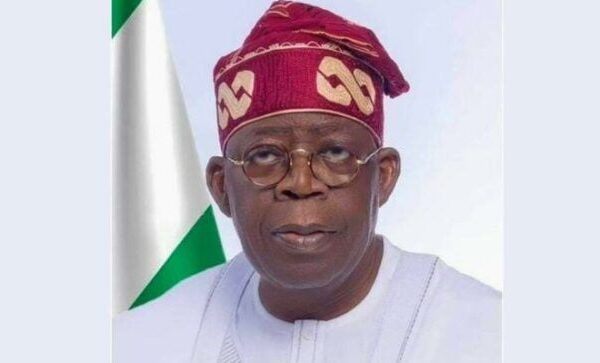
Nigeria’s total public debt could rise by about N40.61 trillion to N193 trillion if all loan requests made by President Bola Tinubu in 2025 are approved and fully disbursed, according to an analysis by The PUNCH. The requests represent approximately 26.6% of Nigeria’s existing debt stock as of June 2025, coming amid mounting fiscal pressures and increasing foreign-currency exposure. Figures from the Debt Management Office (DMO) show that as of June 30, 2025, Nigeria’s total public debt stood at N152.4 trillion, comprising N71.85 trillion in external debt and N80.55 trillion in domestic debt, calculated at an exchange rate of N1,529.21/$1. Using the Central Bank of Nigeria’s November 10, 2025 official rates—N1,437.29 per dollar, N1,662.66 per euro, and N9.33 per yen—The PUNCH projected that Tinubu’s 2025 loan pipeline could lift total debt to about N193.01 trillion, equivalent to $134.3 billion at current rates. This would push Nigeria’s external debt component above 57% of the total, increasing the country’s foreign exposure. At least three major loan requests have been made by President Tinubu this year. In May 2025, he sought National Assembly approval for a $21.5 billion external loan package, €2.19 billion, and ¥15 billion, alongside a N758 billion domestic bond to fund the 2025–2026 borrowing plan, infrastructure projects, and pension liabilities. “In light of the significant infrastructure deficit and paucity of resources, it has become essential to pursue prudent borrowing to close the financial shortfall,” Tinubu said in his letter to lawmakers. The Senate approved the request in July after the presentation of a report by the Committee on Local and Foreign Debt chaired by Senator Aliyu Wamako. Senator Olamilekan Adeola, Chairman of the Appropriations Committee, said the borrowing was already embedded in the 2025 budget framework, while Senator Sani Musa of the Finance Committee defended the move as consistent with global economic norms. “There’s no economy that grows without borrowing,” Musa said. Similarly, Senator Adetokunbo Abiru, who chairs the Banking Committee, assured that the loans are concessional, long-term, and tied to capital projects. However, Senator Abdul Ningi (Bauchi Central) expressed concern over transparency and equitable allocation, urging the government to disclose detailed utilisation plans. In October, Tinubu sent another letter seeking $2.3 billion in external loans and a $500 million debut sovereign sukuk to help finance the 2025 budget deficit and refinance maturing Eurobonds. The National Assembly approved the request on October 29, bringing total external borrowing this year to about $24.8 billion. Defending the proposal, Senator Adams Oshiomhole argued that properly structured loans could stimulate growth and create jobs. A third request, submitted in November, sought approval for N1.15 trillion in domestic borrowing to close the gap in the N59.9 trillion 2025 budget and settle outstanding contractor payments. Tinubu said the funds would ensure the “full implementation of government programmes and projects” under the fiscal plan. If all requests are executed, Nigeria’s total debt would increase from N152.40 trillion in mid-2025 to about N193.01 trillion. External obligations would grow by N39.6 trillion to N111.45 trillion, while domestic debt would rise by about N1 trillion to N81.56 trillion. Between June 2023 and June 2025, Nigeria’s total public debt grew by N65 trillion, a 74.4% jump from N87.38 trillion, driven mainly by exchange rate depreciation following the naira unification policy. External debt rose modestly in dollar terms—from $43.16 billion to $46.98 billion—but doubled in naira value due to the weakening exchange rate. Domestic debt also increased by N26.4 trillion, reflecting continued borrowing and the securitisation of the Central Bank’s N22.7 trillion overdraft. DMO Director-General Patience Oniha maintains that Nigeria’s debt remains sustainable, with a debt-to-GDP ratio of about 40%, below the international benchmark of 70%. However, analysts have warned that while new loans may fund infrastructure and stabilise the budget, the nation’s debt service-to-revenue ratio, among the highest in Africa, poses a growing threat to fiscal stability. Dr. Muda Yusuf, CEO of the Centre for the Promotion of Private Enterprise, cautioned that Nigeria’s debt service burden is already outpacing capital expenditure, urging stronger revenue mobilisation and spending discipline. “Debt service is already far more than capital spending. We need to tread cautiously,” he said. Vahyala Kwaga, Deputy Country Director of BudgIT, warned that the government risks breaching its debt threshold and called for greater transparency in how loans are managed. Likewise, Auwal Rafsanjani, Executive Director of the Civil Society Legislative Advocacy Centre, criticised the continued borrowing without accountability, alleging that “previous loans, including the $3.4bn IMF facility, remain unaccounted for.” Emmanuel Onwubiko, National Coordinator of the Human Rights Writers Association of Nigeria, described the President’s borrowing spree as reckless and damaging. “There is no valid reason why the president wants to drag the country into these debts,” he said, blaming both the executive and legislature for pushing Nigeria toward a “bottomless pit of foreign loans.”
Read More

Delhi Red Fort Blast: Terrorism Law Invoked After 13 Killed, 20 Injured

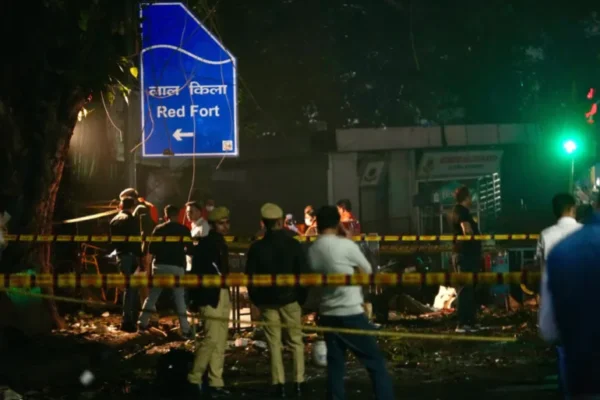
At least 13 people have been killed and 20 others injured in a powerful car explosion that occurred on Monday night near the historic Red Fort in New Delhi, India. Authorities have not yet determined the cause of the blast, but police in the Indian capital have invoked the country’s anti-terrorism law as investigations continue. Home Minister Amit Shah confirmed that the explosion happened just before 7 p.m. (13:30 GMT) and is believed to have originated from a Hyundai i20 car that was halted at a traffic signal. Eyewitnesses reported scenes of chaos following the explosion, with mangled vehicles and bodies scattered across the area. Police and forensic teams quickly cordoned off the site, restricting public access as investigators gathered evidence. The Red Fort area, a major historical landmark and popular tourist attraction, has been placed under tight security as authorities search for possible suspects and motives behind the attack.

Read More

Tinubu Reportedly Sends Delegation to UK Over Ike Ekweremadu’s Detention

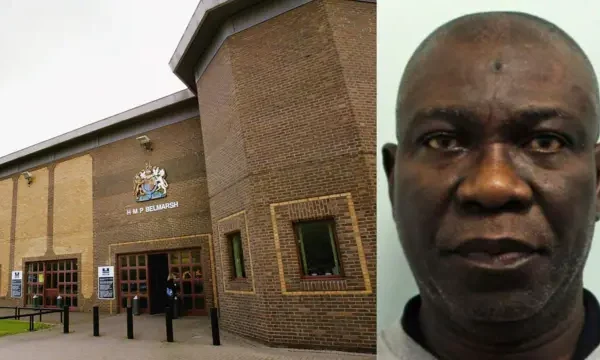
President Bola Tinubu has reportedly dispatched a high-level delegation to the United Kingdom to engage officials of the UK Ministry of Justice regarding the case of Nigeria’s former Deputy Senate President, Ike Ekweremadu, who remains in custody over an organ-harvesting conviction. According to a post by Ayekooto Akindele, a chieftain of the All Progressives Congress (APC), on his Facebook page, the delegation includes the Minister of Foreign Affairs, Yusuf Maitama Tuggar, and the Attorney General and Minister of Justice, Lateef Olasunkanmi Fagbemi (SAN). The officials were received at the Nigerian High Commission in London by Ambassador Mohammed Maidugu, the Acting High Commissioner to the UK, before proceeding to their meeting with the British Ministry of Justice. Ekweremadu has been in detention in the UK since March 2023, after he and his wife, Beatrice, were arrested by the London Metropolitan Police for allegedly trafficking a young Nigerian man, David Nwanini, for the purpose of harvesting his kidney.

Read More

Tinubu Vows to Boost Nigeria’s Electricity Supply

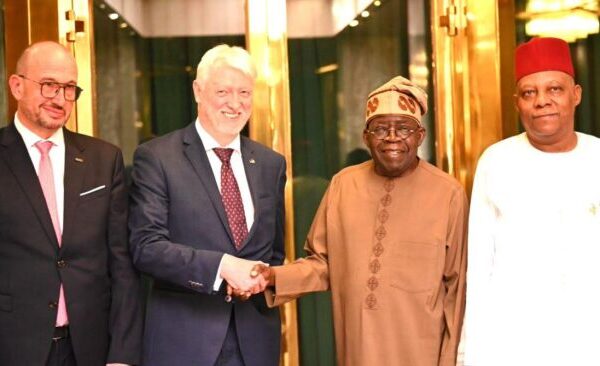
President Bola Tinubu on Monday reaffirmed his administration’s commitment to improving Nigeria’s electricity supply through the ongoing Presidential Power Initiative (PPI) being executed in partnership with Siemens Energy. Speaking during a meeting with a Siemens Energy delegation led by Dietmar Siersdorfer, Managing Director for the Middle East and Africa, at the State House, Abuja, Tinubu said the government remains determined to deliver reliable power to drive industrial growth and improve citizens’ quality of life. The President emphasised that a stable power sector is vital to the nation’s economic recovery, with significant implications for industrial, educational, and healthcare development. “There is no industrial growth or economic development without power. I believe that power is the most significant discovery of humanity in the last 1,000 years,” Tinubu said. “We appreciate the partnership on this initiative. The progress so far is notable, but we know there is still more to be done.” Tinubu commended Siemens Energy and the German government for their support, assuring that Nigeria would continue to provide the necessary resources for the completion of the project. He also directed the expansion of major transformer substations from two to three phases to boost electricity capacity nationwide. “We are all inspired and happy. This is what we want to achieve on the continent—to show the glory of our economic recovery and the banishment of poverty,” the President added. This was contained in a statement by Bayo Onanuga, the Special Adviser to the President on Information and Strategy, on Monday, November 10. Vice President Kashim Shettima, Minister of Power Adebayo Adelabu, Minister of Finance and Coordinating Minister of the Economy Wale Edun, and Special Adviser on Energy Olu Verheijen were in attendance. In his remarks, the Power Minister said the sector had recorded several critical milestones, including decentralisation, liberalisation, and the signing of the Electricity Act 2023, which has attracted more than $2.2 billion in new investments.

Read More

Ref Watch: Why Liverpool’s Disallowed Goal Against Man City Wasn’t a Clear and Obvious Error – Dermot Gallagher Explains

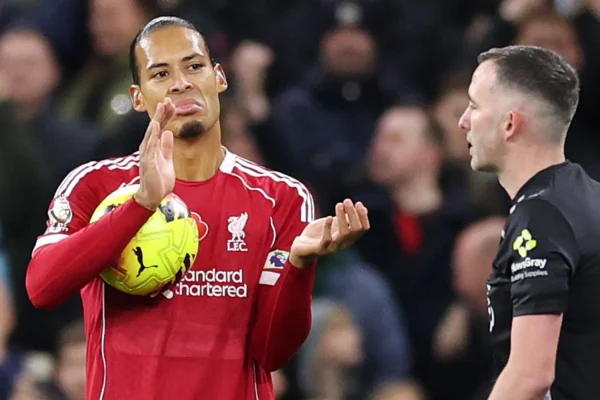
Former Premier League referee Dermot Gallagher has explained why Virgil van Dijk’s disallowed goal in Liverpool’s 3–0 defeat to Manchester City was not considered a “clear and obvious error” under VAR rules — despite growing frustration from Liverpool, who have lodged a formal complaint with the PGMOL. The Incident Liverpool captain Virgil van Dijk thought he had pulled one back at the Etihad Stadium when he headed home a cross, but the goal was ruled out after Andy Robertson was deemed to be obstructing goalkeeper Gianluigi Donnarumma’s line of sight from an offside position. Gallagher’s Verdict “It is subjective without doubt and it’s a grey area because it’s all about interpretation,” Gallagher said on Ref Watch. “Everybody sees things differently — that’s why you can have similar incidents produce different outcomes. There are no hard and fast rules.”Gallagher clarified that the on-field decision was “no goal,” meaning VAR would only intervene if it was a clear and obvious mistake.“VAR asked, ‘Is Robertson in an offside position? Yes. Is he impacting the goalkeeper?’ They decided yes, as he was close enough to interfere. Since the on-field call was ‘no goal,’ it stood.”He added that VAR is not meant to “re-referee” matches:“The referee is only sent to the monitor if there’s a clear and obvious error or a subjective offside that needs review. In this case, VAR backed the on-field decision.” Bothroyd’s View: ‘It Should Have Stood’ Former England striker Jay Bothroyd disagreed, arguing the goal should have been allowed. “When you watch the replay, Donnarumma can clearly see the ball. Robertson ducks out of the way and doesn’t make an attempt to play it,” Bothroyd said. “If anything, [Man City’s] Doku is more in the keeper’s line of sight. Robertson isn’t interfering. It was a poor decision.” Other Matches Discussed on Ref Watch Brentford 3–1 Newcastle: There was controversy at the Gtech Community Stadium as Dan Burn avoided punishment for a challenge on Dango Ouattara in the first half, only to be sent off later for a similar foul. Gallagher said the first decision — no penalty and a yellow card for simulation — was “understandable,” but admitted the two incidents highlighted the fine margins referees face. “There was contact both times. The referee judged the first to be minimal. VAR didn’t think it met the threshold for a penalty. It’s so difficult — that’s the life of a referee.”Arsenal Women 1–1 Chelsea Women (WSL): The Women’s Super League clash produced several controversial moments, reigniting debate over the absence of VAR in the league. Stina Blackstenius had a goal ruled out for handball, though replays showed the ball struck her thigh.“From the referee’s angle, it looked like handball. It was an optical illusion,” Gallagher explained. “If VAR existed in the WSL, the goal would have stood.”Arsenal’s Victoria Pelova also escaped a possible red card for a high challenge on Keira Walsh. Gallagher said:“At full speed, it looked like a fair challenge, but on slow motion, the studs are high. With VAR, that would likely be a red.”Sunderland 2–2 Arsenal (Premier League): There was debate over Dan Ballard’s elbow on Mikel Merino in the box, and Martin Zubimendi’s yellow card for a midfield tackle. Gallagher said neither incident warranted VAR intervention:“Ballard used his arms for leverage; it wasn’t a foul. Zubimendi was unlucky — probably a misread by the referee.” The VAR Debate Continues The series of contentious calls across the Premier League and WSL once again spotlighted the subjective nature of VAR decisions and renewed calls for consistent standards across all levels of English football. “Refereeing has never been more difficult,” Gallagher concluded. “Every angle tells a different story — and interpretation is everything.”

Read More

Two Top BBC Leaders Quit Over Editing of Trump Documentary

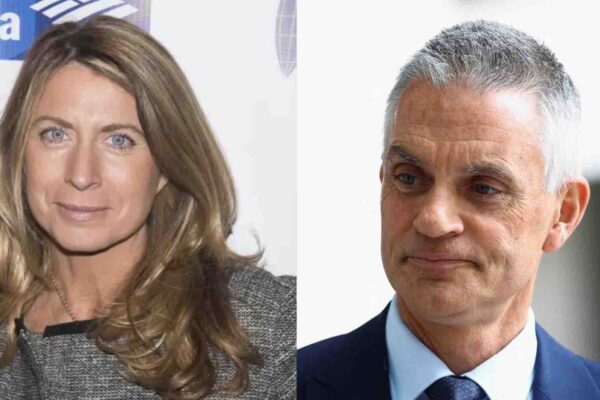
Two of the top executives of the BBC resigned abruptly on Sunday following a report suggesting the public service broadcaster had misleadingly edited a speech by President Trump that preceded the Jan. 6 Capitol riot. The surprise resignation of the director general, Tim Davie, and Deborah Turness, the chief executive of BBC News, came several days after The Daily Telegraph published details of a leaked internal memo arguing that a BBC Panorama documentary had juxtaposed comments by Mr. Trump in a way that made it appear that he had explicitly encouraged the attack on the Capitol on Jan. 6, 2021. “Like all public organizations, the BBC is not perfect, and we must always be open, transparent and accountable,” Mr. Davie said in a statement. “While not being the only reason, the current debate around BBC News has understandably contributed to my decision.” Mr. Davie added: “Overall the BBC is delivering well, but there have been some mistakes made and as director-general I have to take ultimate responsibility.” Ms. Turness, in her announcement, said, “The ongoing controversy around the Panorama on President Trump has reached a stage where it is causing damage to the BBC — an institution that I love.” She said that “the buck stops with me” and conceded that “mistakes have been made” but insisted that “recent allegations that BBC News is institutionally biased are wrong.” Mr. Trump welcomed the resignations in a post on his Truth Social account. With about 21,000 employees, the BBC calls itself the world’s leading public service broadcaster, and is funded primarily from a license fee paid by Britons who watch TV, supplemented by commercial revenue. It produces a huge range of material, from news to entertainment, and has reach outside Britain through its international broadcasting operations. Pressure had been building on Mr. Davie and senior management of the BBC after the White House press secretary, Karoline Leavitt, reacting to the leaked memo, accused the broadcaster of being “purposefully dishonest” over its depiction of the Capitol Hill insurrection. The leaked memo was written by Michael Prescott, a former journalist who, until June, was an independent external adviser to the broadcaster’s editorial standards committee. The documentary, called “Trump: A Second Chance?” was broadcast last year and, in one section, spliced together footage from comments Mr. Trump made about 50 minutes apart. Mr. Prescott’s critique also included claims that the broadcaster did not cover stories that raised difficult questions about transgender rights, and that BBC Arabic gave a platform to a journalist who had posted antisemitic comments. Mr. Davie was director general for five years and survived a number of other crises at the broadcaster, earning the nickname “Teflon Tim.” This year, the broadcaster was criticized for having failed to cut away during live coverage of the Glastonbury music festival when the performer Bob Vylan led the crowd in chants against the Israeli military. Ofcom, Britain’s media regulator, ruled this year that the BBC had committed a “serious breach” of broadcasting rules by failing to disclose that the narrator of a documentary about Gaza was the son of a Hamas official. And there were controversies over the behavior of several TV stars employed by the corporation. The BBC’s senior leadership was widely expected to issue an apology in front of a parliamentary committee on Monday over the documentary about President Trump, and Mr. Davie appears to have calculated that his position was becoming untenable. Some of the BBC’s senior staff have said they believe that the broadcaster is under attack from partisan opponents. “It’s clear that there is a genuine concern about editorial standards and mistakes,” wrote Nick Robinson, a presenter on Today, the flagship morning radio show, on social media. “There is also a political campaign by people who want to destroy the organization.” In a statement issued after Mr. Davie’s resignation, Lisa Nandy, the secretary of state for culture, media and sport, thanked him for his service, described the BBC as “one of our most important national institutions.” But earlier on Sunday Ms. Nandy, in an interview with the BBC, said that decisions about the broadcaster’s editorial standards and guidelines, and the sort of language used in reporting, was “not always well thought through.” She added: “Often it’s left to individual journalists or newsreaders to make decisions.” In a statement, Kemi Badenoch, leader of the main opposition Conservative Party, welcomed the resignations but added that Mr. Prescott’s report “exposed institutional bias that cannot be swept away with two resignations — strong action must be taken on all the issues it raised.” On social media, Ms. Leavitt reacted to Mr. Davie’s resignation by posting screenshots of two news articles, the first reading “Trump goes to war with ‘fake news’ BBC,” the second from the broadcaster’s own website on Sunday reporting “Tim Davie resigns as BBC director general over Trump edit.” Above the first article, Ms. Leavitt wrote: “Shot,” above the second, “Chaser.” In response, Ed Davey, leader of Britain’s centrist Liberal Democrat party wrote, also on social media: “To see Trump’s White House claiming credit for his downfall and attacking the BBC should worry us all.”

Read More

Olubadan: Trump’s Warning a Wake-Up Call for Nigeria to Confront Terrorism

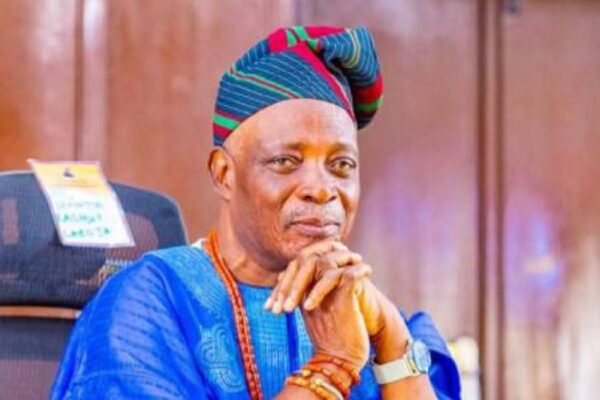
The Olubadan of Ibadanland, Oba Rashidi Ladoja, has described U.S. President Donald Trump’s recent comments on Nigeria as a wake-up call for the nation to confront terrorism head-on and heal religious divisions. Speaking while receiving the President of the Pentecostal Fellowship of Nigeria (PFN), Bishop Wale Oke, at his palace in Oke Aremo, Ibadan North Local Government Area, the monarch urged Nigerians to unite against terrorism and “fight it to a standstill while placating the aggrieved.” In a statement issued by his media aide, Adeola Oloko, on Sunday, Oba Ladoja lamented that Nigeria has been battling terrorism for over a decade — dating back to the final years of former President Goodluck Jonathan’s administration in 2014. “Many people have been killed and property worth an inestimable amount of money destroyed. Multitudes of families, particularly women and children, have been displaced. Kidnappings have taken place,” the monarch said. He noted that successive administrations — from Jonathan to Muhammadu Buhari and now President Bola Tinubu — have made efforts to combat insecurity, but warned that terrorism remains a threat to all Nigerians, regardless of religion. “Terrorists don’t know the difference between Muslims and Christians. They see everybody as prey, while they are the predator,” he added. “We must unite as one people to overcome this menace and also placate our brethren who feel aggrieved by the violence.” Oba Ladoja also praised the peaceful coexistence among people of different faiths in the South-West, urging other regions to emulate such harmony. Earlier, Bishop Wale Oke congratulated Ladoja on his emergence as the 44th Olubadan of Ibadanland, praying that God grants him wisdom and understanding to lead with fairness and compassion. The PFN President also called on President Tinubu to work closely with U.S. President Donald Trump to address the killings and attacks ravaging several communities across the country, particularly in the North. Meanwhile, President Tinubu on Friday met with the Sultan of Sokoto, Alhaji Muhammad Sa’adu Abubakar, at the Presidential Villa, Abuja, days after holding a similar meeting with the Catholic Archbishop of Abuja, Bishop Ignatius Kaigama. According to sources, the meetings are part of ongoing consultations with religious and traditional leaders following Trump’s description of Nigeria as a country facing religious persecution and human rights abuses. The Speaker of the House of Representatives, Tajudeen Abbas, accompanied the Sultan to the meeting. Nigeria’s federal government has since rejected the U.S. characterisation, insisting that violence across the country is driven by multiple factors — not religion — and that the constitution guarantees freedom of worship for all citizens.

Read More

Terrorists Attack Passenger Bus on Ayere–Kabba Road in Kogi, Kill One, Injure Several

A terrorist attack on a commercial bus has left one passenger dead and several others injured along the Ayere–Kabba Road in the Ijumu Local Government Area of Kogi State. Eyewitnesses told reporters that the incident occurred around 5 p.m. on Sunday, when gunmen opened fire on travellers along the busy route. According to a witness, some vehicles narrowly escaped the ambush, while several passengers sustained gunshot wounds. “One person was confirmed dead at the general hospital, while others are receiving treatment for gunshot injuries,” a local source said. Residents say the Ayere–Kabba axis has become increasingly dangerous for commuters, with frequent attacks by armed gangs believed to be operating between Kogi and neighbouring Kwara State. In recent months, communities along the Kogi–Kwara border have witnessed a surge in terrorist attacks, kidnappings, and violent crimes, heightening fears among residents and travellers. On Sunday, residents of Yagba East Local Government Area staged a protest in Isanlu, demanding urgent government action over the escalating insecurity in the region. The demonstration, held in front of the General Hospital, Isanlu, followed the killing of an elderly, sick woman who had been abducted by bandits a day earlier. Eyewitnesses reported that protesters blocked major roads, set tyres ablaze, and chanted slogans calling for immediate deployment of more security personnel. Sources said the kidnapped woman was killed after the abductors realised she was too weak to keep up with them in the forest. The killing has sparked outrage and mourning across the community, as residents lament what they describe as government inaction in the face of worsening insecurity. Communities across Yagba East and West have faced repeated kidnappings and armed robberies in recent months, with attacks occurring almost daily. Local leaders have repeatedly appealed to both the state and federal governments to strengthen security presence and protect residents from further violence.

Read More