
Fola Badmus

States Take Charge: Nigeria’s Power Sector Enters New Era Amid Decentralisation Push

Nigeria’s electricity landscape is undergoing a major transformation as seven states—Enugu, Ondo, Ekiti, Imo, Oyo, Edo, and Kogi—officially assume full regulatory control over their electricity markets, in line with the Electricity Act 2023 signed into law by President Bola Tinubu. This landmark reform marks a shift from the long-standing, centrally managed electricity sector, giving sub-national governments the authority to independently generate, transmit, distribute, and regulate electricity within their jurisdictions. The Nigerian Electricity Regulatory Commission (NERC), previously the sole regulator, will now serve a diminished role, providing only oversight to states that haven’t transitioned. According to NERC, at least 11 states have begun the decentralisation process, with Lagos, Ogun, Niger, and Plateau expected to finalise their transitions between June and September. Anambra State has also passed its electricity law and is setting up its regulatory agency. While many experts and stakeholders have welcomed the move as a much-needed push towards true federalism, energy market competitiveness, and improved service delivery, concerns remain about state readiness. Industry insiders warn of capacity gaps, regulatory inexperience, and a lack of technical expertise that could hamper the success of the new state-managed electricity markets. “There’s a serious manpower issue,” a senior NERC official told The PUNCH. “States may not yet grasp the full implications of managing their own electricity markets, especially when it comes to technical operations like tariff setting or enforcement.” States are expected to create new electricity regulatory commissions to license operators and monitor distribution companies. In Enugu, the state has already begun enforcement, even sanctioning a local distribution firm, MainPower Electricity Distribution Ltd, for overbilling. Lagos has also made strides by issuing its first regulatory order under the Lagos State Electricity Regulatory Commission (LASERC), asserting control over all intrastate electricity activities. Consumer advocates have raised red flags about the possible creation of “regulatory vacuums” in states that have taken over without setting up solid frameworks. Others fear the politicisation of power pricing, subsidy management, and consumer protection. Still, proponents like PowerUp Nigeria’s Adetayo Adegbemle argue the reform is a necessary leap forward. “Decentralisation will open the door for private investment and tailored solutions to local electricity needs,” he said. “But states must act quickly to build institutions, protect consumers, and avoid regulatory confusion.” The development is being hailed as a step toward realising the economic potential of the country’s power sector, long plagued by inefficiencies and poor service delivery. Experts warn, however, that success will hinge on collaboration between state and federal actors, as well as a shared commitment to capacity building, transparency, and innovation.


Read More

Iran Launches Missile Attack on US Al Udeid Base in Qatar in Retaliation for Nuclear Strikes

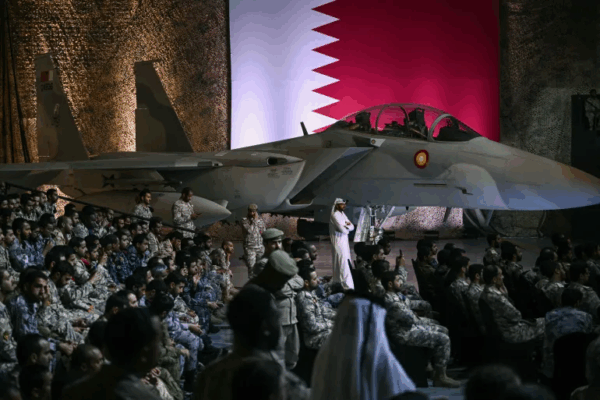
Tehran, Iran – Iran’s Islamic Revolutionary Guard Corps (IRGC) has confirmed launching a retaliatory missile strike on the United States’ Al Udeid Air Base in Qatar, in response to the recent American airstrikes on Iranian nuclear facilities. The operation, codenamed “Annunciation of Victory”, was reported by Iran’s semi-official Tasnim News Agency on Monday. Eyewitnesses in Doha reported loud explosions and visible flares in the sky, indicating the activation of air defence systems. Qatar’s Defence Ministry announced that its forces successfully intercepted the incoming projectiles, preventing any casualties or major damage. The ministry credited the interception to “the vigilance of the armed forces and precautionary measures taken.” While Iran has vowed a broad response to the US-Israeli strikes that targeted its Fordow, Natanz, and Isfahan nuclear sites, the scale and intent of Monday’s attack remain unclear. “This may be just the beginning of Iran’s retaliation,” said Al Jazeera’s Tehran correspondent Ali Hashem, noting uncertainty around whether this would escalate into a broader confrontation or remain a symbolic act. Analysts speculate the attack may have been choreographed to avoid escalation, potentially mirroring Iran’s restrained retaliation in 2020 after the US assassination of General Qassem Soleimani. However, officials have not confirmed such coordination, and the situation remains volatile, with fears growing that the Gulf could become another active theatre in the widening regional conflict.

Read More

Israel Kills At Least 43 Palestinians in Gaza, Including 13 Aid Seekers

Gaza City – At least 43 Palestinians have been killed in fresh Israeli attacks on Gaza since Monday morning, according to local medical sources, pushing the total death toll since the start of the war to over 56,000. Among the dead are 13 civilians killed while attempting to access food aid at controversial distribution centres in the besieged enclave. The victims were reportedly gathered near facilities operated by the Gaza Humanitarian Foundation (GHF), a US- and Israeli-backed NGO whose operations have been condemned by the United Nations for the “weaponisation” of humanitarian aid. Human rights groups say Israeli forces have repeatedly targeted these sites, calling them “human slaughterhouses” due to the frequency and scale of civilian casualties. Since the GHF began aid distributions on May 27, Israeli strikes near its centres have killed more than 400 people and wounded around 1,000 others, according to Palestinian officials. Monday’s attacks mark another grim chapter in a worsening hunger crisis, with many Gazans risking their lives daily to feed their families amid reports of famine in several parts of the territory. Al Jazeera correspondent Hani Mahmoud, reporting from Gaza City, described the attacks as part of Israel’s ongoing multi-front strategy. “While it engages in direct conflict with Iran, Israel continues its daily killing of Palestinians across the Gaza Strip, launching deadly air strikes on tents and residential homes,” he said.

Read More

Trump Announces Ceasefire Agreement Between Iran and Israel, Declares End to 12-Day War

Washington, D.C. — U.S. President Donald J. Trump has announced a formal ceasefire agreement between Israel and Iran, marking what he called the official end to the 12-day war that has rocked the Middle East. In a dramatic statement posted Monday evening, Trump declared that both nations had agreed to halt all hostilities in a staggered 24-hour ceasefire window, beginning in approximately six hours. According to the announcement, Iran will initiate a 12-hour ceasefire first, allowing time for both sides to conclude ongoing military operations. Following that, Israel will implement its own 12-hour ceasefire, after which the war will be officially considered over. Trump hailed the deal as a significant achievement and praised the “Stamina, Courage, and Intelligence” of both countries for averting a prolonged regional conflict. “This is a War that could have gone on for years, and destroyed the entire Middle East, but it didn’t, and never will,” Trump said in the message, which bore his signature and title: President of the United States of America. While it was not immediately clear whether the announcement was officially endorsed by either government, Trump presented the ceasefire as a done deal and called on the world to recognize the end of the hostilities. The surprise ceasefire comes after nearly two weeks of heavy bombardment, cyberattacks, and retaliatory strikes between the two regional adversaries. Trump ended his message with a sweeping appeal for unity and peace, invoking divine blessings on Israel, Iran, the Middle East, and the world. Observers are now waiting to see if the ceasefire terms hold and whether official statements from Tehran and Tel Aviv confirm the conclusion of the conflict.

Read More

Favour Ofili Dumps Nigeria, Switches Allegiance to Turkey

Favour Ofili, the Nigerian-born sprinting talent who recently broke the women’s 150-meter world record, according to world media, has officially transferred her athletic allegiance to Turkey, less than three months before the 2025 World Athletics Championships in Tokyo. The 22-year-old LSU alumna, widely regarded as one of Nigeria’s brightest track prospects, is said to have made the switch in response to what she described as years of mistreatment and mismanagement by the Athletics Federation of Nigeria (AFN) and the Nigeria Olympic Committee (NOC). According to reports first shared by Jamaica-based journalist Kayon Raynor, Ofili completed her nationality change on May 31, 2025, notifying the Athletics Integrity Unit (AIU) of her decision. Raynor cited sources within the TVJ News Centre, noting that Ofili had expressed “growing frustration” with the Nigerian athletics authorities. In one social media post, Raynor wrote, “She has switched allegiance to Turkey as of May 31. According to impeccable sources, 22-year-old Ofili has advised the Athletics Integrity Unit of her frustration with the Nigerian Athletics Federation.” Ofili’s decision reportedly stems from a pattern of administrative issues, including her controversial omission from the Tokyo 2020 Olympics due to delayed doping test confirmations. More recently, she was left out of the 100m event at the Paris 2024 Olympics and only competed in the 200m final, where she placed sixth. Although Ofili has yet to make a formal public statement, sources close to the athlete suggest her decision was not financially motivated. Nonetheless, the move aligns with a broader trend, as Türkiye has been actively recruiting elite international athletes in recent years. Reports indicate that the country has offered incentives of up to $500,000 in its drive to attract top-tier talent. Ofili joins a growing list of athletes who have opted to represent other nations amid dissatisfaction with their home federations. At the time of this report, World Athletics still lists her as representing Nigeria, although the change is expected to be updated soon. In May, Ofili stunned the global athletics community by setting a new world record in the women’s 150m event at the Adidas Atlanta City Games. She clocked 15.85 seconds, breaking the previous record of 16.23 seconds held by Olympic champion Shaunae Miller-Uibo. With her switch to Turkey now confirmed, all eyes will be on Ofili as she prepares to represent her new country at the upcoming World Championships in Tokyo.

Read More

Mission X: Super Falcons Impressive in Scoreless Draw With Portugal

Reigning Africa’s best goalkeeper, Chiamaka Nnadozie had a game to remember forever as Nigeria’s Super Falcons provided both flair and steel in a 0-0 draw with hosts Portugal in a pre-WAFCON friendly match in Lisbon on Monday. The nine-time African champions, aspiring boldly for a 10th title, only arrived in Portugal less than 24 hours before the encounter, but advertised no signs of fatigue or lassitude as they stood up to the Portuguese in a game that indicated readiness to battle for the continental crown in Morocco. A back pass by Christy Ucheibe allowed Diana Silva sight of the Nigeria goal in the 6th minute, but her shot spurned the ball away from goal. In the 9th minute, Nnadozie plucked the ball off the air from a pull-out, and at the other end, the fabulous Francisca Ordega cut into the box and found captain Rasheedat Ajibade, whose smart turn and shot nearly wrong-footed goalkeeper Ines Pereira. Nnadozie pulled off another epic save in the 24th minute, and as the home girls launched onslaught after onslaught, only Nnadozie’s heroics and stonewall defending by the Falcons kept the scoreline even. Just before half time, Nigeria could have taken the lead against the run of play, but Rinsola Babajide overhit the ball from an opportunity that presented itself after Ordega had been foiled with a last-ditch effort. In the second stanza, Africa’s number one pulled off three world-class saves within a spate of four minutes, denying the dangerous Jessica Silva, Fatima Pinto and Andreia Norton. The injection of Ifeoma Onumonu, Ashleigh Plumptre and Halimatu Ayinde rejuvenated Nigeria’s game, and as the Falcons took control, Ordega’s brilliant move and pass into the box in the 64th minute went begging. The Falcons revved the engine to dominate the final 20 minutes, during which the vibrant Ordega rattled the crossbar from distance and Onumonu just fell short of squaring past the goalkeeper from another inspired Ordega cross. At the end, the Super Falcons gave a good account of themselves, and left the Portuguese fans stunned with an elegant outing at the Estádio José Gomes. The Nigeria contingent will depart from Lisbon for Casablanca on Wednesday, where they will take on Ghana’s Black Queens in another friendly match on Sunday. Their first match of the 13th Women Africa Cup of Nations comes up on Sunday, 6th July against Tunisia in Casablanca.

Read More

What to Know About the US’s Al Udeid Air Base in Qatar After Iran’s Missile Attack

Doha, Qatar – Iran’s missile attack on Al Udeid Air Base marks a significant escalation in regional tensions following the United States’ direct strikes on Iranian nuclear facilities. Located just outside Doha, Al Udeid is the largest US military base in the Middle East and a strategic hub for American and allied operations across the region. The Islamic Revolutionary Guard Corps confirmed the strike late Monday, in what it dubbed the “Annunciation of Victory” operation, targeting the base as part of Iran’s promised retaliation. Home to over 10,000 troops, Al Udeid hosts the US Air Force, UK’s Royal Air Force, and Qatar’s Emiri Air Force. The 24-hectare facility serves as the forward headquarters for US Central Command, overseeing military operations from North Africa to Central Asia. Qatar has invested more than $8 billion in its development, making it a pillar of Western military readiness in the Gulf. The base played a central role in past US-led campaigns in Iraq and Afghanistan, and was instrumental during the 2021 Kabul evacuation. Before the strike, satellite imagery and US military movements suggested that Washington anticipated potential Iranian retaliation. Reports showed a dramatic reduction in visible aircraft at the base by June 19, compared to earlier images. US military officials confirmed that non-sheltered aircraft and Navy vessels had been repositioned as part of “force protection” efforts. Although Al Udeid was not used in the US’s Iran strikes, its symbolic importance made it a prime target for Iranian response. Qatar has condemned the missile strike as a “flagrant violation” of its sovereignty. The country had already taken precautionary steps earlier in the day by temporarily suspending air traffic and advising foreign nationals to shelter in place. Its Ministry of Defence said air defence systems successfully intercepted incoming missiles, and no casualties were reported. However, the attack has raised questions about further escalation, with both the US and Iran now openly targeting each other’s military infrastructure in the region.

Read More
Petrol Price Hits ₦945/Litre at NNPC Stations Amid Soaring Global Oil Prices Petrol Price Hits ₦945/Litre at NNPC Stations Amid Soaring Global Oil Prices

Petrol Price Hits ₦945/Litre at NNPC Stations Amid Soaring Global Oil Prices

Abuja, Nigeria – The Nigerian National Petroleum Company Limited (NNPCL) has increased the pump price of Premium Motor Spirit (PMS), also known as petrol, to ₦945 per litre in Abuja and ₦915 per litre in Lagos, reflecting a new wave of cost hikes across the country’s deregulated fuel market. The upward revision follows Dangote Petroleum Refinery’s decision to raise its ex-depot price from ₦825 to ₦880 per litre, sparking a ripple effect. NNPC retail stations in Kubwa and Obasanjo Way in Abuja, as well as Igando and Badagry in Lagos, reflected the updated pricing on Monday, further compounding pressure on consumers amid steep living costs. Private fuel stations have also raised their prices in response. MRS now sells at ₦925 per litre, while TotalEnergies has adjusted to ₦910, and smaller independent marketers like Oluwafemi Arowolo Petroleum in Iba have gone as high as ₦920. Depot sources confirmed that major supply hubs, including Wosbab and NIPCO, are now selling PMS at up to ₦925 per litre, citing rising international crude prices and operational costs. Experts warn the price could cross ₦1,000 per litre if global crude exceeds $80 per barrel, amid heightened geopolitical tensions following US-Israeli strikes on Iran. “Unless Dangote keeps prices stable, depot owners will hike rates,” said Olatide Jeremiah of PetroleumPrice.ng. With inflationary pressures mounting, Nigerians now brace for deeper economic strain.

Read More