Fola Badmus

Tanzanian President Hassan Declared Winner of Disputed Election with 98 Percent Amid Deadly Protests

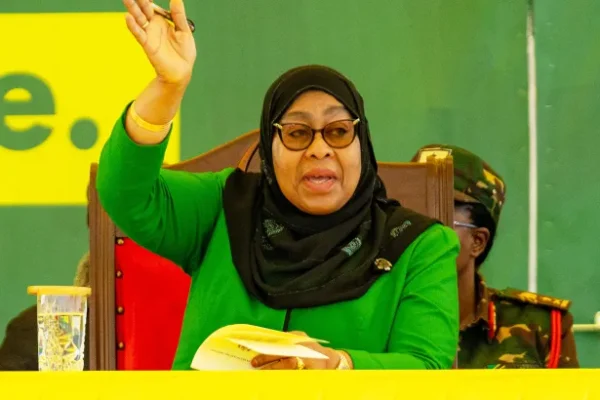
Tanzanian President Samia Suluhu Hassan has been declared the overwhelming winner of the country’s highly contentious presidential election, securing nearly 98 percent of the vote in a contest marred by violence, opposition crackdowns, and widespread accusations of fraud. The Independent Electoral Commission announced on Saturday that Hassan had won 97.66 percent of the ballots cast in Wednesday’s vote, sweeping every constituency. Her victory, however, came after the main opposition parties were barred from contesting, triggering days of violent protests across the country. Opposition party Chadema, which was excluded from the race, rejected the result, describing it as “a mockery of the democratic process.” Party spokesperson John Kitoka called for an international intervention to oversee a new, credible election. “We are calling for the intervention by a credible body to oversee another fresh election,” he said. In her victory speech in Dodoma, Hassan condemned the protesters, calling their actions “neither responsible nor patriotic.” She vowed to maintain security, saying, “When it comes to the safety of Tanzania, there is no debate – we must use all available security avenues to ensure the country remains safe.” The disputed election sparked mass unrest across major cities including Dar es Salaam, Arusha, and Mwanza, as demonstrators decried what they called a “sham” vote. Witnesses reported fires, the destruction of government buildings, and clashes with security forces who responded with live ammunition and tear gas. Internet watchdog NetBlocks confirmed that mobile and social media access had been restricted during and after the vote. Chadema claimed on Saturday that at least 800 people had been killed by security forces since protests began, while the UN human rights office cited “credible reports” of at least 10 confirmed deaths in three cities. The African Union chair, Mahmoud Ali Youssouf, congratulated Hassan but expressed regret over the loss of life, extending condolences to victims’ families. Foreign Minister Mahmoud Thabit Kombo defended the government’s handling of the crisis, insisting that “no excessive force has been used” and claiming the government had “no official figures” for protester deaths. “I’ve not seen these 700 anywhere,” he told Al Jazeera. Analysts have condemned the election as one of the most repressive in Tanzania’s recent history. Alex Vines, Africa director at the European Council on Foreign Relations (ECFR), described the polls as “a campaign of harassment and intimidation,” adding that the scale of violence was “unexpected” for the country. “This is a very serious crackdown,” he said, noting that most protesters were young Tanzanians frustrated by political exclusion. President Hassan, who succeeded John Magufuli in 2021 following his sudden death, faced only 16 minor candidates after her two strongest rivals — Tundu Lissu of Chadema and Luhaga Mpina of ACT-Wazalendo — were either jailed or disqualified. Lissu remains imprisoned on treason charges stemming from his calls for electoral reform. The United Nations Secretary-General, Antonio Guterres, said he was “deeply concerned” by reports of deaths and injuries, calling for restraint and an independent investigation into the violence. Human rights groups, meanwhile, accuse Hassan’s administration of orchestrating a “wave of terror” marked by abductions, media restrictions, and intimidation of civil society in the lead-up to the vote. As the country reels from the unrest, observers warn that Tanzania — once seen as a bastion of stability in East Africa — is now facing its most severe political and human rights crisis in decades.
Read More

No Mercy: Survivor Recounts RSF Mass Killings in Sudan’s El-Fasher as Thousands Flee Amid Atrocities

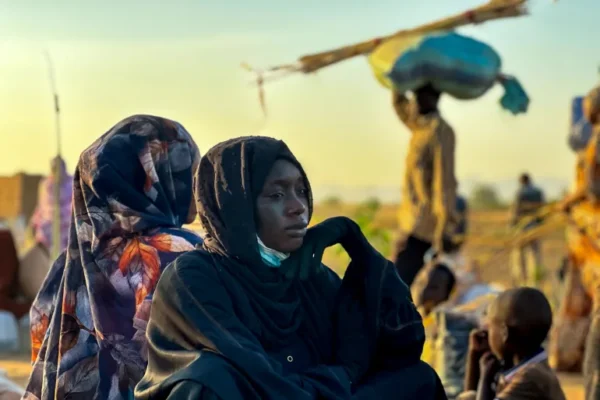
Thousands of civilians remain trapped in el-Fasher, Sudan, as harrowing accounts emerge of mass killings carried out by the Rapid Support Forces (RSF) following their capture of the city on October 26. Survivors describe scenes of horror, accusing the paramilitary group of executing civilians “without mercy” in what humanitarian officials warn may amount to ethnic cleansing. For 550 days, Abubakr Ahmed, a 29-year-old fighter in the city’s “popular resistance” unit, battled alongside the army to defend el-Fasher — the last government stronghold in Darfur. But when the army surrendered and withdrew under a deal it claimed was meant to prevent a bloodbath, tens of thousands of civilians were left behind. “The RSF killed civilians and left their corpses in the streets,” Ahmed told Al Jazeera after escaping. “They were killed without mercy.” According to Sudan’s Doctors’ Network, the RSF killed at least 1,500 people in the first three days after seizing control, including 460 patients and companions at al-Saud hospital — a figure also verified by the World Health Organization (WHO). Videos authenticated by Al Jazeera’s Sanad unit show RSF troops standing over piles of bodies and executing unarmed men. More than 33,000 people have already fled to nearby towns like Tawila and Tine, but most civilians remain trapped, hiding from RSF patrols. Those escaping face a perilous journey through the desert with little food or water. “The majority of people won’t stay in el-Fasher because they are terrified of the RSF,” said one survivor, Mohammed, who arrived in Tawila on October 28. “They don’t trust them. The Arabs will live in one place and the non-Arabs in another — that’s just the way it is now.” The Yale Humanitarian Research Lab (HRL) reported evidence of “mass killings” as people attempted to flee the city, warning that current death estimates are likely undercounted. UNICEF’s Sudan representative, Sheldon Yett, described el-Fasher as “killing fields,” drawing parallels to the Rwandan genocide. “The kind of slaughter we are seeing, and the pride [the perpetrators] have in killing innocent people, is what scares me,” he said. Aid efforts have nearly collapsed as RSF fighters target local relief workers, accusing them of collaborating with the army. UNICEF has lost contact with many of its community partners, including those running food kitchens. “Many are on the move and hiding, and they’re afraid,” Yett said. International outrage has followed the massacre, with the UN, United States, and European Union issuing condemnations and urging the RSF to protect civilians. However, analysts and survivors accuse the global community of failing to act before the atrocities unfolded. “This is a case of refusal and betrayal by the international community,” said Sudan expert Hamid Khalafallah. “They didn’t do anything serious to protect civilians.” Human Rights Watch researcher Jean-Baptiste Gallopin said the RSF’s actions in el-Fasher mirror previous atrocities in el-Geneina and Ardamata, warning that impunity has emboldened RSF leader Mohamed Hamdan “Hemedti” Dagalo. “Diplomats are focused on getting to an elusive ceasefire, but by avoiding sanctions or accountability, they’ve effectively washed their hands of the atrocities that occur,” Gallopin said. The fall of el-Fasher marks one of the bloodiest chapters in Sudan’s two-and-a-half-year civil war — and leaves Darfur’s civilians once again at the mercy of militias accused of genocide two decades ago.

Read More

Hundreds Feared Dead in Tanzania Post-Election Protests as Opposition, UN Clash With Government Over Death Toll

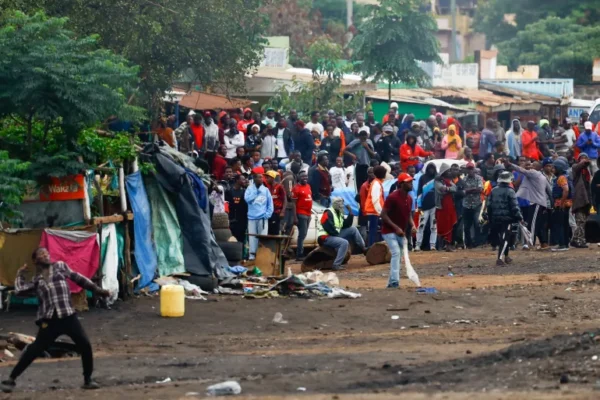
Tanzania’s main opposition party, Chadema, has claimed that hundreds of people have been killed in violent protests following this week’s disputed general elections, while the United Nations says it has “credible reports” of at least 10 deaths. Chadema spokesperson John Kitoka told AFP on Friday that the party’s internal assessment put the number of deaths at roughly 700 nationwide, including around 350 in Dar-es-Salaam and more than 200 in Mwanza. The opposition said it based its figures on visits to hospitals across the country. A security source and a diplomat in the capital also confirmed that deaths were “in the hundreds.” The Tanzanian government has rejected the opposition’s claims. Foreign Minister Mahmoud Thabit Kombo denied that excessive force had been used by security agencies and insisted the government had “no official figures” of protesters killed. “I’ve not seen these 700 anywhere … there’s no number until now of any protesters killed,” Kombo said, adding that “pockets of violence and vandalism” had occurred, with government offices and vehicles attacked and electricity facilities set ablaze. The UN Human Rights Office, however, expressed alarm over reports of killings by security forces. Spokesperson Seif Magango called on Tanzanian authorities to refrain from using lethal force against demonstrators and to “make every effort to de-escalate tensions.” Later on Friday, UN Secretary-General António Guterres urged a full investigation into the allegations, citing “deep concern” over reports of disappearances and detentions ahead of the polls. Protests erupted on Wednesday in Dar-es-Salaam and other cities following elections marred by allegations of fraud and the exclusion of key opposition candidates. Witnesses reported clashes between demonstrators and police, with several vehicles, police stations, and a petrol station set on fire. The government deployed the military to the streets and imposed an internet shutdown to quell unrest. President Samia Suluhu Hassan, who assumed office in 2021 after the death of John Magufuli, faced the election without her two main challengers, Tundu Lissu of Chadema and Luhaga Mpina of ACT-Wazalendo. Both were barred by the electoral commission under controversial circumstances that opposition groups and rights organizations have condemned as politically motivated. The UN and human rights groups, including Human Rights Watch (HRW), have long warned of rising repression, disappearances, and violence against opposition figures in Tanzania. HRW recently documented multiple cases of abduction, torture, and intimidation of activists and journalists, warning that the October elections were at “great risk.” Meanwhile, in the semi-autonomous Zanzibar archipelago, the ruling Chama Cha Mapinduzi (CCM) party claimed victory, with incumbent President Hussein Mwinyi declared winner with nearly 79% of the vote. Opposition parties rejected the results, alleging “massive fraud,” as soldiers patrolled the streets amid growing unrest. As demonstrations spread nationwide, the government postponed the reopening of colleges and universities and vowed to restore order. The army chief, Jacob John Mkunda, condemned the violence and pledged that the military would work with police “to contain the situation.”

Read More

AU, AFRIMA Confirm January 7-11, 2026 for 9th Awards in Lagos

The African Union Commission (AUC) and the International Executive Committee of the All Africa Music Awards (AFRIMA) have officially announced the 9th edition of Africa’s global music awards will now take place between Wednesday, January 7 to Sunday, January 11, 2026, in Lagos, Nigeria. Previously scheduled for November 25–30, 2025, the awards’ date adjustment followed extensive consultations with partners, artistes, and stakeholders across Africa and the diaspora. “The African Union Commission is proud to continue its partnership with AFRIMA in celebrating Africa’s creative excellence and global influence,” said Ms. Angela Martins, Acting Director of Social Development, Culture and Sports and Head of the Culture and Sport Division, AUC. “This relationship aligns perfectly with the AU’s Cultural Policy for Africa and the AU Agenda 2063, which prioritise the creative economy as a driver of sustainable development, youth empowerment, and continental integration. The new dates for the 9th AFRIMA in January 2026 provide an exciting opportunity to further showcase the rich diversity, innovation, and unity of Africa’s music and culture to the world.” Explaining the decision, Nde Ndifonka, AFRIMA’s Regional Director for Central Africa and Cameroonian music star popularly known as Wax Dey, said the new dates in January will allow for broader participation and ensure a top-quality experience for everyone involved. “AFRIMA is not just an award show; it is Africa’s global music stage,” said Ndifonka, who is also a lawyer. “Rescheduling the 9th edition to January allows us to deliver the kind of world-class celebration that truly reflects Africa’s creative power. It also ensures that more of our stakeholders, artistes, fans, media, and partners can participate fully. This is about giving African music the grand platform it deserves.” The 9th AFRIMA, held in partnership with the African Union Commission, the Federal Government of Nigeria as the Official Host Country and Lagos State as the Official Host City, will feature a week-long lineup of music, culture, and entertainment. The continent’s biggest music festival will commence officially on Wednesday, January 7 with the exclusive Welcome Soirée for nominees, delegates, guests and international media offering a premium networking space for artistes, industry leaders, sponsors, and media professionals. On the same day, the 9th AFRIMA Diamond Showcase, a special performance platform for undiscovered African music acts, will host 15 budding talents creating an opportunity for them to connect their sounds to a larger audience and break into mainstream music success. On Thursday, January 8, the spotlight will shift to the Africa Music Business Summit (AMBS) —AFRIMA’s signature conference for thought leadership and collaboration within the African music ecosystem. Later that evening, guests will be treated to the Music Icons’ Night, a celebration of legendary figures who have shaped Africa’s music heritage. The excitement continues on Friday, January 9 with a vibrant lineup that includes community outreach visits to schools, a host city cultural tour, and a courtesy reception with the Lagos State Government. The day will close on a high note with the AFRIMA Music Village, an open air live performances, star studded concert & festival arena Saturday, January 10, will bring the energy up further at the 9th AFRIMA Nominees & Industry Party, a glamorous night dedicated to past winners, current nominees, and AFRIMA’s valued sponsors and partners. The week-long celebration will culminate on Sunday, January 11, 2026, with the live broadcast  9th AFRIMA Awards Ceremony at the Eko Convention Centre, Eko Hotels & Suites in Lagos. The grand event will include a live Red Carpet broadcast and feature electrifying performances from some of Africa’s biggest music stars. The ceremony will be aired to over 84 countries around the world.

Read More
Hurricane Melissa Live: Drone Images Reveal Devastation as 77% of Jamaica Left Without Power and Dozens Dead in Haiti

Hurricane Melissa Live: Drone Images Reveal Devastation as 77% of Jamaica Left Without Power and Dozens Dead in Haiti

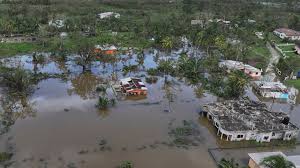
Hurricane Melissa, one of the strongest storms ever recorded in the Atlantic basin, has left a trail of destruction across the Caribbean, killing dozens and crippling infrastructure across multiple nations. In Haiti, at least 25 people have been confirmed dead after a river burst its banks, flooding several communities. In Jamaica, the storm struck with fierce winds and torrential rain, leaving 77% of the island without power and causing widespread damage to homes and public utilities. By Wednesday morning, Melissa had moved across Cuba, though the full extent of the damage throughout the region is still emerging. Drone images show flattened buildings, uprooted trees, and entire neighborhoods submerged under water. Climate Change and Hurricane Severity Experts say climate change is making hurricanes more destructive, fueling both their strength and speed of intensification. Storm Surges One of the most devastating impacts comes from storm surges — sudden rises in sea level driven by high winds and pressure changes. As global sea levels rise, these surges are becoming more severe, causing catastrophic flooding similar to what occurred during Hurricane Katrina in 2005. Rapid Intensification Scientists have also documented a growing trend of rapid intensification, when sustained winds increase by at least 35 mph within 24 hours. Hurricane Melissa’s transformation from a tropical storm to a Category 5 hurricane in just one day is a striking example. This phenomenon is driven by warmer ocean temperatures and greater atmospheric moisture, both fueled by global warming. A 2023 study found that Atlantic tropical cyclones were 29% more likely to undergo rapid intensification between 2001 and 2020 than in previous decades. With storms like Melissa setting new benchmarks for intensity, some researchers are calling for the introduction of a Category 6 classification to reflect the growing power of modern hurricanes.

Read More

Israel Launches Fresh Gaza Strike, Accuses Hamas of Planning ‘Imminent Attack’

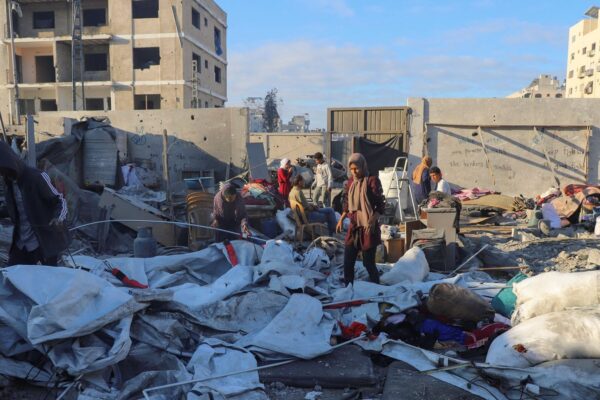
The Israeli military has launched a fresh strike on Gaza, accusing Hamas of preparing an “imminent terror attack” — a move that has heightened fears over the fragility of the ongoing ceasefire. According to the Israel Defence Forces (IDF), the operation targeted “terrorist infrastructure” in Beit Lahia, northern Gaza, where weapons were allegedly stored for use against Israeli soldiers. “IDF soldiers remain deployed in accordance with the ceasefire agreement and will continue to operate to remove any immediate threat,” a spokesperson said. Residents of Gaza City reported hearing explosions and seeing thick smoke rising from the area. The strike followed overnight attacks that hospital officials say killed at least 104 people, including 46 children. Prime Minister Benjamin Netanyahu reportedly ordered those strikes after an Israeli soldier was killed by “enemy fire” in Rafah. Hamas denied involvement in the Rafah incident and reaffirmed its commitment to the ceasefire. US President Donald Trump defended Israel’s actions, stating: “They took out an Israeli soldier… so the Israelis hit back — and they should. Nothing is going to jeopardise the ceasefire.” Qatar’s Prime Minister, Sheikh Mohammed bin Abdulrahman al-Thani, who has been mediating peace efforts alongside the US and Egypt, described the renewed violence as “very disappointing and frustrating.” Despite the escalation, the IDF said it remains committed to the ceasefire but will respond “firmly” to any violations.

Read More
Microsoft Outage Knocks Office 365 and Xbox Live Offline for Thousands of Users

Microsoft Outage Knocks Office 365 and Xbox Live Offline for Thousands of Users

Thousands of Microsoft customers across the world were hit by service disruptions on Wednesday after a major outage affected Azure, Office 365, and Xbox Live platforms. According to Downdetector, Azure — Microsoft’s cloud computing service — was down for more than 105,000 users, while Microsoft 365 recorded nearly 9,000 outage reports. The disruption also affected users trying to access the Azure Portal and the Microsoft 365 admin center. Microsoft confirmed it was “investigating an issue with the Azure Portal where customers may be experiencing issues accessing the portal,” and said the outage was linked to problems with its domain name system. A company spokesperson told Sky News: “We are working to address an issue affecting Azure Front Door that is impacting the availability of some services. Customers should continue to check their Service Health Alerts and the latest update on this issue can be found on the Azure status page.” In a post on X, Microsoft 365 Status said: “Microsoft 365 services are experiencing downstream impact related to the ongoing Azure outage.” The company later identified a “recent configuration change” as the likely cause of the disruption and said it was “pursuing multiple remediation strategies,” including rerouting service traffic and reversing the offending change. Microsoft also confirmed it had halted the rollout of the configuration update and was working to restore services by reverting affected systems to their previous state. The outage comes just a week after Amazon’s AWS cloud platform suffered a similar global disruption, which temporarily crippled major online services including Snapchat and Reddit.

Read More

U17 Women’s World Cup: Flamingos Out after 0-4 Loss to Italy

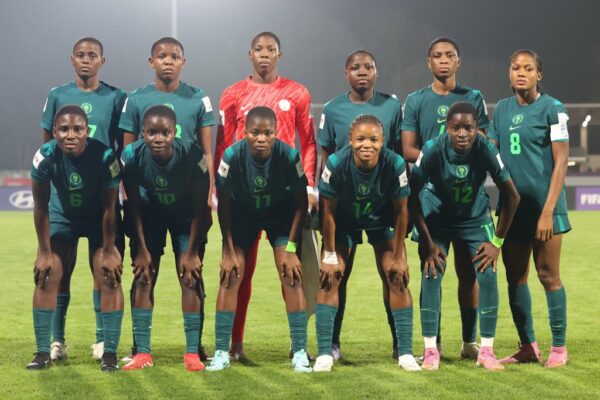
2022 bronze medallists Nigeria were eliminated from the ongoing FIFA U17 Women’s World Cup on Tuesday after a 4-0 defeat by Italy, who took their tournament tally to four wins in as many matches.   The Flamingos entered the game determined to prove that their passage into the Round of 16 was no fluke, and could have been in front after 24 minutes but Captain Shakirat Moshood saw her fierce shot from the left side of the penalty box pushed round the post by goalkeeper Matilde Robbioni.   Just before the close of the first half, Anna Copelli put Italy ahead when she danced round the Nigeria rearguard and then picked her spot to slot past goalkeeper Sylvia Echefu.   Nigeria thought they had drawn level 10 minutes into the second half when Nguemo Terlumun poked into the net after a battling effort by Queen Joseph, but the Video Support Review ruled that Joseph kicked the ball from Robbioni’hands.   The Italians increased the tally three minutes later, through an audacious long-range strike by Caterina Venturelli that flew over Echefu and into Nigeria’s net.   It was 3-0 five minutes later, thanks to Giulia Robino, and in the 89th minute, the Video Support Review ruled that Rachelle Giudici was not in the off-side position and had scored a legitimate fourth goal for the Italians.   The defeat ended Nigeria’s interest in the ongoing championship in Morocco, but the Flamingos must immediately commence preparations for the qualifying series for next year’s edition of the FIFA U17 Women’s World Cup finals, which is now an annual event.

Read More