Kamal Yalwa

Crisis of Integrity: Nigeria’s Body of Benchers and the Erosion of Ethics in the Legal Profession

The Call to Bar ceremony is one of Nigeria’s most revered legal traditions — a solemn ritual through which new lawyers are formally admitted into the legal profession. The event, overseen by the Body of Benchers (BoB), is meant to symbolize integrity, discipline, and the highest standards of legal distinction. However, recent developments surrounding the 2025 Call to Bar ceremony have raised serious questions about the credibility and moral authority of the institution charged with maintaining those values. The BoB, described by law as a body of “legal practitioners of the highest distinction,” is responsible not only for admitting new entrants into the Bar but also for overseeing professional discipline through its Legal Practitioners Disciplinary Committee (LPDC). Yet, the criteria for determining who qualifies as a member of “the highest distinction” remain opaque, and in practice, some of its members have been tainted by ethical controversies. Opaque Standards and Questionable Membership The Body of Benchers comprises three main categories of members: Honorary Members – often appointed for political or diplomatic reasons, usually symbolic rather than substantive. Ordinary Members – drawn from top public offices such as judges, Attorneys-General, leaders of the Nigerian Bar Association (NBA), and principal officers of the National Assembly who are lawyers. Life Benchers – members recognized for consistent participation in BoB meetings and events over a four-year period. While these categories seem designed to preserve merit, critics say political patronage and internal favoritism often determine membership more than professional excellence or ethical standing. The Ozekhome Controversy During the most recent Call to Bar ceremony held in Abuja from September 23 to 25, 2025, a controversy quietly unfolded behind closed doors. Chief Mike Ozekhome, SAN, who had only been conferred as a Life Bencher in January 2025, was asked to withdraw from participating in the ceremony following objections from some BoB members. Their objection stemmed from a UK property tribunal judgment delivered on September 11, 2025, where the judge dismissed Ozekhome’s testimony as “an invention and contrivance.” The case, related to a failed real estate registration application, raised ethical concerns among some members of the legal community. According to Professor Gideon Christian of the University of Calgary, the case illustrated how “politicians hide wealth abroad under false identities, while lawyers—sworn to uphold the law—serve as enablers of fraud.” Despite Ozekhome’s withdrawal, the BoB reportedly went to great lengths to ensure the incident remained a closely guarded secret, underscoring what observers describe as a pattern of selective accountability within the body. A Culture of No Consequence The Body of Benchers’ handling of the Ozekhome issue is emblematic of a larger problem — the failure to enforce ethical standards among senior lawyers. The LPDC, which operates under the BoB, has a long history of inaction in cases involving influential figures. Notably: In 2021, the Supreme Court condemned former Attorney-General Michael Aondoakaa (SAN) for “undermining and subverting the administration of justice.” The court ruled that he should never again hold public office. Yet, no disciplinary action followed from the Bar. Earlier cases include Kunle Kalejaiye (SAN), accused of corrupting a judge, and Joseph Nwobike (SAN), found guilty of manipulating court assignments. Both men escaped meaningful professional sanctions after years of legal maneuvering and technical rulings. A System in Moral Decline The latest episode involving Chief Ozekhome reinforces the perception that Nigeria’s legal elite operates under a culture of impunity. The very institution tasked with upholding ethical standards has instead become a sanctuary for some of the same individuals accused of undermining them. While the BoB publicly extols integrity during the Call to Bar ceremonies, its internal practices suggest a widening disconnect between rhetoric and reality. For many observers, the 2025 incident serves as a troubling reminder that without accountability at the top, the moral foundation of Nigeria’s legal profession continues to erode.
Read More

Akpabio Says Hunger Among His People Drove Him Into Politics

ABUJA, Nigeria – President of the Senate, Senator Godswill Obot Akpabio, has revealed that hunger and poverty among his people motivated him to join politics, with the goal of transforming their living conditions and changing public perception of Akwa Ibom indigenes. Akpabio made the statement during a youth-focused programme titled “Uncommon Evening with Akpabio”, organized by the All Progressives Congress (APC) Youth Wing in Abuja on October 10. Addressing a large audience of Nigerian youths, Akpabio recounted how the socio-economic conditions of his people once pushed many into menial jobs across the country, where they were often employed as security guards and domestic workers—popularly referred to as Ekaete or Akpan. The Senate President said this experience spurred his passion for leadership and inspired his political journey aimed at rewriting the narrative of Akwa Ibom State. “My people were known mainly as security men and housemaids. That reality pained me deeply, and I resolved to change it through leadership and development,” Akpabio said. He highlighted the remarkable transformation of Akwa Ibom State during his tenure as governor from 2007 to 2015, noting achievements in infrastructure, human capital development, and tourism, which have turned the state into a “tourist haven with a thriving economy.” Akpabio also referenced a viral video by media personality Daddy Freeze, where a young man testified to receiving $85,000 from him years ago—a gesture that reportedly changed the man’s life. Encouraging Nigerian youths not to lose faith in the country, Akpabio urged them to remain resilient and committed to building a better nation. Currently serving as the 15th President of the Nigerian Senate, Akpabio previously held office as a two-term governor (2007–2015), Senator (2015), and Minister (2019) before his election to lead the upper legislative chamber in 2023.

Read More

Katsina Government Opens Peace Talks With Bandits in Troubled Communities

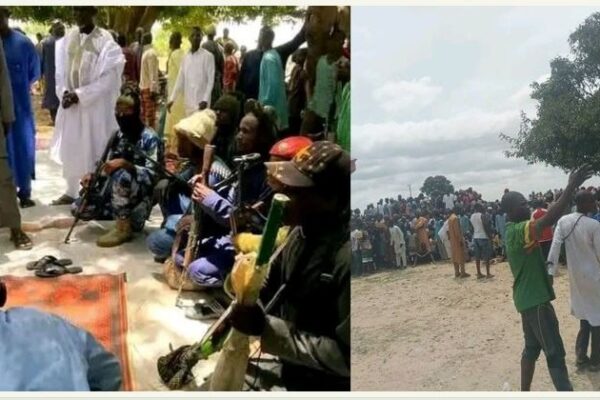
The Katsina State Government has initiated a peace dialogue with armed bandits in Kakumi town, Bakori Local Government Area, as part of renewed efforts to restore lasting peace in the state’s violence-hit regions. The meeting, which began on Sunday, reportedly brought together representatives from at least five local government areas — Bakori, Kankara, Funtua, Kafur, and Malumfashi — all of which have suffered repeated bandit attacks in recent years. According to local sources, the dialogue aims to broker a ceasefire and secure commitments from the armed groups to end hostilities in affected communities. However, details of the discussions remain sketchy as of press time. Katsina, one of the states most affected by banditry in northwest Nigeria, has in the past experimented with peace initiatives that produced mixed results. Earlier reports by SaharaReporters indicated that despite failing to renounce their criminal activities or surrender their weapons after a previous peace agreement, the Chairman of Sabuwa Local Government Area, Engr. Sagir Tanimu, recently attended the wedding of children belonging to some of the bandits. The ceremony, held in Kadawan Dandume village — a community recently reconciled with local authorities after years of clashes — was reportedly part of the state’s ongoing reconciliation efforts with armed groups. Tanimu was said to have attended the event alongside Alhaji Ibrahim Bello Kogo, the Prince of Kogo Emirate, and the District Head of Sabuwa. While the government continues to explore dialogue as a pathway to peace, residents insist that true reconciliation can only be achieved when the armed groups formally renounce violence and surrender their weapons.

Read More

Opposition Leader Patrick Herminie Wins Seychelles Presidential Run-off

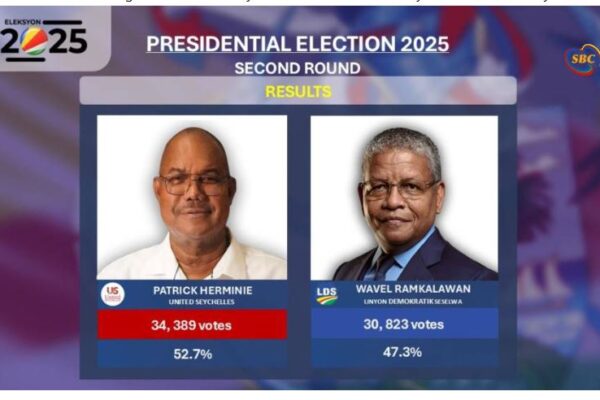
Opposition leader Patrick Herminie has emerged victorious in the Seychelles presidential run-off election, securing 52.7% of the vote against incumbent Wavel Ramkalawan, who garnered 47.3%, according to the country’s electoral commission. Ramkalawan has conceded defeat, paving the way for Herminie to become the 6th president of Seychelles. In his victory speech, Herminie pledged to reduce the cost of living, improve public services, and govern inclusively for all Seychellois. A medical doctor and former head of the national anti-drug agency, Herminie said combating the country’s growing heroin addiction crisis will be among his top priorities. His party, United Seychelles, also secured 15 out of 26 parliamentary seats in last month’s legislative elections, strengthening his mandate to implement reforms. The campaign was heavily influenced by public anger over a 70-year lease of Assumption Island for a Qatar-backed luxury resort near the protected Aldabra Atoll, a UNESCO World Heritage site. Herminie has vowed to cancel the controversial deal and accused Qatari entities of attempting to interfere in the election process. With his victory, Seychelles enters a new political chapter as Herminie takes on the challenge of uniting a divided nation and steering the island country toward economic stability and social recovery.

Read More

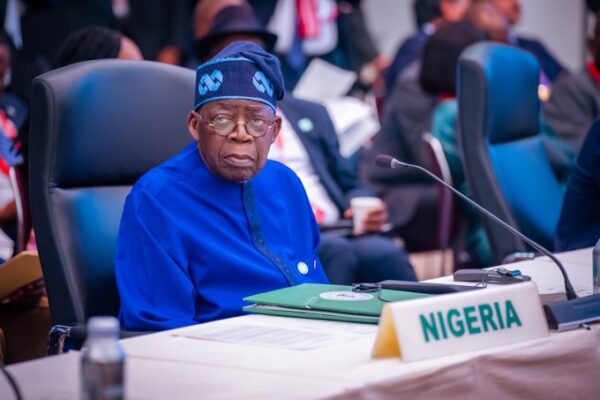
Two Years On: Why Poor Nigerians Are Yet to Feel the Impact of Tinubu’s Bold Reforms

The presidency continues to insist that its bold reforms are visible, but many Nigerians are asking why the poor are not reaping the benefits of President Bola Tinubu’s policies after two years in office. Tinubu’s administration has consistently described its policies as “bold reforms” aimed at stabilizing and rebuilding the economy. These include the removal of fuel subsidy, the unification of the foreign exchange market, tax and revenue reforms, fiscal discipline, debt management initiatives, and an emphasis on promoting investment and infrastructure. However, the benefits of these measures have not been felt by poor and working-class Nigerians for several reasons. First, many of Tinubu’s economic policies, especially the fuel subsidy removal and foreign exchange liberalization, were expected to cause short-term hardship before producing long-term gains. Unfortunately, after two years, inflation remains above 30 percent, food prices are even higher, and wages have not kept up. The so-called long-term benefits are still out of reach for millions living in poverty. Another major issue is the weakness of social safety nets. Although the government announced cash transfer and palliative programs to cushion the effect of reforms, implementation has been inconsistent and often poorly targeted. Many vulnerable Nigerians, for whom these policies were meant to provide relief, have not received any meaningful support. Without a strong social welfare system, the reforms appear more punitive than protective. The instability of the naira has also worsened living conditions. The currency devaluation, which was intended to attract foreign investment and unify exchange rates, has instead caused a surge in import costs. This has eroded the purchasing power of households, as businesses transfer higher costs to consumers. Moreover, the expected boost in productivity has not materialized. Local industries continue to struggle with power shortages, expensive imports, and high borrowing rates. Without significant growth in the productive sectors of the economy, the reforms have not translated into job creation or improved living standards. Public trust has also been undermined by perceptions of corruption and waste in government. Many citizens believe that the savings from subsidy removal and other reforms have not been properly managed or transparently utilized. Lavish spending by government officials amid widespread hardship only fuels disillusionment and anger among the populace. Even when reforms are well-intentioned, structural change takes time. Economic recovery, job creation, and investor confidence cannot happen overnight. But the lack of visible progress and accountability has made Nigerians increasingly skeptical and impatient. In the end, while the Tinubu administration’s reforms may appear visible on paper and in official reports, they have not yet brought relief to ordinary Nigerians. Prices remain high, incomes are stagnant, and inequality continues to deepen. Until the government channels the gains of its reforms into tangible improvements — such as affordable food, jobs, stable power, and accessible healthcare — most Nigerians will continue to see the reforms as promises without progress.

Read More

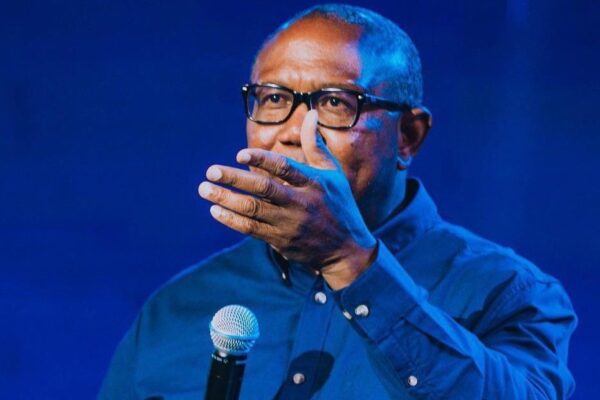
Peter Obi: Hardship Pushing Nigerians Into Mental Distress, Crime

By Trend Brio News Desk | October 12, 2025 ABUJA — Former Anambra State Governor and 2023 Labour Party (LP) presidential candidate, Peter Obi, has raised alarm over what he described as a worsening mental health crisis in Nigeria, saying that the country’s deepening hardship is driving many citizens into psychological distress and criminality. In a post on his X (formerly Twitter) handle to mark World Mental Health Day, commemorated every October 10, Obi said that poverty, unemployment, and the struggle for daily survival have left millions of Nigerians mentally overwhelmed. “As the world celebrates Mental Health Day this weekend, it is troubling to note that a nation like Nigeria has deepening mental health crises,” Obi wrote. “A recent World Health Organisation (WHO) report estimated that about 40 million Nigerians are living with mental health conditions, with fewer than 300 psychiatrists available nationwide.” He lamented that the statistic reflects Nigeria’s “growing disinterest and neglect” of the health sector, emphasizing that mental health should be treated as a national priority. “Mental health is more important than physical health. Nigerians are now feeling so overwhelmed by hardship that they are mentally affected,” Obi stated. “Poverty, unemployment, and the daily battle to survive have pushed many, especially the youth, into hopelessness, criminality, and an increasing rate of suicide.” The LP flag bearer urged the federal government to declare a public health emergency on mental health and to invest massively in mental health infrastructure. He called for the establishment of psychiatric hospitals in all geopolitical zones, alongside the recruitment and training of more mental health professionals to bridge the gap in access to care. “We must also address the issues of poverty, unemployment, and hunger that are contributing to this mental problem and build a nation that heals, uplifts, and gives every citizen a reason to live,” he added. Obi concluded that Nigeria’s true progress should not be measured by the wealth of its leaders but by the well-being and development of its people.

Read More
China Condemns Trump’s 100% Tariff Threat, Defends Rare Earth Export Controls

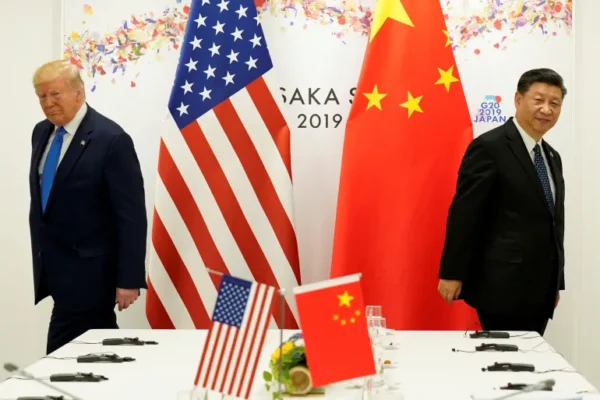
China Condemns Trump’s 100% Tariff Threat, Defends Rare Earth Export Controls

By Trend Brio News  | October 12, 2025 BEIJING — China has lashed out at U.S. President Donald Trump’s decision to impose 100 percent tariffs on Chinese imports, calling the move “hypocritical” and warning Washington to resolve trade tensions through dialogue rather than confrontation. In a statement released on Sunday, China’s Ministry of Commerce defended its recent restrictions on rare earth exports and related technologies, saying the measures were taken in response to a series of “provocative and damaging” U.S. actions since bilateral trade talks in Madrid last month. “China’s stance is consistent. We do not want a tariff war but we are not afraid of one,” the ministry said, adding that Beijing would not back down in the face of “threats and coercion.” Beijing accused Washington of double standards after Trump announced the sweeping new tariffs on Friday, claiming China had weaponized its dominance in rare earth production. The tariffs, which take effect November 1, target a wide range of Chinese goods and include new restrictions on software exports. “These actions have severely harmed China’s interests and undermined the atmosphere for economic and trade talks,” the statement added. Rare earth elements—crucial for smartphones, electric vehicles, renewable energy systems, and military hardware—have become a central issue in the escalating economic rivalry between the two superpowers. China currently dominates global production and processing of these materials and on Thursday introduced tighter controls on the export of technologies used in mining and refining them. The new restrictions have rattled global markets, with tech stocks sliding amid fears of disruptions to the supply chain for critical minerals. The renewed trade tensions also threaten to derail a possible meeting between Trump and Chinese President Xi Jinping at the Asia-Pacific Economic Cooperation (APEC) Summit in South Korea later this month. The encounter would be their first face-to-face meeting since Trump’s return to office in January. Meanwhile, Taiwan’s Ministry of Economic Affairs downplayed concerns that China’s export controls would disrupt its semiconductor industry, saying the rare earth elements covered by the new rules differ from those used in chip manufacturing. “The expanded ban differs from materials required in Taiwan’s semiconductor processes, so no significant impact is expected,” the ministry said, noting that Taiwan sources most of its rare earth materials from Europe, the U.S., and Japan. Despite China’s restraint in not announcing countermeasures, observers expect Beijing to continue using targeted export restrictions and diplomatic pressure as leverage in the ongoing trade confrontation.

Read More

El-Sisi, Trump to Co-Chair Gaza Peace Summit in Egypt on Monday

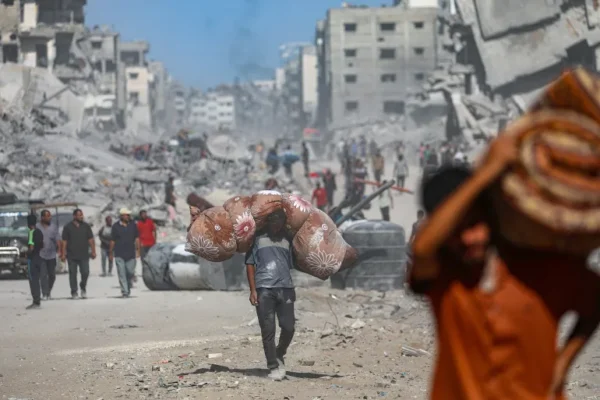
By Trend Brio News | October 12, 2025 SHARM EL-SHEIKH, EGYPT — Egyptian President Abdel Fattah el-Sisi and U.S. President Donald Trump are set to co-chair an international peace summit in Egypt’s Sharm el-Sheikh on Monday, bringing together leaders from over 20 countries to discuss a comprehensive plan to end Israel’s devastating war on Gaza. According to a statement from the Egyptian presidency on Saturday, the summit aims “to end the war in the Gaza Strip, enhance efforts to achieve peace and stability in the Middle East, and usher in a new era of regional security and stability.” Among those confirmed to attend are United Nations Secretary-General António Guterres, UK Prime Minister Keir Starmer, French President Emmanuel Macron, Italy’s Giorgia Meloni, and Spain’s Pedro Sánchez. It remains unclear whether Israeli Prime Minister Benjamin Netanyahu or any representatives from Hamas will take part. The announcement follows the implementation of the first phase of a U.S.-brokered ceasefire between Israel and Hamas, which includes the release of Israeli hostages and Palestinian prisoners, the partial withdrawal of Israeli troops, and the resumption of humanitarian aid into Gaza. Palestinians Return to Rubble As the ceasefire holds, tens of thousands of displaced Palestinians have begun returning north along the Gaza coast to their homes — or what remains of them. Much of Gaza lies in ruins after two years of war that have killed more than 67,000 people, mostly civilians, and left the enclave on the brink of famine. Al Jazeera’s Hani Mahmoud, reporting from Gaza City, described scenes of resilience amid destruction. “People walk this exhausting journey back because they belong here,” he said. “But spending a night here is going to be very difficult. The struggle to survive continues each hour.” Recovery Efforts Underway Gaza’s Government Media Office said more than 5,000 recovery and relief operations have been conducted since the ceasefire began. Over 850 missions were carried out by civil defence and municipal teams to recover bodies and clear debris, while more than 900 efforts focused on restoring water and sewage infrastructure. Officials in Khan Younis reported that 85 percent of the city has been destroyed, with over 400,000 tonnes of rubble still blocking streets. Aid agencies say the work is being done with minimal resources due to Israel’s continued blockade restricting fuel and equipment imports. Push for Humanitarian Access Aid groups, including the World Food Programme (WFP) and UNICEF, have called on Israel to reopen border crossings to allow the delivery of food, medicine, and relief materials. WFP country director Antoine Renard said the agency was ready to reopen 145 food distribution points across Gaza once access is restored. UNICEF also announced plans to scale up food and hygiene supplies for children and families. Prisoner and Hostage Exchange As part of the ceasefire deal, 20 Israeli captives and the bodies of 28 others are set to be handed over on Monday, according to President Trump. In exchange, Israel will release 250 Palestinian prisoners and about 1,700 Gazans detained without charge since the war began. In Tel Aviv, tens of thousands gathered in Hostages Square to mark the expected return of captives. Trump’s son-in-law Jared Kushner, daughter Ivanka Trump, and U.S. envoy Steve Witkoff — who helped broker the agreement — joined the rally. “I dreamed of this night. It’s been a long journey,” Witkoff said to loud applause. “As you return to your families, know that all of Israel and the world stand ready to welcome you home.” Al Jazeera’s Hamdah Salhut reported that families of Israeli captives credited Trump and the U.S. team for the deal, accusing Prime Minister Netanyahu of prolonging the conflict for political reasons. With the summit in Sharm el-Sheikh set to convene on Monday, global leaders hope the talks can solidify the fragile ceasefire and pave the way for lasting peace in the region.

Read More