117 Repentant Terrorists Complete Nigeria’s Operation Safe Corridor Rehabilitation Programme
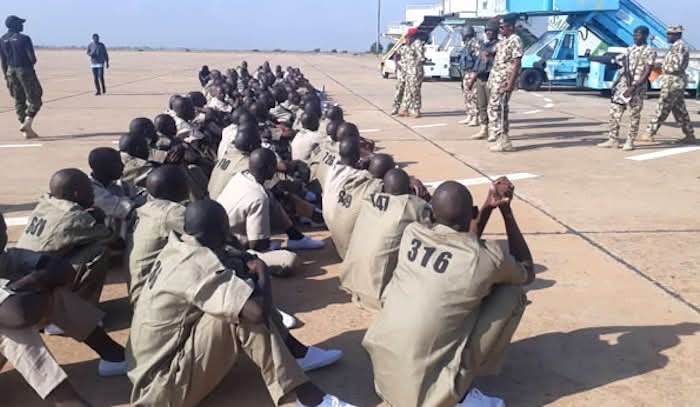
A total of 117 repentant terrorists have successfully completed the federal government’s De-Radicalisation, Rehabilitation, and Reintegration (DRR) programme under Operation Safe Corridor (OPSC) in Borno State.
The announcement was made on Thursday during a high-level stakeholders’ meeting at the Nigerian Army Resource Centre in Abuja, according to Samaila Uba, Director of Defence Information.
Y. Ali, the OPSC coordinator, said the graduates underwent the programme at Mallam Sidi Camp, emphasizing the strengthened collaboration between federal and state authorities in monitoring, reception, and community reintegration. He added that the meeting also finalised procedures for transferring the rehabilitated individuals to their respective national and state authorities for reintegration into communities.
Ali explained that OPSC is a multi-agency initiative backed by the Nigerian Constitution and international humanitarian frameworks, involving personnel from 17 ministries, departments, and agencies. Since its inception in 2016, the programme has improved screening processes, enhanced ideological disengagement, strengthened psychosocial support, and expanded inter-agency coordination.
He also highlighted the programme’s expansion to north-western states, including a facility in Zamfara established last year, with plans underway to open a similar centre in Benue.
Chief of Defence Staff Olufemi Oluyede, represented by Jamal Abdusalam, Chief of Defence Operations, described OPSC as a critical component of Nigeria’s security strategy. He stressed that while military operations create space for stabilisation, structured rehabilitation and reintegration help prevent former insurgents from returning to violence.
“The programme provides controlled, integrity-driven pathways for surrendering insurgents, helping to reduce insurgent cohesion, generate intelligence, and support long-term stability,” he said.
The stakeholders’ meeting also included briefings on camp activities, community reintegration strategies, and timelines for the graduates’ return to their communities.