Senate Didn’t Reject Eletronic Transmission Of Results – Akpabio

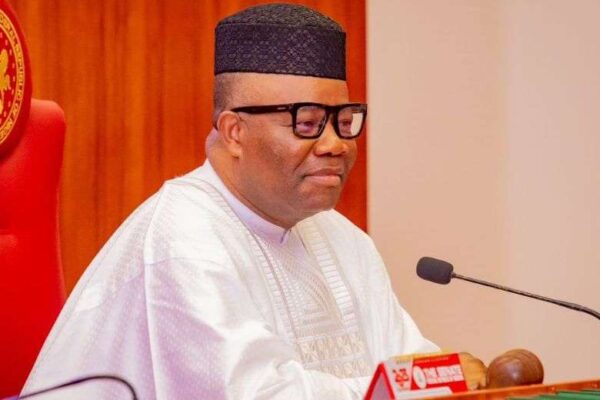
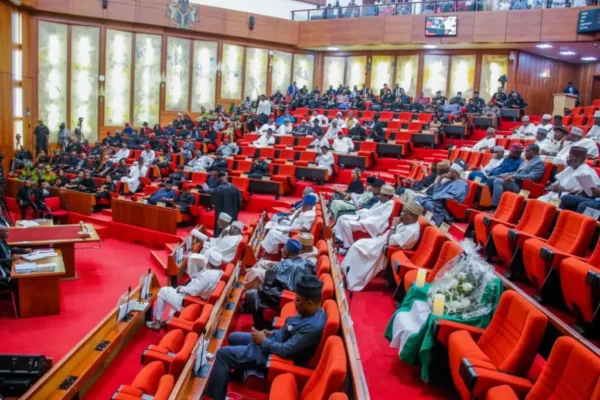
Senate President Godswill Akpabio has dismissed claims that the Senate rejected the electronic transmission of election results during deliberations on the Electoral Act (Amendment) Bill. Speaking shortly after the bill was passed following a lengthy four-and-a-half-hour session, Akpabio addressed widespread online reports suggesting that lawmakers voted against mandatory electronic transmission of results. The controversy arose during consideration of the amendment to Clause 60, Subsection 3, which sparked speculation that the Senate had removed provisions requiring INEC presiding officers to transmit results electronically from polling units to the IREV portal in real time. Contrary to those reports, Akpabio explained that the Senate merely retained the existing provisions of the Electoral Act, which already allow for electronic transmission in a manner prescribed by the Independent National Electoral Commission. He stressed that the Senate did not vote to eliminate electronic transmission, noting that the provision was applied during the 2022 elections and remains part of the law. Akpabio cautioned against misinformation, stating that the Senate’s records and final votes are available for verification. He reaffirmed that under his leadership, the Senate has not taken any step backward on electoral reforms. “We have retained what was in the previous law by way of amendment. The allowance for electronic transmission remains, and we cannot afford to go backwards,” he said.

Read More
Snoop Dogg Carries Olympic Torch in Italy Ahead of Milan-Cortina 2026 Winter Games

Snoop Dogg Carries Olympic Torch in Italy Ahead of 2026 Winter Games

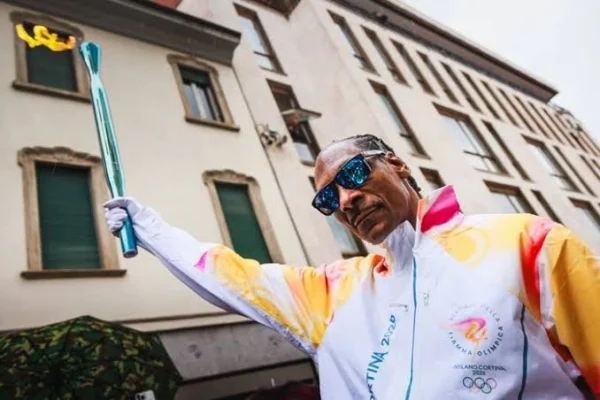
Hip-hop icon Snoop Dogg has taken part in the Olympic torch relay, carrying the flame through the streets of Northern Italy ahead of the 2026 Winter Olympics in Milan and Cortina. The rapper was spotted in Gallarate dressed in a white tracksuit, with “Coach Snoop” boldly written on his Team USA trousers as he proudly held the flaming torch. Expressing his excitement, Snoop described the moment as an honour, saying he wanted to spread peace and love to athletes, Italians, and people around the world. “This is what the Olympics is all about,” he said. “Spreading peace and love to everyone.” Snoop Dogg’s involvement comes after he was named a special correspondent for NBC’s coverage of the Milan-Cortina Games, following his widely praised and entertaining appearances during the 2024 Paris Olympics. He is also set to make Olympic history as Team USA’s first-ever honorary coach, a role he says is focused on celebrating athletes and supporting them beyond competition. In a LinkedIn post, Snoop Dogg explained that the position allows him to motivate athletes, highlight their full journeys, and recognise the people who help make their dreams possible. The opening ceremony of the 2026 Winter Olympics is scheduled to take place on 6 February.

Read More

NNPC Lacks Capacity To Operate Refineries Profitably – NNPC GCEO

The Group Chief Executive Officer of NNPC Limited, Bayo Ojulari, has said the corporation lacks the capacity to run a refinery, describing the reoperationalisation of the Port Harcourt Refinery and Petrochemical Company as a major waste of resources. Ojulari made the remarks on Wednesday, February 4, while speaking at the ongoing 2026 Nigerian International Energy Summit. He said effective refinery operations require adequate financing, competent Engineering, Procurement and Construction contractors, as well as strong operational and maintenance capacity, conditions he said NNPC does not currently meet. The Port Harcourt Refinery, rehabilitated at a cost of about $1.5 billion under the leadership of former NNPC Group Chief Executive Officer Mele Kyari, was reopened in November 2024 after nearly three years of rehabilitation. However, the facility was shut down again in May 2025 following sustained financial losses. Ojulari said a detailed review of the refinery’s operations showed that it was operating at a significant loss. “The first thing that became clear was that we were running at a monumental loss to Nigeria. We were just wasting money. I can say that confidently now,” he said. “So the first decision I had to make was to stop the rot by shutting it down and then quickly recalibrating to see what could be done.” He questioned how the refinery continued to post losses despite receiving regular crude supply.   “We were pumping cargo into the refinery every month, but utilisation was around 50 to 55 per cent. Those cargoes have value, and we were losing that value. We were spending a lot of money on operations and contractors. But when you look at the net outcome, we were just leaking value, and there was no clarity on how to turn those losses into positive returns,” he added. Ojulari said NNPC is now seeking reliable partners with proven experience in refinery management to operate Nigeria’s refineries. “To make a refinery work, you need three things,” he said. “First, financing to support operations. Second, a competent EPC contractor. Third, world-class operational capacity to run the refinery.” According to him, NNPC’s current strategy, as approved by its board, is to partner with experienced refinery operators rather than contractors. “We are not looking for contractors. We are not looking for O&M service providers. We are looking for an entity that actually runs refineries,” he said. He added that the successful operation of the Dangote Refinery had reduced the urgency to rush decisions on reviving government-owned refineries. “There was a lot of pressure about continuity, but we were not under that pressure. And thank God for Dangote Refinery. Thank God. Whether you love Dangote or hate him, thank God. “Thank God he is a Nigerian and not someone from another continent. Despite everything, that gave us breathing space because we now have a refinery that is working,” he said. On oil production, Ojulari expressed optimism that Nigeria could reach 1.8 million barrels per day in 2026. However, he described the Federal Government’s 2025 budget benchmark of 2.06 million barrels per day as overambitious, noting that average production in the previous year was about 1.7 million barrels per day. “For this year, we have a target of two million barrels per day, but the budget is based on about 1.8 million barrels per day. So we are not overcommitting,” he said. “One of the financial problems Nigeria faced last year was overprojection. We overprojected production and revenue, and by mid-year, oil prices were lower while production was below projections. Yet spending plans had already been made based on those assumptions. That has far-reaching consequences,” he said. Ojulari said credible and realistic production planning must be taken seriously to prevent future fiscal challenges.

Read More
NAF

NAF Reactivates Super Puma Helicopter After 3 Years

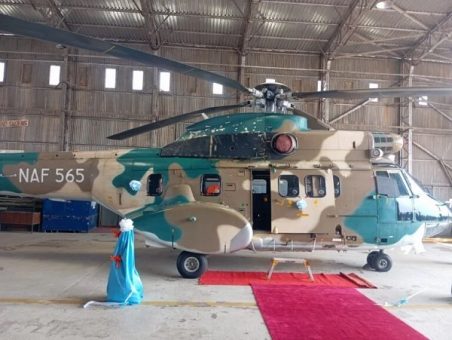
The Nigerian Air Force has reactivated its Super Puma Helicopter after the aircraft was grounded for three years due to a main rotor hub challenge. The Chief of the Air Staff, Sunday Aneke, said the reactivation was critical because of the helicopter’s versatility and its ability to handle demanding and complex operations. Aneke spoke while inaugurating the reactivated Super Puma Helicopter at the 205 Rotary Wing of the Nigerian Air Force in Ikeja, Lagos State. He said the aircraft, known for its endurance and reliability, would significantly enhance the Air Force’s rotary wing capabilities, particularly in troop transport, search and rescue, casualty evacuation, and logistics support. “Having demonstrated its effectiveness as a tactical mobility platform in Operation Hadin Kai, the Super Puma is a workhouse,” Aneke said. “This occasion is not mainly about the return of an aircraft to our fleet, but also a demonstration of our unwavering commitment to my command philosophy “Which is, to enhance and sustain a highly motivated professional mission ready force capable of delivering decisive air power effects in synergy with surface forces for the realisation of national security objectives.” The Air Chief added that the helicopter would also be deployed for close support and training of troops, as well as the movement of personnel and equipment in collaboration with the Army and the Navy, particularly where maritime operations are involved. Aneke expressed gratitude to Bola Tinubu for what he described as the President’s steadfast commitment to national security, noting that this was reflected in the approval of key acquisitions and support for the reactivation of legacy platforms. He said the return of the Super Puma to service would directly strengthen the Air Force’s capacity to support joint operations in Lagos State’s maritime and coastal environment. “As well as in our counterinsurgency and anti-banditry operations in other theatres and parts of the country,” he said. The Chief of the Air Staff urged personnel of the 205 Rotary Wing who would operate and maintain the helicopter to adhere strictly to safety and professional standards. “I urge all the personnel of 205 Rotary Wing who will operate and maintain this aircraft to uphold the highest standards of safety, professionalism and responsibility in operating this platform,” Aneke said. “Treat this platform with utmost care, ensuring that it remains mission ready whenever required.” He also acknowledged the contributions of retired Air Commodore Taiwo Badru for his support and consultation during the reactivation process. “I also commend the Air Officer Commanding, Mobility Command, AVM Mike Onyebashi, and technicians of 205 Rotary for working tirelessly to restore the helicopter to flying condition,” he said.

Read More
Senate Steps In To End ASUU Strike, Sets Meeting With Education Minister And NUC

Senate Rejects Mandatory Electronic Transmission of Election Results

The Senate has turned down a proposed change to Clause 60, Subsection 3, of the Electoral Amendment Bill that aimed to compel the electronic transmission of election results. Under the rejected amendment, presiding officers of the Independent National Electoral Commission (INEC) would have been mandated to upload polling unit results electronically to the IREV portal in real time, once Form EC&A had been duly signed and stamped by the presiding officer and countersigned by party agents. Rather than adopt the proposal, the Senate opted to retain the current provision in the Electoral Act, which provides that “the presiding officer shall transfer the results, including the total number of accredited voters and the results of the ballot, in a manner as prescribed by the Commission.”

Read More

Ex-Petroleum Minister Alison-Madueke Resumes In London Court

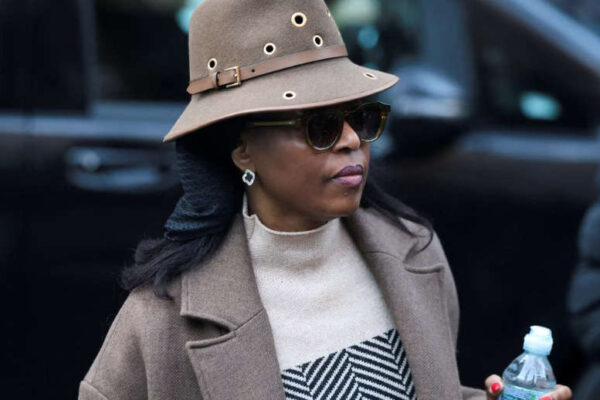
Former Minister of Petroleum Resources, Alison-Madueke, at the Southwark Crown Court in London on Monday, February 2026.   The corruption trial of Nigeria’s former Petroleum Minister, Diezani Alison-Madueke, continued on Wednesday in London, with jurors hearing fresh testimony about millions of pounds allegedly spent on luxury property refurbishments.   Proceedings at Southwark Crown Court shifted focus to a construction contractor linked to high-end London homes, as prosecutors worked to trace what they describe as a wider financial trail of benefits flowing through intermediaries.   The 65-year-old is accused of multiple bribery counts stemming from a years-long investigation.   The alleged offences occurred between 2011 and 2015, when she was Nigeria’s oil minister but maintained a UK address.   The UK National Crime Agency (NCA), which targets international and serious and organised crime, has accused her of receiving the bribes in Britain.   Alison-Madueke is accused of accepting “financial or other advantages” from individuals linked to the Atlantic Energy and SPOG Petrochemical groups.   Both companies secured contracts with the Nigerian National Petroleum Corporation (NNPC) or its subsidiaries, according to the prosecution.   The former minister is also said to have received £100,000 ($137,000) in cash, chauffeur-driven cars, a private jet flight to Nigeria and refurbishment work and staff costs at several London properties.   Other counts allege she received school fees for her son, products from high-end shops such as London’s Harrods department store and Louis Vuitton, and further private jet flights.  

Read More

Seadogs, Others Seek New Policing Strategies In FCT

National Association of Seadogs (NAS), alongside stakeholders in Nigeria’s security sector, has renewed calls for new policing strategies to address rising insecurity in the Federal Capital Territory (FCT) The call was made at a Town Hall meeting on addressing insecurity through a decentralised security architecture, organised by NAS, Galleon Bay Deck, Gwarimpa, Abuja, in collaboration with the Centre for Transparency Advocacy (CTA). Speakers at the meetingcalled for urgent reforms in Nigeria’s policing system, including decentralised policing and stronger collaboration among security agencies, as a strategy to take critical steps toward addressing rising insecurity, especially in Abuja. The summit, held under the theme “Decentralized Security Architecture: Defining Federal and State Roles in State Policing,” brought together security agencies, including the Nigeria Police Force and the Nigeria Security and Civil Defence Corps, as well as security experts, civil society organisations and policy advocates to examine gaps in Nigeria’s centralized security structure and their implications for public safety, particularly in the nation’s capital. Participants noted that despite governors being constitutionally recognised as chief security officers of their states, real control of the police remains concentrated at the federal level, limiting effective and timely responses to local security threats. They called for the decentralisation of policing and the formal integration of community security councils, traditional institutions and residents’ associations into the security architecture, stressing that local communities are best positioned to provide early warning signals and actionable intelligence. Speaking at the summit, police historian and lead paper presenter, Uche Bamah, said meaningful policing reform must recognise the importance of community-driven security models, adding that trust between citizens and law enforcement remains a significant factor in tackling insecurity. Discussions also highlighted the need for improved police welfare, enhanced training and greater investment in modern technology. Bamah pointed to survey data showing that over 70 per cent of respondents believe the use of technology in policing strengthens accountability and protects human rights. He recommended that any constitutional amendment must mandate independent state-level police oversight commissions, insulated from governors and other political officeholders, with representation from civil society, the judiciary, and professional bodies. He also backed decentralisation with clear legal boundaries and strong laws, noting that while human rights abuse remains a significant concern, the legal framework must clearly define jurisdictional limits, command structures, and use-of-force rules. NAS member, Samuel Abhulimen, alongside Engr. Faith Nwadishi, Executive Director of the Centre for Transparency Advocacy (CTA), emphasised that strong legal frameworks and independent oversight must back policing reform to prevent abuse and ensure professionalism. The Town Hall called for swift policy action, clear delineation of federal and state responsibilities, and sustained stakeholder engagement to build an accountable, community-focused security system capable of responding effectively to insecurity in the FCT and across Nigeria. Division crime officer at Gwarimpa Police Station, Supol Bature, in his short address, said Gwarimpa is safe, noting that throughout January, the Station has not recorded major crimes, kidnappings, or any incidents. He said, “Security is something we should all be interested in. It is not something that only the government or citizens alone can do. It requires collaboration, which is why we are happy to work with NAS.”  

Read More

Poland 2026: Senegal’s Lionesses de Téranga Train in Abeokuta for Falconets

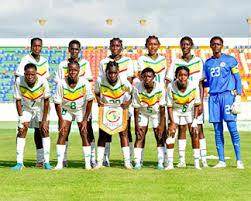
The opponents of Nigeria’s U20 Women National Team, Falconets, in Saturday’s FIFA U20 Women’s World Cup third round, first leg qualifying match, Senegal’s U20 girls, have arrived in Abeokuta, the Ogun State capital.   A delegation of the Lionesses de Téranga flew into Lagos on Tuesday night and were immediately driven by bus to the Ogun State capital, with the team scheduled to have their first training session on Wednesday evening.   The Confederation of African Football has appointed officials from Uganda and Burundi to take charge of Saturday’s encounter, which is the first leg of the penultimate round of the qualifiers, with the winner on aggregate to confront the winner of the Guinea Bissau/Malawi fixture for a place at the final tournament in Poland later this year.   Ugandan Diana Murungi will be the referee, with her compatriots Immaculate Ongiera and Elizabeth Nassolo as assistant referees 1 and 2. Suavis Iratunga from Burundi will be the fourth official.   In the role of commissioner is Ghanaian Christine Ziga, while Berthe Minka from Gabon will be the referee assessor. XXXXXXXXXXXXXXXXXXXXX   Records at stake as Assar, Goda headline 2026 ITTF Africa Cup Egyptian table tennis stars Omar Assar and Hana Goda will be putting their records on the line when the 2026 ITTF Africa Cup serves off in Benghazi, Libya, from February 7 to 9. The annual continental championship, which also serves as a qualifier for the 2026 ITTF World Cup, is organised by the African Table Tennis Federation (ITTF Africa) in collaboration with the International Table Tennis Federation (ITTF), and hosted by the Libyan Table Tennis Federation (LTTF) at the iconic Al Nasr Sports Club. Assar, who is men’s No. 1 seed, enters the tournament as the most successful player in the men’s singles, with six titles to his name—Yaoundé 2015, Nairobi 2018, Lagos 2019, Lagos 2022, Nairobi 2023, and Tunis 2025. His closest rival, Nigeria’s Quadri Aruna, has won five editions, including the most recent in Kigali 2024. Since his semifinal loss to Aruna at the 2020 Africa Cup in Tunis, Assar has remained unbeaten at the Africa Cup, cementing his dominance with back to back victories in Lagos, Nairobi, and Tunis. In Benghazi, he will once again face the challenge of Aruna, as well as rising compatriot Youssef Abdelaziz, who is steadily establishing himself among Africa’s elite. For Hana Goda, the women’s No. 1 seed, the journey began at just 14 when she stunned the continent by winning her first Africa Cup women’s title in Lagos 2022, becoming the youngest champion in the tournament’s history. She faltered in Kigali 2024, losing 4–0 in the semifinals to compatriot Mariam Alhodaby, but bounced back in Tunis 2025 to reclaim her crown by defeating Africa’s most decorated player, Dina Meshref, who holds a record nine titles. Now 18, Goda is determined to follow in Meshref’s footsteps and add to her growing collection of titles. In Libya, she will face stiff competition from Meshref and Alhodaby, as well as Nigeria’s Fatimo Bello, a finalist in Lagos 2022. Tunisia’s Ela Saidi, who impressed in 2025, is also expected to be a strong contender. With Africa’s finest players converging on Benghazi, the 2026 Africa Cup promises high drama and fierce battles. For Assar and Goda, it is not just about defending records—it is about cementing their legacies as the faces of African table tennis.

Read More