Portable Sparks Controversy By Declaring Bewaji His Only Wife

Portable has ignited drama after announcing that Bewaji is his one and only wife, stripping the “wife” title from all other women who share children with him. In a video shared on New Year’s Day, the singer stated that in 2026, he will recognize only one wife, while the other women are to be considered “baby mamas.” The clip shows Portable in a tense exchange with several women, with one of them grabbing his shirt in frustration as he makes the declaration. “2026, it is one wife, baby mamas. Bewaji is my only wife, the rest of you are baby mamas,” he said. Portable declares openly to Bewaji during heat exchange moment: "2026 I want to wipe off the housewife title. Bewaji is the only one I recognize as my wife — the rest are just babymamas." pic.twitter.com/lOGi3cLGfD — CHUKS 🍥 (@ChuksEricE) January 2, 2026

Read More

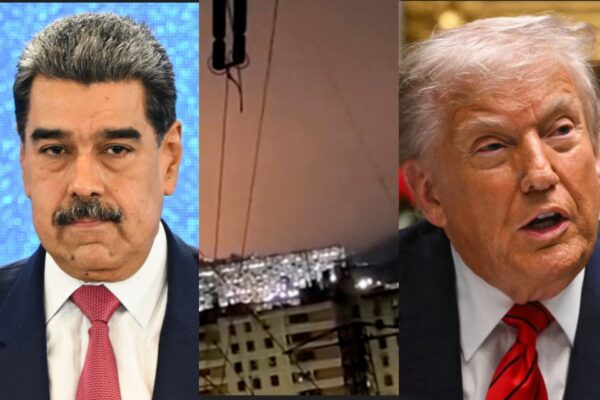
BREAKING: US Executes Strike On Venezuela, Captures President Maduro And Wife

President Donald Trump announced early Saturday that the United States carried out a major strike against Venezuela, resulting in the capture and removal of President Nicolás Maduro and his wife. On Truth Social, Trump wrote, “The United States of America has successfully carried out a large-scale strike against Venezuela and its leader, President Nicolás Maduro, who has been, along with his wife, captured and flown out of the country.” CNN reporters in Caracas observed multiple explosions and heard aircraft flying overhead in the early hours of Saturday. Several areas of the city experienced power outages following the blasts, with the first explosion recorded around 1:50 a.m. local time (12:50 a.m. ET). In recent weeks, Trump had repeatedly warned that the US was preparing action against alleged Venezuelan drug trafficking networks, stating that strikes on land would commence “soon.” His campaign against Maduro has already targeted over 30 vessels in the Caribbean Sea and eastern Pacific Ocean as part of a counter-narcotics operation. Last month, Trump also imposed a blockade on sanctioned oil tankers entering and leaving Venezuela. Earlier, in December, the CIA reportedly carried out a drone strike on a coastal port facility in Venezuela, marking the first known US attack inside the country, CNN reported, citing sources.

Read More

Anthony Joshua Escapes Death After Seat Swap Before Fatal Crash That Killed Two Friends

Anthony Joshua narrowly avoided death in a car crash that killed two of his friends after a last-minute seat swap, UK’s Daily Mail reports. The former world heavyweight boxing champion, 36, had initially been seated in the front of his SUV but moved to the back shortly before the crash. The accident claimed the lives of Sani Ghami and Latif Adeyole, who had just arrived in Nigeria for a holiday. Joshua’s driver, 47-year-old Kayode Adeniyi, appeared in court on Friday and denied all charges, including dangerous driving. Wearing a black Muslim kaftan, Adeniyi pleaded not guilty, maintaining that brake failure caused the accident. He has driven Joshua for over three years and was granted bail, later escorted to Sagamu Correctional Centre for paperwork. Adeniyi’s lawyer, Olalekan Abiodun, told the Daily Mail, “My client has pleaded not guilty and what happened was an accident. He says the brakes did not work. When the journey started in Lagos, Anthony was sitting in the front seat, but the driver asked him to move behind because he couldn’t see the wing mirror properly.” The report notes that one of Joshua’s friends later swapped seats with him—the side of the SUV that was hit during the crash. Outside court, Adeniyi’s family expressed their distress. His 19-year-old son, Ifeoluwa, said, “The family is very upset by what’s happened and we are sorry for the deaths of the two people. Dad is not a fast driver; he was following the speed limit. The brakes failed, and he tried to swerve to avoid a truck parked illegally by the side of the road but couldn’t avoid it. He’s been driving for Anthony for three years and is a good driver. If the truck hadn’t been parked there, this wouldn’t have happened.” The tragic incident occurred just minutes after the group had been picked up from the airport and were on their way to visit Joshua’s family in Sagamu.

Read More

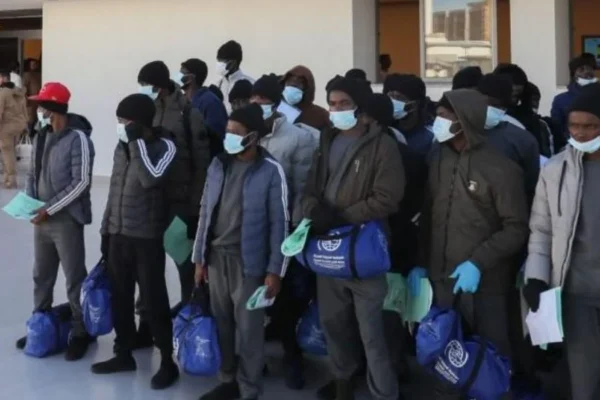
Canada Deports 366 Nigerians As Enforcement Hits Decade High

Canada removed 366 Nigerian nationals between January and October 2025 as part of an intensified immigration enforcement drive, the most aggressive the country has carried out in more than a decade. Records from the Canada Border Services Agency (CBSA) removals program show that an additional 974 Nigerians are currently listed as “removal in progress,” meaning they are awaiting deportation. Updated figures released on November 25, 2025, place Nigeria ninth among the top 10 nationalities deported from Canada this year, while it ranks fifth among countries with the highest number of pending removals. Historical data indicates that deportations of Nigerians from Canada have fluctuated over the years. In 2019, 339 Nigerians were removed, a figure that dropped to 302 in 2020, 242 in 2021, and 199 in 2022. Nigeria did not feature among the top 10 deported nationalities in 2023 and 2024 but returned to the list in 2025, recording 366 removals in just 10 months—about an eight percent increase compared to 2019. The rise in deportations coincides with a broader tightening of immigration controls. The CBSA is currently removing close to 400 foreign nationals every week, the fastest rate recorded in over 10 years. During the 2024–2025 fiscal year, Canada deported 18,048 people at a cost estimated at $78 million. Under the Immigration and Refugee Protection Act, the CBSA is legally obligated to enforce valid removal orders against foreign nationals deemed inadmissible. Reasons for removal include security concerns, violations of human or international rights, criminal activity, organized crime, health or financial grounds, misrepresentation, and failure to comply with immigration regulations. Data shows that the majority of deportees—about 83 percent—are failed refugee claimants whose asylum applications were denied. Criminal cases account for roughly four percent of all removals. Canadian law recognizes three types of removal orders: departure orders, which require individuals to leave within 30 days; exclusion orders, which bar re-entry for one to five years; and deportation orders, which permanently prohibit return unless special authorization is granted. The federal government says the increased deportations are aimed at aligning immigration levels with national priorities, including addressing housing shortages, labour market pressures, and border security challenges. As part of this effort, authorities approved an additional $30.5 million over three years to strengthen removal operations and committed $1.3 billion to border security improvements. Concerns have been raised by immigration advocates over the potential impact of proposed legislation. Aisling Bondy, president of the Canadian Association of Refugee Lawyers, warned that deportations could rise further if Bill C-12, commonly referred to as the border bill, is passed. “According to Bondy, one provision in that legislation states that many individuals will face a permanent prohibition on submitting asylum applications in Canada.” An examination of CBSA figures shows that Nigeria is the only African country among the top 10 nationalities deported from Canada in 2025. Other African countries fall under a broader “remaining nationals” category, which recorded a total of 6,233 removals this year. Mexico leads the list of removals in 2025 with 3,972 deportations, followed by India (2,831), Haiti (2,012), Colombia (737), Romania (672), the United States (656), Venezuela (562), China (385), Nigeria (366), and Pakistan (359). In the current removal inventory, India tops the list with 6,515 cases, followed by Mexico (4,650), the United States (1,704), China (1,430), Nigeria (974), Colombia (895), Pakistan (863), Haiti (741), Brazil (650), and Chile (621). Nigeria remains the only African nation featured in this top 10. Despite the removals, Canada continues to attract Nigerians seeking better economic and educational opportunities. The 2021 Canadian census shows that more than 40,000 Nigerians migrated to Canada between 2016 and 2021, making them the largest African immigrant group and the fifth-largest overall during that period. Further data from Immigration, Refugees and Citizenship Canada indicates that 6,600 Nigerians became permanent residents in the first four months of 2024, ranking fourth behind India, the Philippines, and China. Between 2005 and 2024, over 71,459 Nigerians obtained Canadian citizenship, placing Nigeria among the top 10 source countries for new Canadians. Canada’s ageing population and labour shortages continue to make the country an attractive destination for Nigerian professionals and students.


Read More

Anambra State Rejects Bianca Ojukwu’s Chieftaincy Title, Labels It “Fake”

Anambra State Government has rejected the chieftaincy title “Anyanwu N’Awalu Ora” reportedly given to Minister of State for Foreign Affairs, Bianca Ojukwu, by Obi Austin Ndigwe, describing him as an impostor and insisting he has no recognition as a traditional ruler in Awka or Anambra State. In a letter dated December 31, 2025, and signed by the Commissioner for Local Government, Chieftaincy and Community Affairs, TonyCollins Nwabunwanne, the state said the conferment violated the Traditional Rulers’ Code of Conduct. The letter stressed that “the conferment of chieftaincy titles in Anambra State is the exclusive prerogative of recognized/certified traditional rulers in their respective communities, and they do so only to residents/indigenes of their communities.” It added, “In the case of a person not from the community, the approval of the Traditional Ruler of the conferee’s community and the Commissioner for Local Government, Communities and Chieftaincy must be sought and obtained. None of these conditions was met in this case.” The letter accused Ndigwe of attempting to undermine the authority of the legitimate traditional ruler, HRH Gibson Nwosu, Eze Uzu II of Awka. It described the act as an insult to Awka people and the state’s cultural institutions, adding, “Amb. Bianca Ojukwu knows that Mr. Ndigwe has neither legal nor customary rights to confer a Chieftaincy title on anyone… She should desist from addressing herself by any such fake title conferred by Mr. Austin Ndigwe.” The government warned that it would take necessary steps to protect Anambra’s cultural heritage and traditional institutions, assuring the people of Awka that it supports lawful custodians of their traditions.

Read More

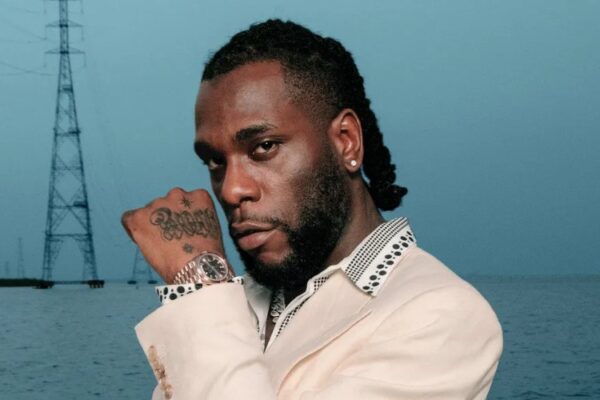
Burna Boy Sets New Spotify Streaming Record For African Artists

Burna Boy is dominating! The African Giant has set a new record for the most streams by an African artist on Spotify in a single year, racking up an astonishing 1.986 billion streams in 2025. He leads the pack ahead of fellow Nigerian stars, including Wizkid, who sits in second place with 1.81 billion streams, and Davido, who ranks fifth with 1.58 billion streams. Here’s the top 10 most streamed African artists on Spotify in 2025: 1️⃣ Burna Boy – 1.986B 2️⃣ Wizkid – 1.81B 3️⃣ Tyla – 1.67B 4️⃣ Rema – 1.63B 5️⃣ Davido – 1.58B 6️⃣ Asake – 1.52B 7️⃣ Ayra Starr – 1.47B 8️⃣ CKay – 1.38B 9️⃣ Seyi Vibez – 1.32B 🔟 Mr Eazi – 1.26B This milestone highlights Burna Boy’s global influence and the rising impact of African music on the world stage.

Read More

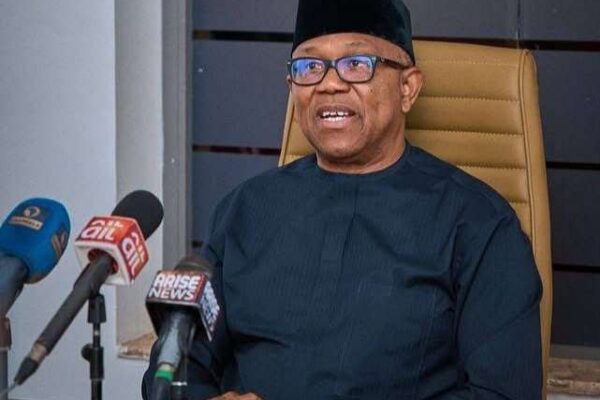
Peter Obi Warns Nigeria Against Tax Policies That Make Citizens Poorer

Former Anambra State Governor Peter Obi has cautioned that Nigeria may worsen hardship and weaken national unity by adopting tax policies that place heavier burdens on an already struggling population. In a statement shared on X, Obi said genuine economic progress cannot be achieved through measures that make citizens poorer, stressing that growth must be anchored on trust, honesty, and productivity. He warned that policies which erode people’s wellbeing ultimately damage the social contract between government and citizens. Drawing from his interactions with leaders across different countries, Obi noted that nations which achieved lasting transformation did so by uniting their people around a shared vision rooted in truth. He argued that leadership without honesty destroys consensus and weakens the foundations of development. He said taxation should operate as a true social contract built on fairness, sincerity, and concern for citizens’ welfare, adding that tax policies must be clearly explained, including their impact on incomes and how revenues are used for national development. According to him, without transparency, taxation becomes a burden rather than a tool for growth. Obi maintained that Nigeria’s fiscal challenge is not just about increasing revenue but about making citizens wealthier so the country itself can grow stronger. He said Nigerians are being asked to pay higher taxes without clarity, accountability, or visible public benefits. He identified the empowerment of small and medium-sized enterprises as the starting point for sustainable economic growth, noting that thriving small businesses create jobs, raise incomes, and naturally broaden the tax base. The former governor also expressed concern over what he described as an unprecedented tax fraud controversy, alleging that a tax law currently being enforced is not the same version passed by the National Assembly. He said reports indicate that lawmakers themselves have acknowledged discrepancies between what was approved and what was eventually gazetted. Obi warned against celebrating increased government revenue while citizens become poorer, describing such outcomes as a failure of governance rather than success. He argued that taxing poverty does not create wealth but instead deepens hardship. He called for a fair, lawful, and people-centred tax system that supports production, rewards enterprise, protects the vulnerable, and restores trust between the government and the people, saying only such an approach can turn taxation into a true instrument for unity, growth, and shared prosperity.

Read More

Sanwo-Olu Orders Demolition Of Fire-Damaged GNI Building In Central Lagos

Lagos State Governor Babajide Sanwo-Olu has ordered the controlled dismantling of the Great Nigeria Insurance (GNI) building in the heart of Lagos after a fire left the structure severely compromised. The decision was taken on Friday during the governor’s inspection of the building on Martins Street. Sanwo-Olu said assessments carried out by a team of engineers and safety experts revealed that the fire caused extensive damage to the building’s structural framework, making it unsafe for continued existence. He noted that public safety remains the government’s top priority, adding that the demolition would be executed in stages and under strict safety protocols to prevent harm to nearby buildings, traders, and pedestrians. Following the directive, the state government ordered the immediate closure of shops along Martins Street, advising traders to evacuate their wares and relocate temporarily to safer areas. The Lagos State Emergency Management Agency has also set up a support desk at the site to assist families seeking information about persons who may have been inside the building when the fire occurred. Although a specific timeline for the demolition was not disclosed, the governor assured residents that emergency services and safety personnel would stay on ground throughout the operation, while the area is cordoned off to protect surrounding structures in the busy commercial district.

Read More