Lagos Gears Up for 2025 Festival of Table Tennis

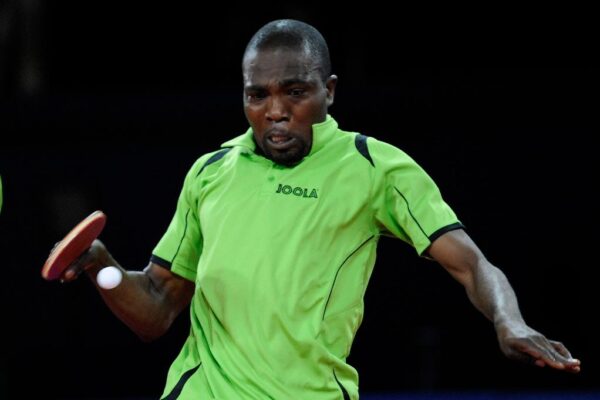
The Molade Okoya-Thomas Hall at Teslim Balogun Stadium is getting a vibrant makeover as Lagos prepares to host the Festival of Table Tennis, a 20-day celebration of the sport running from July 16 to August 5, 2025. This exciting festival will feature a lineup of prestigious competitions, including the ITTF Africa West Regional Championships, WTT Contender Lagos, ITTF Africa Youth Championships, and the inaugural ITTF Africa Youth Cup. As one of the global hubs of table tennis, Lagos is set to welcome elite players from West Africa, across the continent, and around the world for what promises to be a truly unforgettable sporting experience. The action begins with the ITTF Africa West Regional Championships from July 16 to 19, where regional champions in team and singles events will be crowned. From July 22 to 26, the spotlight shifts to the WTT Contender Lagos, drawing international stars eager to compete for $100,000 in prize money across five events. The increased prize pool and valuable ranking points have attracted a stellar lineup for this five-day showdown. Next, the continent’s rising stars take centre stage at the 2025 ITTF Africa Youth Championships, held from July 27 to August 3. This 14-event tournament will determine Africa’s top young talents. The festival concludes with the ITTF Africa Youth Cup on August 4 and 5, offering another platform for emerging players to showcase their skills and compete for continental glory. Throughout the three weeks, fans can expect electrifying matches, passionate crowds, and the signature energy that defines Lagos. It’s set to be a spectacular 20-day celebration of table tennis—uniting athletes, fans, and officials in a festival of competition, culture, and camaraderie.
Read More

Police Pay ₦1 Million Compensation for Boy Killed by Van in Delta, Make Mother Sign Affidavit Waiving Legal Action

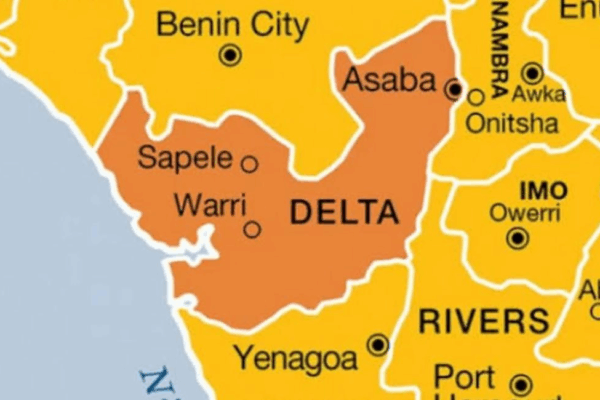
The family of 14-year-old Wisdom Chukwudi, who was killed by a Nigerian police van in Okuokoko, Delta State, has been paid ₦1 million in compensation by the police—but only after the victim’s mother was made to sign an affidavit waiving all legal rights against those involved. The tragic incident occurred on Monday, June 16, 2025, along the Okuokoko axis of the East-West Road, where witnesses say a police Hilux van veered off the road and crushed the teenager against an electric pole. The vehicle was reportedly driven recklessly by a Chief Superintendent of Police (CSP) attached to the Bayelsa State Police Command. According to eyewitnesses, the boy had been standing safely off the road when the van lost control, resulting in a fatal crash. No official statement was issued by the police in the days following the incident, and the family said they received no visits or condolences from the force. Family Accepts Payment Under Pressure A relative of the deceased told SaharaReporters that the family was pressured to accept ₦1 million to cover funeral costs, which included the burial held on Monday, June 30. The police handed over Wisdom’s body on Friday, June 27, nearly two weeks after the accident. However, the payment came with a disturbing condition: Jennifer Otono, the boy’s grieving mother, was required to swear an affidavit stating that the family had no intention of seeking justice through the courts. The affidavit, titled “Affidavit as to No Legal Intention”, was sworn before the Delta State High Court of Justice on June 30, 2025. The document states that the family has “resolved to settle the matter amicably” and that they hold “no legal intention against the suspect or anyone involved in the accident.”

Read More
FG Declares 31st March And 1st April As Public Holidays To Mark Eid EL-Fitr

FG Declares Tuesday, July 15 Public Holiday to Honour Late President Buhari

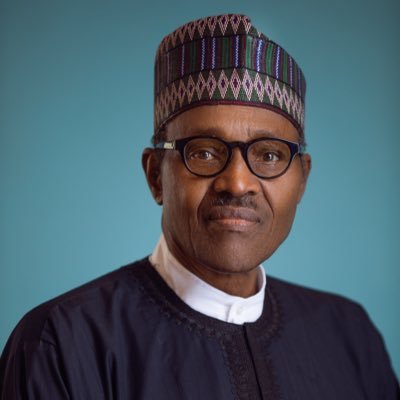
The Federal Government has declared Tuesday, July 15, a public holiday in honour of the late former President Muhammadu Buhari, who passed away on Sunday in London. The announcement was made on Monday by the Minister of Interior, Olubunmi Tunji-Ojo, through a statement issued by the ministry’s Permanent Secretary, Magdalene Ajani. This one-day holiday comes in addition to the seven-day national mourning earlier declared by President Bola Tinubu, following Buhari’s death in a London clinic after a prolonged illness. “President Muhammadu Buhari served Nigeria with dedication, integrity, and an unwavering commitment to the unity and progress of our great nation,” the minister said. Tunji-Ojo described the holiday as a symbolic gesture to allow Nigerians reflect on the late president’s legacy and contributions to national development and democratic governance. He urged citizens to use the day to promote peace, unity, and patriotism, which he said aligned with Buhari’s core values and lifelong vision for the country. “This public holiday provides an opportunity for all Nigerians to reflect on his life, leadership, and the values he upheld,” the minister added. Buhari, who served as Nigeria’s military head of state from 1983 to 1985 and returned as a democratically elected president in 2015, completed his second term in 2023. Plans for his burial are currently underway, with Vice President Kashim Shettima in London to accompany his remains back to Nigeria.

Read More

Adeleke Bags NBA Award, Denies Rebuking Supreme Court Amid Tense Faceoff with Aregbesola

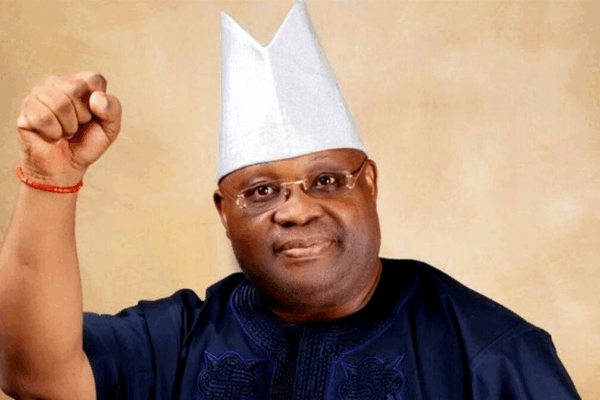
Osun State Governor, Senator Ademola Adeleke, has received an award from the Nigerian Bar Association (NBA) in recognition of his commitment to the rule of law. However, the governor has also found himself in the midst of renewed political tension with his predecessor, Rauf Aregbesola, whom he sharply criticised on Monday. In a statement issued by his spokesperson, Mallam Olawale Rasheed, Governor Adeleke clarified that contrary to recent reports, he did not rebuke the Supreme Court over its judgment on the controversial local government dispute in Osun State. He described the claims as misleading and reaffirmed his respect for the judiciary as a cornerstone of democracy. Meanwhile, the governor launched a scathing attack on former Governor Rauf Aregbesola, in response to the latter’s alleged threats to unseat him in the 2026 governorship election. Describing Aregbesola’s administration as “the worst in Osun history,” Adeleke accused the former governor of leaving behind a legacy of “huge debt, half salaries, scam learning tablets (Opon Imo), and inflated, abandoned projects.” “The empty boast of Mr Aregbesola about 2026 is a symptom of a troubled mind who sees wrong visions, who is battling his benefactor, and who is haunted by the pains and suffering he inflicted on millions of Osun people,” the statement read. Governor Adeleke said his administration had paid 28 months of the half salaries owed by Aregbesola’s government and cleared close to ₦60 billion in pension debt. He also claimed to have reduced Osun’s debt burden by 40%, without borrowing for infrastructure development. Listing his achievements, Adeleke cited the construction of over 200 kilometres of roads, the rehabilitation of more than 200 schools and health centres, free health insurance coverage for over 30,000 pensioners, and free medical surgeries for more than 60,000 residents. He also highlighted the completion of abandoned university projects and the establishment of the University of Ilesa. “Within less than three years, Governor Adeleke has surpassed the delivery of Mr Aregbesola’s eight years without borrowing a kobo,” Rasheed said. The statement concluded with a strong rebuke: “Mr Aregbesola is a shrew (Asin tí ò mọ̀ pé òun ń rùn) who does not know that he is smelling. 2026 is payback time when Osun people will punish the former governor and his new party for wilfully inflicting pain and suffering on Osun people throughout his eight-year rule.” As political temperatures rise in Osun ahead of the next election cycle, Governor Adeleke’s administration appears focused on consolidating support by highlighting contrasts with the past, while maintaining his public image with national recognition such as the NBA’s award for legal adherence.

Read More

Buhari’s Economic Legacy: A Presidency Marked by Reform Recession and Resilience

As tributes continue to pour in following the death of former President Muhammadu Buhari, many are reflecting on the sweeping economic transformations—both turbulent and transformative—that defined his eight-year civilian presidency from 2015 to 2023. Buhari, a retired Major General and one of Nigeria’s most consequential political figures, first ruled as military head of state from 1983 to 1985 before returning to power as an elected leader in 2015. His administration pursued an ambitious anti-corruption agenda, economic reform strategies, and efforts to combat insecurity—but it was the economy that bore the deepest marks of his tenure. Below is a summary of key economic events that shaped Buhari’s presidency: Nigeria’s Twin RecessionsBuhari’s administration saw two economic recessions, a first in Nigeria’s history under a single government.The first occurred in 2016, triggered by the global oil price crash and mismanagement of the naira exchange regime.The second came in 2020, driven by the COVID-19 pandemic, which disrupted global supply chains and battered oil revenues. Pandemic Stimulus and Poverty Reduction EffortsIn response to COVID-19, the government launched a N2.3 trillion Economic Sustainability Plan (ESP) aimed at job creation and MSME support.Buhari also inaugurated a national strategy to lift 100 million Nigerians out of poverty over ten years—primarily through agricultural and economic diversification programmes. Treasury Single Account (TSA) ImplementationThough introduced under President Goodluck Jonathan, the TSA was fully enforced under Buhari in September 2015, consolidating government revenues under the CBN and improving fiscal transparency. Support for Nigerians in Global FinanceBuhari’s diplomatic push led to Nigerians occupying key positions: Border Closures and Food Security PushIn August 2019, Buhari ordered a partial closure of land borders to curb smuggling and promote local rice production.Critics argued the move exacerbated inflation, and borders were eventually reopened in December 2020. Oil Production Woes and TheftDespite Nigeria’s status as Africa’s largest oil producer, crude output plummeted during Buhari’s second term.In 2022, output fell below 1 million barrels per day, its lowest in decades.Rampant oil theft and pipeline vandalism cost the nation over $2 billion in losses in just eight months of 2022. NNPC CommercialisationIn a landmark reform, the Nigerian National Petroleum Corporation (NNPC) was converted into NNPC Limited, a fully commercial entity in July 2022.Buhari described it as free from fiscal regulations and political interference, positioning it to operate more competitively. Debt Explosion and Fiscal DeficitsUnder Buhari, Nigeria’s debt profile skyrocketed.Total public debt rose from N42 trillion in 2015 to N77 trillion by 2023.External debt surged from $7.35 billion to $37.2 billion.Ways and means borrowing from the CBN exceeded N25 trillion.Debt servicing costs rose from N1.06 trillion in 2015 to over N5.2 trillion by 2022. Currency Volatility and DevaluationThe naira depreciated sharply: Controversial Naira RedesignIn late 2022, Buhari unveiled redesigned N200, N500, and N1000 notes to curb counterfeiting and ransom payments.The rollout was widely criticised as chaotic and cosmetic. Many Nigerians described it as a mere “repainting.” Fuel Crisis and Off-Spec Petrol ScandalIn early 2022, substandard petrol led to a nationwide fuel crisis.The NNPC blamed suppliers like MRS, Oando, and Duke Oil. A technical committee was formed to investigate, but disruptions persisted. Despite criticism of his economic management, Buhari’s defenders cite his anti-corruption drive, infrastructure investment, and efforts to restructure Nigeria’s fiscal systems as lasting legacies. As Nigeria reflects on his passing, the economic imprint of Muhammadu Buhari’s presidency will remain deeply contested—and impossible to ignore. SourBy TheCable Staff | 14 July 2025

Read More
Buhari: I Left Office with the Same Assets I Had Before Becoming President

Indian, Ethiopian Prime Ministers, Other World Leaders Mourn Buhari’s Death

SaharaReporters earlier exclusively reported that former Nigerian President Muhammadu Buhari died of leukaemia on Sunday in London, United Kingdom. Global leaders—including the Indian Prime Minister, the Ethiopian Prime Minister, the Tanzanian President, the Sierra Leonean President, and top international organisations—have expressed grief and extended heartfelt condolences to Nigeria over Buhari’s passing. Sources privy to the former president’s health condition told SaharaReporters that Buhari died of leukaemia, a type of cancer that affects the blood and bone marrow, where blood cells are produced. Narendra Modi, Prime Minister of India In a message posted on his verified X (formerly Twitter) account on Monday, Indian Prime Minister Narendra Modi said: Abiy Ahmed, Prime Minister of Ethiopia Ethiopian Prime Minister Abiy Ahmed Ali wrote: “On behalf of the Government and People of Ethiopia, I extend sincere condolences to the family of former President Muhammadu Buhari and to the people and Government of Nigeria. Our thoughts are with you during this time of mourning.” Samia Suluhu, President of Tanzania Tanzania’s President Samia Suluhu expressed her condolences: “I am deeply saddened to learn of the passing of the former President of the Federal Republic of Nigeria, His Excellency Muhammadu Buhari.On behalf of the Government and the people of the United Republic of Tanzania, I convey our heartfelt condolences to His Excellency Bola Ahmed Tinubu, President Buhari’s family, and the people of Nigeria. May his soul rest in peace.” Julius Maada Bio, President of Sierra Leone President Bio wrote: “I am deeply saddened to hear about the passing of President Muhammadu Buhari.On behalf of the people of the Republic of Sierra Leone, I want to express our heartfelt condolences to his family, President Bola Ahmed Tinubu, and the people of Nigeria during this incredibly difficult time.This is truly a devastating loss, and our thoughts are with you all.” African Union Commission AU Commission Chairperson Mahmoud Ali Youssouf released a statement on behalf of the AU: “President Buhari will be remembered as a principled and resolute leader who served Nigeria with honour and conviction.Throughout his tenure, he remained a committed Pan-Africanist—an advocate for regional integration, good governance, and African-led solutions to the continent’s pressing challenges.The Chairperson pays tribute to the life and enduring legacy of this distinguished statesman and salutes his contribution to the advancement of Africa’s development, unity, and voice on the global stage.May his soul rest in eternal peace.” ECOWAS In a statement signed by Dr. Omar Alieu Touray, President of the ECOWAS Commission, the regional bloc stated: “It is with deep sorrow that the world learnt of the passing of His Excellency General Muhammadu Buhari, former President of the Federal Republic of Nigeria.On behalf of all the institutions of the Economic Community of West African States (ECOWAS), we extend heartfelt condolences to the bereaved family, President Bola Ahmed Tinubu, the Government of Nigeria, and the entire Nigerian people.ECOWAS salutes the memory of this distinguished statesman whose invaluable contributions greatly advanced democracy and regional integration in West Africa and across the continent.May his soul rest in paradise.”

Read More

It’s a War: Volunteers Lead Resistance as Trump’s Deportation Raids Intensify Across LA

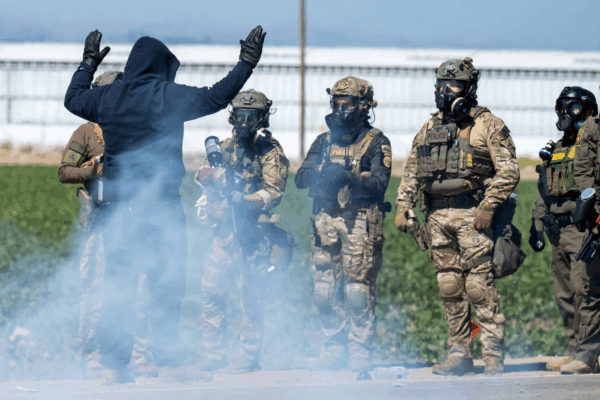
As immigration raids sweep across Los Angeles under orders from former President Donald Trump, a network of volunteer-led resistance groups is rising up to protect undocumented communities from what they call “warfare in the streets.” At 5:30 a.m. in South Central LA, a group of volunteers from Union del Barrio gather in a laundromat parking lot. Armed not with weapons, but with walkie-talkies, megaphones, and leaflets, their mission is to patrol immigrant-dense neighborhoods and warn residents about imminent Immigration and Customs Enforcement (ICE) raids. “This is like Vietnam,” says Ron, a high school history teacher and activist. “We’re taking losses, but in the end we’re going to win. It’s a war.” The group is led by Francisco “Chavo” Romero, who each morning rallies volunteers before dispatching them into the field. On this particular morning, the streets seem calm, but elsewhere in Los Angeles, ICE agents are already conducting dawn raids. ICE Arrests Surge, Communities in Fear Since the beginning of June, more than 2,800 undocumented immigrants have been arrested in Los Angeles alone, according to the Department of Homeland Security—a dramatic spike from the 850 arrests recorded in May. The raids have prompted chaos, street protests, and rising fear in immigrant communities. Videos of ICE agents tackling individuals at car washes, construction sites, and outside homes have gone viral, fueling public outrage. In Pomona, a Latino neighborhood east of LA, Maria recounts how her husband Javier, who has lived in the U.S. for nearly 40 years, was arrested at work by masked ICE agents. “I know they’re doing their job,” Maria says tearfully, “but they don’t have to do it like that—pushing people down like they’re animals.” Javier is now being held in a detention center two hours away. Their grandchildren, especially the eldest, are asking when “papa” is coming home. “I don’t know what to tell him,” Maria says. “He’s not a criminal.” Volunteers Counter ICE Tactics Union del Barrio’s resistance effort includes identifying suspicious vehicles—like white SUVs with tinted windows—suspected of being used by ICE for surveillance. Volunteers distribute flyers with legal advice and encourage people not to open their doors without a warrant. “People are scared,” says Ron, pointing at a fruit vendor who he says is the typical ICE target: vulnerable and easy to detain. Businesses Suffer, Owners Plan to Hide Workers The fear extends to the business community. Soledad, who runs a Mexican restaurant in Hollywood, says half of her undocumented staff are too afraid to show up for work. “I’ve told them: get inside the fridge, hide behind the stove—just don’t run.” Soledad works double shifts to keep her restaurant afloat amid plummeting sales and no way to cover wages. “Sometimes I cry,” she admits. “We’re desperate.” Trump’s Crackdown Fuels Tensions The White House defends the raids as targeting criminals, but activists argue the reality is far more indiscriminate. ICE agents have reportedly faced resistance—including being shot at—making their operations more perilous. Still, Trump has instructed ICE to intensify the crackdown further. Tensions have only escalated with the deployment of National Guard troops, prompting new waves of protests and confrontations on the streets. As deportation numbers climb, so too does the resolve of resistance groups like Union del Barrio. “We’re not backing down,” says Chavo. “We’re organized, we’re ready, and we’re fighting for our communities.”

Read More

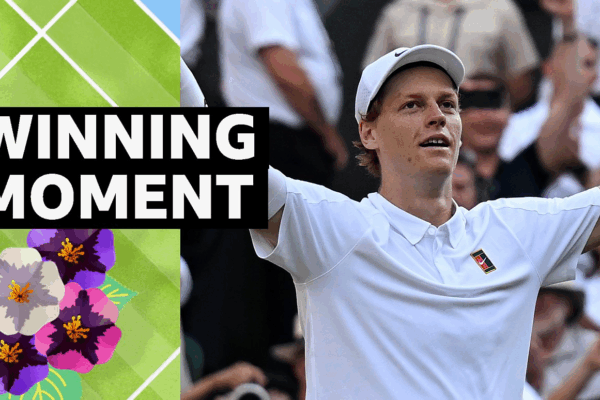
Everything Except Easy: How Jannik Sinner Fought Back to Win Wimbledon 2025

Jannik Sinner stood victorious on Centre Court, arms raised, then dropped to his knees—overcome by the moment. Just five weeks after suffering a gut-wrenching loss at the French Open, the 23-year-old Italian bounced back in stunning fashion to win his first Wimbledon title, defeating archrival Carlos Alcaraz in a gripping final. “Only me and the people who are close to me know exactly what we have been through on and off the court,” Sinner said, fighting back emotion. “It has been everything except easy.” The victory makes Sinner the first Italian man to win Wimbledon, and it came just over a month after he had lost to Alcaraz in a five-set classic in Paris—after holding three championship points. Redemption After Roland Garros That French Open defeat had the potential to unravel a lesser athlete. But for Sinner, it became fuel. After just three days off to regroup with friends and family, he returned to training with a vengeance. “This match was important for many reasons,” said Darren Cahill, one of his coaches. “He knew the importance of closing this one out when he had the opportunity.” Grass-Court Struggles to Centre Court Glory Sinner’s Wimbledon campaign didn’t start smoothly. He exited early in Halle, his only grass-court warm-up. And during his fourth-round match at SW19, he found himself down two sets to Grigor Dimitrov before an injury to the Bulgarian shifted the match. Sinner also suffered an elbow knock during that match but powered through the pain to defeat Ben Shelton and Novak Djokovic in straight sets en route to the final. By dethroning Alcaraz—his first win in their last six meetings—Sinner added Wimbledon to his 2024 and 2025 Australian Open titles, taking a huge step toward a career Grand Slam. Setbacks Off the Court Sinner’s 2025 season has not been without controversy. Earlier this year, he served a three-month doping ban after testing positive for clostebol, a banned substance. Though the World Anti-Doping Agency found he had no intention to cheat, he accepted responsibility for his team’s error. He returned in time for the French Open and has since retained his world No. 1 ranking, highlighting his consistency and resilience. “He’s had a challenging year,” Cahill admitted. “The guy you see on court—so focused and precise—is also a fun, relaxed guy off court, always joking and messing around. We’re proud of the way he’s carried himself.” A Rivalry for the Ages Sinner and Alcaraz have now claimed eight of the last nine Grand Slam titles between them, with their rivalry shaping a new era in men’s tennis. And as Sinner hoisted the Wimbledon trophy aloft, he shared a knowing smile with Alcaraz, a silent nod to battles fought—and still to come. “It doesn’t matter how you win or lose,” Sinner said. “You just have to understand what you did wrong and work on that. That’s why I’m holding this trophy.” Source: By Harry Poole, BBC Sport

Read More